
Elasticity is an important concept in economics. It is used to measure how responsive demand (or supply) is in response to changes in another variable (such as price).
Price Elasticity of Demand

The most common elasticity is price elasticity of demand. This measures how demand changes in response to a change in price.
See: Price elasticity of demand
Questions on Elasticity
- If the price of salt increases, will you reduce demand for salt?
Some goods like salt are price inelastic because if the price of salt increases, people will generally keep buying it. e.g. a 10% increase in price, may reduce demand for salt by only 1%.
We say the PED of salt is -1/10 = -0.1
Price Inelastic demand
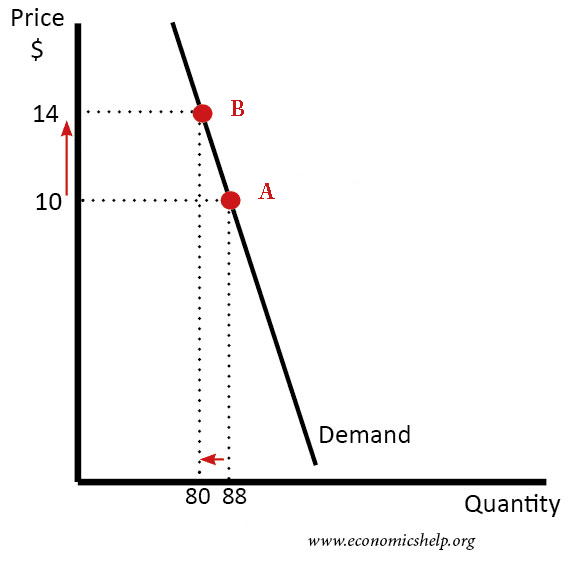
We say demand is inelastic if a change in prices causes a smaller % fall in demand. Examples, include
- petrol
- salt
- Tobacco
- Electricity
- Gas
All these goods are seen as necessary by consumers. If the price of electricity goes up, you will still use it to turn on lights and your TV. You can plug your TV into the gas socket. Electricity is inelastic because it doesn’t have any close substitutes. It is the same for petrol and salt.
Firms with monopoly power will face an inelastic demand curve.
Characteristics of inelastic good
- Necessities
- No close substitutes
- Addictive
- Small % of income.
Elastic Goods
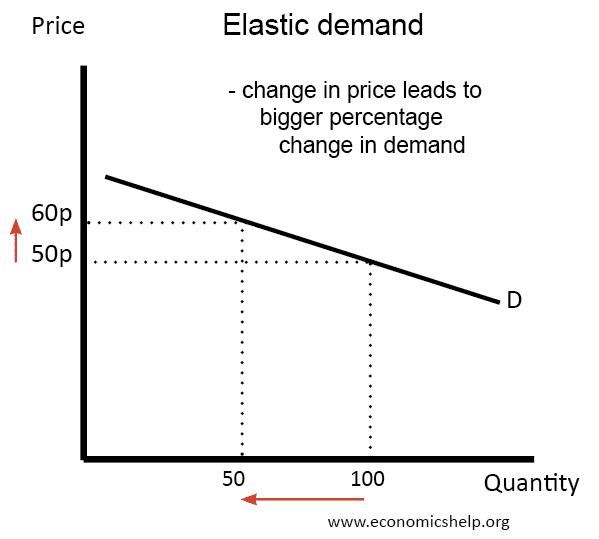
This means a change in price leads to a bigger % change in demand. Elastic goods will be anything with many substitutes or luxury items that are expensive to buy e.g.
- Tesco Bread
- Tesco Value Baked Beans
- Sports car outside
- Designer label clothes
Question: If the price of Volvic mineral water increases, would you reduce demand for Volvic?
If the price of Volvic mineral water increased by 10%, many consumers would buy other types of mineral water. This is because Volvic mineral water has many close substitutes – Evian, Vittel, Gerolsteiner e.t.c.
Therefore, a 10% increase in the price of Volvic water may reduce demand by 18%. Therefore, the PED of Volvic is -18/10 = -1.8. We say that Volvic has an elastic demand – it is sensitive to changes in price.
Therefore, a firm could cut price and gain a bigger % increase in demand. These are goods with many substitutes. E.g. if Volvic cut its price by 10%, it may gain an 18% increase in market share (unless other firms also cut prices)
Using Knowledge of Elasticity
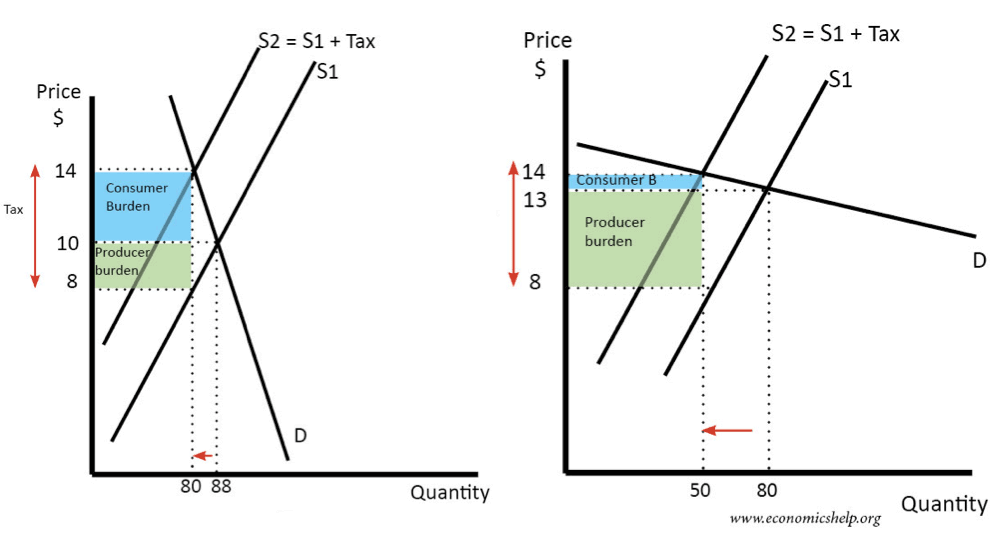
This shows that if demand is price elastic, a tax (to increase prices – leads to relatively big decrease in demand. If demand is price inelastic, then a higher price leads to only a small fall.
If a firm knows that demand for its product is price inelastic, then it can increase price and increase its revenue. Generally, firms would seek to make their goods more price inelastic, through advertising and highlighting unique selling point.
Other Types of Elasticity
Income elasticity

- Income Elasticity of demand – how demand changes in response to a change in income.
Income elasticity of demand gives us different types of goods.
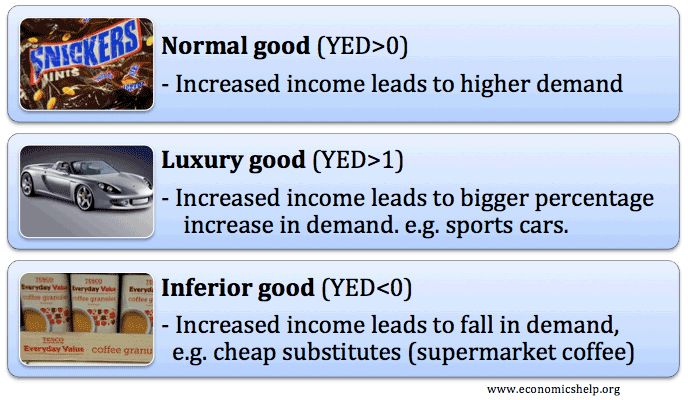
Cross elasticity of demand
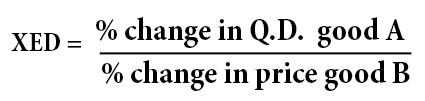
- Cross elasticity of demand – measuring how demand for one good changes in response to a change in price of another good. e.g. if price of coffee increases 10%, demand for tea may increase 2%
Price elasticity of supply

- Price Elasticity of supply – how supply changes in response to a change in price.
Related
Thanks you 🙂 it helps me easily understand what elasticity is.
i mean thank you ^^ not thanks you.
Hola! Mi gustan los “economicas.” Es muy dificil, y tu pago de informacion es fantastico! Tu es muy inteligente, y yo aprendio mucho en la pasado horas. Gracias mi amigo! Muchos gracias! ARRIBA