
economics blog

oil | Economics Blog - Part 2

Entries Tagged 'oil' ↓

Rising Gas and Electricity Prices

Amidst rising gas and electricity prices the chancellor, Alistair Darling will meet with the chairman of energy regulator Ofgem, Sir John Mogg. Darling will ask whether the recent price rises are justified.

At the moment, Electricity, Gas Companies and Ofgem are saying that the price rises are due to the increased cost of oil, natural gas and other energy prices. They claim with oil reaching $100 a barrel it is inevitable that domestic energy prices rise as well.

Ofgem also say that the UK has one of the most competitive domestic energy markets in the World. However, this will be little comfort for those facing higher energy prices.
Some commentators are accusing Ofgem of regulatory capture. This is when the industry regulator becomes dependent on information from firms and gives price rises which favour the firms. For example, it is argued that the increase in wholesale prices should not increase retail prices so much, at least not in the short run. Continue reading →

OPEC and Oil Prices in 2008

Readers Question: What will happen if OPEC continued to increase oil prices?

Firstly, the rise in the price of oil is not just due to the activities of OPEC. It is partly due to the rising demand from countries such as China.

If OPEC continue to contribute to higher oil prices in 2008 it would have the following effects.

Oil Exporting Countries.

  • Higher prices would lead to higher oil revenues. This would improve their current accounts and also government finances.

Oil Importing Countries.

  • Would see a deterioration in their current account deficits.
  • Inflation. – Higher oil prices is likely to lead to cost push inflation. This is because the price of oil effects the cost of producing many different goods.
  • Economic Growth. Economic growth may slowdown if oil prices continue to rise. However, it would have to be  a fairly significant rise in prices to have a permanent effect. Continue reading →

Has Opec Misused its power?

OPEC is the organisation for Oil Producing and Exporting Countries.

OPEC tries to control the price of oil within a certain target price.

Because demand is inelastic OPEC can increase the profits of its member countries by keeping prices high. Therefore, if prices start to fall below the target price, OPEC may set output quota’s to restrict supply and keep prices high.

OPEC did this in 1973, when the price of oil was tripled in response to events in the middle east. This caused significant economic hardship in the West, who had grown accustomed to cheap oil.

In a way this is a classic example of abuse of monopoly power. If this cartel occurred in the UK between different companies it would be declared illegal and the firms would be prevented from doing it. However, because it is a global cartel there is nothing that other countries can do.

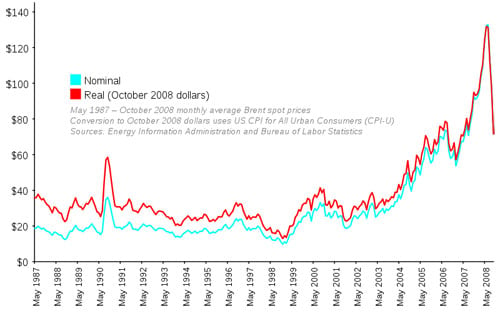
However, since 2000 OPEC has started to lose control over the price of oil. They have struggled to keep price within their target of $20-$24, although they are probably quite pleased about the recent increase in the price of oil.

The high price of oil encouraged production to start in other non opec countries like USA and Russia. Because supply now comes from more non opec countries it is more difficult to control supply and price.

Also the high prices of oil have encouraged people to look for alternatives to oil. Oil and petrol and not the only way to fuel transport. In the future, it is likely that economies will increasingly look for alternatives to oil, such as hydrogen powered cars.