
Elasticity is a concept which involves examining how responsive demand (or supply) is to a change in another variable such as price or income.
- Price Elasticity of demand (PED) – measures the responsiveness of demand to a change in price
- Price elasticity of supply (PES) – measures the responsiveness of supply to a change in price
- Income elasticity of demand (YED) – measures the responsiveness of demand to a change in income
- Cross elasticity of demand (XED) – measures the responsiveness of demand of good A to a change in the price of good B
Price Elasticity of Demand

The most common elasticity is Price Elasticity of Demand. This measures how responsive demand is to a change in price.
- If price of tomatoes increase 20%, and quantity falls by 4%, then the PED = -0.2
Inelastic Demand
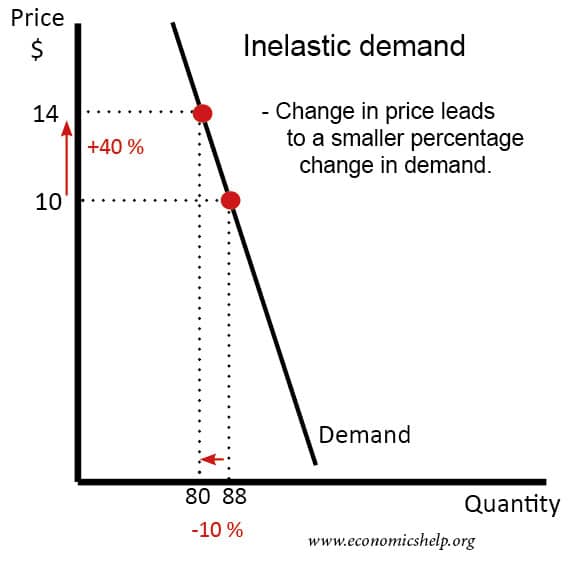
If a change in prices causes a smaller % change in demand, then we say demand is price inelastic.
In the above example, the price increased 40% and demand fell 10%.
- Therefore the PED would be -10/40 = -0.25
- In other words, the higher price does little to reduce your demand.
- Other examples of inelastic goods might involve:
- oil, petrol, coffee, cigarettes.
Characteristics of Inelastic Demand
With goods which have inelastic demand, there will be a few characteristics:
- Few if any substitutes, gold, diamonds, petrol, sugar
- Goods which are necessities. E.g. if you drive a car to work, it is a necessity to buy petrol. Therefore, if the price of petrol goes up you are likely to keep buying it.
- Addictive. If you are addicted to cigarettes/drugs, you will keep buying even if the price goes up.
- Bought infrequently and small percentage of income. If salt increases in price, most people wouldn’t mind.
Elastic demand
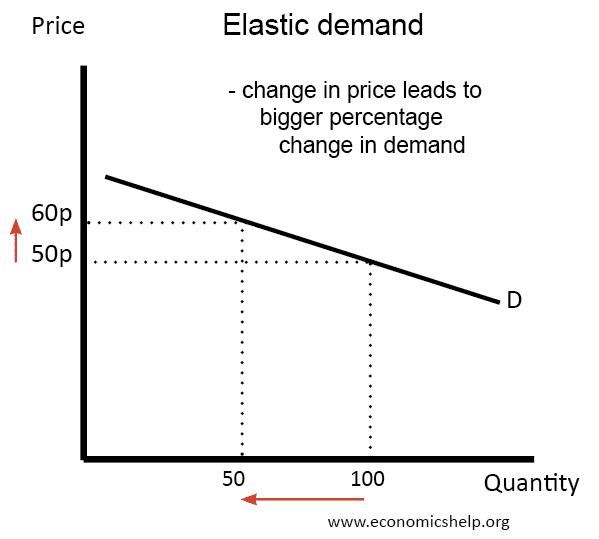
Demand is said to be price elastic – if a change in price causes a bigger % change in demand.
In the above example, the price rises 20%. Demand falls 50%. Therefore PED = -50/20 = -2.5
Elastic demand means that you are sensitive to changes in price. For example, if the price of Sainsbury’s Caledonian mineral water increases, you would probably switch to other varieties of mineral water. Therefore a change in price causes a bigger % change in demand and your demand is quite elastic.
Goods vs particular brand
- If the price of chocolate in general increased, demand would be quite price inelastic – there are no close substitutes for chocolate
- However, if a particular brand like “Wispa” or ‘Dairy Milk’ increased in price, consumers could switch to other brands of chocolate. Therefore demand is more elastic for individual brands.
Making Use of Elasticity
Effect on demand. If a firm knows demand is price elastic, raising the price is likely to cause a significant fall in demand and a fall in revenue.
The effectiveness of a tax. If demand is price inelastic, a tax would only cause a small fall in demand. Though it would lead to an increase in tax revenue.
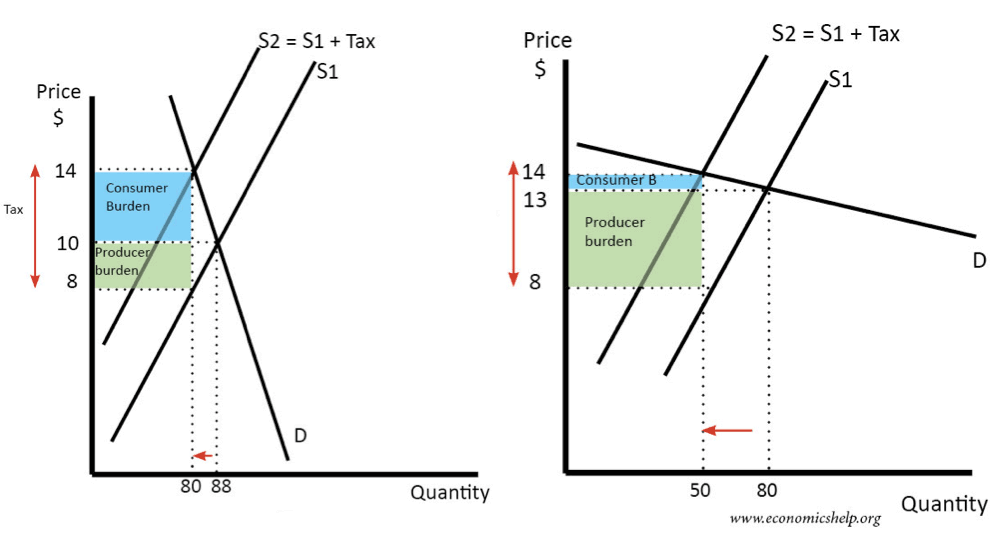
In the diagram on left, demand is inelastic. Higher tax leads to a big increase in price and small fall in demand.
Elasticity and price discrimination Elasticity can be used to explain and understand the decisions of firms such as price discrimination. A firm may have two groups of consumers – adults and students. Because students have low income, their demand is more price elastic. This means that if you cut prices for students, you get a bigger % increase in demand. Therefore, a firm will try to increase profits by cutting the price for students and keeping them higher for adults.
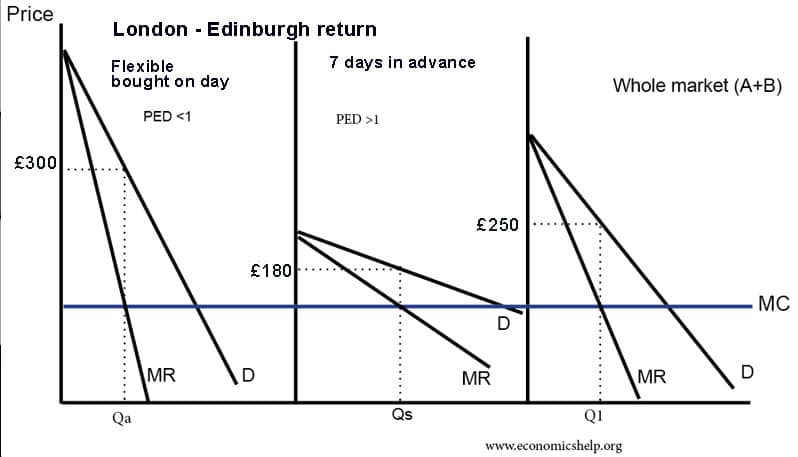
In the above example, firms set a much higher price for a ‘flexible’ ticket bought on the day. Some business users will have an inelastic demand so will be willing to pay this price. However, students or those on low-incomes will be more sensitive to changes in price and will be willing to book in advance – to save money.
Elasticity can vary over time
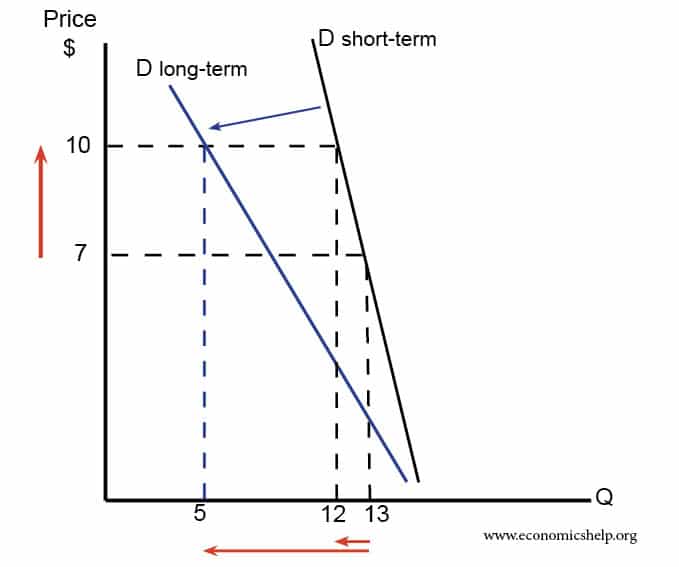
Often elasticity can vary over time. In the short-term, demand is price inelastic – because people don’t have time to look for alternatives. However, over time, people try harder to find alternatives and so demand becomes more price elastic.
For example, if the oil price increases, demand will be inelastic in the short-term. But, over time, consumers will consider buying more fuel-efficient engines or electric cars – to avoid the expensive petrol.
Other types of elasticity
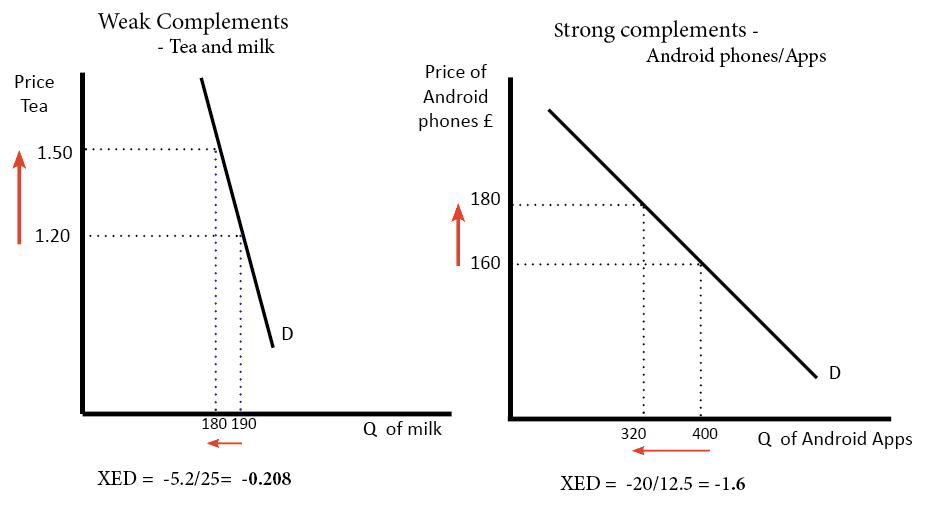
- Cross elasticity of demand

If goods are complements, the XED will be negative
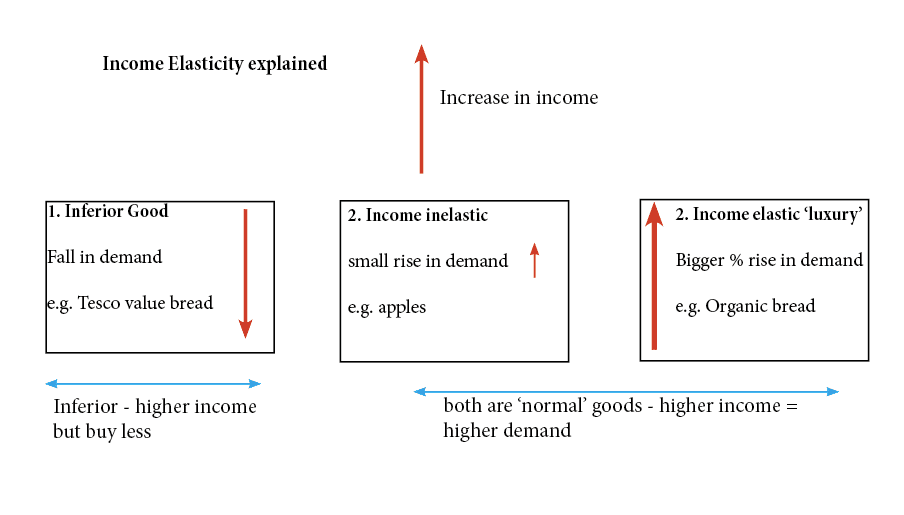
Income elasticity of demand

If income rises 10%
- Demand for Tesco bread falls 5%. YED = -0.5 (inferior good)
- Demand for butter increases 8%. YED = 0.8
- Demand for organic bread increases 17%. YED = 1.7
Price elasticity of supply (PES)

If price of potatoes rises 10% and quantity supplied increases 1%, the PES = 0.1
Elasticity of supply is determined by factors such as
- Levels of spare capacity
- Can the firm employ more factors of production
- Time period – supply often inelastic in the short-term
Related
Explain why the following situations would occur in terms of the factors that affect elasticity.
a. Demand for cellular service is inelastic in the short run, but more elastic in the long run