
“What if the UK’s most successful industry was also its biggest curse? The City made billions of Pounds, but did it also make the country weaker?”
On the eve of the financial crisis in 2007, the UK economy seemed to be doing pretty well – 18 years of economic growth, low inflation, low borrowing, and a strong Pound.

But, then, it all came crashing down, a deep recession, the pound slumped 30% and a crisis which cost the economy an estimated £1.8 trillion or £26,000 per person. Ever since that fateful crash, the UK economy has struggled, real wages have stagnated, debt has risen and productivity has slowed. The growth in finance may have made the city rich, but for the average worker, house prices have soared, mortgages are bigger and the tax burden significantly higher.

As the financial crisis fades from memory, people blame a multitude of other factor, but 2009 was an undeniable turning point for when your wages stagnated.
Rise of the City
It was supposed to be very different. The Docklands had been transformed from a wasteland to a shining new modern mecca of global finance – billions flowed from around the world, the best jobs and the new face of the British economy. In 1980, financial assets were 250% of GDP, In 2022, that figure 1,080% of GDP or £27 trillion. Whilst UK industrial production had been in long-term decline, the UK economy had been seemingly saved by financial and business services. Back in 2008, financial exports peaked at £111 billion. Impressive on paper – but masking an underlying weakness.
The Crash
How can an oil-laden country like Venezuela or diamond-rich Angola become so poor? Because one dominant industry can itself become a curse. The success of UK finance in attracting capital flows pushed up the value of the pound, weakening the competitiveness of manufacturing. But, finance was a large bubble, and when the crisis hit, the Pound fell 30%, showing how reliant the UK was on these financial flows. But the devaluation was not enough to save the rest of the economy. An economy dominated by financial services can crowd out resources, investment and productivity in other areas. Britain is brilliant at trading money – it has assets and liabilities worth 500% of GDP. But when it comes to real investment? It ranks near the bottom. And this low investment has a knock-on effect of low productivity and low growth.
Finance Curse
But the crash wasn’t the only cost of finance. The real problem runs deeper: the finance curse. In the 70s and 80s, financial markets were liberalised and this led to a boom in the financial sector. It was the era of the Yuppie, loads of money, the champagne flowed salaries and bonuses soared. Yet, there were unintended effects.

The boom in finance coincided with a decline in industrial production. Bank lending for business investment fell, with financial institutions preferring to seek more profitable uses of capital. A century or more ago, 80% of bank lending went to businesses for genuine investment. Now, less than 4% of financial institutions’ business lending goes to manufacturing.
Housing
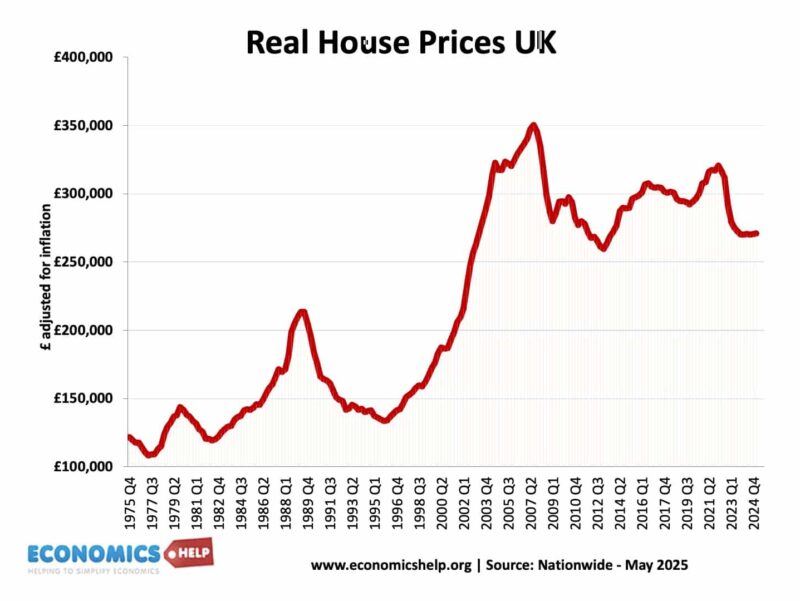
The liberalisation of mortgage lending, which started in the 1970s, saw a huge growth in demand for housing. House prices didn’t just rise – they skyrocketed beyond what young families could ever dream of affording. As price to income ratios rose, the main solution was often to encourage bigger mortgages. But the era of great finance has left many struggling to live.
Optimal Finance?

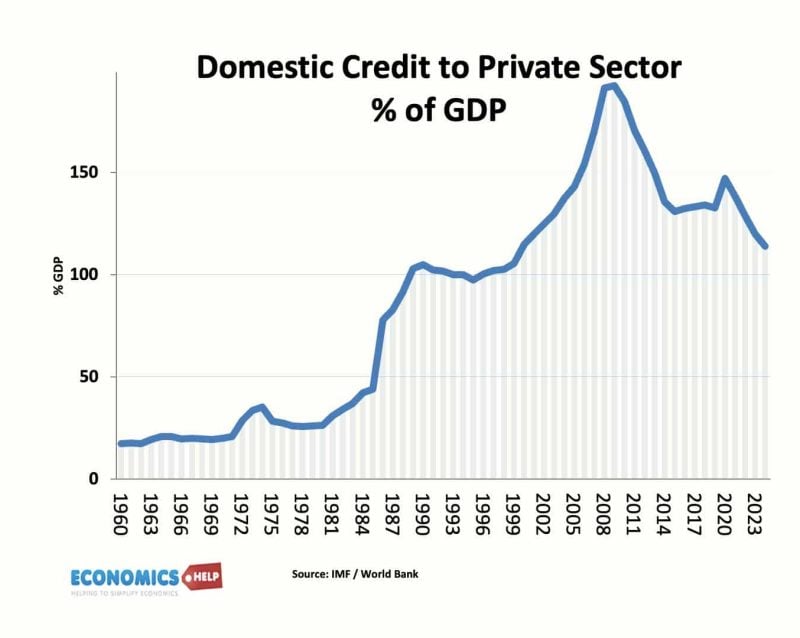
An IMF paper suggested at first, finance boosts growth. But too much of it? It actually slows an economy. For example when credit to the private sector goes over 90% of GDP, finance becomes detrimental. In the UK, private credit soared from 20% of GDP in 1960 to over 150% by the credit crisis.
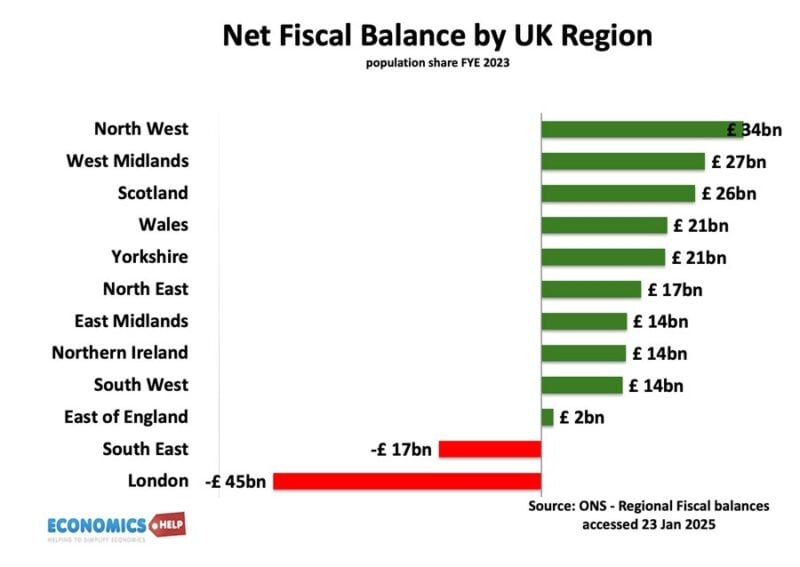
We are frequently told that London, and the city in particular, effectively subsidise the rest of the country and it is true, London is a net payer towards the government budget.
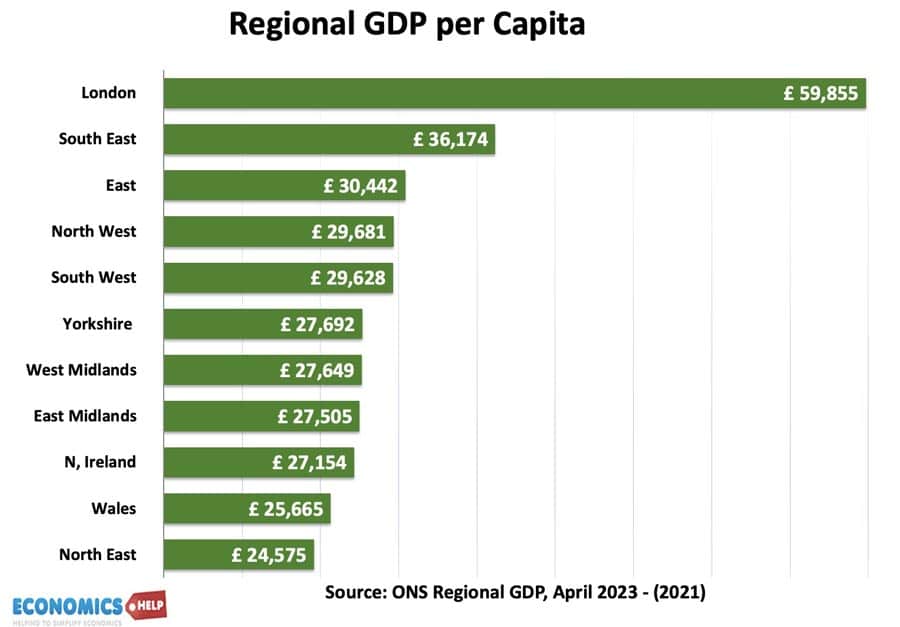
But what if the problem is that the huge salaries of London finance are hoovering up the best workers and opportunities? If you are a top graduate, why go into engineering when you can earn more in the city, as one academic study commented
“People who might have become scientists, who in another age dreamt of curing cancer or flying people to Mars, today dream of becoming hedge-fund managers.”
Imagine a football team where every one wants to be a striker. That’s Britain’s economy everyone wants to be the £500,000 a week striker, but the badly paid defence is short of players and leaking goals.
Is the city of London spreading wealth, or is it hoovering it up? One academic study suggests the cost of over-financialisation to the UK economy is in the region of £4.5 trillion. A significant cost is this misallocation of resources. Firstly, excess profits of around £400bn. On average, those working in the financial sector earn 15% than non-finance sector, but in the lead up to the financial crisis, this rose to 40%.
Short-term profit maximisation rules the City. Instead of funding real businesses, finance chases easy paper gains – buying and selling assets. Recently Britain has sold off many assets – everything from water to football clubs to private schools. The money flows in, but real investment? Much less. Yes, foreign firms like Nissan have created jobs, but water privatisation was more about loading utilities with debt and extracting high dividend payments.
Risk
And then there’s the risk. The 2008 crash may have started in America, but London was at the centre of the storm. City traders developed complex products like credit default swaps – mortgage insurance that was supposed to be safe. Ratings agencies even stamped them ‘triple-A.’ In reality, they were junk. When the bets collapsed, banks around the world fell with them. But traders still got their bonuses, while taxpayers picked up the bill. Heads they win, tails we lose.”
Whilst taxpayers bailed out the banks, and suffered austerity. The banks were too big to fail and continued to thrive helped by unprecedented levels of liquidty in the form of QE. And this is another potential problem of a sector like finance being so dominant, it starts to have an outsize political influence.
London isn’t just a magnet for global capital – it’s also a magnet for dirty money. For years, Russian oligarchs and other elites have poured billions into the City, hiding their wealth in London’s booming property market.
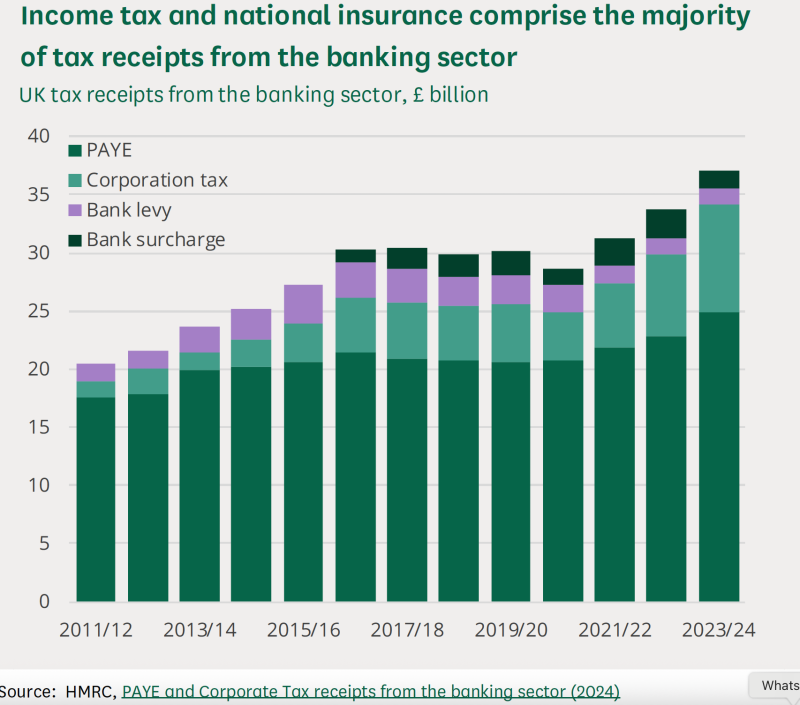
At first glance, all this money sounds great for the Treasury. And it’s true – City workers pay a big chunk of Britain’s taxes. But here’s the twist: economists often call London the hub of the global tax haven system.
Accountants and traders in the Square Mile don’t just manage money – they funnel it offshore, to British-linked havens like the Cayman Islands and Bermuda. The IMF estimates this kind of profit-shifting costs governments at least $500 billion globally every year, with around $80 billion linked to UK territories alone.
And it’s not just oligarchs. Big corporations play the same game. For years, Google routed its UK ad revenue through Ireland, then the Netherlands, and finally the Cayman Islands – slashing its tax bill in the process. And who helped make it all possible? London’s big four accountancy firms. It begs the question how much value is added from this kind of business activity?
Regulations introduced post-financial crisis have sought to prevent a repeat of this risk-taking, but regulators are often fighting the last battle. Financial bodies have a habit of creating new forms of assets and lending.
Any Alternative?
“So if finance has caused so much damage, what’s the alternative? The truth is, Britain still depends on the City. The UK runs a current account deficit, and financial services are one of the few big net contributors. In 2024, they exported £94 billion and delivered a £78 billion surplus in services. The sector employs around a million people and pays almost 10% of all government tax revenues.

Manufacturing, once the backbone of the economy, has shrunk. And with high energy costs, it’s hard to bring it back. Like it or not, finance has become Britain’s comparative advantage. We can’t turn back the clock to the 1970s.
Better Finance?
But we can choose what kind of finance we want. Clean up offshore tax havens linked to Britain. Push capital into the real economy instead of paper assets. Incentivise long-term investment over short-term bonuses. And crucially, spread finance beyond London – giving other UK cities a chance to share in the wealth.
Sources:
https://researchbriefings.files.parliament.uk/documents/SN06193/SN06193.pdf
https://www.tax.org.uk/calls-for-action-on-profit-shifting
BIS Working Papers No 381 “Reassessing the impact of finance on growth by Stephen G Cecchetti and Enisse Kharroubi
The world’s top three tax havens are British territories – new research
About The Author
