
Around the world, economies are slowing down.

Wages are stangant, living costs are up and households are pessimistic. In living memory, we had decades where living standards rose dramatically, seamingly with little effort. But this now seems to be going into reverse. You can blame politicians and economists for having no idea what to do but the real causes run deeper: ageing populations, declining productivity and major structural shifts. It’s not all doom and gloom, new technology does offer hope – but will it be enough to outweigh the challenges?
Demographic Shifts
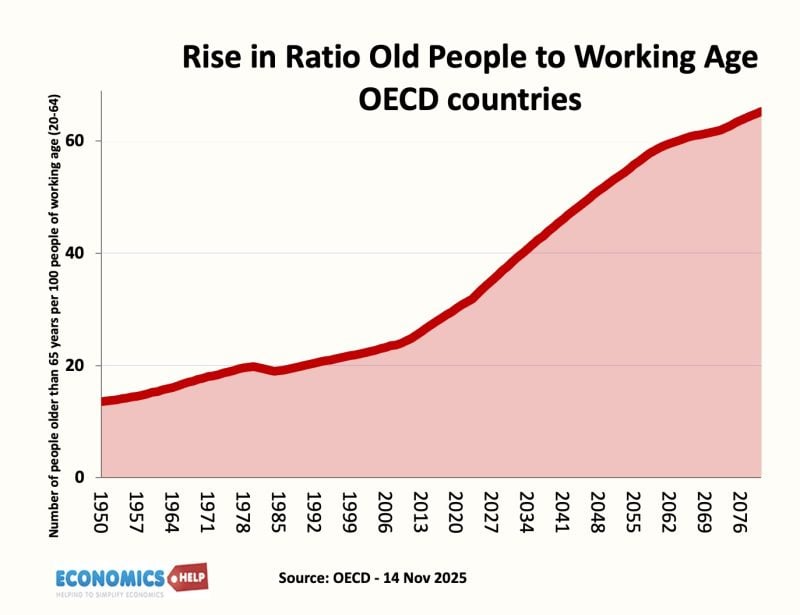
The first big change is simple demographics. The backbone of any economy is people. It’s no coincidence that the post-war economic boom followed the post-war baby boom. A young, dynamic population boosts innovation, investment and growth, with plenty of workers to drive the economy forward. But this favourable demographic picture is now reversing—and we’re not prepared for it. In 2000, major Western economies had about 21 older people per 100 workers. Today it’s 33, and by 2080 it’s expected to reach 66. And if that sounds dramatic, remember that fertility forecasts have repeatedly been too optimistic—birth rates are falling even faster than expected.
This creates a real economic headache. An ageing population needs more spending on pensions and healthcare, while contributing less in tax than workers. At the same time, ageing societies typically invest less and grow more slowly. So just when we need faster growth to fund rising pension costs, growth itself is weakening.
It’s not an excuse for poor policy, but it does explain the underlying pressure governments face. The national pie is growing more slowly, meaning less to share around—so governments respond by borrowing more, raising taxes, or cutting spending. And this slows growth even further.
Do we always get growth?

This is economic growth in the UK since 1300. For about 300 years between 1351 and 1651, there was virtually no economic growth. I’m not saying we are going back to the dark ages, but in a way the post-war economic boom wasn’t actually the norm, that many people think. It was a combination of peace, stability, growth in trade and very effective adoption of new technology.
Unexpected Shocks

The next issue is the rise of unexpected shocks. From the early 1980s to the mid-2000s, the world experienced around 25 years of relative stability, with only brief disruptions like the 1991 Gulf War. But since the 2008 financial crisis, economies have been hit by a series of sucker-punches: the global credit crunch, Covid, the Ukraine war, tariff conflicts, and a growing fragmentation of the international order.
At the same time, extreme weather events are becoming more frequent and more costly. Insurance premiums are rising, and climate-related disasters are putting new strains on households, businesses and governments.
Post-war Boom – End of an Era?
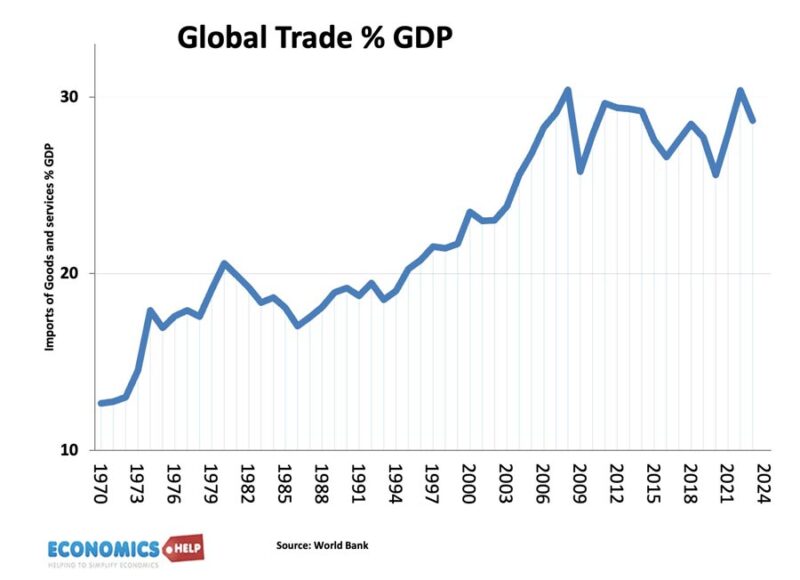
A key feature of the post-war boom was the rapid growth of global trade and steadily falling tariffs. Yes, this contributed to a decline in manufacturing jobs in advanced economies, but it also delivered lower prices and stable inflation. The device you’re watching this on was probably built in China. If global trade continues to unwind, we lose those economies of scale—and that almost certainly means higher costs and higher prices.
Will the world become more unstable in the future. It certainly seems a long time since the fall of the Berlin Wall and the so called end of history, and “the universalization of Western liberal democracy as the final form of human government.”
If you think the Ukraine War caused huge economic costs to Europe, what would happen if China invaded Taiwan? And uncertainty is already here. Just last month a fall in GDP was blamed on the cyber attack of Jaguar Landrover
Energy Transition is not Easy
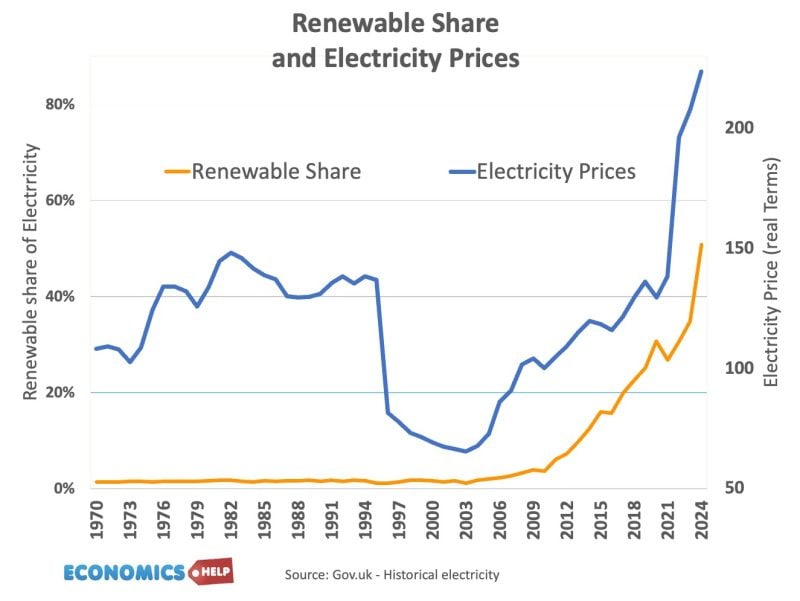
The costs of global warming have caused governments to invest heavily in the green revolution. But, this has not been as easy as some hope. It is true the marginal cost of renewables has been falling, but this is only part of the story, electric grids are not ready to store and transmit the very different forms of electricity. If you want to go renewable, it requires massive investment in grid infrastructure, which will be costly. Certainly the UK is a cautionary tale of how a rising share of renewables has not translated into lower prices.
Structural stress leads to poor decisions
Of course, it’s not helped by bad management, but structural stresses and poor management of the economy are linked. For example, when growth was high, some countries effortlessly increased taxes and expanded investment in public transport, health care, education and even a sovereign wealth fund. In other words, there was a virtuous cycle of investment in the future. People don’t mind paying higher tax rates, when they can see salaries rising.

But, what happens when incomes stop growing, and housing costs become more expensive? People feel frustrated with the economic system, and there is political pressure to offer short-term fixes, a little tax cut here, an investment spending cut there. Politicians try to win elections with promises to increase spending but not increase taxes. But, when they get in power, because the economy is doing badly, they can’t implement what they promised. Taxes have to go up, it creates uncertainty and resentment and rather than a virtuous cycle, it becomes more negative.
Productivity Decline

Another major factor behind weaker economic growth is the slowdown in productivity — how much output we produce per hour. This isn’t just a UK problem; productivity growth has been falling across advanced economies. But the UK’s slowdown has been particularly sharp.

A big reason is the shift from manufacturing towards services and public-sector work. Manufacturing offers huge scope for automation and efficiency gains. But the UK’s largest employer is now the NHS, and healthcare is far harder to automate. You can streamline the production of solar panels, but you can’t automate a doctor’s appointment or a nurse’s care.
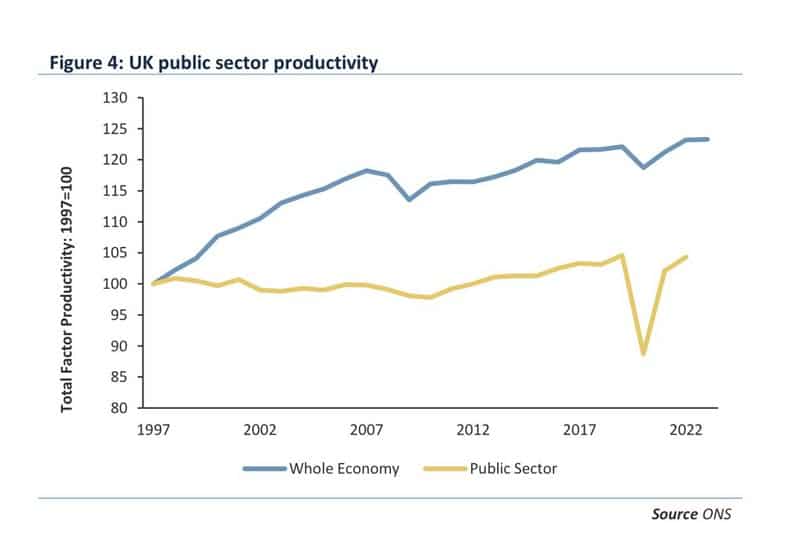
At the same time, government spending has risen as a share of the economy, yet productivity in the public sector has been essentially flat. As these labour-intensive industries grow, the economy becomes more vulnerable to Baumol’s cost disease — where sectors with low productivity growth absorb more resources and drive up costs. A string quartet plays at the same speed today as a century ago, but the musicians still need higher wages. It’s important to say that spending more on healthcare isn’t a bad thing — there’s more to life than productivity. But this shift does help explain why overall economic growth has slowed.
Inequality is an issue
Another problem is that when the economy was doing well in the 50s and 60s, the benefits were equally spread. Homeownership rose. Life wasn’t all rosy, but there was an expectation you would probably get a job and probably somewhere affordable to live. The problem now is that wages have stagnated but housing costs have risen faster than inflation. So for a new generation, they feel like they are worse off. And it’s not just about feeling worse off, they are worse off in terms of housing opportunities. A key sense of well-being is not just raw income, but can you basically share in the same opportunities as the rest of society, but for an increasing number, it feels like they are locked out, and this is leading to demoralisation of the younger workforce.
AI to the rescue?
So what about the positive case for the future? Firstly, a lot is riding on AI. There is great hope it will be the next transformative technology, which can actually crack issues like stagnant productivity even in health care. AI is really just at its starting phase, and the potential or hope is for exponential growth. With new wonder technology, doctors can treat more people, treatments will be more cost-effective and we will find a way to increase healthy life expectancy not just keep people hanging on. The downside is how you do like the idea of being diagnosed by ChatGPT or lifted from your wheelchair by a robot. The other thing, is that although AI makes a lot of claims, it is one of those things, we’ll believe when we actually see it.
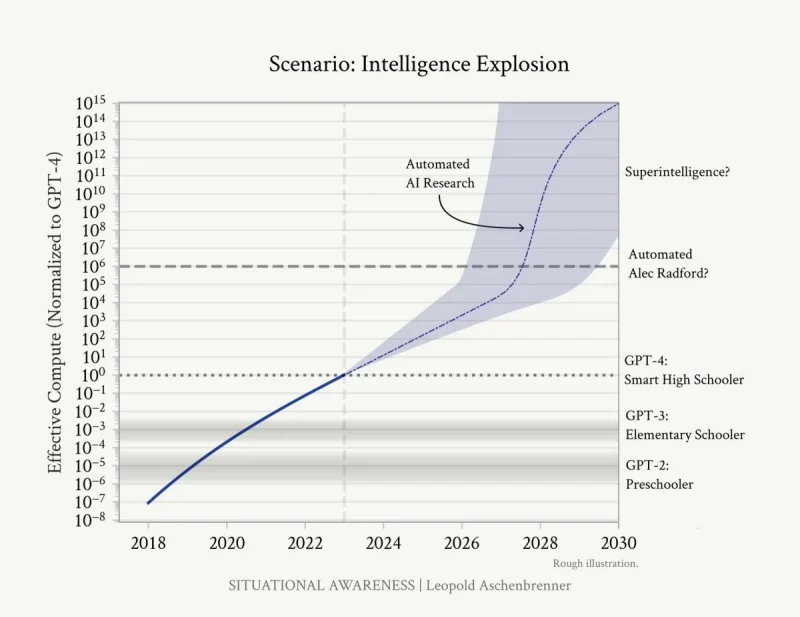
Already, people start to wonder if the hyperbolic cliams of AI will actually be delivered. I’ve no doubt that AI will play an important role, but it may be less transformative than some believe. Even the internet has actually done very little to boost productivity since it went mainstream in the past 20 years. Electricity and railways were much bigger boost.
The fall in the population isn’t all bad news. In theory, it’s the kind of thing that could make housing more affordable, though if your watching this video, chances are you won’t see a falling population in your lifetime, just the ageing part. The fall in population will be for your children, if you’re having any.
Despite all this I am an optimist, economies are resilient and can do better than expected. But, the world of big tech is over-rated and causes as much problems as things it solves.
Video
Related
About The Author
