
In the summer of 2022, Liz Truss was elected Prime Minister and with chancellor Kwasi Kwarteng, embarked on a bold economic experiment of large unfunded tax cuts primarily for the rich. They believed in a free market ideology and hoped a radical budget of tax cuts would end the UK’s economic stagnation. However, even whilst the chancellor read his speech, markets went into free fall. The Pound fell interest rates soared. Within 44 days, the experiment was over. But, why did it fail so spectacularly? how much damage did it do and who really thwarted the budget?
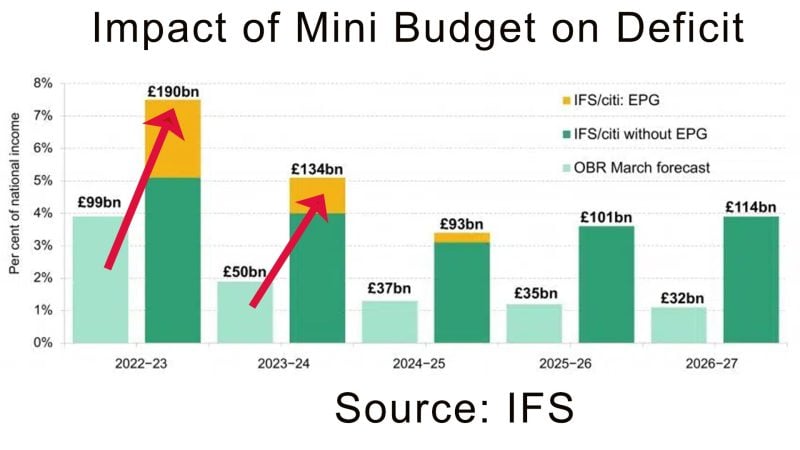
The budget was unprecedented in its scale over £50bn of unfunded tax cuts, which would see the UK deficit rise to £190bn. It was enthusiastically welcomed by portions of the press. But, the first problem of the budget was that it was incredibly badly timed.
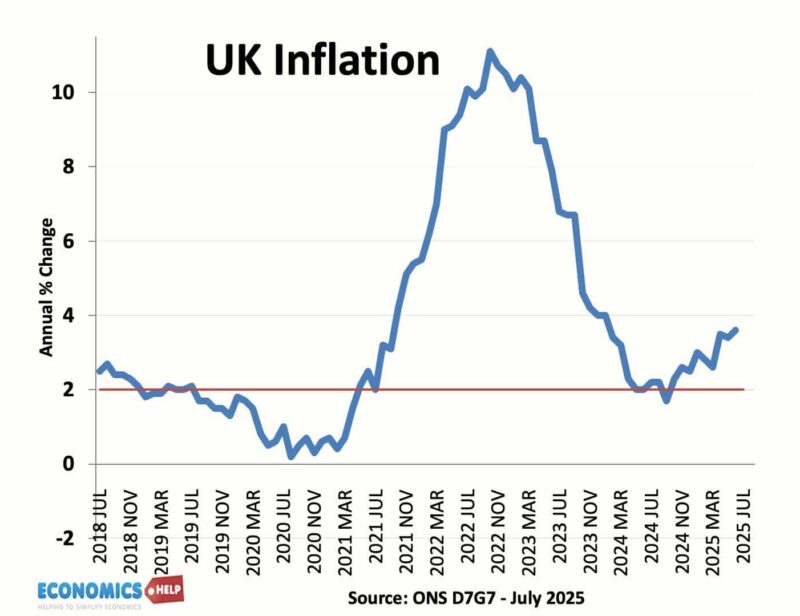
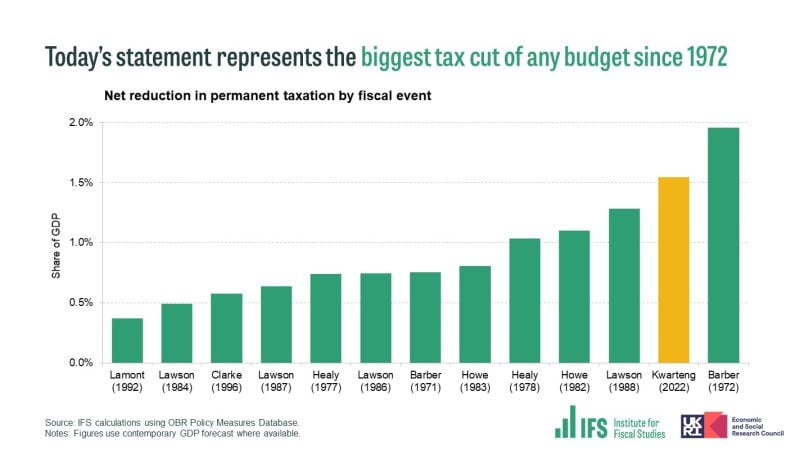
UK inflation had soared in 2022 from 2% to 10% by September 2022. However, the impact of such large scale tax cuts was to cause further inflationary pressure. Tax cuts boost spending pushing up inflation. It was the biggest tax cuts since Barber’s 1972 dash for growth. That budget caused a boom but ended in inflation and recession. The Bank of England had already started to raise interest rates to 2%, but you could argue they were behind the curve. But, market traders realised this budget on top of 10% inflation would mean much higher interest rates. Traders sold government bonds, and bond yields soared.
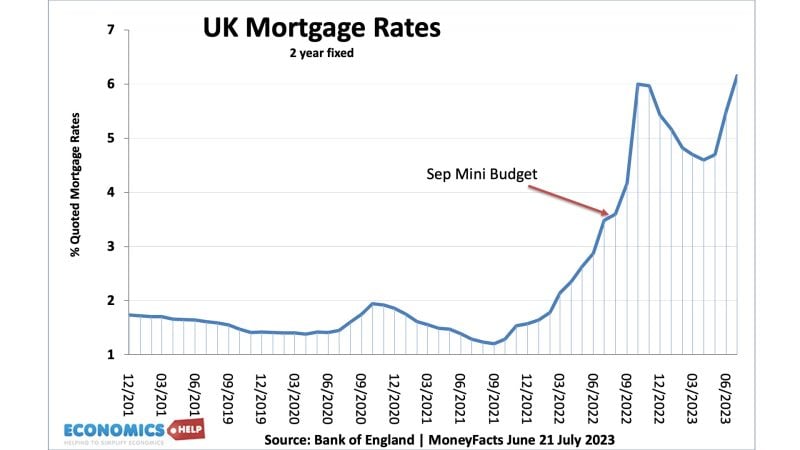
Mortgage rates were rising before the budget, but after mini-budget they rose even further.
Mortgage rates nearly tripled overnight. For a decade interest rates had been stuck at near zero, but now they were going up by the hour.
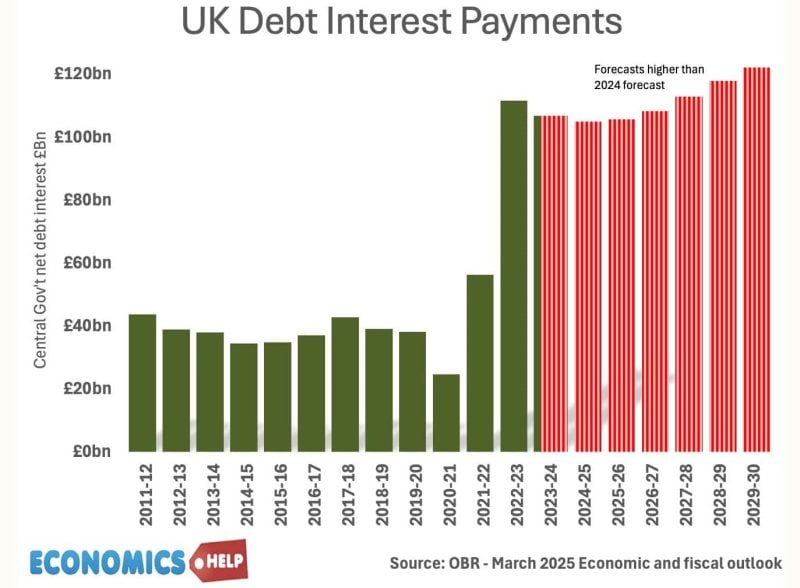
The other problem was that UK debt had been rising ever since the financial crisis. Net debt was now 95% of GDP and the government finances still recovering from Covid bailouts. On top of this, the mini-budget saw the projected budget deficit to nearly double from £99bn to a mouth-watering £190bn. There was no plan to reduce debt, except for a vague hope, tax cuts would encourage people to work more and the government would get more tax revenue. Therefore, the size of the deficit was another factor, in pushing up bond yields as markets were concerned about scale of borrowing, with no strategy to reduce. The credit rating agency Moody stated the budget “could more permanently weaken the UK’s debt affordability” and they lowered their UK outlook to negative. Another complication for the UK is that we have many index-linked bonds, which means UK debt interest payments depend on inflation rates. With inflation at 10%, it was much more expensive to borrow. UK debt interest payments soared to over £120bn last year. (and this was with most of the budget reversed).
Now a good question to ask is – who has the power to effectively reverse government policy? Well, there is a saying by one of Bill Clinton’s political advisers.
“I used to think that if there was reincarnation, I wanted to come back as the president .. But now I would like to come back as the bond market. You can intimidate everybody.”
The Power of the Bond Market
The thing is the bond market is composed of self-interested investors, who want to make money. These bond traders are exactly the kind of people who would benefit from the large tax cuts for the rich. But, in the bond market there is no room for sentiment or political favours. They simply follow the money. It was obvious to everyone, the budget meant interest rates had to go up. So everyone sold bonds and sold pounds. If you don’t, you just lose money. When people talk about some left-wing deep state responsible for torpedoing the budget, I’m sure Goldman Sachs bankers will be laughing at the description of themselves. The market is essentially politically and morally neutral. As the government found out in the ERM crisis of 1992, you can’t buck the market, when investors scent an opportunity to make money. There is an irony in adherents of the free market being brought down by the free market.
Politically unsustainable
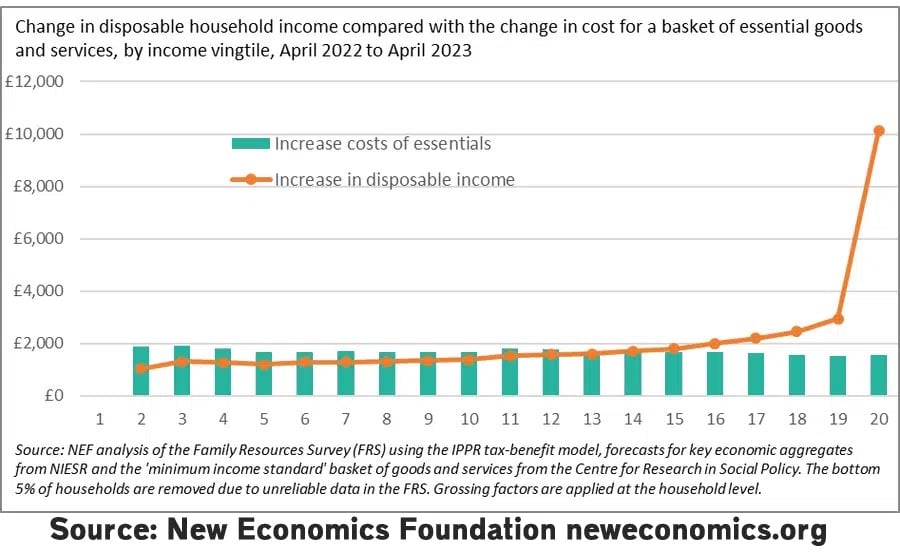
There was another factor, which is relevant. Markets correctly judged that this budget was politically unsustainable. In the autumn of 2022, the UK was experiencing a severe cost of living crisis. Real wages were falling due to higher energy costs. The budget was notable in being almost entirely focused on high earners. The budget left the poorest 60% of the population with inflation greater than any increase in income. But, the richest 5% saw an increase in income of over £10,000. The IMF issued a rare rebuke saying it would “likely increase inequality” Paul Johnson of the IFS stated the budget was “a naked exercise in redistributing wealth upwards” and it was hard to find an economist who supported the government approach.
Did interest rates rise because of Truss?
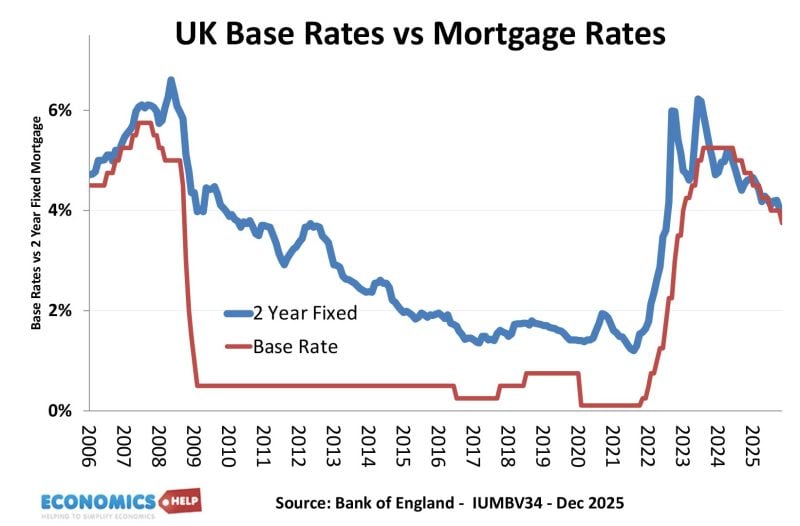
During Truss’s premiership interest rates rose very quickly. They rose much faster than similar countries. Some traders used the highly technical term ‘moron premium’.

In other words under Truss, UK interest rates were now higher than comparable countries. We were paying for unfunded tax cuts with higher interest rates. Now, after Sunak replaced Truss, the budget was reversed and this interest rate premium declined. However, it would be a mistake to say it had no lasting effect. The Resolution Foundation reports it cost £30bn. £10bn of higher interest payments and £20bn though unfunded tax cuts. Also, it undermined Britain’s international credibility. Larry Summers compared the UK to “emerging market turning into a submerging market” It severely dented business confidence at a time when UK investment was already low. It impacted household confidence who were shocked at the scale of the rapid rise in interest rates. Also, after a decade of easy government borrowing, the market reaction made politicians more aware of the difficulty of increasing borrowing in the new climate. In 2023, interest rates continued to climb because inflation proved more stubborn than expected. UK inflation proved higher than many European countries, but that was not reallyn due to Truss, but issues around productivity, Brexit, and depreciation in Sterling.
What about the Bank of England?
You could argue the Bank of England made a mistake in pursuing £400bn of QE during Covid and then keeping interest rates too low for too long. When Truss came to power, they were already behind the curve and needed to increase interest rates amyway. But, that doesn’t alter the genuine impact Truss and Kwarteng had on short-term bond yields. Also, it is important to bear in mind, the market reaction could have been worse without Bank of England intervention. Bond yields rose so fast in September and October, pension funds were at risk of running out of liquidity and were close to being wound up. The Bank had to halt Quantitative tightening and buy £65bn of bonds to stabilise the bond market.
What about Underlying logic of tax cuts?
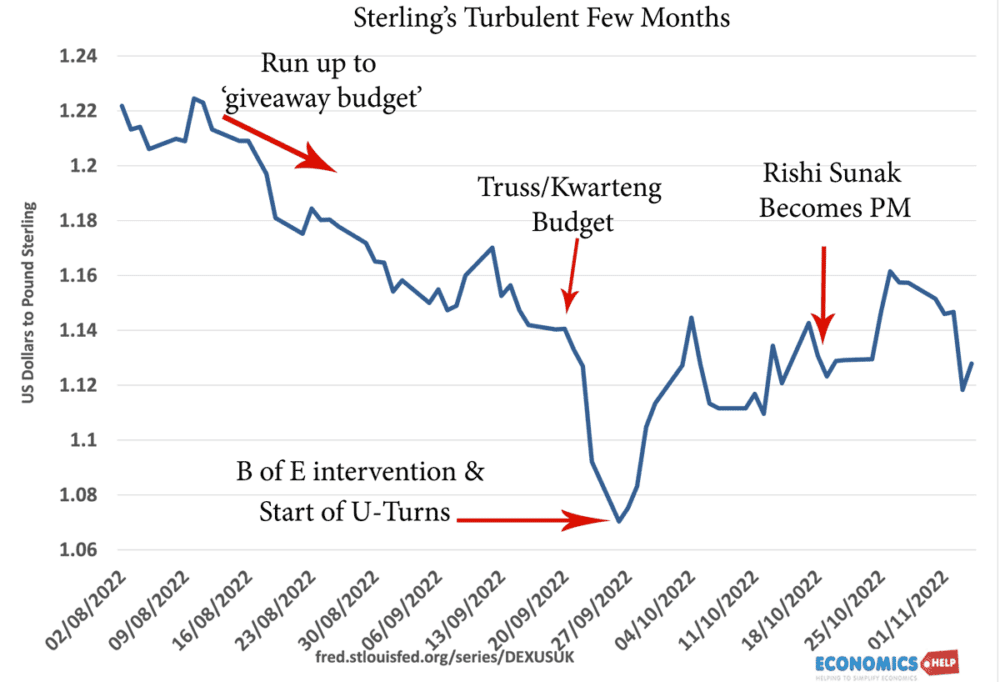
The budget was incredibly badly timed. Truss and Kwarteng also showed a lack of flexibility. After the initial bad market reaction, Kwarteng doubled down, saying he didn’t care about a fall in Pound, and they would push through even more tax cuts. If they had gone slower and more judiciously, they could have offered at least some of the income and corporation tax cuts. Would that have helped the UK economy?
The logic is that high marginal tax rates reduce incentives to work. Cut taxes, productivity rises, the economy grows and tax revenues increase. It is standard Laffer curve analysis that if you cut taxes, the government magically gets more revenue. For example, in 1979, Thatcher cut the top marginal tax rate from 83% to 60%. At 83%, there is definitely a disincentive effect. But, when the top rate of tax is only 45%, this is more tenuous. There maybe a very marginal effect, but very few people have the luxury of saying I’m not going to work because 45% is too high. Also, focusing only on tax cuts is a very superficial analysis of problems of UK economy that tax cuts can solve. The problems go much deeper, low productivity growth, disruptions to trade, planning restrictions, lack of skilled labour, rising long-term sickness, underfunded public services to name but a few. If there is a real problem of disincentives in the labour force it is at much lower income levels, where people who take full time work and lose benefits are at risk of very high effective marginal tax rates. For example, freezing child benefit has caused marginal tax rates of up to 87% for families with three children earning over £50,000.
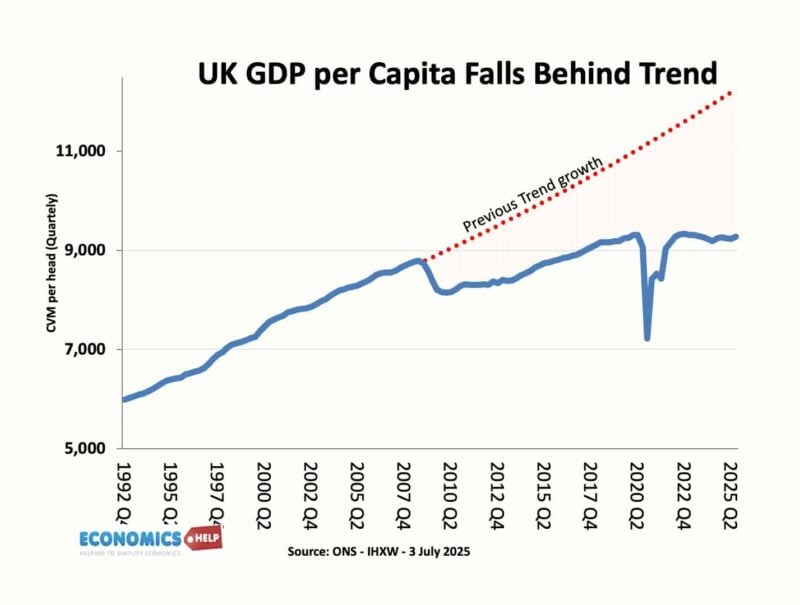
Truss and Kwarteng had the right idea that the UK economy needed to promote higher growth, but by focusing on tax cuts for high earners they did little to change underlying issues. But, the main problem with the budget was that it was badly timed with no awareness of the macroeconomic situation. The truth is that if they had introduced the budget in the 2010s, when inflation and interest rates were low, the market would have accepted it without the panic we saw in 2022. But, the first rule of a chancellor is to understand the situation of the economy.
Further Reading
Video
https://www.ft.com/content/7bad4783-e6d1-4776-8fa7-4188bbb9d86f
About The Author
