
In 2025, the global economy was a rollercoaster – and normally Erratic tariffs, rising public debt, higher bond yields and a cost-of-living squeeze would unsettle markets but the truth is stock markets loved it.

They surged to their highest ever levels. The most dangerous time in markets is when bad news stops mattering. In the US the S&P 500 index now pays 40 times cyclically adjusted earnings – a multiple very close to the dot com bubble. Another thing that is soaring – Gold all the uncertainty has people talking of $7,000, just a reminder gold can fall in value too.
But US Keeps Growing

Yet for all the talk of headwind and an imminent crash, the US economy keeps expanding. The April tariff liberation day shocked the world, but in retrospect, it just looks like a great buying opportunity. In early 2026, there is a sense of Groundhog Day, another wave of tariffs this time for US policy on Greenland. It caused Mark Carney, the Canadian PM to talk about the end of the globalised order. It will never be the same. You might ask, how many times can you predict a crash before it becomes like the boy crying wolf?
When Crashes Happen
But Economists at Harvard and the NBER have analysed the history of financial crisis and found that crisis are substantially predictable. There are two important factors. Crashes don’t start with panic. They start with complacency. The more bullish the forecasts are, the higher the crash risk. The other warning sign of a bubble is when credit and asset prices grow rapidly in the same sector. i.e. assets soaring based on growing debt. Here evidence is mixed. Firstly, corporate profit has soared, and the big tech firms have low debt levels. However, it is worth pointing out that the boom in the stock market is very one-sided as profits rise, the wage share of the economy falls.

The top 1% of households are responsible for nearly 50% of all spending. This is a very uneven economy, reliant on the spending of the top 1%, but this year, the richest 1% will benefit even further from tax cuts, which largely favour the rich. The rich have never had it so good, but it means the economy is vulnerable to a crash that affects the wealthy. Whilst Wall Street may be pushing share values higher, the western world has record low levels of optimism. The average person is pessimistic about prospects like never before.
Warning Signs
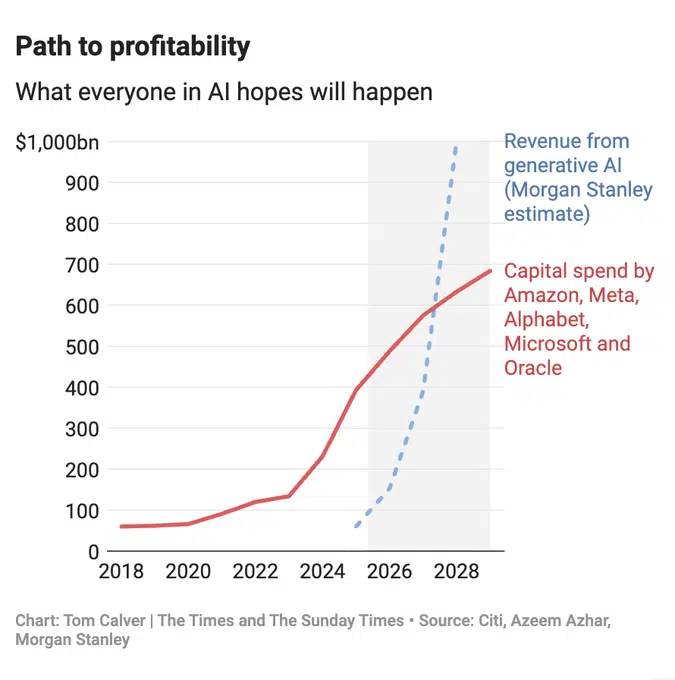
However, if you want to present a case for an inevitable crash, there is one pretty strong warning sign. Both US growth and the stock market boom is being driven by the AI boom, or would a better word be bubble. The heady valuations of companies are based on earnings soaring over the next five years. Yet, when you dig deeper, it’s hard to see AI being the magic bullet that optimists crave. A survey by PWc found only 12% of CEO’s had managed to use AI to increase revenue and reduce costs. 42% had found no change. Will AI tools be able to command the huge growth in revenue, that current predictions claim will happen?
Warnings
Michael Burry, who predicted last crash of 2008, says of open AI’s $500bn valuation that it is “the next Netscape, doomed and haemorrhaging cash.” traffic fell in November of 2025 as Google Gemini sweeps up market share. Burry has been wrong many times since 2008 — but his warning reflects a broader concern about cash burn and competitive pressure. The sober-minded Bank of England warned last month that AI infrastructure spending is so great, it could top $5tn, that over 50% is now been funded by debt. This creates a growing risk of debt default and systemic risk, should the meteoric growth be checked.
Yet, for all the headwinds facing the global economy, the US economy in particular remains resilient. Goldman Sachs recently updated their growth forecasts for the US to 2.8%, and this resilience explains part of the continued strength of US bonds and the US stock market. This is despite the tariff shock of 2025, which some claimed would derail the global economy. But Tariffs are not the kind of things that trigger global recessions. They are an inconvenience, push up some prices and reduce investment. In 2025, headline tariffs soared, but the actual tariff rate faced by companies takes time to adjust. This has slowly been building, but also, some of the more extravagant tariff announcements were later moderated.
New Tariffs
However, just as it appeared the tariffs story was slowing down. A new wave of US tariffs over Europe’s position on Greenland pushes the global economy into unchartered territory.
Markets are not necessarily rational in pricing in fundamental change or global chaos. Just this week a Danish pension fund announced it was withdrawing all its holdings of US debt because of “poor US government finances” It is true the US deficit is growing but you don’t have to be Sherlock Holmes to work out the move may be more to do with Trump’s desire for Greenland rather than long-term fiscal projections. It is worth pointing out that Europe’s holding of US bonds is in the region of $2-3 trillion. A change in capital flows between Europe and the US is the kind of thing that can upset market sentiment. The US bond market has been pretty relaxed in recent months, with US bond yields remaining relatively low. If you keep shorting US bonds on the expectation of a bond crisis, you would have lost a lot of money. Nevertheless, it doesn’t alter the fact that there are some bubble-like statistics. With an ageing population, US debt will soar, unless there is an unexpected new political consensus.
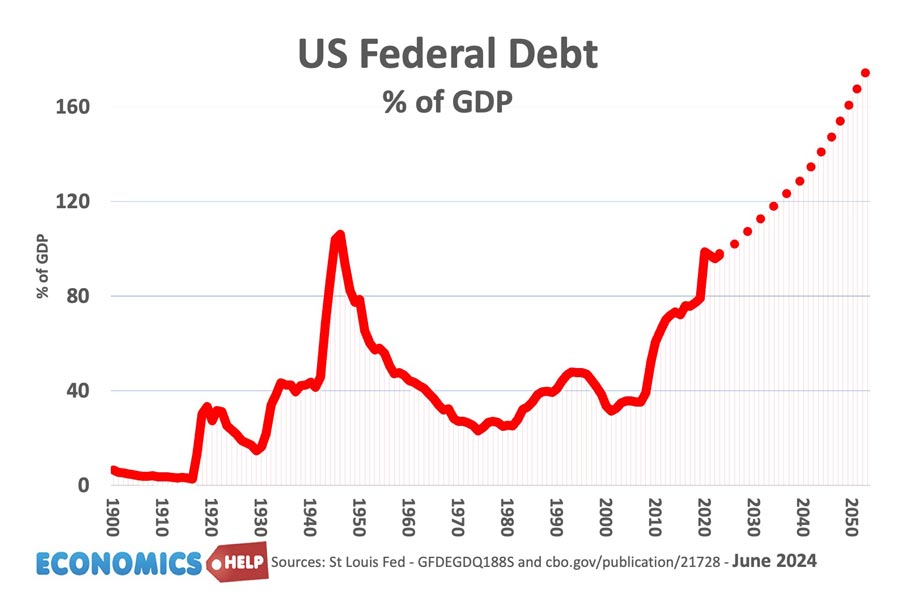
Old certainties about stable, low inflation are being challenged in a new way. President Trump has made clear his desire for lower interest rates, and when combined with large tax cuts and inflationary tariffs, this increases the risk of a sustained rise in inflation. The experience of 2022 showed how quickly inflation can return. For all their flaws, independent central banks have a far better record of keeping inflation low than politicians. In Turkey, President Erdoğan’s pressure to cut rates led to a collapse in the lira and surging inflation. The US is not Turkey, but history suggests that political interference in central banking raises inflation risks

And it’s not just tech industries where we see bubble behaviour. House prices to income ratios are greater than just before the credit bubble. The share of first-time buyers in the US has been falling, as households priced out.
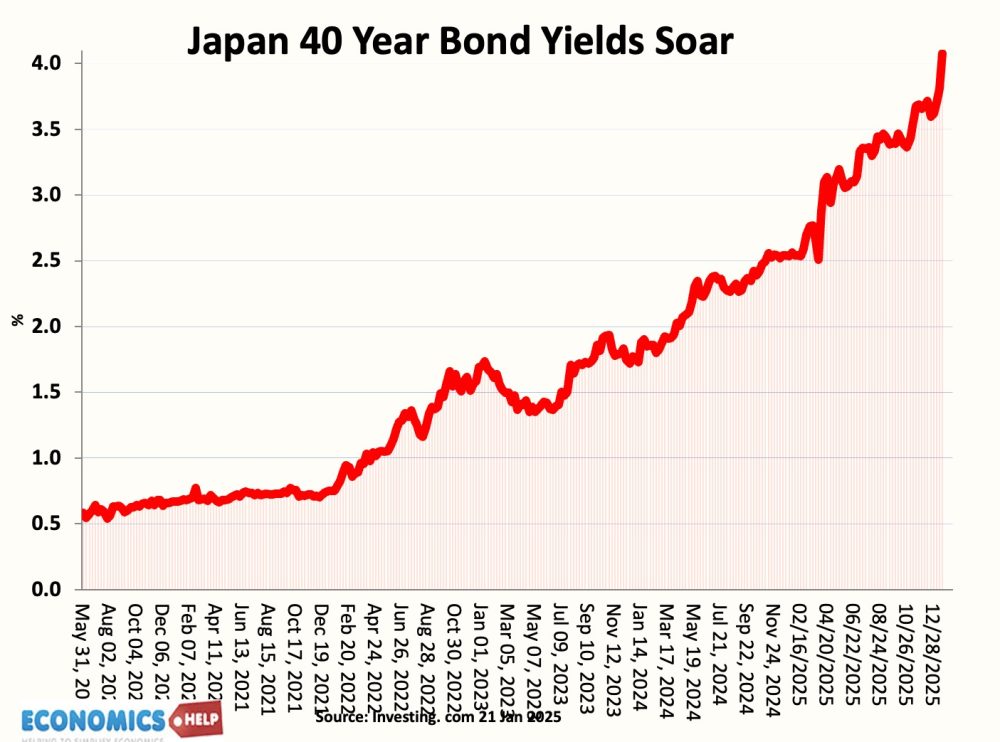
But, the one market that is really unwinding in real time is the Japanese bond market. The most indebted advanced economy is seeing bond yields soar, which is big deal which
On the one hand, US growth is strong and resilient. AI is delivering some real benefits to the economy and for all the talk of uncertainty, the private sector remains fairly dynamic. However, the economy is increasingly unbalanced toward tech and wealthy consumers. The stock market as a share of GDP has grown to record levels and US households are more exposed to the stock market than ever before. None of this means a crash is inevitable. Markets can stay expensive longer than expected — until they can’t. If I were heavily in US tech stocks, I would consider re-weighting to UK shares. Why, because UK shares are heavily undervalued after years of underperformance and have little exposure to the tech boom. This is not a recommendation but a reminder that valuation still matters.
Related posts
Video
Sources:
- https://www.goldmansachs.com/insights/articles/the-global-economy-forecast-to-post-sturdy-growth-in-2026
- https://www.bbc.co.uk/news/articles/cx2e0y3913jo
- https://www.economist.com/interactive/graphic-detail/2025/11/05/how-much-wealth-would-be-destroyed-by-an-ai-stockmarket-crash
- https://www.economist.com/finance-and-economics/2025/11/02/why-wall-street-wont-see-the-next-crash-coming
- https://moneyweek.com/economy/us-economy/investors-should-brace-for-trumps-great-inflation
- https://www.npr.org/sections/planet-money/2026/01/06/g-s1-104281/attempting-to-predict-the-economy-in-2026
- https://www.economist.com/finance-and-economics/2026/01/14/its-not-just-the-fed-politics-looms-over-central-banks-everywhere
About The Author

Most major crashes happen when several risks hit at once — slowing growth, high valuations, debt stress, geopolitical shocks, or unexpected policy changes.