
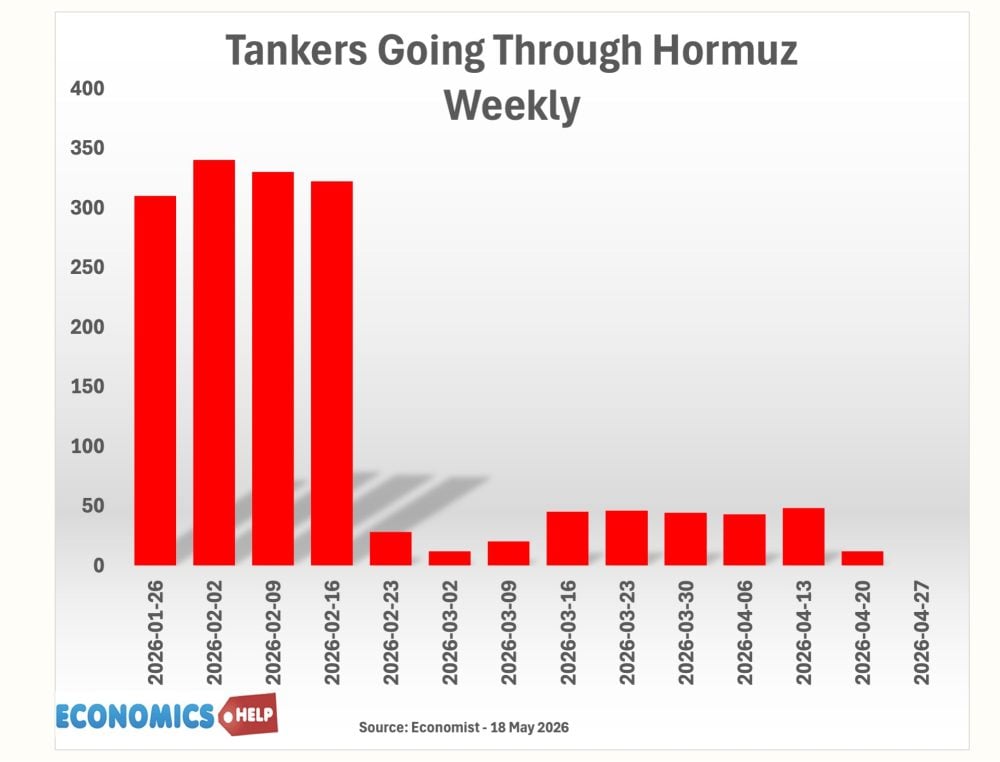
On 28 February, oil stopped flowing through the Strait of Hormuz. The unthinkable was actually happening. Oil prices rose, and gasoline prices duly followed. US gas prices are now returning to 2022 levels.

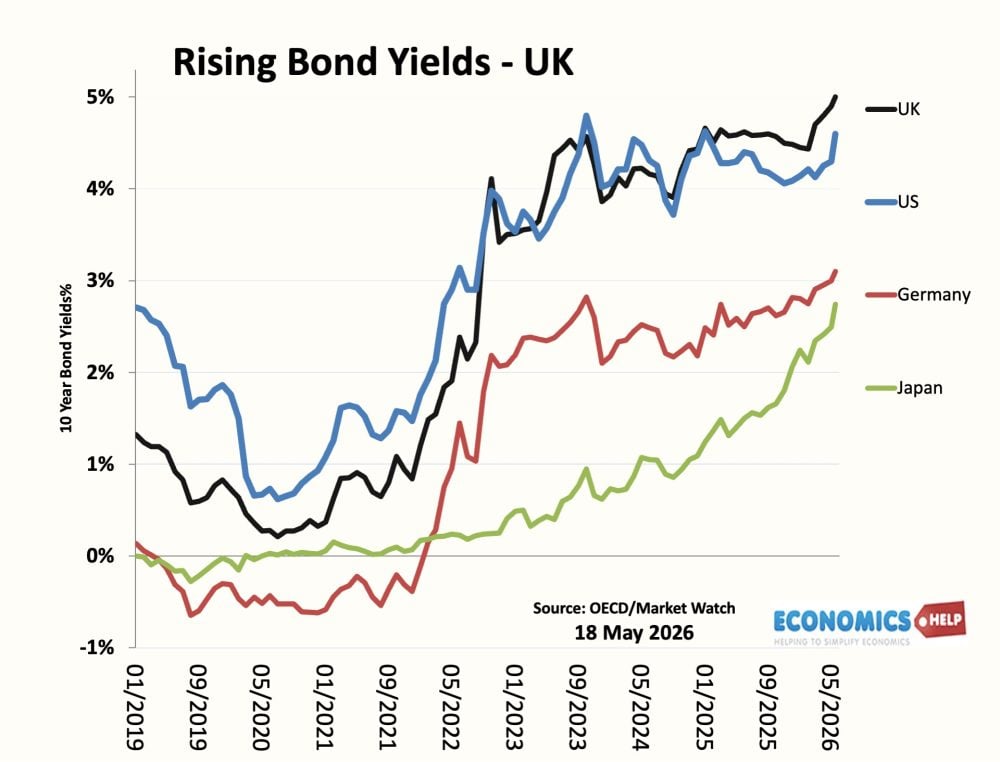
When oil prices rise, so does inflation. Bond markets are rattled; across the world, yields are soaring and bond prices falling.
US Treasury Secretary Scott Bessent recently said this is just transitory, a temporary period of high prices. But, for all the bullish tones of the US administration, you can’t talk your way out of physical shortages. The world economy runs on energy.

The two speed economy – consumer sentiment dropping. Dow Jones surging.
When energy supply is cut, what will happen to output? A central bank might be able to print money, but you can’t print oil. So what will happen next?
In Japan, popular snacks have been printed in black and white because there’s a shortage of naphtha, a derivative of oil. But in Africa, it’s more serious: farmers can’t afford to plant crops. In Asia, there are queues at petrol pumps. In the US, consumer sentiment has plunged to the lowest level on record, though confusingly, at the same time, stocks soar to record levels. Is it a crash waiting to happen?
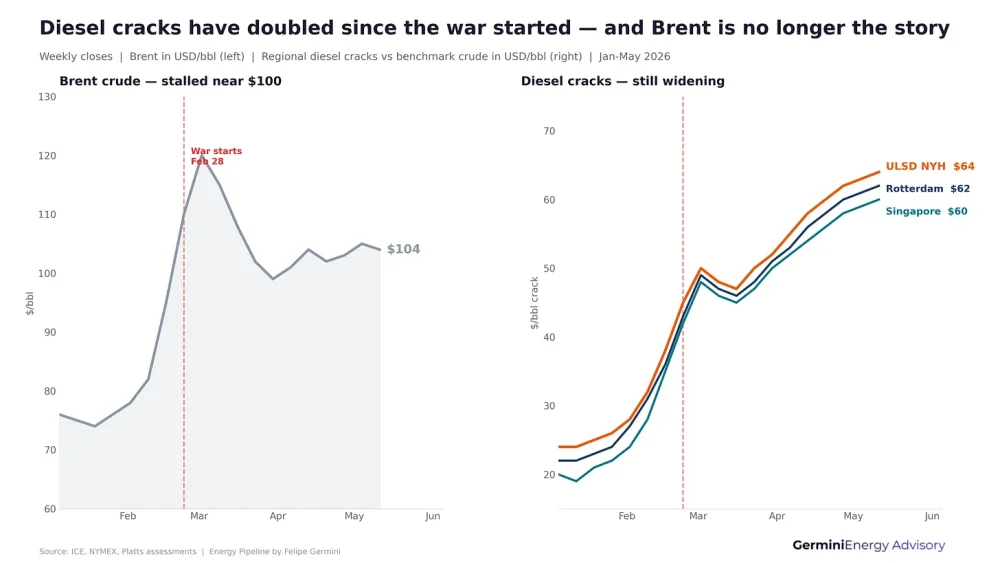
But whilst consumers fret about cancelled flights and rising petrol prices, the big story is the shortage of diesel. Diesel has risen much faster than crude; it now trades at $64 more than a barrel of crude oil. But it is set to get worse. In recent years, there has been a reduction in diesel refining capacity, especially in the UK and Europe. As diesel prices soar, so does the price of every good that is transported. When petrol prices rise, we may cut back on travel, but when diesel rises, firms have to pay. There is no alternative if you want to get goods to shops.
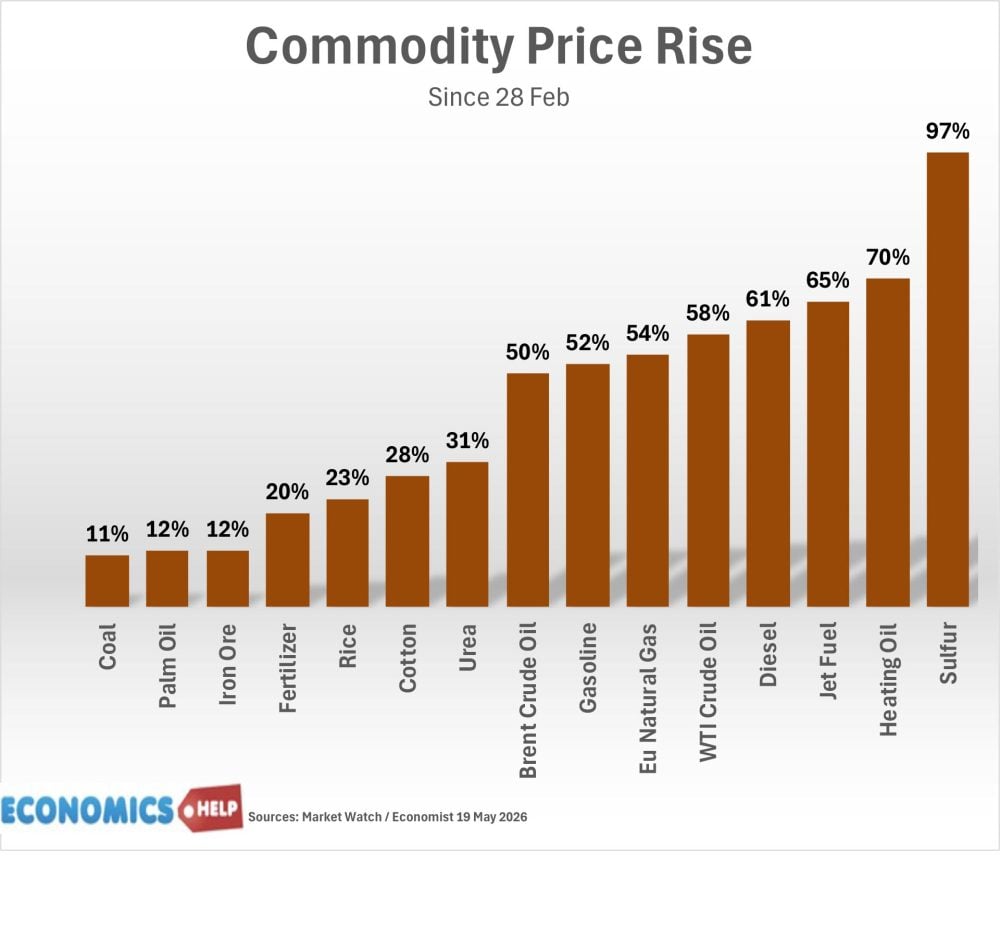
The Gulf crisis has also caused a range of price rises from coal to jet fuel and sulphur. Rising diesel and fertiliser prices will cause a jump in food inflation in the coming 12 months, with food inflation set to reach 50% since 2021. When food prices rise, we don’t cut back on food but may cut back on non-essentials like going out and subscriptions to ChatGPT.
Future Inflation
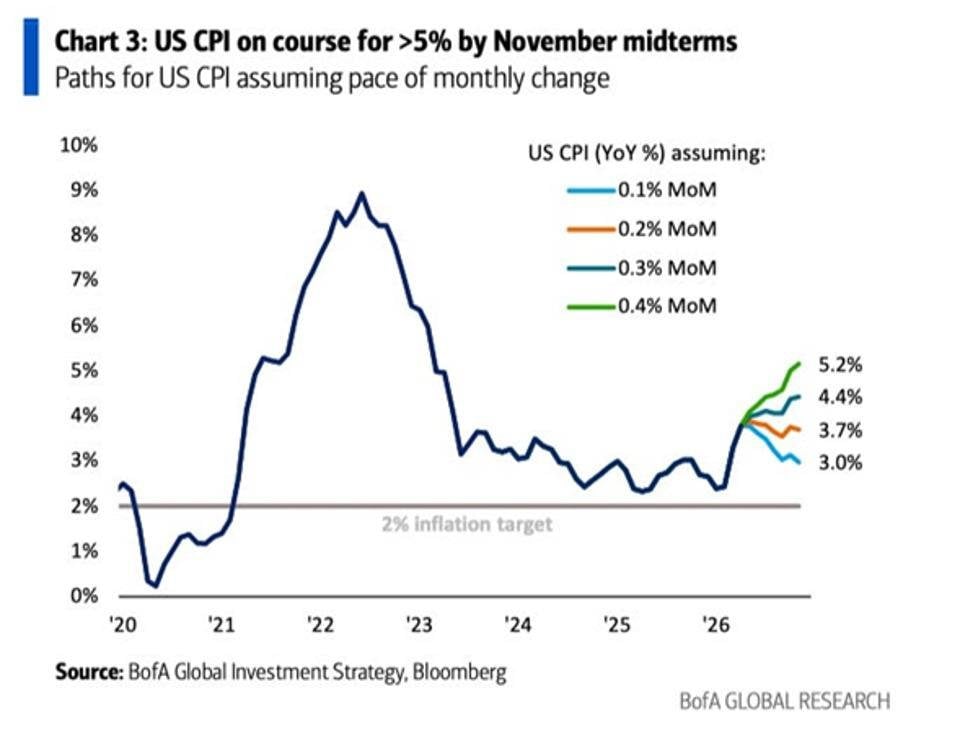
With commodities and diesel prices rising, it is baked into future inflation. It has already started with rising producer prices. In the US, producer prices have already jumped 6%; in the UK, 5.4%. This will only increase and directly lead to higher consumer prices. US headline inflation jumped to 3.8%, but there is more to come, with expectations of 5% by the autumn. And when there is high inflation, firms may take the opportunity to pass on bigger price rises, like 2022. When prices are rising, it’s a chance to increase profit margins.
Interest rates to compound problem
So what happens next when inflation and oil prices soar? As a result of rising inflation, central banks usually respond by increasing interest rates — the traditional mechanism for reducing inflation. This means households face multiple costs: higher prices, but without a rise in wages; higher interest rates, rising unemployment and slower growth. In the UK, the labour market is weakening. Unemployment is increasing, yet we could see a central bank raising interest rates because it is concerned about inflation. It’s an impossible trade-off.
Governments may try to prevent the pain through price controls. India is setting a cap on prices. Western governments talk of freezing taxes. But the problem is this is not a case of prices rising due to speculation like 2022. Prices are rising because of physical shortages. You can’t solve a shortage with a maximum price. In fact, you bring the crisis closer. If the supply isn’t there, you either let prices soar or you have to find another way to ration demand, like driving on alternate days?
Indian PM – please consume less
India imports 90% of crude oil and 50% of gas, so PM Narendra Modi has gone on air asking consumers to reduce travel, avoid buying gold and work from home. Echoes of Covid. So far, India is not letting markets set the price, but can you manage a crisis by asking people to reduce their demand?
In the West, governments feel constrained in their response. The renewed inflation surge has caused bond yields to rise across the world. When inflation goes up, investors want higher bond yields to compensate. Governments already heavily in debt now face soaring borrowing costs. The Resolution Foundation points out the crisis will cause borrowing to be over £12 billion a year more. That is worth 2p on the basic rate of income tax. The US has seen a surge in the budget deficit before the crisis. The crisis will slow down tax revenues, but there are additional calls for cutting the federal gas tax. In 2022, the UK government spent £20 billion on energy bailouts, but today there is less appetite for large-scale bailouts. The bond market hangs like the Sword of Damocles over governments, their job made harder by central banks reversing quantitative easing, selling bonds and pushing up bond yields even more than normal.
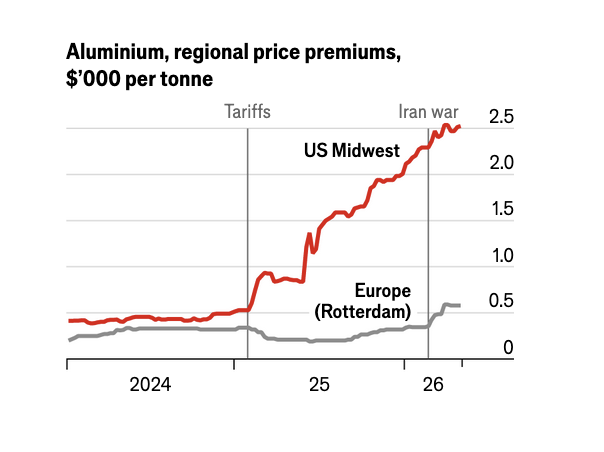
Rising commodity prices are not the only shock being absorbed. Higher tariffs might have been shrugged off on their own, but now they are yet another cost. US car firms face 50% tariffs on the import of aluminium. But the oil crisis has led to shortages and a rise in the regional price of aluminium. It is a perfect storm for US car firms. Higher oil prices will reduce demand, and higher input prices increase costs.
Gas Shortages
So far, gas prices have remained low. But industrial experts state that gas prices don’t reflect the coming shortages. Qatar is the world’s leading exporter of LNG. It played a crucial role in filling gaps caused by disruptions to Russia’s supply to Europe. But LNG exports from Qatar have come to a halt. If gas prices rise, it will cause a knock-on effect, particularly for countries like the UK, which rely on gas to set the price of electricity.
Gulf Countries
Some countries are more vulnerable. The crisis is a disaster for the Gulf economies, which have seen not just a fall in energy exports but also a fall in tourist numbers and a threat to their post-fossil-fuel economy, based on stability and high-end luxury apartments.
Net Oil Importers
Net importers of gas and oil are likely to face a squeeze. Unfortunately, the UK is particularly vulnerable to the oil shock. This is for a few reasons. Firstly, as well as crashing the bond market, Liz Truss managed to sell off gas storage in her short premiership. Whilst many countries have significant oil inventories, the UK has sold off both gas storage and also given up crucial diesel refineries. The result is that the UK is heavily reliant on imports of crucial products like diesel. It is diesel which will be the first to face critical shortages and rapid rises in price. Another problem for the UK economy is its reliance on gas to set electricity prices. As gas prices rise, so does electricity, but it was already pretty high to start with.
So far, global stock markets have been pretty resilient, shaking off doom merchants. This is largely due to a rise in corporate profits and the explosion of AI stocks. However, the concern is that financial markets still behave as though this is temporary. But rising inflation, higher interest rates and rising bond yields could change all that. If consumers cut back on spending, business profits will fall. One thing is for sure — Wall Street gives a misleading indicator of the underlying economy.
Recession Risk
But haven’t we been here before — predictions of crashes that fail to materialise? Obviously, if the Strait of Hormuz were to reopen, then these worst-case scenarios would not happen. Energy prices would remain elevated for a considerable time as countries tried to restock their inventories. But prices would peak and then come back down. Unlike 2022, there is much less underlying inflation. Growth is weaker, and central banks are reversing QE rather than increasing the money supply. The inflation shock shouldn’t be as bad as 2022.
For all the frequent predictions of recession, the US economy has been resilient. Higher productivity growth has dragged the economy forward, even as many consumers say they can’t afford the cost of living. But how sustainable is this two-speed economy of soaring shares and plummeting consumer sentiment?
A more positive response to the crisis is efforts to reduce reliance on fossil fuel imports. Households are already voting with their wallets, increasing purchases of solar panels and electric cars. For countries that can reduce their reliance on gas for electricity, there is strong scope for lower electricity prices and more energy security. But this takes time. Modern economies assume energy is always available. Hormuz is the reminder that it isn’t.
Sources
https://substack.com/home/post/p-197384039
https://profstevekeen.substack.com/p/putting-energy-back-into-economics
https://www.economist.com/interactive/graphic-detail/2026/05/11/mapping-the-iran-wars-trade-disruption
https://www.theguardian.com/business/live/2026/may/19/uk-wage-growth-unemployment-rate-markets-business-live-news
https://www.theguardian.com/business/2021/sep/24/how-uk-energy-policies-have-left-britain-exposed-to-winter-gas-price-hikes
https://www.moneyweb.co.za/news/africa/gulf-shipping-standoff-hits-worlds-most-vulnerable-farmers/
https://www.theguardian.com/world/2026/may/19/japan-naphtha-shortage-explainer-iran-crisis
About The Author
