
A bond is a general term for any debt security. Gilt is the term used for a UK government bond. Treasury is the term for a US government bond.

Bond
- A bond is the general term for a debt instrument.
- It is issued by governments, companies, or agencies to borrow money.
- So “bond” is the broad category.
Gilt
- A gilt is simply the UK government’s version of a bond.
- Gilts are issued by HM Treasury to fund government borrowing.
- They are considered very safe, because the UK government is unlikely to default.
- So all gilts are bonds, but specifically British government bonds.
Treasury / Treasury Bond
“Treasury” refers to US government bonds issued by the U.S. Treasury.
There are three main types:
- Treasury bills (T-bills): short-term, under 1 year
- Treasury notes (T-notes): 2–10 years
- Treasury bonds (T-bonds): 20–30 years
So Treasuries are American government bonds.
A security
A security is any tradable financial asset. It is the broad umbrella term that includes: bonds, equities and derivatives
UK Gilt Market
UK bonds are called gilts because the original paper records had a golden ‘gilt’ edge. They were first issued in 1694 to help fund a war with France. Initially, they were called stock, but they became known as gilts because of their gilt edges.
Gilt-edge security refers to the idea that the investment is ultra safe. For example, the UK has never defaulted on its gilt repayments (though sometimes inflation has eroded their value.

This is an example of who owns UK gilts
Bond Yields
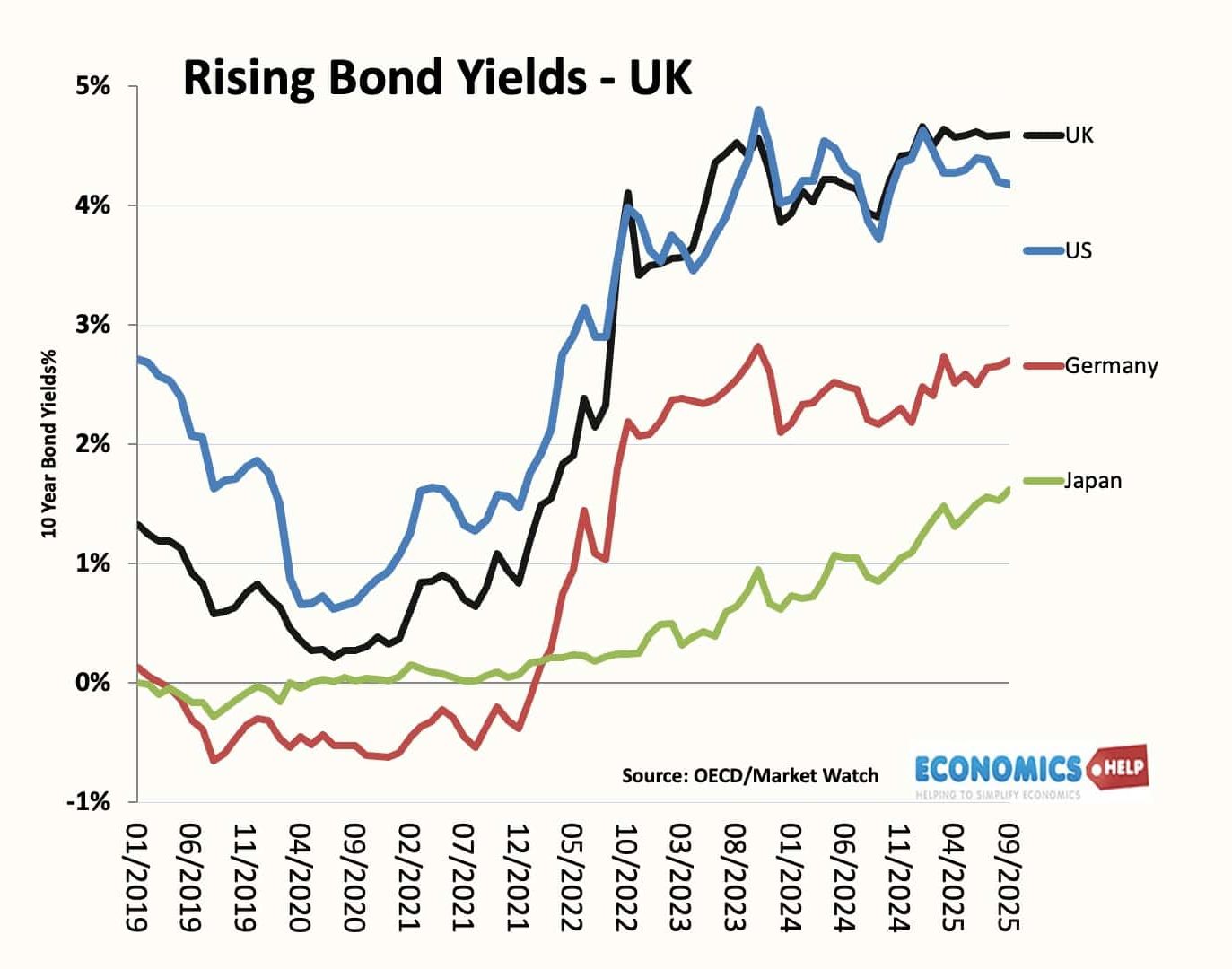
This is the effective return on buying a bond in different countries. In this example, the UK has the highest bond yield
About The Author
