A vibe recession describes a situation where people feel like the economy is in recession even though official data (GDP growth, employment) does not show a clear downturn. Economic indicators may suggest positive economic growth and rising GDP, but public sentiment is pessimistic.
Vibe Recession

A vibe recession occurs when people feel the economy is in recession, even though GDP stats do not show one.
Why it happens
High inflation
Prices rise faster than wages, reducing real purchasing power.
Rising housing costs
Higher rents and mortgage rates dominate household budgets.
Loss aversion
People notice price rises more than pay rises.
Media and social narratives
Constant focus on crises reinforces pessimism.
Why it matters
Lower consumer confidence
Households cut spending even if jobs remain secure.
Self-fulfilling slowdown
Weaker demand can reduce growth over time.
Policy credibility problem
Governments struggle to convince voters the economy is improving.
Politics and elections
Economic pessimism influences voting behaviour.
A vibe recession shows that living standards and real incomes often matter more for public confidence than headline GDP growth. But, surveys on sentiment shouldn’t be given too much importance.
Viberecession was coined by Kyla Scanlon for periods in which people feel lousy about an economy but according to conventional measures seems satsifactory.
Reasons for Vibrecessions

This graph shows the disconnect between median real wags and real GDP in the US. US GDP is rising faster than median wages because of increased inequality, and increased corporate profitability.
The idea of a viberecession comes from the gap between macro statistics and lived experience. For example, GDP may be growing, yet households feel worse off because prices have risen faster than wages, mortgages and rents are higher, and public services feel stretched. People judge the economy by their real disposable income, not headline growth figures.

A key driver of a vibe recession is inflation without recession. Even if growth is positive, high inflation erodes purchasing power, making consumers feel poorer. Loss aversion also matters: people notice price rises more than pay rises, so sentiment deteriorates even when real incomes stabilise.
In a study on “Why people hate inflation” studies found that non-economists blamed inflation on government and discounted fact real wages may actually be rising. ALso people view inflation differently to economists. For example, in 2024, the inflation rate had fallen, but the way people view prices is not by looking at inflation rate, but comparing prices to say three years ago.

This shows price level in UK, even though inflation rate fell in 2024, the price level increase remains.
Negative coverage Media coverage and social comparison amplify the effect. Frequent reporting on “cost-of-living crises”, housing unaffordability, or declining living standards can reinforce negative expectations, leading consumers to cut spending. This can become self-fulfilling, as weaker confidence reduces demand and slows growth. The Youtube algorithm rewards negative content, (I know I have my own economics channel). The most successful video title is “Things are Bad – but they will get worse)

Consumer sentiment fell to reord level in 2025, despite economic statistics being not too bad.

This is US misery index (inflation rate + unemployment rate). In 2025 it was low by historical standards, but consumer sentiment definitely shows a ‘vibrecession’
Importance of Vibe Recessions
Vibe recession matters because confidence influences economic behaviour. Governments and central banks may struggle to convince households the economy is improving if everyday costs remain high. Even if central banks cut interest rates, households may be reluctant to spend because they are pessimistic about the future.

The rise in savings ratio is a classic sign that households are pessimistic about the economic future.
Housing and viberecessions
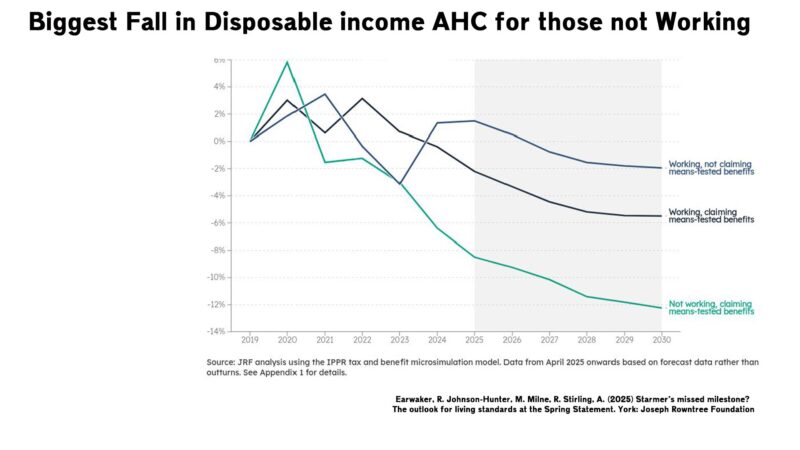
GDP often fails to fully take into account housing costs. This shows that after we take into account housing costs, effective living standards are actually falling. So even if GDP grows, incomes will be worse off.
GDP and GDP per capita
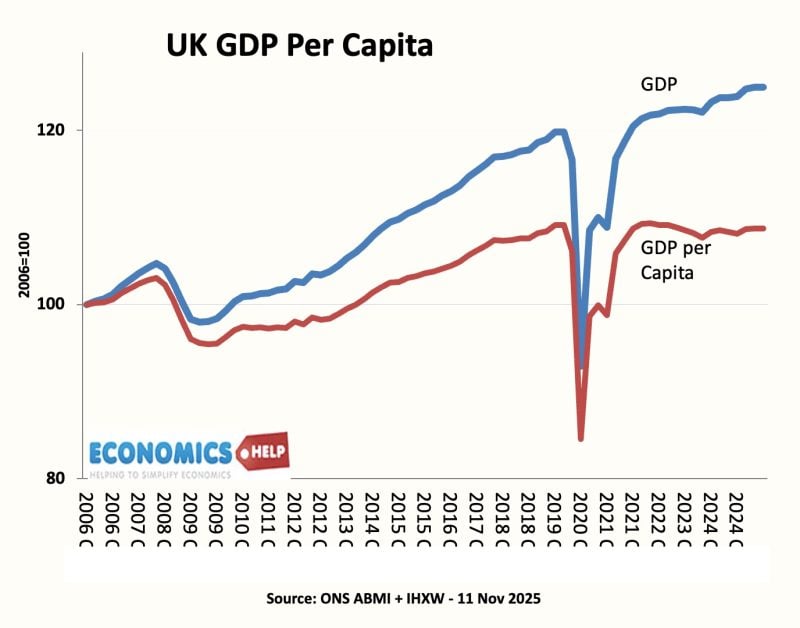
Another factor is that recession means a fall in real GDP. But, this ignores the effect of population growth. For example, in the UK real GDP has increased 25% since 2006, but if we take into account population growth, real GDP per capita has only increased 8%. But, GDP per capita is a much better guide to how people will feel.
Can recessions become self-fulfilling?
There is an argument an economy can talk itself into recession. If negative confidence causes fall in confidence and investment. Though, I’d be reluctant to place too much evidence on this theory, business and households will be influenced by many factors, if real incomes do rise, it will cause some increase in spending.
Evaluation
In evaluation it is worth bearing in mind, talk of vibe recessions may be over-stated. Negative sentiment may reflect wider outlook on life, such as the political climate, and the negative talk is exagerrated by the media. Sentiment is important, but often people report negative sentiment about the economy, but expect their own personal situation to improve. This is a disconnect caused by media influences.
About The Author
