
Fiscal illusion definition. This is when voters underestimate the true cost of government spending or taxation because of ignorance about the way the tax system works. This can lead voters to support higher public spending or lower taxes than they would if costs were clear.
Fiscal Drag as an example of Fiscal illusion
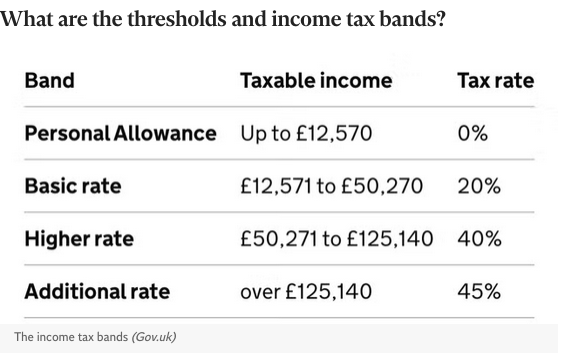
For example, suppose the government keep income tax thresholds constant, e.g. basic rate of income tax of 20% on income above £12,571. Then, assuming there is inflation and wage inflation, over time, more workers will enter the bracket of paying the marginal tax rate. Also, more workers will start to pay the higher rate of 40% as inflation lifts them into the higher rate tax bracket.
In 2025, relatively high UK inflation enabled UK government to collect more taxes through this fiscal drag effect.
UK Tax Burden

This shows the rise in the UK tax burden as a share of GDP. Interestingly the headline basic rate of income tax 20% has stayed constant since 2008-09. However, despite basic rate of income tax staying constant, other forms of taxes have increased, such as National Insurance contributions, insurance tax, fiscal drag from income tax.
For example, with a basic rate of income tax of 20%. Many workers think: “I pay 20% tax.”
But a typical UK employee also pays:
- Employee National Insurance: 12% (on most earnings)
- Employer National Insurance: 13.8% (not shown on payslip as a tax paid by the worker)
Though it is complicated by fact it is only 20% on earnings above threshold. (how marginal tax rates work)
Debt – delayed tax
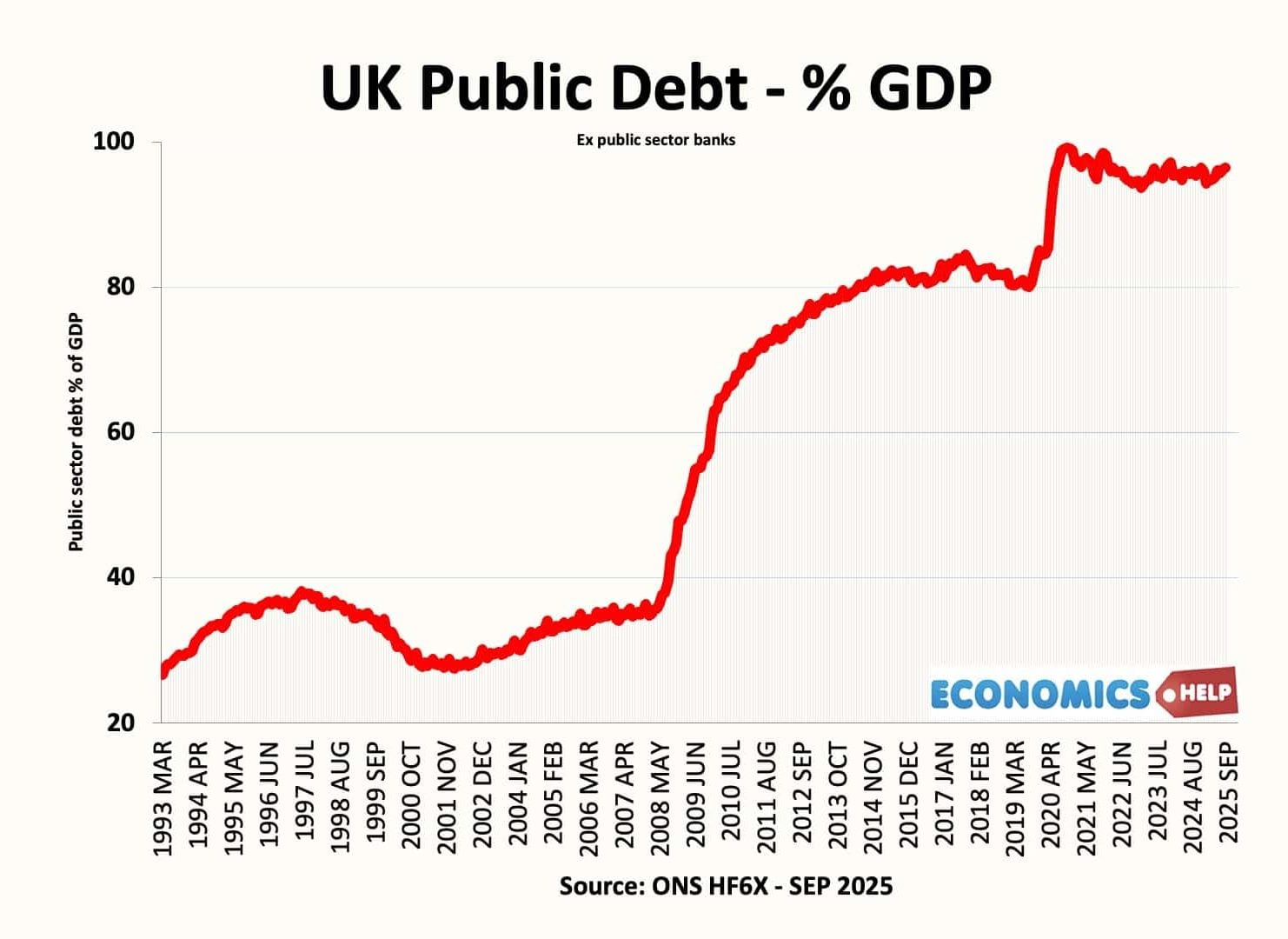 As well as higher tax share of GDP, in this period, the UK also saw a rise in public sector debt (and a rise in debt interest payments). You could argue that higher debt burdens effectively puts pressure for higher taxes in the future.
Taxation by Stealth
Public Choice theorists often argue that more needs to be done to limit the government’s ability to collect higher tax revenues, and government spending has a tendency to rise, crowding out the more efficient private sector.
Tax avoidance
On the other hand, very high-income earners are often very skilled in avoiding tax through exploiting tax loopholes such as offshore accounts.
Also, there is often powerful political opposition to taxes even when they can increase economic efficiency. (e.g. tax on petrol, carbon.
Related
About The Author
