
Definition of Consumer Surplus
- This is the difference between what the consumer pays and what he would have been willing to pay.
- For example: If you would be willing to pay £50 for a ticket to see the F. A. Cup final, but you can buy a ticket for £40. In this case, your consumer surplus is £10.
Definition of producer surplus
- This is the difference between the price a firm receives and the price it would be willing to sell it at.
- If a firm would sell a good at £4, but the market price is £7, the producer surplus is £3.
Diagram of Consumer Surplus
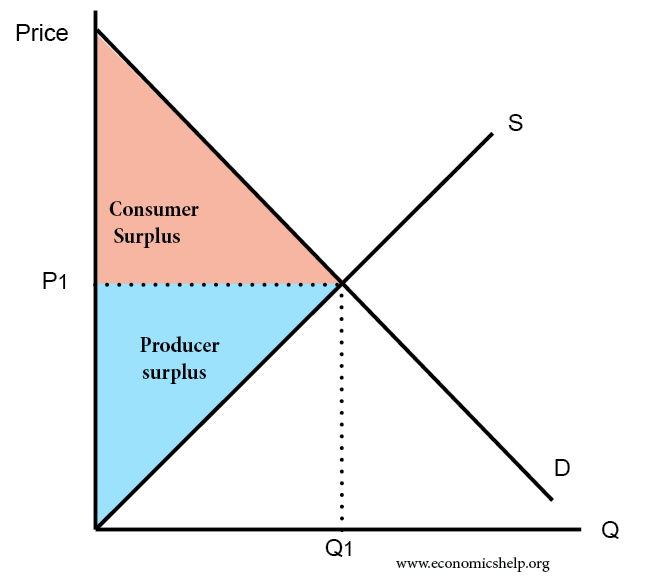
How elasticity of demand affects consumer surplus
If demand is price inelastic, then there is a bigger gap between the price consumers are willing to pay and the price they actually pay.
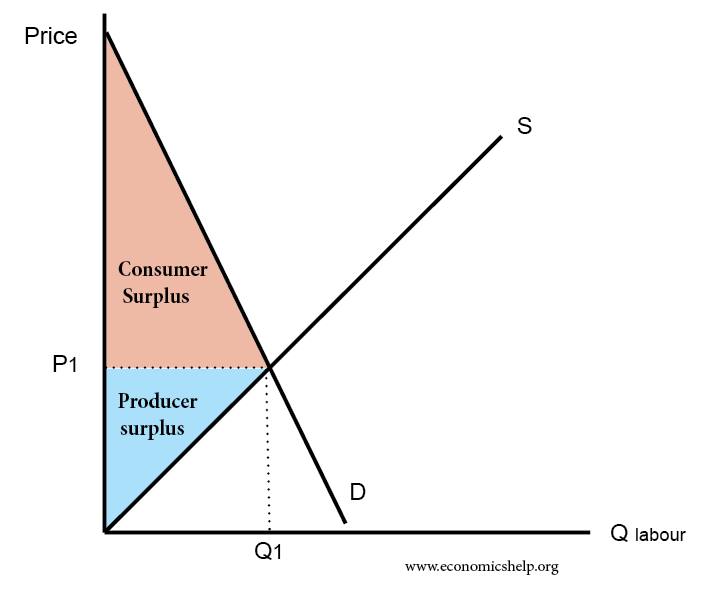
The demand curve shows the maximum price that a consumer would have paid. Consumer surplus is the area between the demand curve and the market price.
If the demand curve is inelastic, consumer surplus is likely to be greater
- Monopolies are able to reduce consumer surplus by setting higher prices
- Price Discrimination is an attempt to extract consumer surplus by setting.
Consumer surplus and marginal utility theory
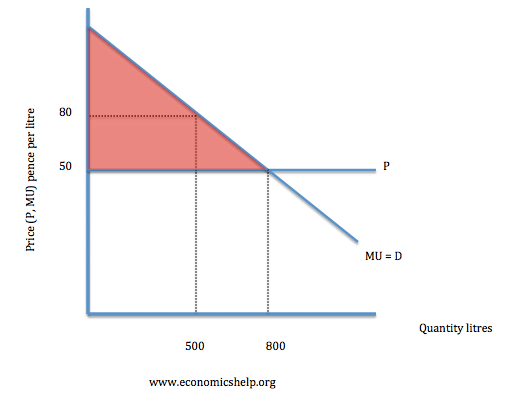
The demand curve illustrates the marginal utility a consumer gets from consuming a product. At quantity 500 litres, the marginal utility is £0.80 – which indicates the marginal utility is 80p. However, with a price of 50p, the consumer surplus is the difference.
Producer Surplus
- This is the difference between the price a firm receives and the price it would be willing to sell it at.
- Therefore it is the difference between the supply curve and the market price
How free trade affects consumer and producer surplus
Free trade means a reduction in tariffs. It leads to lower prices for consumers and an increase in consumer surplus
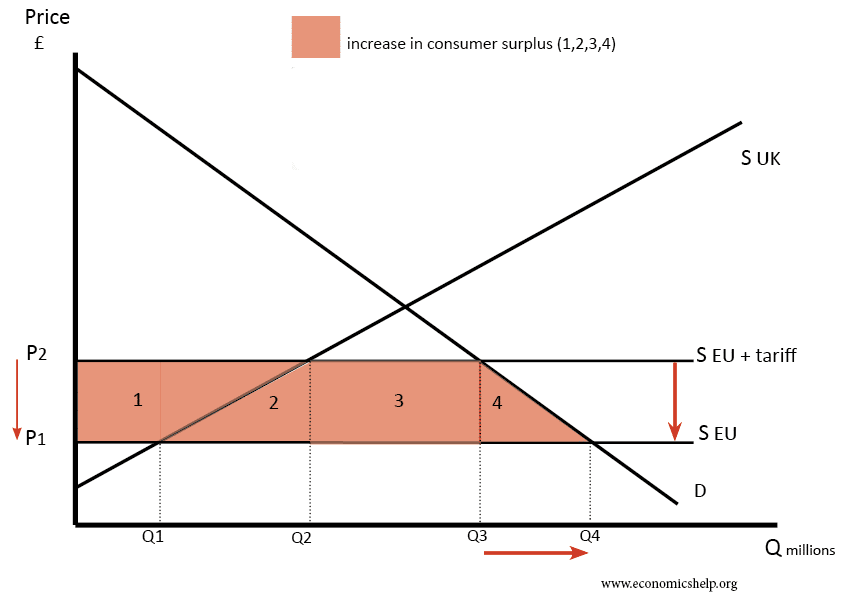
- If tariffs are cut, then we can import at S Eu (P1) – a lower price than P2.
- Imports increase from (Q3-Q2) to (Q4-Q1)
- However, domestic producers see a decline in producer surplus.
- WIth tariffs, we used to buy Q2 from domestic producers. But, now we only buy Q1 at price P1.
- So area 1 represents the decline in producer surplus.
Why Consumer Surplus Matters
1. Measures consumer welfare
Consumer surplus is a direct measure of how much benefit consumers gain from market transactions. A rise in consumer surplus means consumers are better off; a fall means they are worse off. This is why it is often used as a proxy for living standards, especially when looking at price changes in essentials such as energy, food, or housing.
2. Evaluating government intervention


- In the above diagram a tax causes a significant fall in consumer surplus.
- Consumer surplus was P1, A, C
- After Tax consumer surplus is pink area.
- The blue area shows lost consumer surplus
- Indirect taxes (e.g. VAT, fuel duty): raise prices → reduce consumer surplus
- Subsidies: lower prices → increase consumer surplus
- Price controls: price ceilings may raise consumer surplus for those who can buy, but shortages reduce it overall
- This helps policymakers weigh who gains and who loses from intervention.

A maximum price will see consumer surplus change
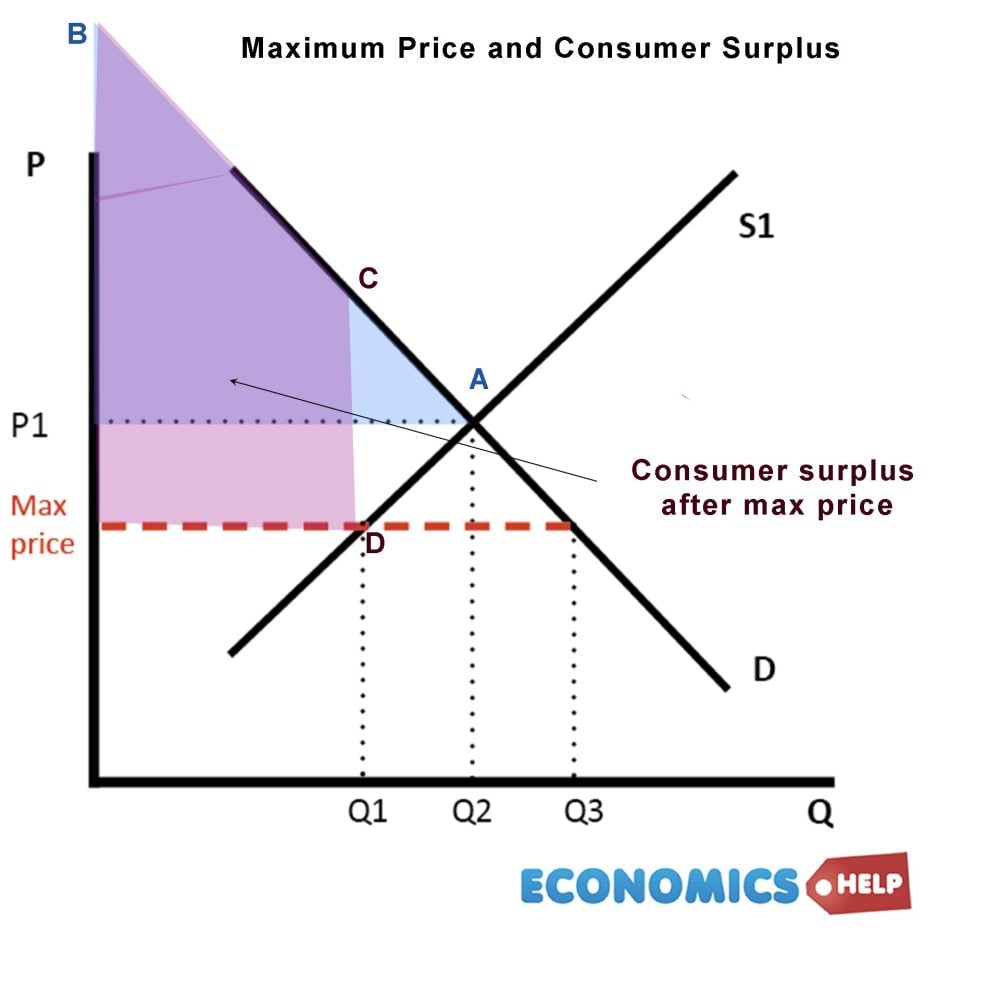
- Initially consumer surplus was A, B, P1
- But, after Max Price, price falls to Max Price, and quantity falls to Q1.
- The new consumer surplus is the pink shaded area (Max Price, D, C, B)
- Sopme consumers gain more consumer surplus because price is lower.
- Some consumers lose consumer surplus because they no longer get to buy good at all.
Related
About The Author

Real facts
EH – MAZING website