
Definition of devaluation and depreciation
- A devaluation occurs when a country makes a conscious decision to lower its exchange rate in a fixed or semi-fixed exchange rate.
- A depreciation is when there is a fall in the value of a currency in a floating exchange rate.
In general, everyday use, devaluation and depreciation are often used interchangeably. They both have the same effect – a fall in the value of the currency which makes imports more expensive, and exports more competitive.
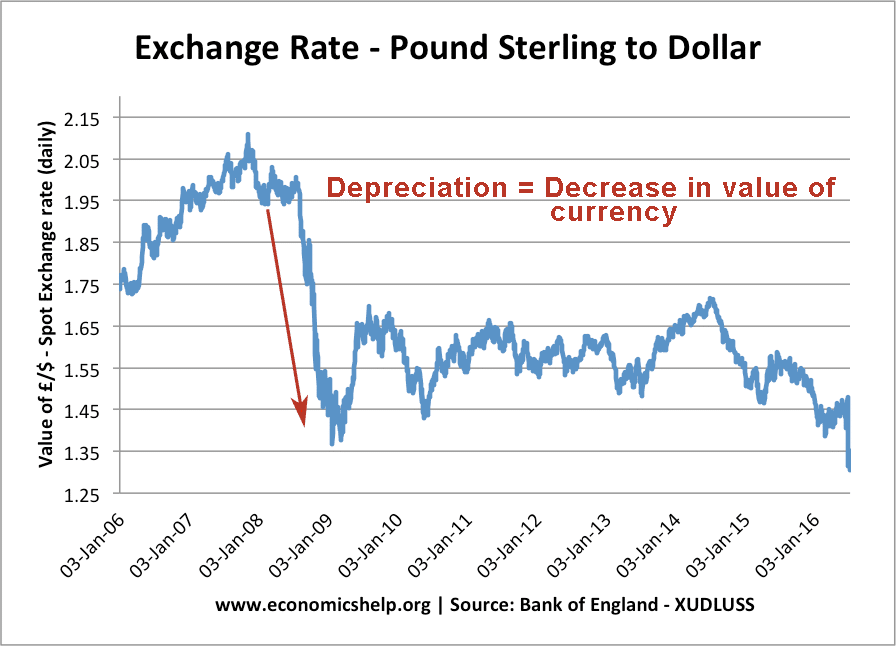
In 2008, the Pound Sterling fell in value by 30%. The correct term is a depreciation because the Pound Sterling was a floating currency. (no fixed exchange rate.)
- For A-Level economics, it is not absolutely essential to distinguish between the two, but there is a distinct technical difference and using them correctly is good practice.
- Essentially devaluation is changing the value of a currency in a fixed exchange rate. A depreciation is reducing the value in a floating exchange rate.
Definition of Devaluation
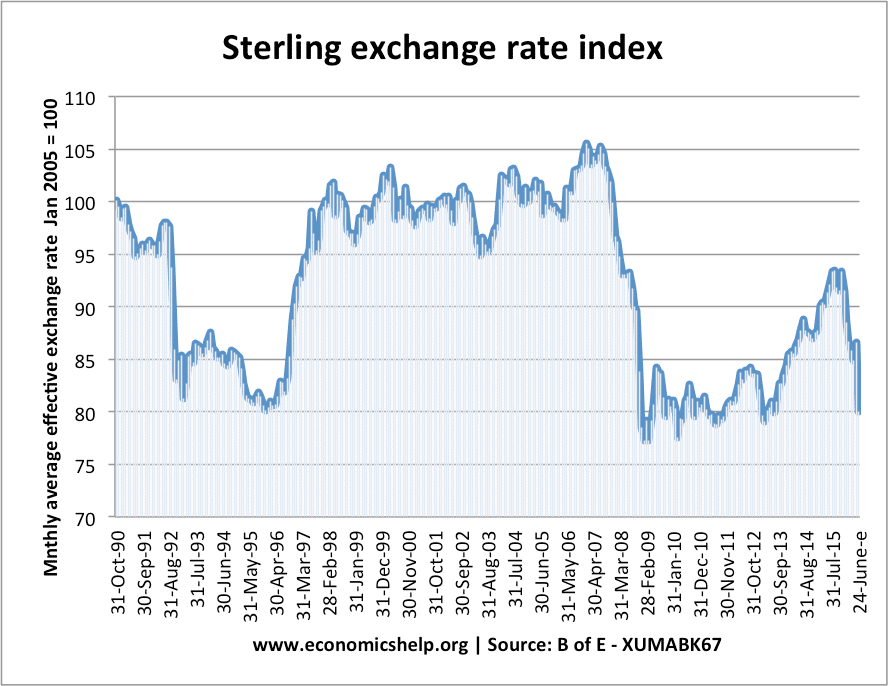
A devaluation is when a country makes a conscious decision to lower its exchange rate in a fixed or semi-fixed exchange rate. Therefore, technically a devaluation is only possible if a country is a member of some fixed exchange rate policy.
- For example in the late 1980s, the UK joined the Exchange Rate Mechanism ERM. Initially, the value of the Pound was set between say 3DM and 3.2DM.
- However, if the government thought that was too high, they could make the decision to devalue and change the target exchange rate to 2.7DM and 2.9DM. In 1992, they left ERM as they couldn’t maintain the value of Pound.
Definition of depreciation
When there is a fall in the value of a currency in a floating exchange rate. This is not due to a government’s decision, but due to supply and demand-side factors. (Although if the government sold a lot of their currency they could help cause a depreciation.)
For example, After the Brexit vote of 2016, the value of Pound Sterling fell 15% because investors downgraded the long-term economic outlook of the UK.
Everyday use
In everyday use, people talk about a devaluation of Sterling/Dollar when, technically speaking, they mean a depreciation in Sterling/US Dollar.
Related
please carefull when you evaluate these two term depreciation &devaluation of currency …one mistake in all mistake
Pls I need help with with difference between depreciation of the cedi and devaluation of the cedi
Ayekoo😂😂 👏
Please what is stagflation all about
Stgflation is the situation in any country where the price of the commodities and services are persistent increases and economic condition of the country is stable,
In general parlance when price of goods and services increases at some extent, it is good for economic growth but in case of stgflation price rises but economic condition still stable
What are the main differences between devaluation and depreciation???
What’s the difference between depreciation and inflation pls
https://www.economicshelp.org/blog/168207/economics/what-is-the-difference-between-depreciation-and-inflation/
does depreciation make demand rise or fall for domestic currency?