
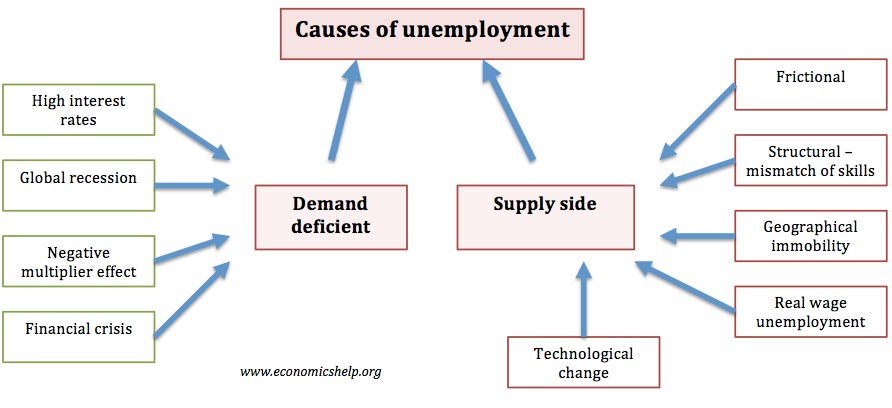
A look at the main causes of unemployment – including demand deficient, structural, frictional and real wage unemployment.
Main causes of unemployment
1. Frictional unemployment
This is unemployment caused by the time people take to move between jobs, e.g. graduates or people changing jobs. There will always be some frictional unemployment in an economy because the information isn’t perfect and it takes time to find work.
2. Structural unemployment
This occurs due to a mismatch of skills in the labour market it can be caused by:
- Occupational immobilities. This refers to the difficulties in learning new skills applicable to a new industry, and technological change, e.g. an unemployed farmer may struggle to find work in high tech industries.
- Geographical immobilities. This refers to the difficulty in moving regions to get a job, e.g. there may be jobs in London, but it could be difficult to find suitable accommodation or schooling for their children.
- Technological change. If there is the development of labour-saving technology in some industries, then there will be a fall in demand for some types of labour which have been replaced by machines.
- Structural change in the economy. The decline of the coal mines due to a lack of competitiveness meant that many coal miners were unemployed. However, they found it difficult to get jobs in new industries such as computers.
- See: structural unemployment.
3. Classical or real-wage unemployment:
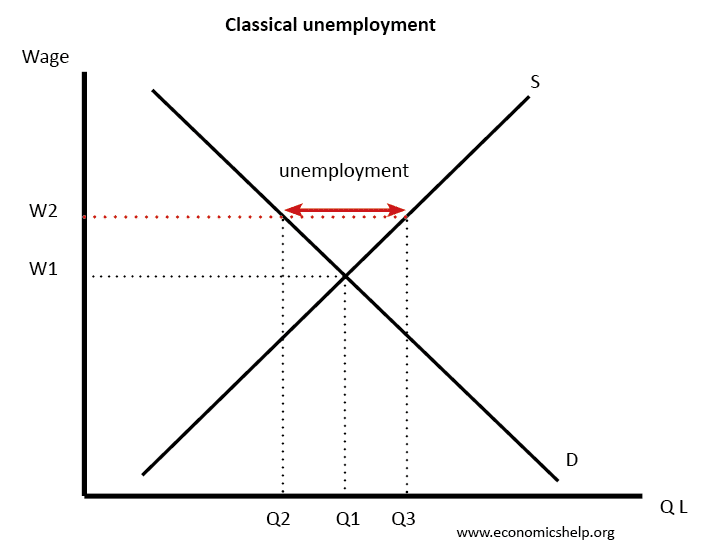
- This occurs when wages in a competitive labour market are pushed above the equilibrium, e.g. at W2 the supply of labour (Q3) is greater than the demand for labour (Q2) leading to unemployment.
- Wages could be pushed above the equilibrium level by minimum wages or trades unions. This is sometimes known as “disequilibrium” unemployment.
- Classical Unemployment
4. Voluntary unemployment
This occurs when people choose to remain unemployed rather than take jobs available. For example, if benefits are generous, people may prefer to stay on benefits rather than get work. Frictional unemployment is also a type of voluntary unemployment as they are choosing to wait until they find a better job.
5. Demand deficient or “Cyclical unemployment”

- Demand deficient unemployment occurs when the economy is below full capacity.For example, in a recession aggregate demand (AD) will fall leading to a decline in output and negative economic growth.
- With a fall in output, firms will employ fewer workers because they are producing fewer goods. Also, some firms will go out of business leading to large scale redundancies.
- In recessions, unemployment tends to rise rapidly as firms lay off workers.
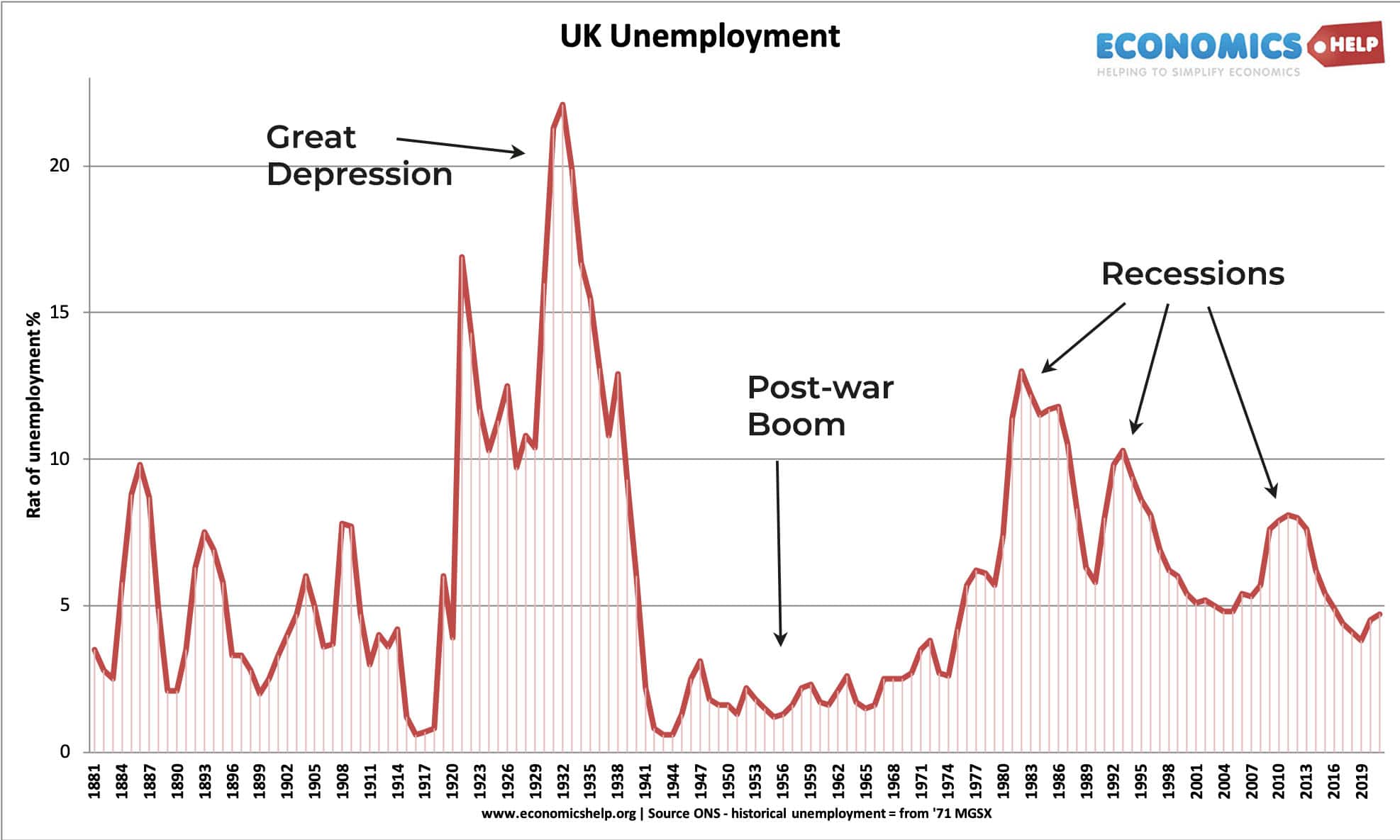
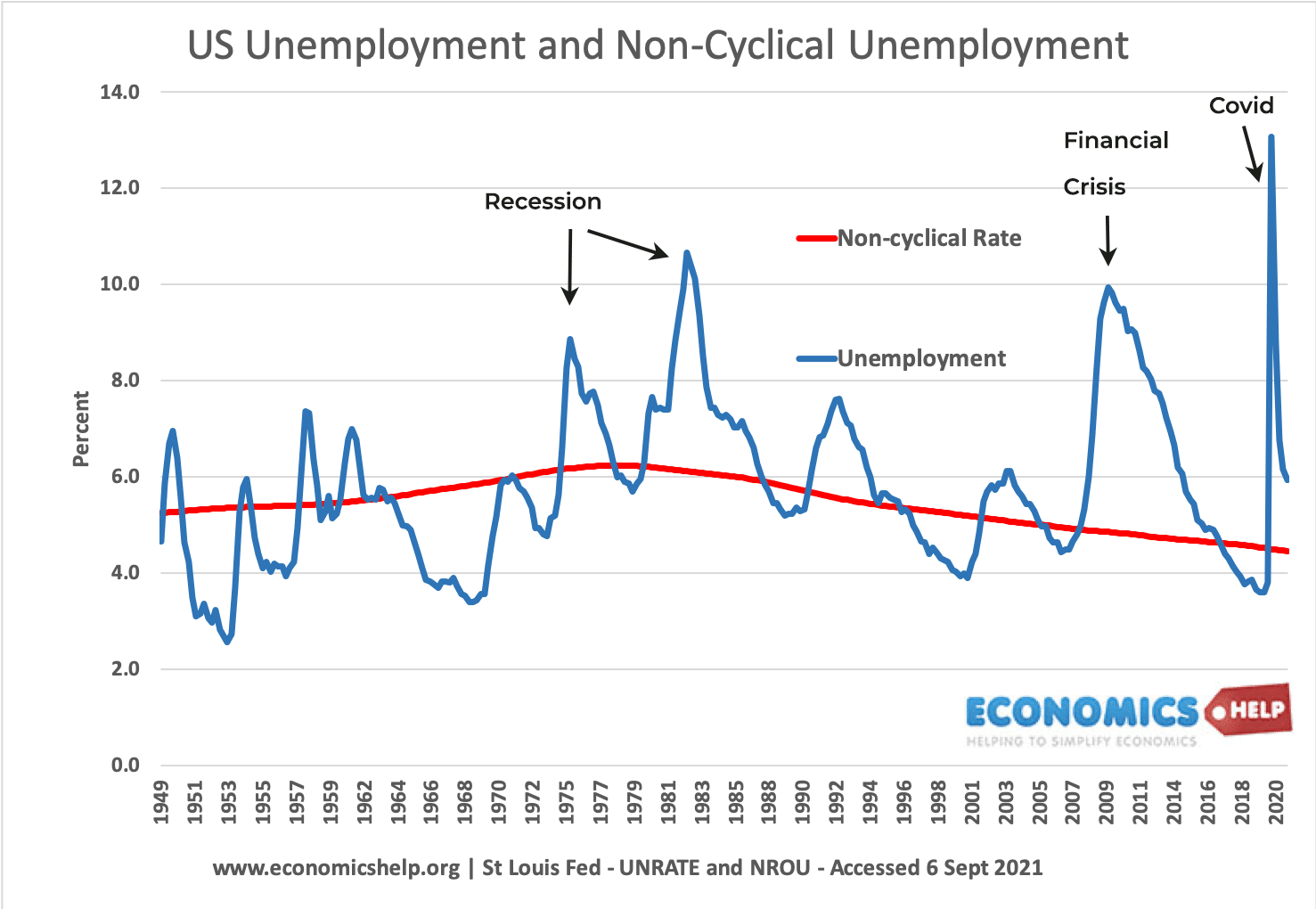
This shows the biggest cause of unemployment in the UK has been cyclical factors. During the 1920s, the UK economy experienced deflation and low growth. This was exacerbated by the great depression of the 1930s.
In the post-war period of economic growth, unemployment was low – until the early 1980s recession. The 1980s also saw a rise in the natural rate of unemployment due to supply side (structural factors)
The graph of unemployment also shows the recessions of 1991/92 and 2008/09
- More on demand deficient unemployment
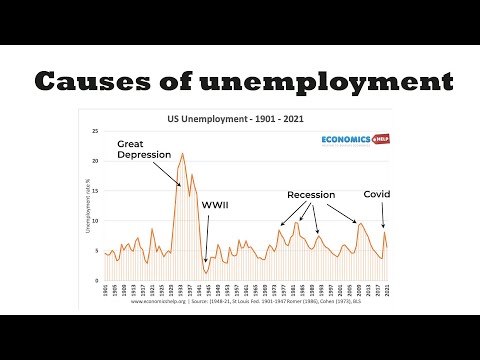
Video on causes of unemployment
Examples of Unemployment
US Unemployment
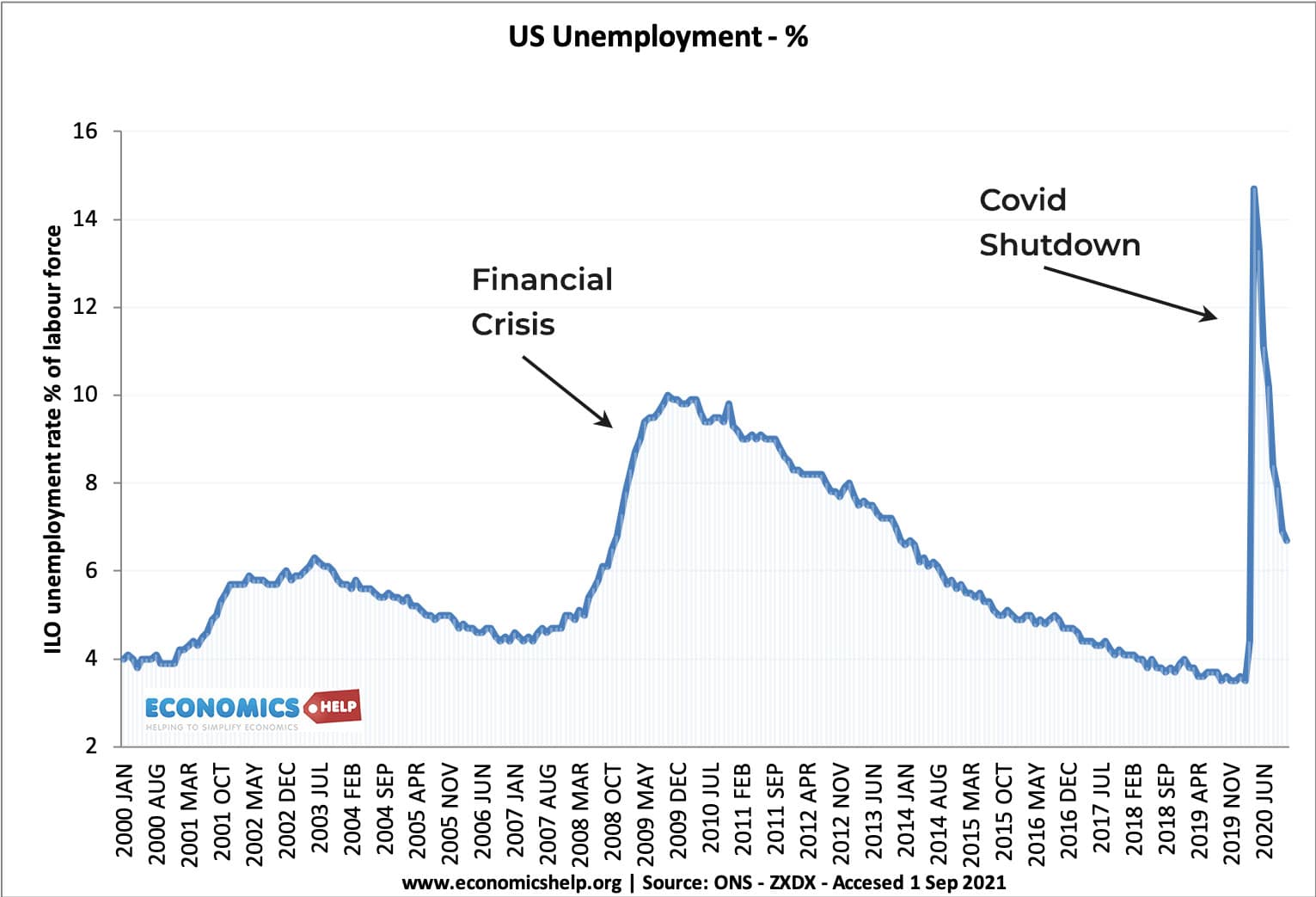
This shows unemployment since 2000 in the US. It shows the surge in unemployment after the financial crisis and also the Covid shutdown of early 2020.
European unemployment
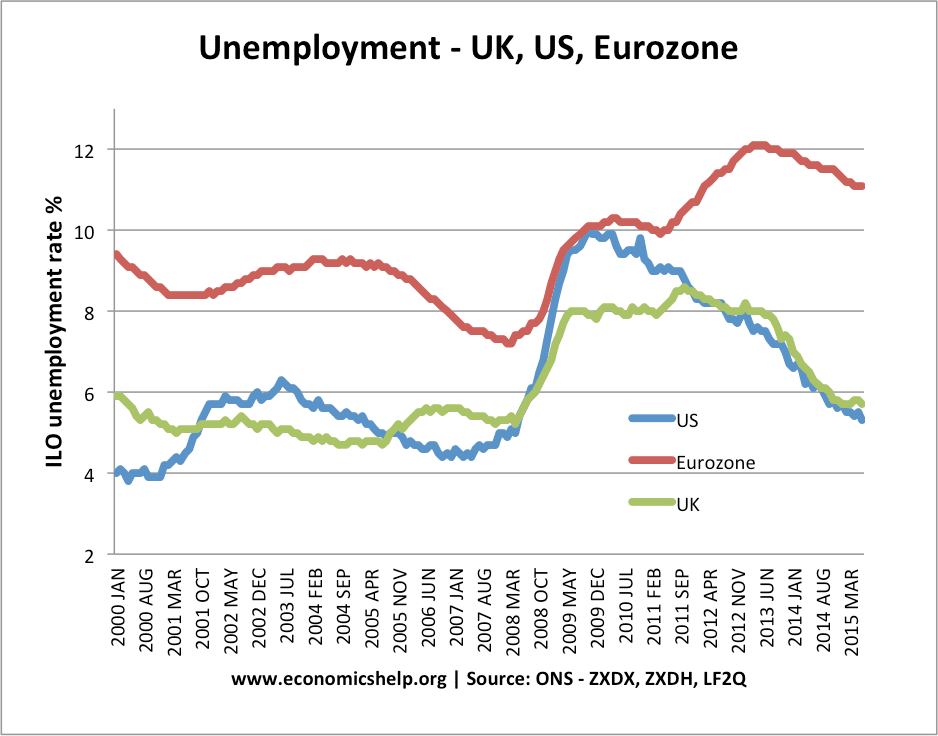
After the 2008 financial crash, we see higher unemployment in UK, US, and Eurozone. However, unemployment continues to rise in Eurozone until 2012. This is because
- Eurozone growth was sluggish due to the Euro debt crisis.
- The graph also shows higher structural unemployment in the Eurozone. Even during times of growth, the average unemployment rate is higher. This structural unemployment has been attributed to factors, such as labour market immobilities and excessive labour market regulation.
Debate on demand deficient unemployment
Classical economists emphasise supply-side factors as the main cause of unemployment. They argue that demand deficient unemployment tends to be only short term. However other Keynesian economists emphasise the importance of aggregate demand in determining unemployment.
They argue unemployment can be caused demand deficient factors because
- Wages are sticky downwards; this means workers are not willing to accept a wage cut
- If wages are cut then there is a fall in consumer spending this causes a fall in AD. Therefore this makes the unemployment situation worse.
- Efficiency wage theory. This states that if wages are cut workers become dispirited and work less hard leading to lower output.
- During a recession confidence is low and firms are reluctant to spend money on employing more workers even at a lower wage.
- Keynes said in the long run wages may adjust, but in the long run, we are all dead! In other words, why wait several years hoping wages will adjust downwards to reduce unemployment.
In the 1930s mass unemployment continued until WW2. However, when governments did begin to spend on military expenditure, unemployment fell.
Citation: Tejvan Pettinger. Oxford, UK 21st September 2021
Related