
A K-shaped recovery describes a situation where different groups in the economy recover at very different speeds after a recession, creating a divergent pattern in which higher income households experience rising incomes and output while low income households continue to stagnate or decline.
Instead of the whole economy returning to growth together, the post-crisis path splits into two directions, with one “arm” of the K pointing upward and the other downward.
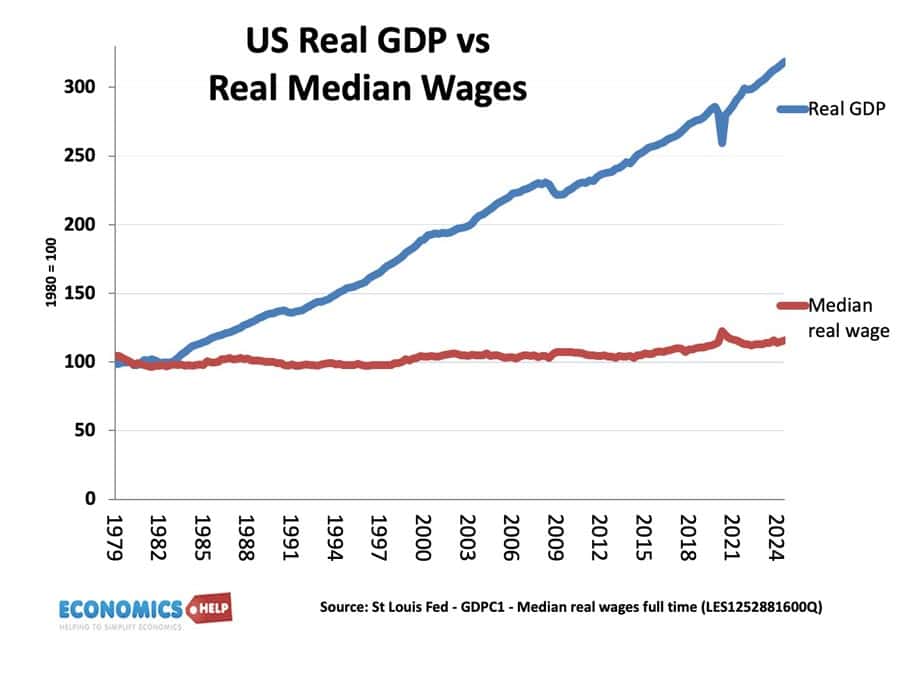
This shows real GDP rising, but median wages staying fairly constant. It reflects the fact that since 1980, high-income earners and company profits in the US have seen more rapid growth in income than average median workers.
Causes of K-Shaped Recovery
1. Structural inequalities. High-income workers, powerful corporate firms tend to rebound quickly because they have capital reserves, flexible working arrangements, and greater mobility. At the same time, low-income households, small businesses, hospitality, retail, and other face-to-face services may recover slowly due to limited savings, weaker demand, and exposure to job loss. In the 1980s, manual workers lost good-paying jobs due to deindustrialisation and decline in trade unions. This was a factor behind low wage growth – especially for non-college-educated manual workers.
2. Technology. Technology plays a key role because during recessions and economic stagnation, automation and digitalisation can accelerate, benefiting workers who can work remotely or use digital tools while harming those in manual or routine jobs. The growth of AI in recent years has also led to a fast-changing labour market with some benefiting from the adoption of AI, but other entry level jobs losing out.
3. Rising wealth Asset prices—such as housing and equities—may rise sharply during recovery periods due to low interest rates, boosting wealthier groups but leaving renters and those without assets behind.

This shows how, during the 2010s, US house prices rose faster than incomes. This led to growth of wealth for those who owned a house, but increased housing costs for those in the rented sector. Therefore, this housing boom exacerbated the uneven nature of economic growth in this decade, creating winners and losers.
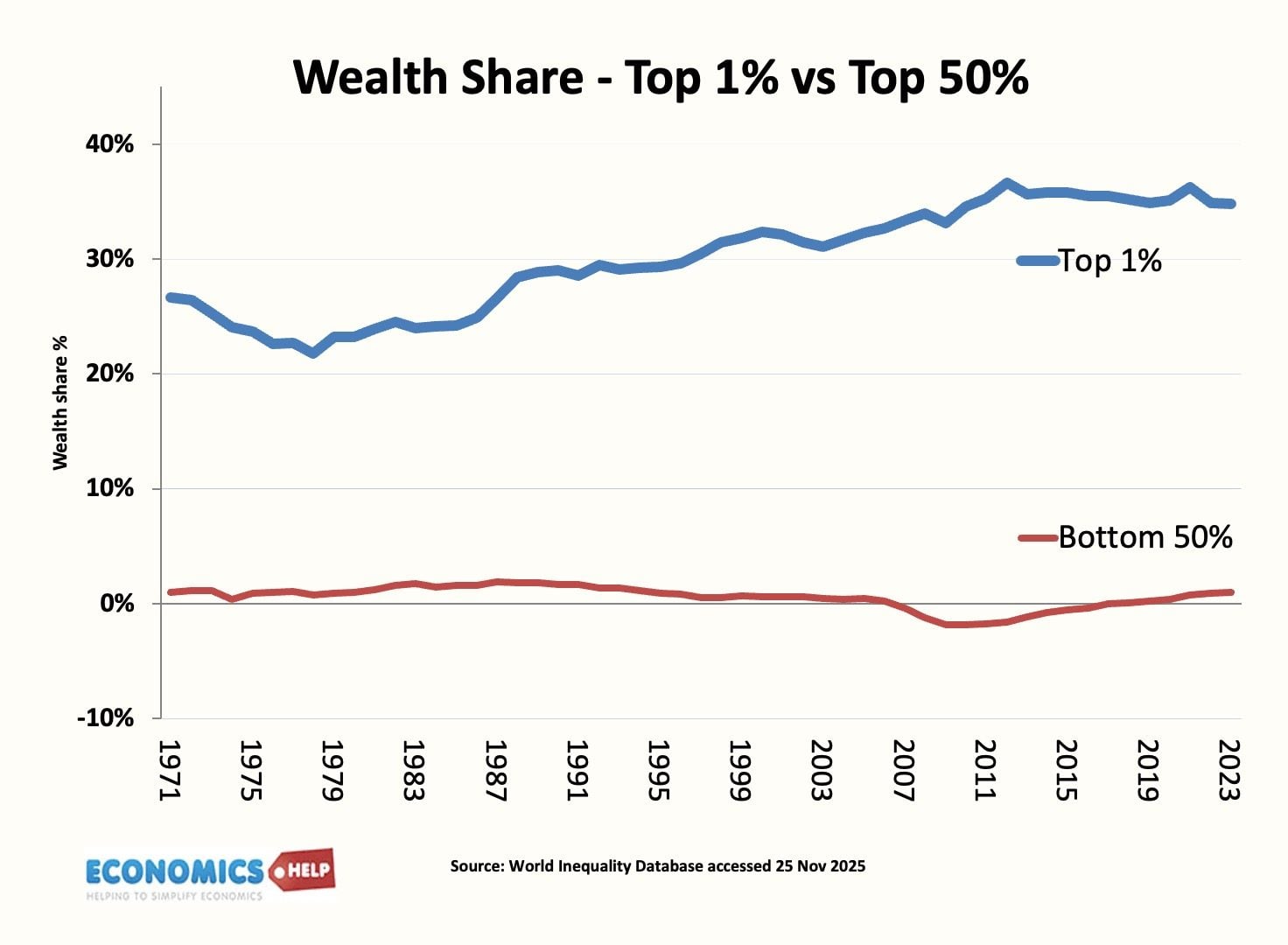
Wealth inequality can also play a role in a k-shaped recovery. Those who own wealth, can supplement income from dividends of wealth, whilst those without wealth lose out
4. Policy. In 2025, The US government prioritised income tax for high income households, but cut medical subsidies and food stamp provision. The result is that low-income households suffered more from economic policy and real wages grew more slowly.
Consequences of K-Shaped Recovery
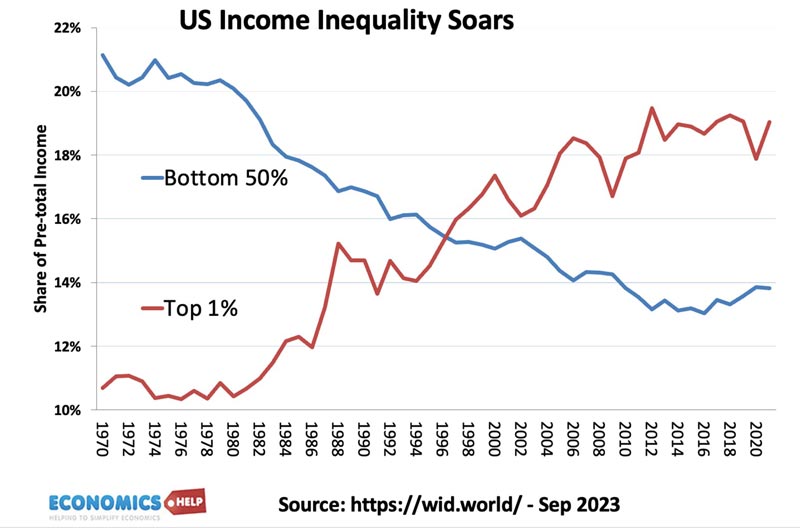
The share of the top 1% income earners has increased, the share of the bottom 50% has fallen.
Impact of K-shaped recovery
Inequality. A K-shaped style recovery increases income inequality, widens wealth gaps, and can weaken social mobility. Demand may remain subdued in lower-income groups even as the headline economy looks strong, creating a disconnect between GDP growth and living standards. It can also lead to rising unemployment or under-employment.
Unbalanced economy. In the second quarter of 2025, the top 10% of wealthiest Americans were responsible for 49% of consumer spending.
How to Avoid K-Shaped Recovery?
Policymakers often respond with targeted support, retraining programmes, and measures to stimulate inclusive growth, but without intervention, the divergence can become entrenched.
Related
About The Author
