
Readers Question: Evaluate the significance of the factors which have contributed to globalisation.
Globalisation is not a new phenomenon. The world economy has become increasingly interdependent for a long time. However, in recent decades the process of globalisation has accelerated; this is due to a variety of factors, but important ones include improved trade, increased labour and capital mobility and improved technology.
Main reasons that have caused globalisation

- Improved transport, making global travel easier. For example, there has been a rapid growth in air travel, enabling greater movement of people and goods across the globe.
- Containerisation. From 1970, there was a rapid adoption of the steel transport container. This reduced the costs of inter-modal transport, making trade cheaper and more efficient.
- Improved technology which makes it easier to communicate and share information around the world. E.g. internet. For example, to work on improvements on this website, I will go to a global online community, like elance.com. There, people from any country can bid for the right to provide a service. It means that I can often find people to do a job relatively cheaply because labour costs are relatively lower in the Indian sub-continent.
- Growth of multinational companies with a global presence in many different economies.
- Growth of global trading blocks which have reduced national barriers. (e.g. European Union, NAFTA, ASEAN)
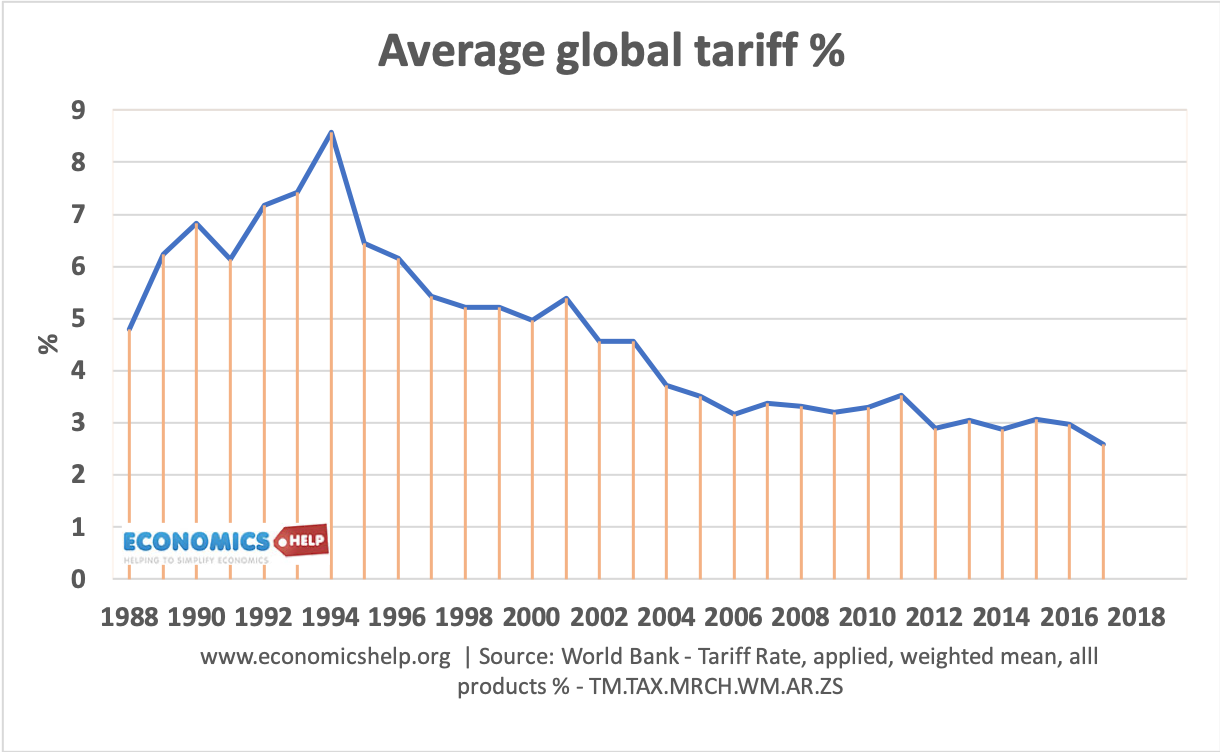
- Reduced tariff barriers which encourage global trade. Often this has occurred through the support of the WTO.
- Firms exploiting gains from economies of scale to gain increased specialisation. This is an essential feature of new trade theory.
- Growth of global media.
- Global trade cycle. Economic growth is global in nature. This means countries are increasingly interconnected. (e.g. recession in one country affects global trade and invariably causes an economic downturn in major trading partners.)
- Financial system increasingly global in nature. When US banks suffered losses due to the sub-prime mortgage crisis, it affected all major banks in other countries who had bought financial derivatives from US banks and mortgage companies.
- Improved mobility of capital. In the past few decades, there has been a general reduction in capital barriers, making it easier for capital to flow between different economies. This has increased the ability for firms to receive finance. It has also increased the global interconnectedness of global financial markets.
- Increased mobility of labour. People are more willing to move between different countries in search for work. Global trade remittances now play a large role in transfers from developed countries to developing countries.
- Internet. This enables firms to communicate on a global level, this may overcome managerial diseconomies of scale. The firm may be able to get cheaper supplies by dealing with a wider choice of firms. Consumers are also able to order more goods online E.G. Dell Computers takes orders online and can meet customer specifications.
Evaluation of globalisation
- It is hard to precisely define globalisation there are different interpretations of what we actually mean, therefore, there are different factors that explain it.
- Improved technology is undoubtedly very influential in helping globalisation; without technologies such as the internet and global communication, it would not have been possible to witness the increased interdependence of companies and countries.
- Increased free trade is important. However, there are various trade barriers still in existence, and this has not stopped the growth of globalisation.
- Could there be a backlash against globalisation as people look for local alternatives to multinational products? I think this is unlikely as people prefer the security of buying established brand names but ‘buy local’ has increasing popularity amongst some people.
Video on Causes of globalisation
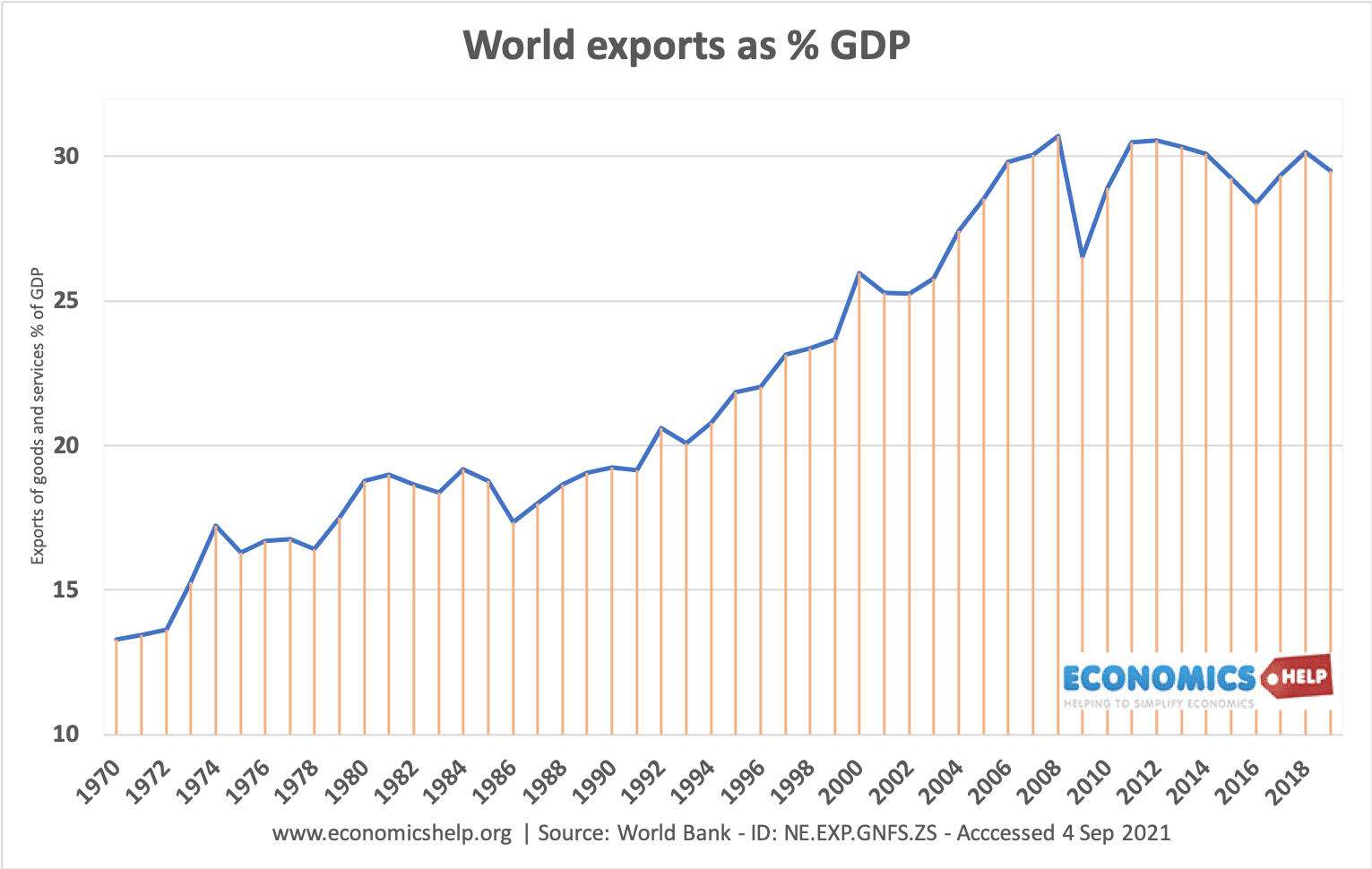
Growth of exports
Is globalisation irreversible?
Probably not. The history of humanity is one of globalisation. The factors that have been behind globalisation in the past, are likely to continue. However, it is possible to change certain factors. For example, it is possible for countries to place tariff barriers and restrict immigration. But, this is only a partial block to the process of globalisation. In terms of growth of trade as % of world GDP, it may be we have reached a plateau at just under 30% of GDP.
Exports are increasingly important to the world economy.
Exports in real terms

Diagrams for Globalisation
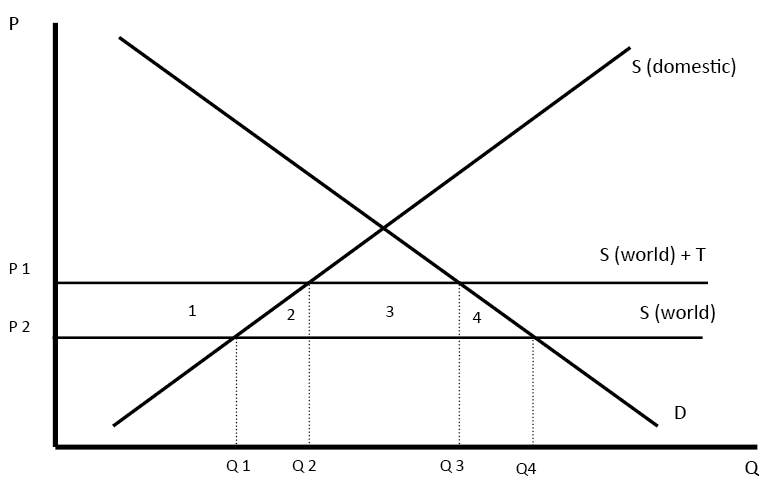
I would draw a diagram for trade creation, showing how the removal of trade barriers increases exports and imports. Also, economies of scale are very important for encouraging increased specialisation of global production.
Related
many things cause globalisation like tarrifs and quotas
Tariffs actually limit globalization by increasing the costs of imported goods. They are often made to promote domestic products by making them able to compete with import´s lower prices.
globalisation is very important nowadays
Sounds more like a problem than importance.
How would you co relate globalisation to old age imperialism ?
You’re right
Great work guys keep it up love the content
Very Accurate!