
In 2016, Britain voted to leave the EU, and there was euphoria amongst Vote Leave, who hoped it would lead to a national resurgence, lower migration and other countries lining up to leave the EU. Yet, five years after officially leaving, regret for the decision has never been higher.
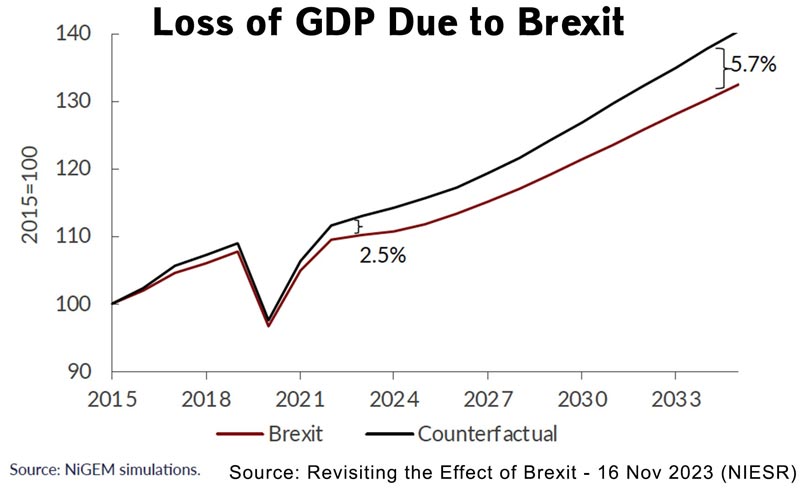
The economy is stagnating, immigration soared and voters are struggling to see any obvious benefits of the biggest constitutional change for decades.

Yet, despite the unpopularity of Brexit, there is a lack of enthusiasm to reconsider the decision. Nine years of torturous debate has left the country exhausted and Brexit a bit like an embarassing old uncle, we’d rather just forget.
Project Fear
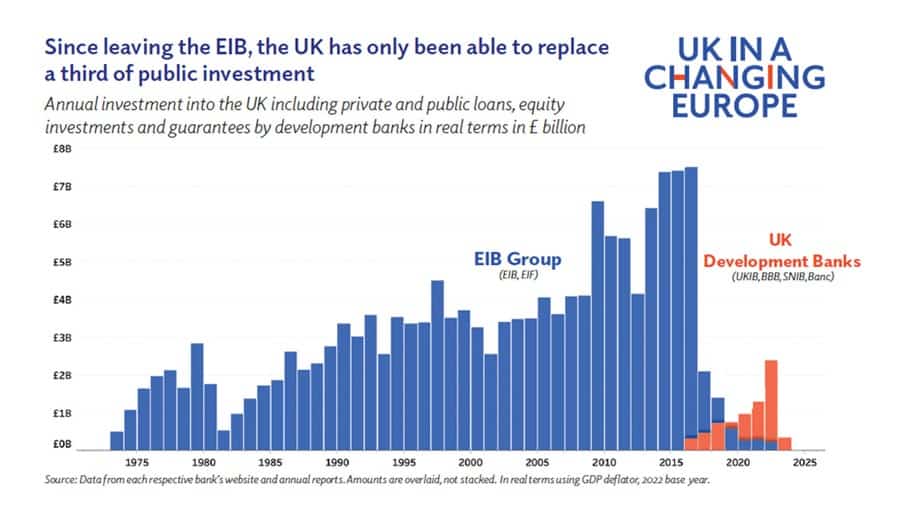
Before, the vote, George Osborne warned that a vote to leave would cause recession and higher taxes. This did not materialise. Apart from a 13% devaluation in the Pound, fears of a recession never materialised and it seemed Project Fear had been just that. More sober forecasts though, suggested that leaving the single market would lead to long-term costs, lower investment, and lower growth. And as the UK edged towards an ever harder Brexit, forecasts of a slow puncture on investment, trade and growth became the reality. One of the biggest costs of Brexit has been the negative impact on investment. 2016 is a clear turning point where firms put investment decisions on hold because of all the uncertainty over Brexit. The loss of investment from the European Investment Bank has not been replaced.
As it turned out, the process of leaving the EU was more complicated and difficult than many ever expected. The referendum was a simple yes or no. But, leaving gave a complex matrix of impossible trade offs – none of which anyone particularly liked. The EU was definitely in no mood to give the best of both worlds. One nadir was December 2018 when the Teresa May government lost a series of votes. Every different form of Brexit from single market, to customs union were all voted down by parliament. It was easier to say what you didn’t like than accept what was on offer. It seemed after all, you couldn’t have your cake and eat it.
UK Special Treatment
In the EU, the UK had been a major player. It was a primary mover in shaping legislation, notably Mrs Thatcher’s efforts to promote a single market. The UK was one of the biggest objectors to EU policy, and for its awkwardness, often got special concessions. It gained a rebate on CAP, it gained exemption from joining the Euro, it wasn’t a member of Shengen and it had partial opt outs from the Charter of fundamental rights. One of the unfortunate things about leaving is that all these special deals and opt outs are probably not on the table for rejoining. Within the EU, some who envisaged a federal Europe were happy to see the UK, the awkward member, leave. But, this has been probably over-weighed by Europeans who regret the UK’s departure. The Ukraine War, Covid, Trump and the rise of China all stress the benefit of the UK having good relations with Europe.
The OBR claim that as a result of Brexit, the UK economy will be 4% smaller than otherwise. This is similar to other studies, such as NIESR, which claim that by 2035, the average citizen will be £2,300 worse off than if the UK had stayed in the EU. 4% loss of GDP may not seem much, but given the disastrous growth performance in the past 15 years, it is income and tax revenue the UK can ill afford to lose. Certainly, economic growth has slowed down in recent years.

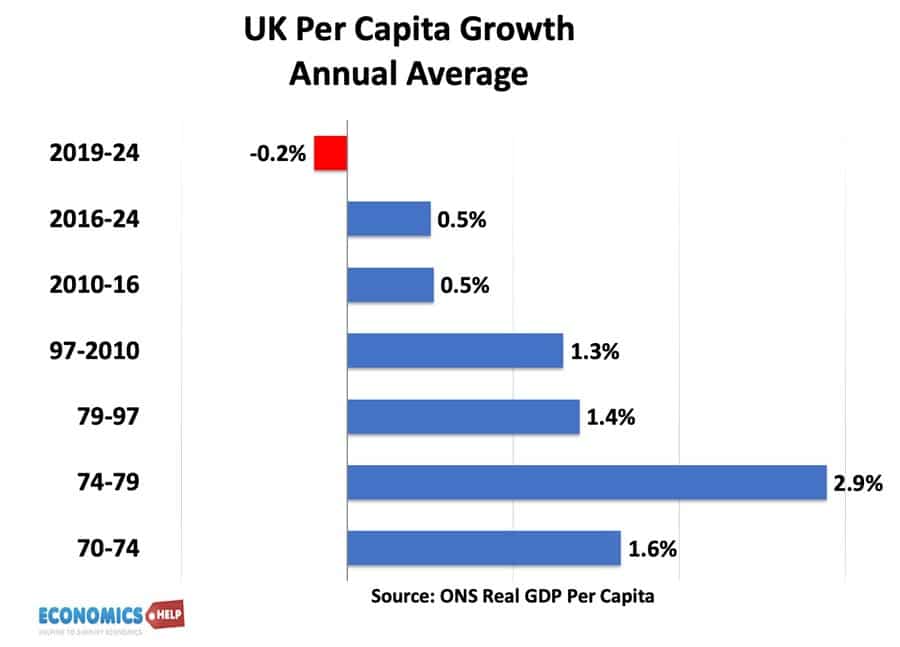
Since 2019, UK GDP per capita growth has been negative. Of course, there are many other factors behind the low growth – austerity, covid, gas prices, political instability, and poor productivity growth. In fact the UK is not alone in experiencing low growth, the malaise has hit Western Europe, with Germany experiencing its own economic crisis. Whilst it is difficult to untangle the causes for the poor economic outlook. The implementation of the new EU UK trade deal has led to very specific costs for business.
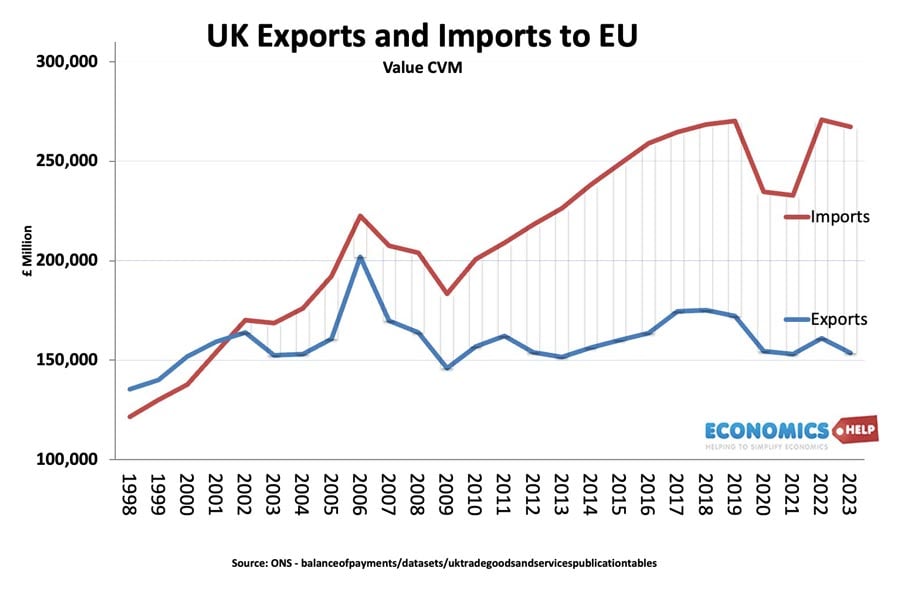
Exports by smaller business has fallen by 30%, with greater trade frictions leading to a 13% fall in goods exports to Europe. Futhermore, the pain for business is not over, new custom checks on food are still being implemented.
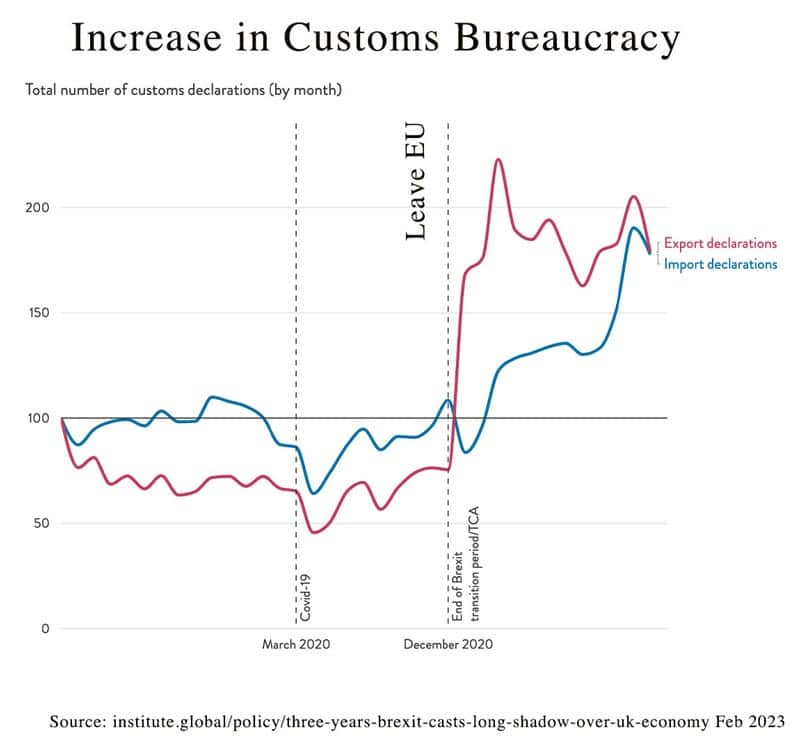
It leads to higher food costs, more friction at the border and makes it more difficult for firms to export abroad. I export books to Europe and have been dismayed at the 150% increase in delivery charges which now have custom fees. Even sending a book worth €10 to Ireland, incurred an extra charge and the customer had to pick up at the post office. Given the UK government’s perilous fiscal situation and desperation for growth, it is perhaps surprising the government was so quick to rule out even a return to the custom unions. It’s not like people flocked to the polls in 2016 in the hope we could sign a new free trade deal with Australia. Whilst the government desparetely look for growth, the OBR suggest closer ties to Europe are one thing that could really moved the dial.
Post-Brexit Surge in Migration

What many voters wanted from leaving the EU was control over borders and a reduction in immigration. In a paradoxical way, the post-Brexit immigration policy chosen by the Conservatives led to a surge in net migration, with much higher levels than the UK has ever experienced before. Enabling more work visas from outside the EU, led to more family members joining and a higher age profile, which gives a smaller net fiscal benefit than EU migration ever did. Not only did legal migration soar post-Brexit, but also coincided with a surge in unauthorised small boat crossing.
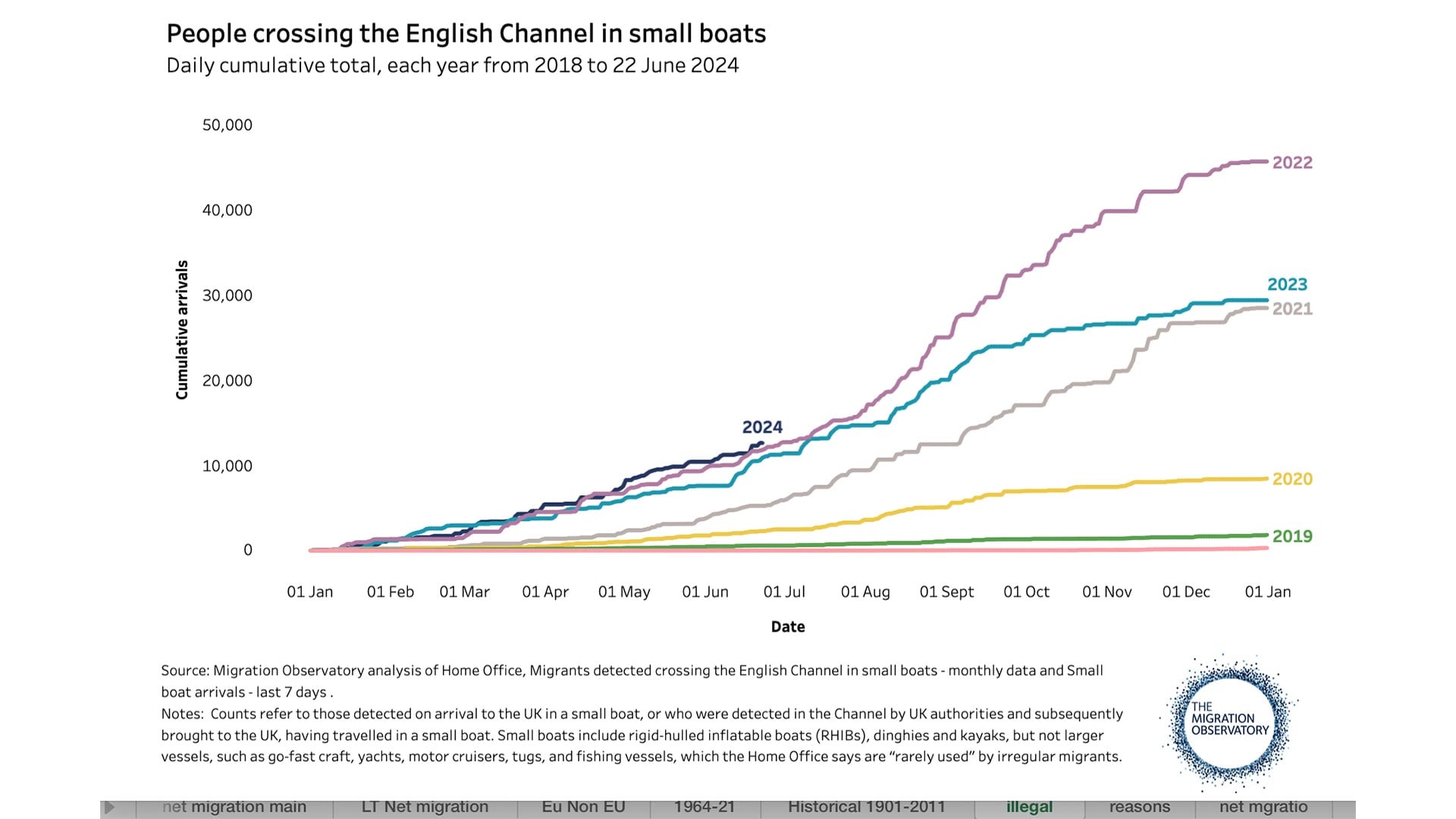
An academic paper found a key reason behind the rise in channel crossing was a failure to reach a returns agreement after leaving the EU.
Free Trade Deals Going Nowhere
One of the proposed benefits of a hard Brexit was that outside the Customs Union, the UK would be able to pursue free trade deals. A trade deal with the US was seen as a major prize, which could help the UK offset any loss in EU trade. However, five years after Brexit, a US free trade deal looks far off. Firstly, the US would want lower agricultural and environmental standards. Chlorinated chicken, hormone-treated beef and genetically modified food are unappetising for UK consumers. But, the bigger picture is that the US just isn’t interested in free trade deal. Biden quietly shelved it and Trump has said ‘tariff’ is the most beautiful word in the dictionary. Trump has considerable unpredictability, but the chance of a global trade war is high. Given an unpredictable US, it makes the UK’s decision to leave the EU more problematic. If the UK ever had a special relationship with the US, it’s really not going to happen with Trump and Starmer. Given the changing priorities of US, the rise of China export dominance, and closer ties to Europe seem a natural development.
Hard to Rejoin
The big question is what now? Whilst regret is high, support for rejoining is much more narrow, a reflection that it’s hard to put a broken egg back together. Interestingly, the EU was never actually that salient as an issue; it was only just before the referendum that intense press coverage made it temporarily the number one issue. Perhaps the most articulate leader for rejoin is currently the 92 year old Michael Heseltine; there’s no young, charismatic leader to lead the charge in a way Nigel Farage galvanised euroscepticism. The truth is that although Brexit was an economic cost, rejoining the EU would be no magic bullet for an economy that is struggling on many fronts. Rejoining EU might help a little, but it won’t on its own lead to a land of milk and honey. Rejoining the customs union does make sense from an economic perspective; it would help remove many non-tariff barriers, without even having to accept free movement of labour.
European Problems
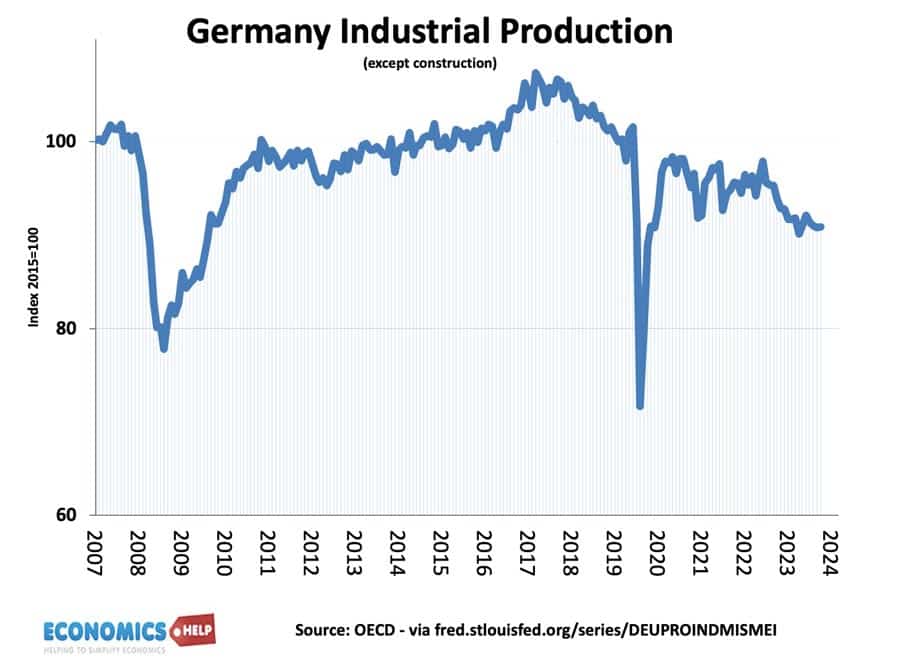
What about the single market, on the one hand, EU sceptics may point to problems with the German economy. It’s hardly a ringing endorsement, but on the other hand, the success of Eastern European economies like Poland and the Czech Republic shows how EU membership can have substantial benefits. The EU still accounts for nearly 50% of UK trade. There was a time when free movement of labour meant there was a surge in Polish workers coming to UK to get more than double the average salary. But, those days are coming to an end. Polish wages are growing significantly faster than the UK and by one prediction, could overtake the UK by 2035. It’s not just Poland, UK living standards are already similar to those in Slovenia. This is important. The big inequality which caused high levels of migration from Eastern Europe is getting much less noticeable. Who knows, perhaps in the future the UK will want free movement so we can go and get better-paying jobs on the continent.
Young and Old Divided
Another issue around the Brexit vote is that the overwhelming majority who wanted to leave the EU, were the older generation. Younger people are generally more supportive. But, with nine years since the vote, many of those older voters who wanted to leave are no longer around. There is logic to constitutional referendums to be once in a generation event. But, the next generation of leaders may have a very different perspective.
Problem of Referendum
In fact, another lesson of Brexit is that referenda themselves can be very divisive and inadequate as a means of dealing with difficult questions. Referendum’s and dealing with the result can become a big distraction. So much energy and time was spent on trying to implement Brexit that could have been spent on how to boost UK productivity, address inequality or how to solve the housing crisis. You may say it’s a shame UK didn’t have a referendum on ‘should we tax wealth and provide cheaper housing.” Many voted leave as a vote against the establishment. But, there are no signs that anything has really changed for the better. A missed opportunity.
Even some Brexiteers are not happy, with many feeling Brexit was never really implemented. It seems a little paradoxical given that Brexit was pretty hard. Though if you vote for Brexit to restrict immigration and then immigration soars, it is understandably a big disappointment.
If you’re disappointed with Brexit Britain, is it time to rejoin? There are some reasons, but the grass is not always greener on the other side, and even if you want to leave, you may find it a little harder to get a visa these days.
Sources
https://papers.ssrn.com/sol3/papers.cfm?abstract_id=4351994
https://www.perspectivemedia.com/channel-crossings-by-migrants-in-2024-key-numbers/
About The Author
