
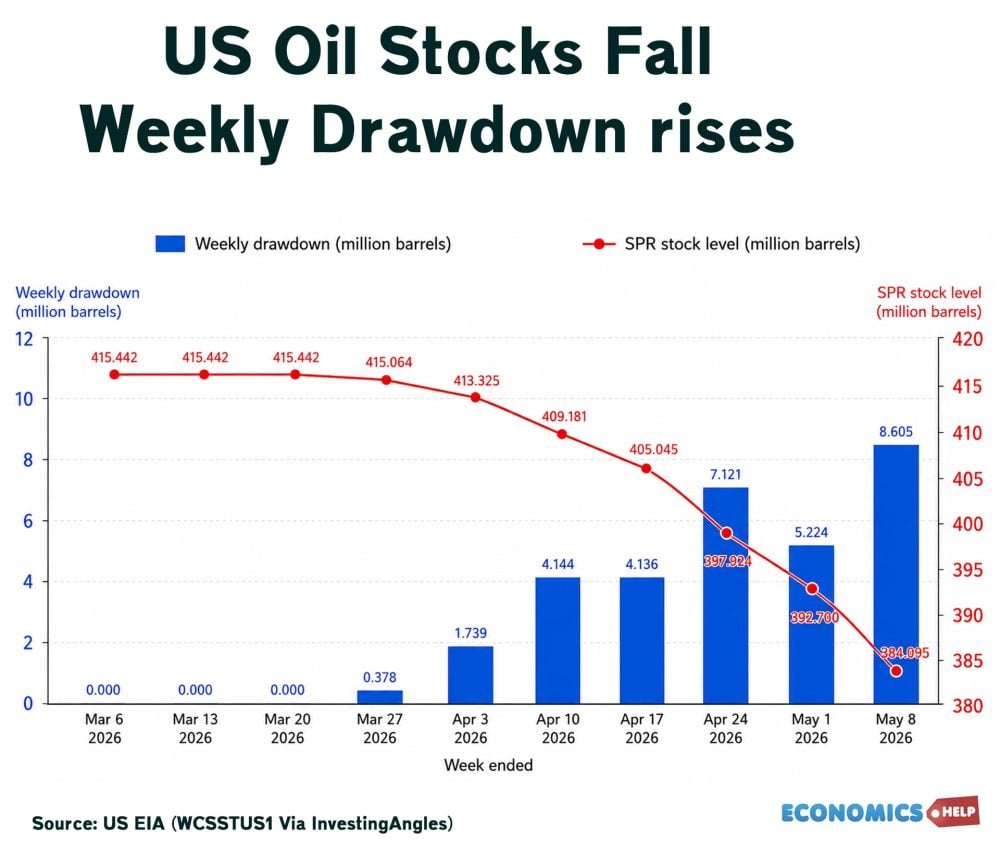
The world is quietly burning through its emergency oil reserves at the fastest pace in decades. And if the Strait of Hormuz stays closed through summer, we could move from an oil shock to an actual. The Strait of Hormuz has been effectively closed for three months.
No one expected it to last this long. It affects up to 20% of global oil trade. But the shortfall from Hormuz is being met by running down stocks. Last week saw a record-breaking level of releases from global strategic reserves — 8.6 million barrels released.

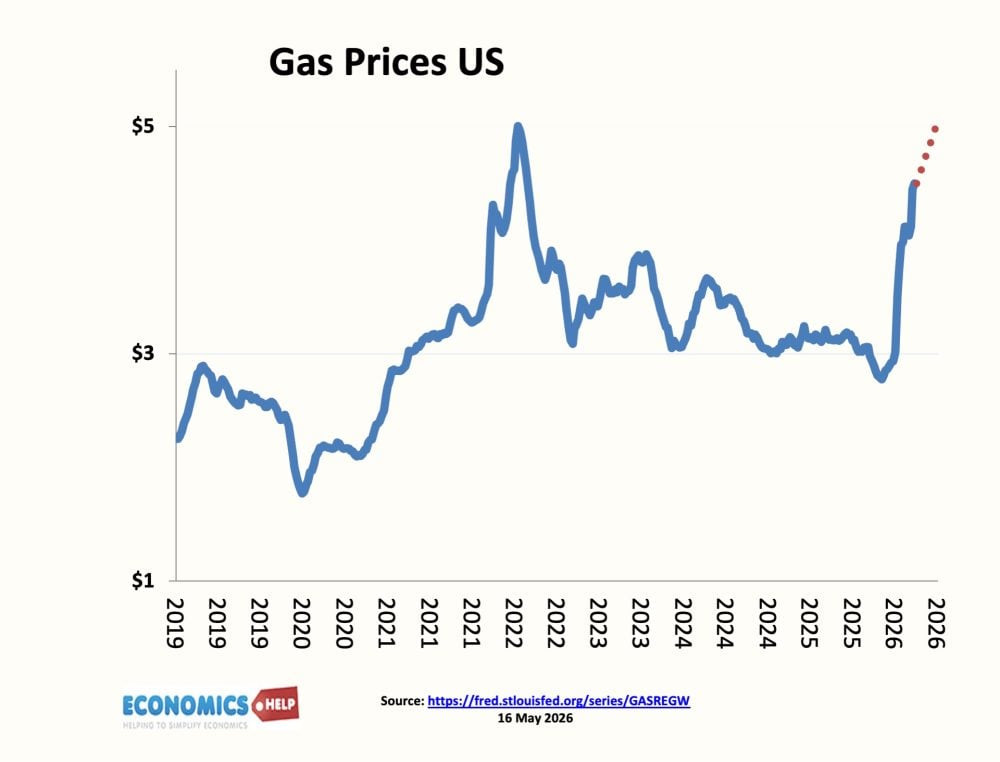
The US is set to reach a 43-year low for SPR by July. Interestingly, a large part of US stock releases is being exported to Asia, which has a big shortfall from the Gulf shutdown. But the US has its own shortages to worry about, in particular its dwindling stocks of petrol and diesel. Gas prices have already risen to over $4 a gallon, but if the crisis continues, experts warn prices could rise to the even more politically sensitive $5 level.
If we look at oil prices, oil futures might predict prices will come down. Investors have retained optimism about a breakthrough in talks. But it is worth bearing in mind that futures markets are not a prediction of geopolitical events. The futures market nearly always predicts that when oil prices go up, prices will fall in the future. But you can see that oil futures predictions are often wrong. It is also interesting to see how rapid the rise in oil prices is today.
J.P. Morgan reports that global oil inventories are falling at a record pace. They model that by June 2026 inventories will reach operational stress levels. But if Hormuz remains closed until September, inventories will reach the operational floor level — the minimum required to keep pipelines functioning and refineries operating.
It’s interesting to see just how much the US has reduced its strategic reserve. There was a big drawdown in 2023 when prices were high, but there was no effort to rebuild reserves when prices were low in the lead-up to the crisis. It means the US SPR is not as prepared as it could be.
Given that Hormuz has led to the loss of 14 million barrels per day, and major producers like Iraq are running out of storage and potentially having to cap wells — which could lead to damaged future supply — a good question to ask is why oil prices haven’t risen more. After all, prices are still lower than the peaks of 2022 when Russia invaded Ukraine and, theoretically, less oil was removed from global supply.
Rising Prices
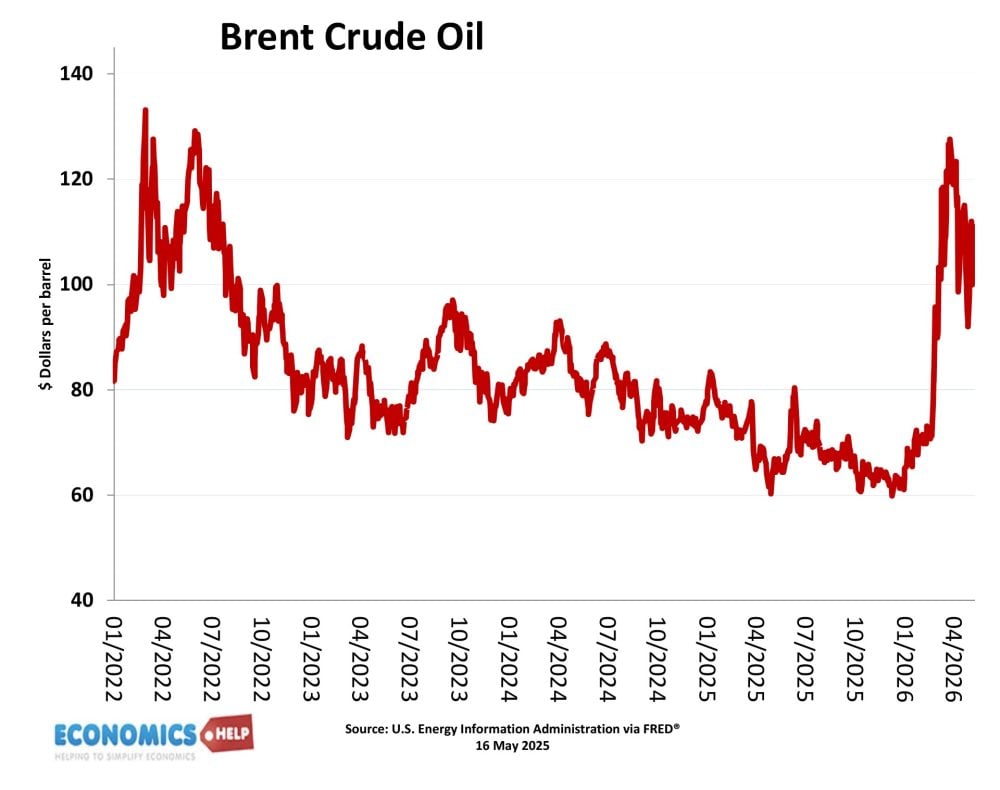
But in 2022 prices were higher to start with. If we look at the percentage change, we can see that 2026 has seen a considerably bigger jump in prices. In 2026, we are looking at a near 80% rise in price. But the shortage has led to unprecedented attempts to increase supply. Non-OPEC countries like Canada and the US have ramped up exports. Though it is worth adding that this is mostly from inventories. A high oil price does create an incentive to drill for more oil, but it is a time-consuming process, and no one wants to start expensive drilling when there is so much uncertainty about the future.
Another factor is the increase in oil exports from the Saudi pipeline which bypasses Hormuz. The UAE has also announced it will accelerate work on its own new oil pipeline to bypass Hormuz, which it hopes will be operational by 2027. It will double capacity to 3.3 million barrels per day. One long-term consequence of this oil crisis is that oil producers will never trust Iran and Hormuz again. Iran is playing its card because it is a global choke point, but by using it, it creates a long-term incentive to get around it. The crisis is also accelerating the shift away from fossil fuels. But 2027 is a long way off, and these new pipelines will not be built quickly enough to solve the immediate crisis.
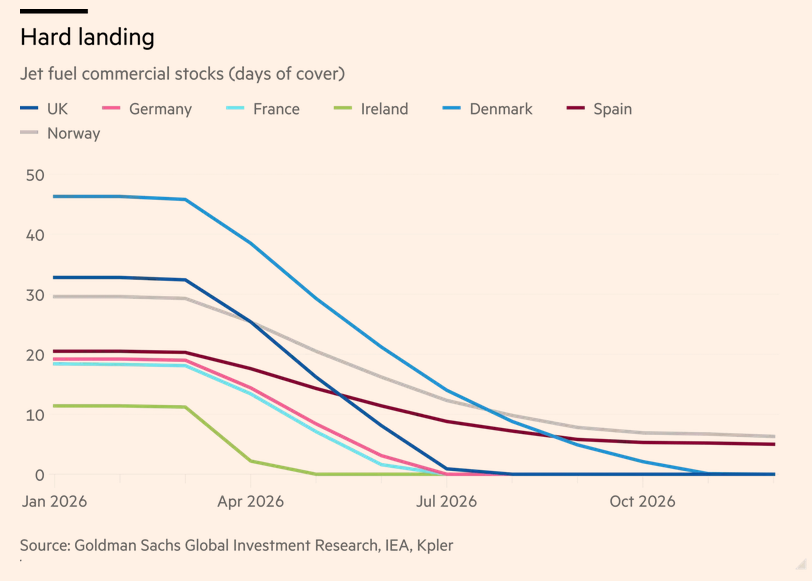
In the shorter term, there is a greater risk of running out not so much of crude oil, but of its products. In particular, Europe has limited supplies of jet fuel, and Goldman Sachs warns stocks will dwindle by July. Will I regret buying a flight in August? European airlines have sought to downplay the risk, though that may be an understandable effort to keep people buying despite fears of a great staycation. European airports are less optimistic, warning the EU will face a systemic jet fuel shortage if the Strait does not open soon. The reality is that jet fuel prices in Europe have doubled to $187 per barrel, and airlines have already started slashing 20,000 short-haul flights on low-value routes.
Fall in Demand
In fact, the shortage of oil would be even greater if it were not for a reduction in demand. We have seen a particular fall in demand for oil-based products like fertiliser and plastic, which are more sensitive to price. Whilst Europe and the US worry about oil shortages affecting their summer vacations, the oil shortage is a matter of survival for African farmers struggling to afford the soaring cost of fertiliser and transportation. This is the double-whammy effect of the oil crisis: it is not just rising fuel costs, but also a jump in food inflation.
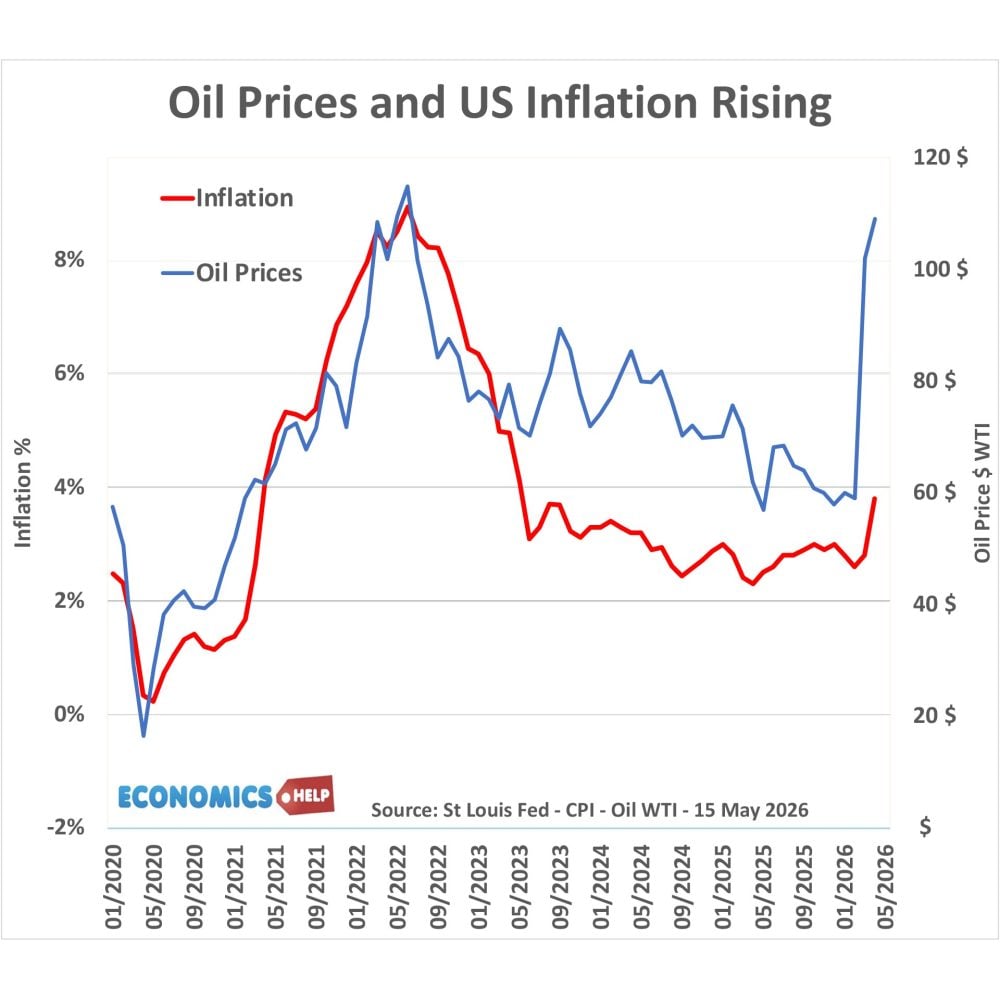 Oil prices follow inflation
The US is already seeing an unexpectedly large jump in inflation, despite theoretically being a net exporter of energy. It is a pattern which will play out across the global economy. And like 2022, it will be the worst kind of inflation — inflation driven by costs, reducing real wages and negatively affecting economic growth.
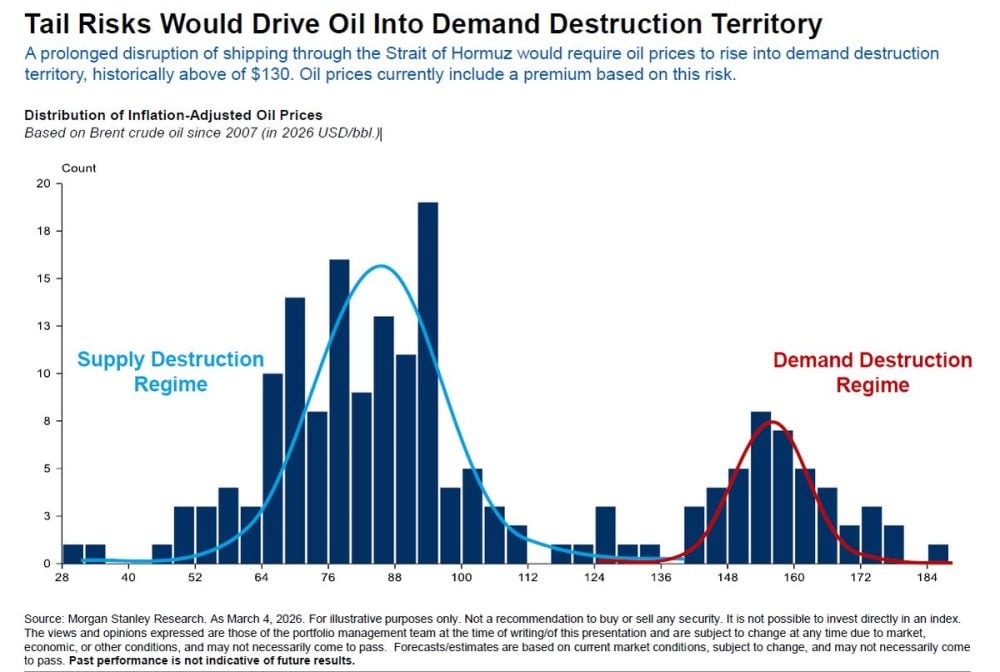
But if shortages become more acute in summer, how high will prices have to rise to actually reduce demand and deal with the shortage? Morgan Stanley has produced this graph, which gives an insight into the prices needed to reduce demand. It is only really when oil rises above $140 a barrel that the price is high enough to significantly reduce demand. For most consumers with petrol cars, demand is price inelastic — you keep buying if you need to get to work. Even more so for transport firms using diesel to ship goods. Bear in mind that the past year saw prices around $70, leading to a decline in investment in new oil capacity — the area of supply destruction.
Over-optimism
One thing keeping oil prices lower than they otherwise would be is traders’ perpetual optimism that a diplomatic breakthrough is around the corner. Another factor is the surge in exports from non-OPEC countries. Also, Asian economies, and China in particular, have responded to the crisis by significantly reducing imports.
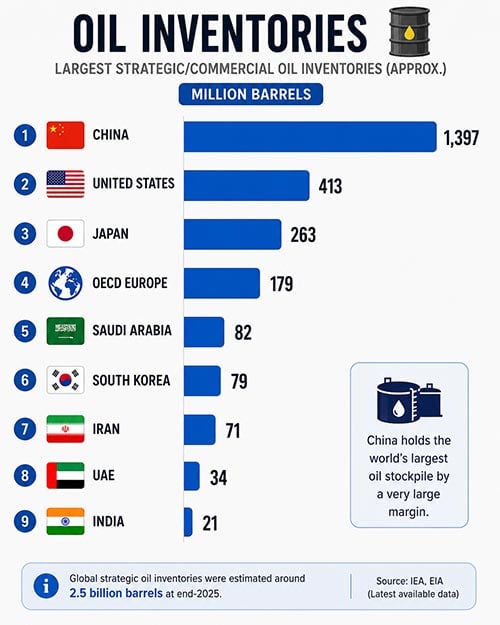
What is happening is that both China and Japan have significant oil stocks; they have been preparing for an event such as this. China is reported to have a 180-day reserve, and Japan even longer. But strategically, they would be reluctant to keep drawing down reserves, and recent buying suggests Asian buyers alone took 7 million barrels for August delivery.
It is in summer that the crunch could intensify the crisis. Summer is a peak period for demand, the SPR will hit operational limits, and there will be a bidding war for remaining stocks of essential fuels like petrol, diesel and jet fuel.
The oil crisis will have effects on every economy and, in particular, we are seeing a jump in bond yields due to fears over both higher inflation and rising government borrowing. This video explains the costs of rising bond yields.
Sources:
Economist.com/finance-and-economics/2026/05/12/how-the-world-has-avoided-an-oil-catastrophe-so-far
https://www.ft.com/content/c5ac196f-d141-4710-ab54-4c50216ab900?syn-25a6b1a6=1
https://www.ft.com/content/ae621e63-0be6-4818-9bec-eb1188737a1a
About The Author
