
Back in 2008 the economy came crashing down but the Bank of England had a plan create £250 billion of out of thin air and buy government bonds. Quantitative easing led to lower interest rates, cheaper government borrowing and rising asset prices. But fast forward to 2026 and the opposite is happening. Bond yields are surging, government debt interest payments are going up and it’s leaving the government facing difficult choices But, does it have to be like this?
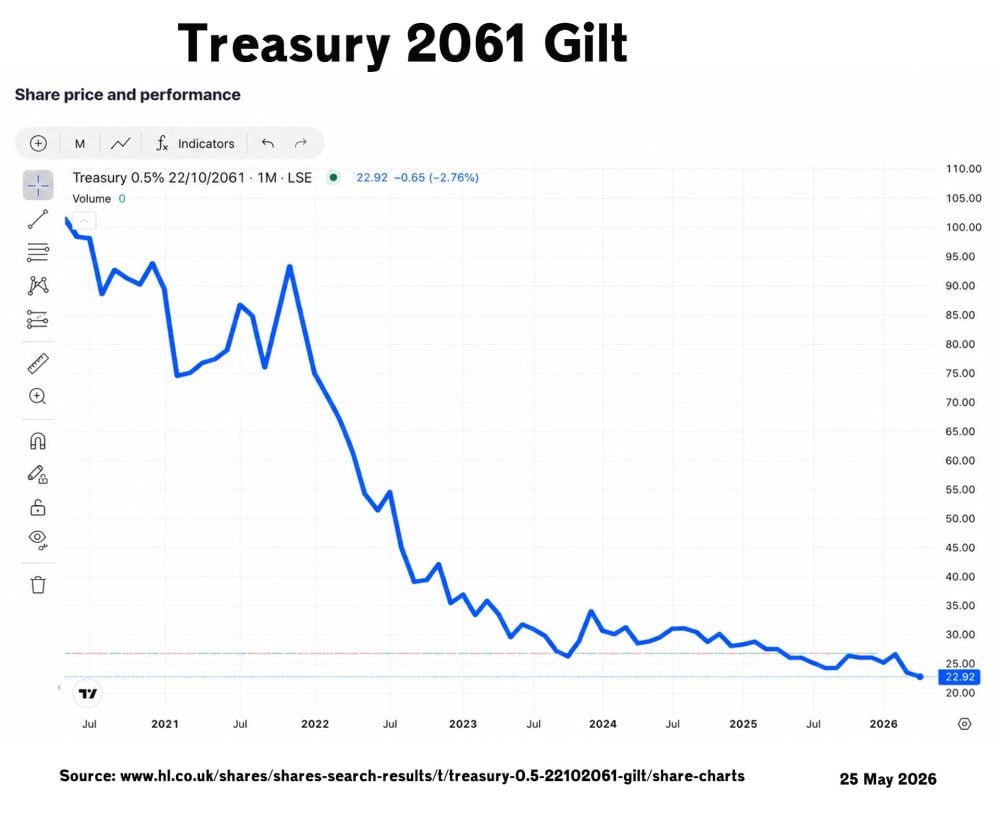
In 2020, The bank of England were buying long-term bonds at around £100. But, since then long-dated securities have fallen almost 75%. Now they are selling at £22. You don’t have to be an economist to know this is a big loss. So what is going on? And why does the UK have the highest bond yields in the G7?
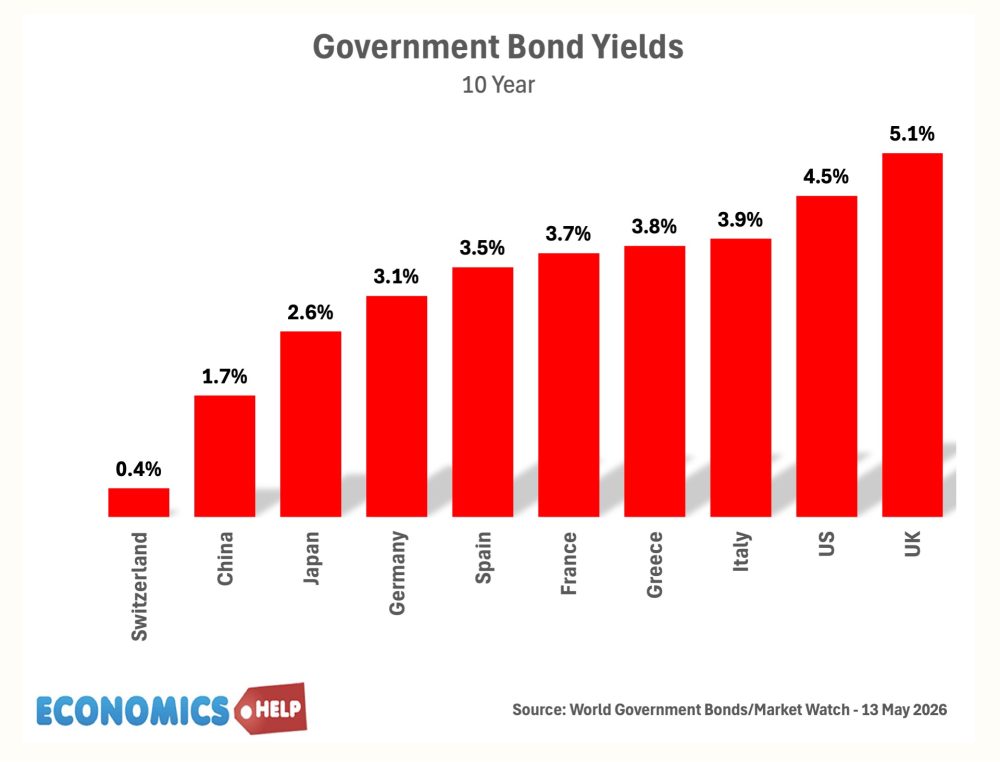
There is certainly an argument UK bond yields are a reflection of high debt, incompetent government and general economic and political malaise. But, what if I told you the Bank of England were unnecessarily pushing up yields.

Let’s compare the UK to France. France has had debt and a bigger annual deficit than the UK. Yet, UK bond yields are rising faster than France. If you think UK politics is a circus, France has its own political merry go round. But one difference is that the Bank of England has been more active in selling gilts, pushing down prices, and pushing up gilt yields. Why?
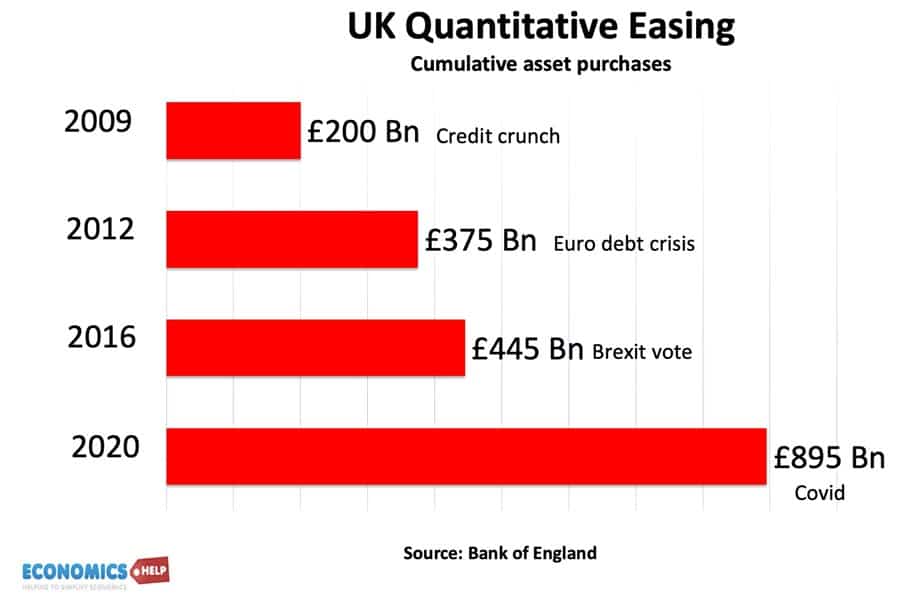
The initial QE stabilised finance markets but far from creating strong broad based economic growth, the post-crash recovery was weak. The extra money went into assets like housing rather than productive assets. In the 2010s, QE was generating a windfall for the government, it was creating free money, reducing borrowing costs and even generating a profit for the government. Now you might say it’s not the Bank of England’s fault the government squandered this period of ultra-low interest rates by failing to invest. But since inflation was low, the Bank kept creating more money and buying more gilts. By 2022, The Bank of England had accumulated nearly £900 billion of gilts.
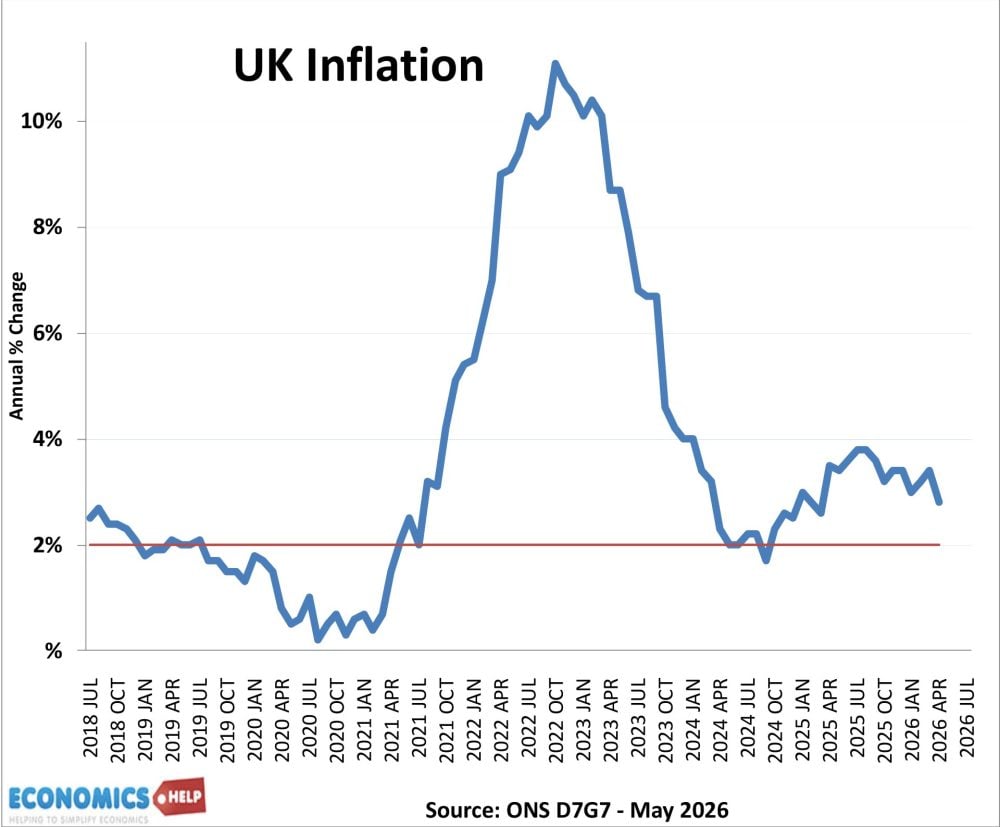
But, after this last bout of QE, inflation surged to 10%, beating all the Bank’s expectations of inflation staying low. With inflation above target, the Bank decided they needed to reverse QE, sell bonds, push up interest rates, reduce the money supply and bring inflation under control.
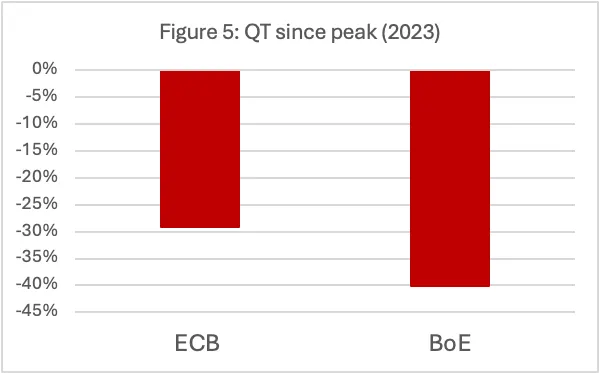
Not only are the Bank in reverse gear, but they are reversing it much faster than any other central Bank, they are actively selling the long-dated gilts which have fallen in value so much. It means the UK is uniquely exposed to bigger QE losses. In 2026, the Bank have reversed 30% of the £900bn reserves, which is faster than the conservative Eurozone. So why is the Bank of England in a rush?

The problem with QT is that since 2022, there has been a surge in bond yields and, therefore a fall in the price of bonds. For example, a long-dated 2061 gilt the Bank bought in 2020 for £100 has fallen in value to £22. This means that the Bank of England is now making a loss on quantitative easing. And these losses are being funded by the Treasury or the taxpayer. It is estimated that the Bank of England’s unwinding of QE will cost between £125 billion or £139 billion. You could almost build another 120 mile railway with that kind of money… It’s also about 2 years of defence spending. The cost to the UK is significantly higher than the US and Eurozone who are being more cautious.
Does inflation mandate QT?
So that raises the question why are the Bank of England reversing QE and landing the taxpayer with losses, when we could halt QT, keep interest rates lower and boost investment? Well, the primary mandate of the Bank of England is low inflation. And since 2021, inflation has been above the target of 2%. Quantitative tightening is in theory, reducing inflationary pressures. Also the Bank argue we should reduce its balances in case there is another crisis where we need to go back to QE. Some like Andrew Sentence argue the problem with the Bank of England is that they have been too weak on inflation and should go quicker on QT, pushing up bond yields even more and encourage the government to reduce government spending. Critics argue the Bank’s biggest mistake was the extra £400 billion of QE during Covid, boosting the money supply and super-charging the rise in inflation to 10%. And it is this surge in inflation that was the biggest reason for rising bond yields and rising cost of debt interest payments.
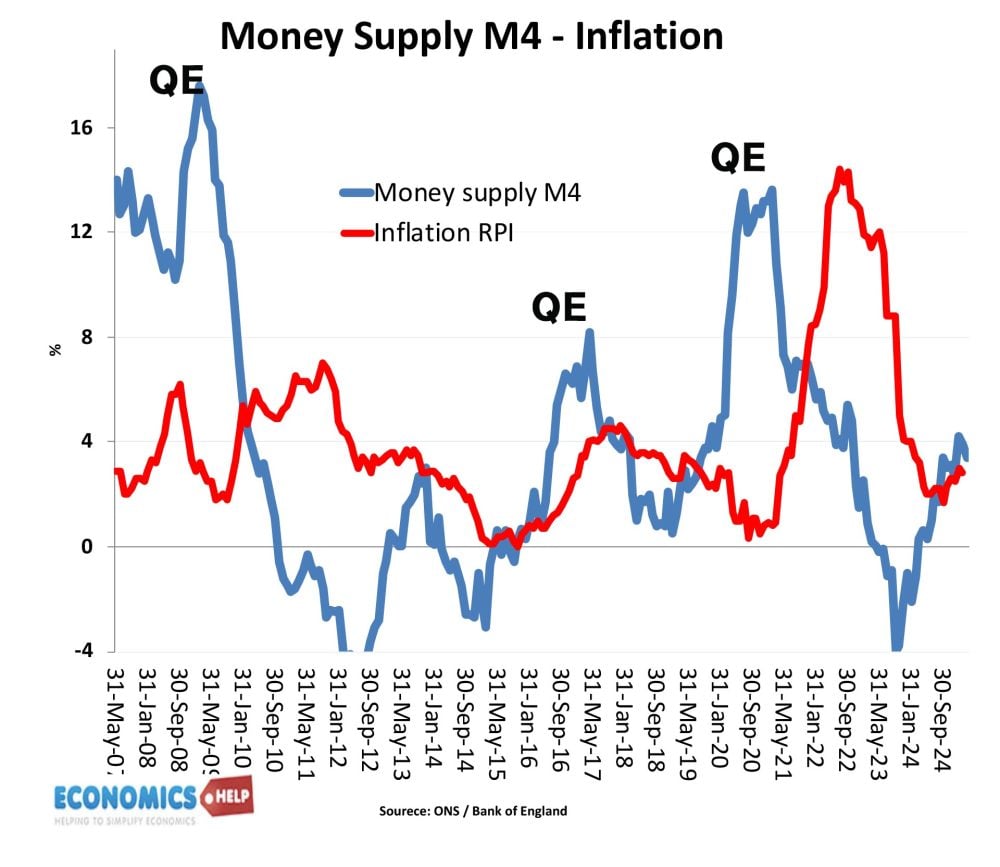
But whichever way you look at it, it raises the unwelcome fact that the Bank of England has in effect a huge political influence. Allow inflation to grow, political disaster. Even technical decisions on QT have a material effect on the economy, fiscal policy and government spending. You often hear that the bond market is like a sword of Damocles hanging over government. But is it the Old Lady of Threadneedle street hanging over the government? There is certainly a case for closer co-operation of monetary and fiscal policy.
Liz Truss and some supporters still claim it was the Bank of England who did it in for her government. On 21 Sep just two days before the Truss mini budget, high inflation encouraged the Bank of England to vote to start QT. This raised bond yields in anticipation of the Bank selling gilts. But, when the Truss unfunded tax cuts landed, bond yields soared, sterling fell and the rest is history. Ironically, the Bank of England had to abandon QT, and actually had to restart QE as an emergency measure. Though, when Truss was ousted in November, the Bank went back to QT. The Bank is also criticised for allowing the growth of liability driven pension liabilities, which made the gilt market much more volatile.
Defence of the Bank of England
But can we really blame UK economic problems on the Bank of England? the Bank of England’s own studies suggest QT is only causing bond yields to rise just 20 basis points. i.e. bond yields are 5.1% rather than 4.9%. Other independent studies suggest, it is closer to 44-70 basis points. And 0.5% is materially significant. If all debt instantly refinanced 0.5% low: That is roughly 0.5% of £2.8 trillion is roughly ≈ £14 billion per year.
Certainly if bond yields were 4.5% rather than 5.1%, it would make government’s decisions easier. It is significant. And the crucial thing is that QT is having a bigger effect on fiscal policy, and very limited effect on reducing inflation. (interest rates not that effective in bringing current cost-push inflation down)
Maturity rates
Why is Bank of England actively selling gilts when the more conservative ECB isn’t? The Bank’s own reasoning is that they bought many long-term gilts and waiting for maturity would take fore-ever. And that is a problem of QE, by buying many long-term bonds, the Bank of England has made themselves vulnerable to higher interest rates and bond losses. (see: FT for more reasons)
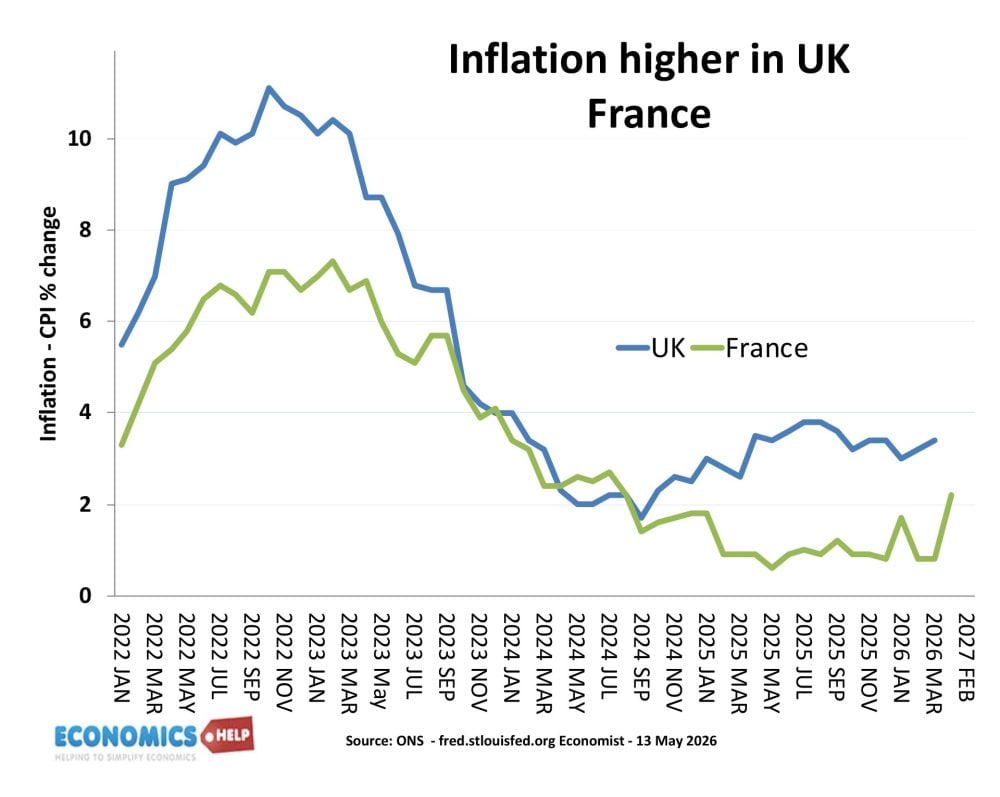
The other defence of the Bank of England is that they can be easily criticised for structural failings of the UK economy. Higher UK bond yields are partly due to higher UK inflation has been higher than other competitors like France. And UK inflation is more due to supply side factors, like rising energy, housing costs. When you have 16 years of very low productivity, there’s only so much you can do through monetary policy. Not all rising yields are caused by QT. Inflation and global interest rates are the bigger drivers. but QT is adding to the pressure
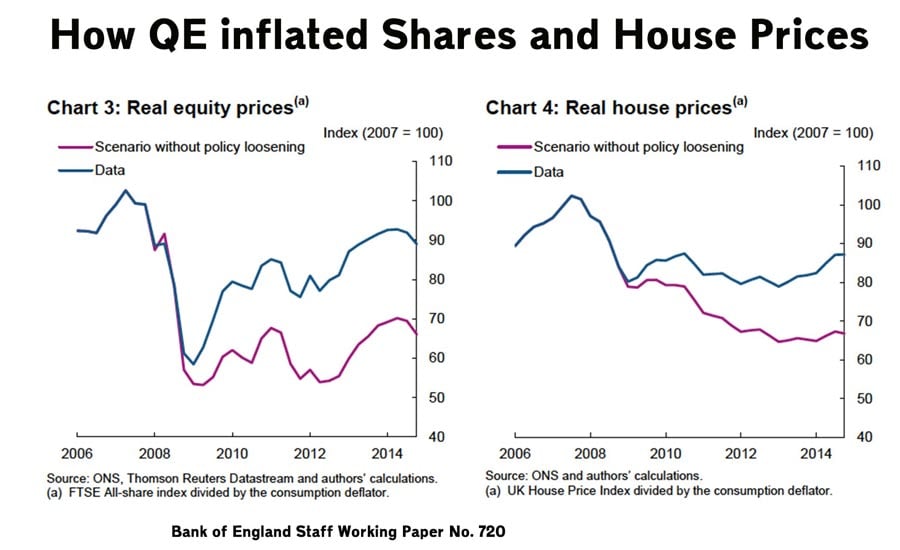
Finally, some argue QE was responsible for surging asset and housing prices. There is some truth to this, the Bank of England agree it was significant. Reversing QE then in theory, will reduce the housing asset bubble and make it more affordable. It is interesting to see how much real house prices have fallen since 2022 when the Bank started to reverse QE.
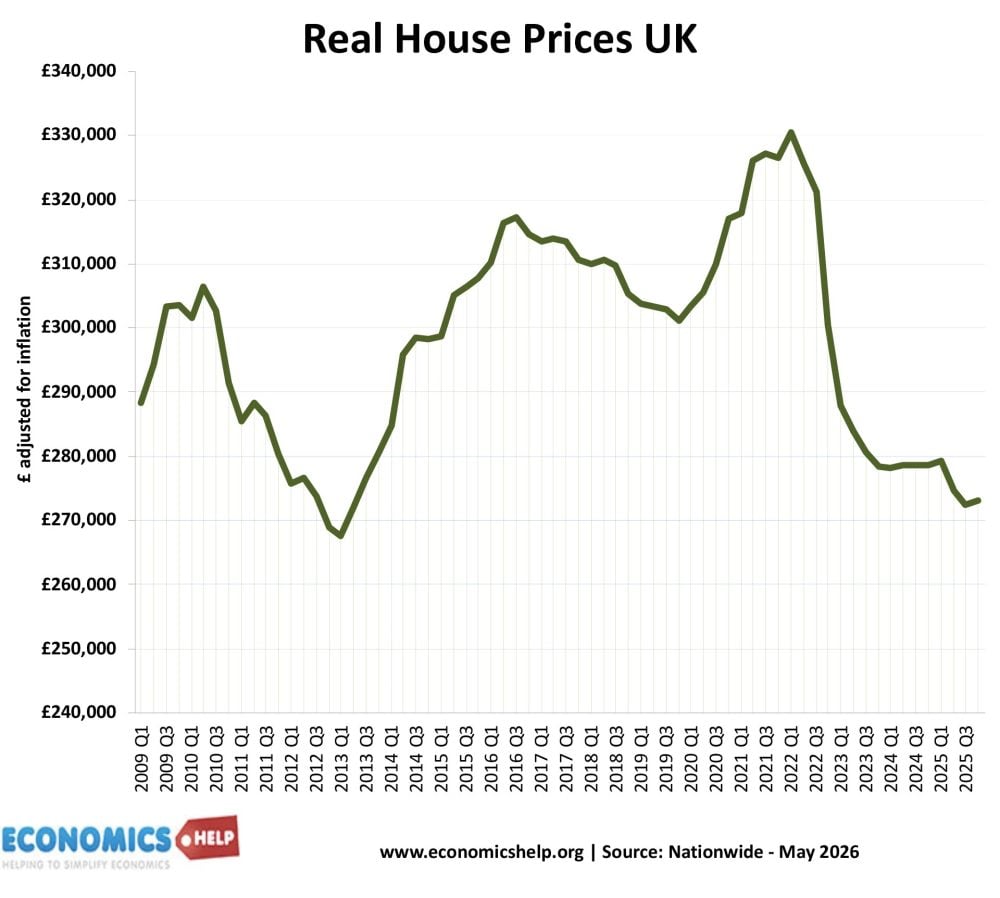
Guess when QT started (end of 2022)
But, whilst these arguments are true, you can’t hide from three conclusions. QE has been mismanaged, especially since 2020. Given the surge in bond yields, it makes no sense to actively sell off gilts and push up yields even more. Thirdly, the Bank has ended up with huge political influence which is concerning given how much governments are defined by bank of England decisions.
Now with rising bond yields and higher inflation is the UK economy really all grim and negative. By popular demand, I tried to look at the positive case for the UK economy. This video was fun to make, a bit shorter than usual and by no means overly optimistic, but I do recommend it.
Sources
Bank of England estimate QT has raised bond yields by 20bps
44–70 basis points https://www.nber.org/system/files/working_papers/w32321/w32321.pdf
“The Committee may judge it necessary to unwind any unconventional policy instruments, consistent with the requirements of this remit, for monetary policy purposes.”
https://niesr.ac.uk/blog/what-next-quantitative-tightening
https://unherd.com/2024/02/the-bank-of-england-gambled-with-your-money-and-lost/
https://neweconomics.org/2025/02/the-bank-of-england-is-costing-us-billions?utm_source=chatgpt.com
https://substack.com/home/post/p-198108216
https://www.youtube.com/watch?v=mVD8XaRfs4c
https://publications.parliament.uk/pa/cm5804/cmselect/cmtreasy/219/report.html
https://www.bankofengland.co.uk/-/media/boe/files/working-paper/2024/quantitative-easing-and-quantitative-tightening-the-money-channel.pdf
https://niesr.ac.uk/wp-content/uploads/2022/08/From-QE-to-QT.pdf
https://www.rethinkeconomics.org/wp-content/uploads/2022/03/Understanding-the-Bank-of-England.pdf
www.hl.co.uk/shares/shares-search-results/t/treasury-0.5-22102061-gilt/share-charts
https://www.omfif.org/2025/11/a-tale-of-two-debts-in-france-and-the-uk/
https://www.ft.com/content/f86abe99-195f-48a0-98ad-686b78ef91f3
About The Author
