
It’s very easy to make a pessimistic article about the UK economy, bond crisis, oil shortages, inflation returning, economy stagnating. But is there a danger of over-dosing on the negative news? A reader challenged me to make a more positive case for the UK economy. Well this might be shorter than your average post, but let’s give it a go.
The IMF recently updated their growth forecasts for UK economy, stating the UK enter this latest global shock with “more momentum than expected.” – I think the key thing there was low expectations. In fact, growth per capita has been reasonable compared to other G7 in past couple of years.
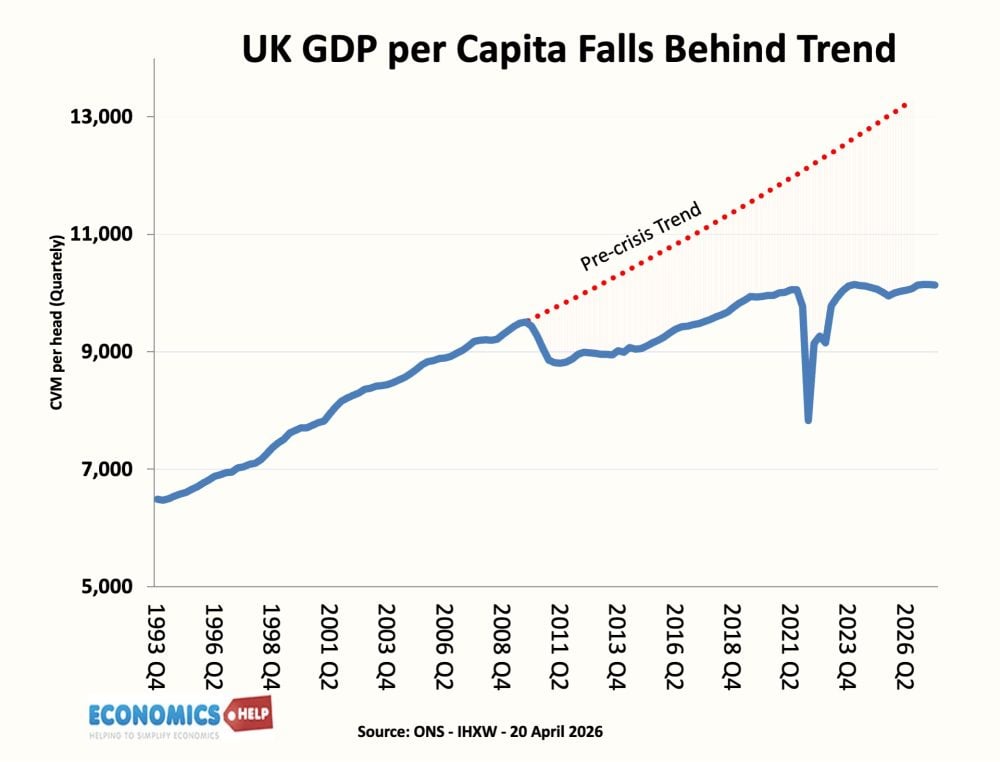
And per capita growth is something that the UK has been pretty poor at in the past 16 years. But, if you look very, very closely you can start to see an uptick.
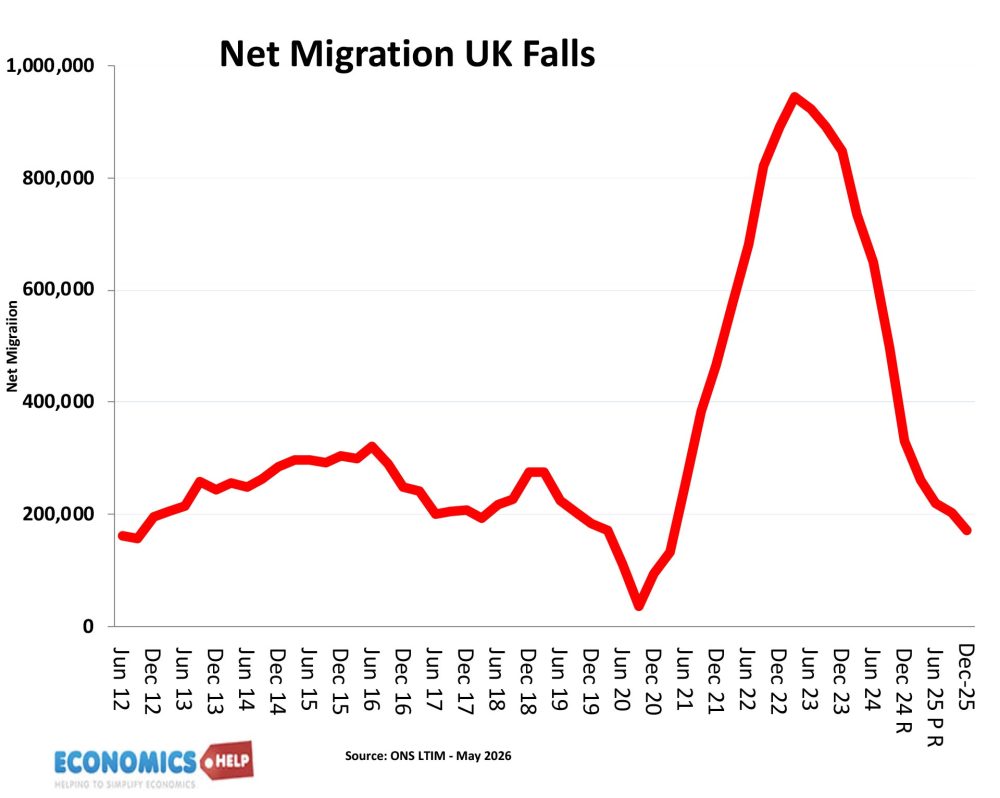
One reason for the improvement in per capita GDP is that net migration has fallen sharply in recent years. The high levels of the Boris Wave contributed to soaring rents. But most people are not aware of how much net migration has actually fallen.
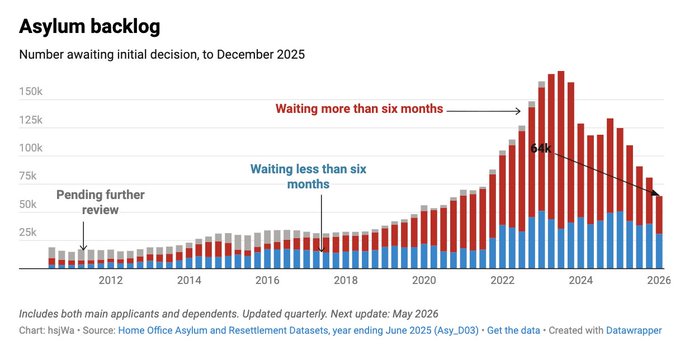
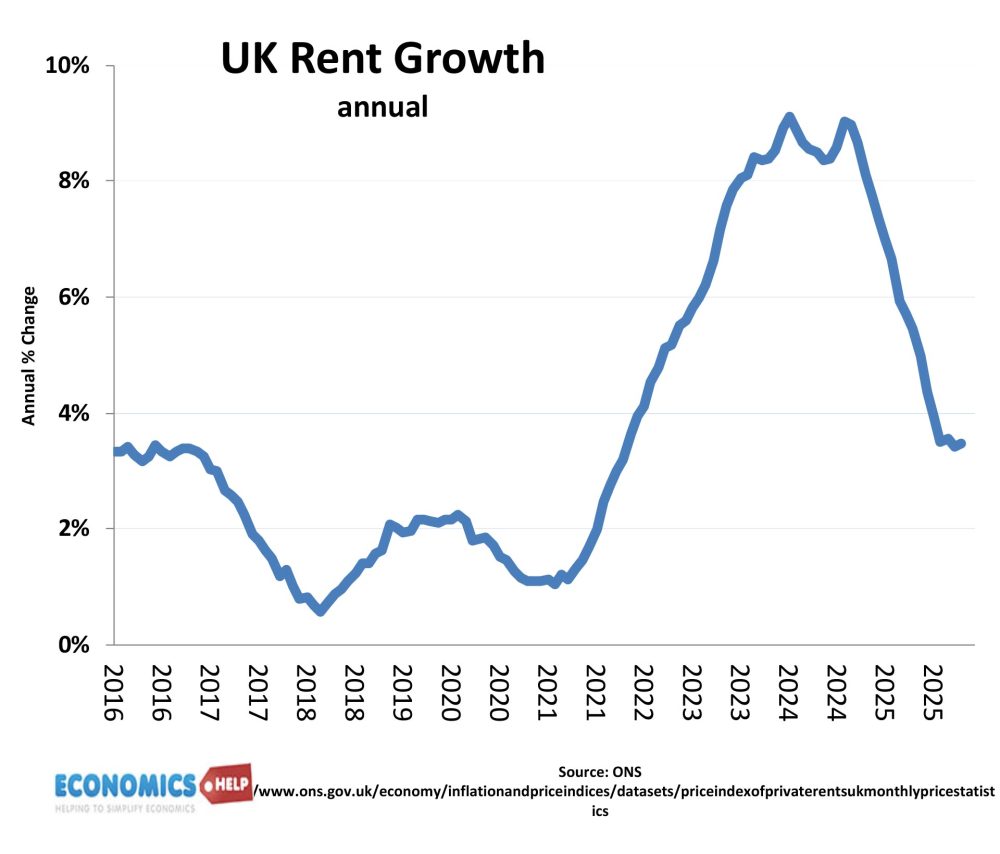
Another quiet success is clearing the asylum backlog. Of course, you might not see a fall in net migration as an unqualified success, but the decline in foreign students is hurting the university sector. But rental growth has also fallen in recent months to more moderate levels. This is despite the new renters’ reform bill which has abolished no fault evictions and other renter rights.
Another quiet improvement in the UK economy is the reduction in the cost of buying a house.

There have been falls in real house prices and falls in house-price to income, which makes it a little more possible for people to buy, though you can still see it is very high by historical standards and not really caused by a boom in house building, more due to higher interest rates. For many the real cost of housing is renting and this is increasingly unaffordable for many.
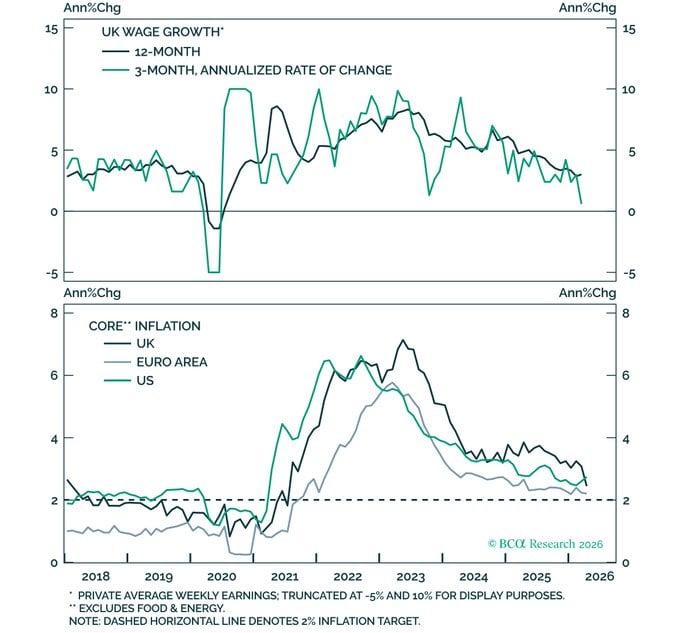
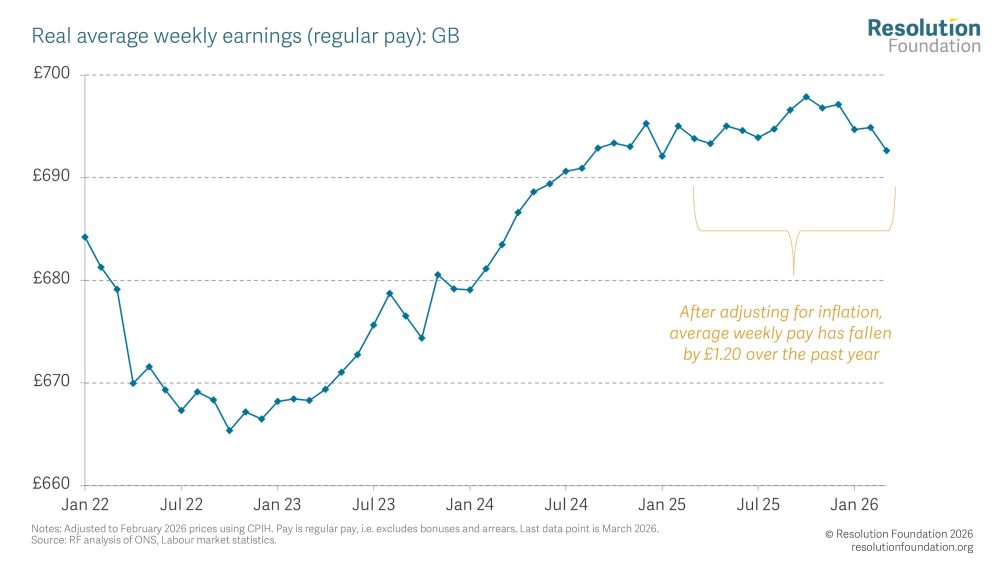
On inflation, the UK was the only major economy to have a lower inflation rate last month. If you look at core inflation, there are signs that the UK is falling closer to US and Eurozone levels after years of above average inflation. But even the most optimistic take can’t get too carried away by this monthly. Producer inflation is running at 7.7%, and that is a better guide to what is coming down the line. And as inflation rises, we risk another period of falling real wages. The main reason for lower inflation is falling wage growth. The Resolution Foundation show we are already hitting negative real growth.
But this video is supposed to be a more optimistic take so I’ll try not to get distracted. So what else is going well? The NHS Report a huge improvement in waiting lists. With nearly half a million fewer people on waiting lists than July 2024. However, if we zoom out, it is still pretty high by historical levels and a long-way to go before we reach pre-covid crisis levels.
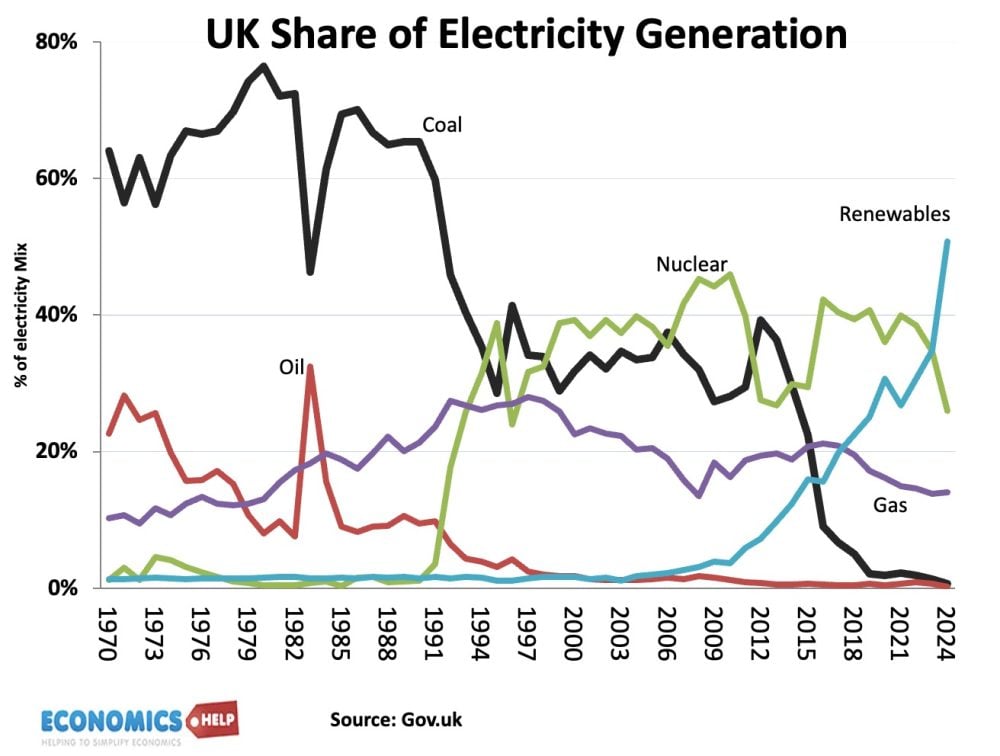
The UK is pretty exposed to the oil crisis, being a net importer of energy, but the good news is that the power mix has shifted away from fossil fuels. UK power prices are increasingly independent from gas. The decline in CO2 emissions means the government has agreed remove the carbon tax on electricity generation, this will reduce the cost of all forms of power from 2028. And with improvement in battery technology, there is hope that solar will become more adapted to providing 24 hour energy, rather than just when sun shines.
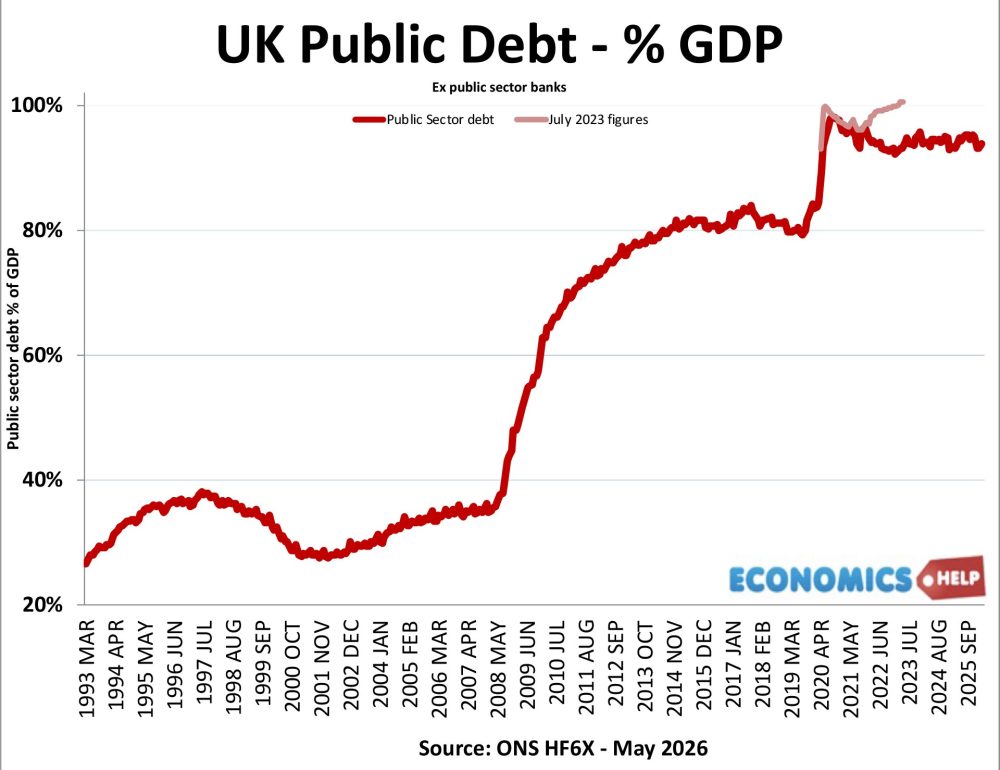
I remember a few years ago talking about how UK debt reached 100%, but actually two years later, the ONS have significantly revised down the data and actually, debt was only 94%. If anything, debt is now slightly falling. The government’s borrowing was helped by revenue from wealth taxes. Revenue from inheritance tax and capital gains exceeded £30 billion for the first time, up almost 40%.
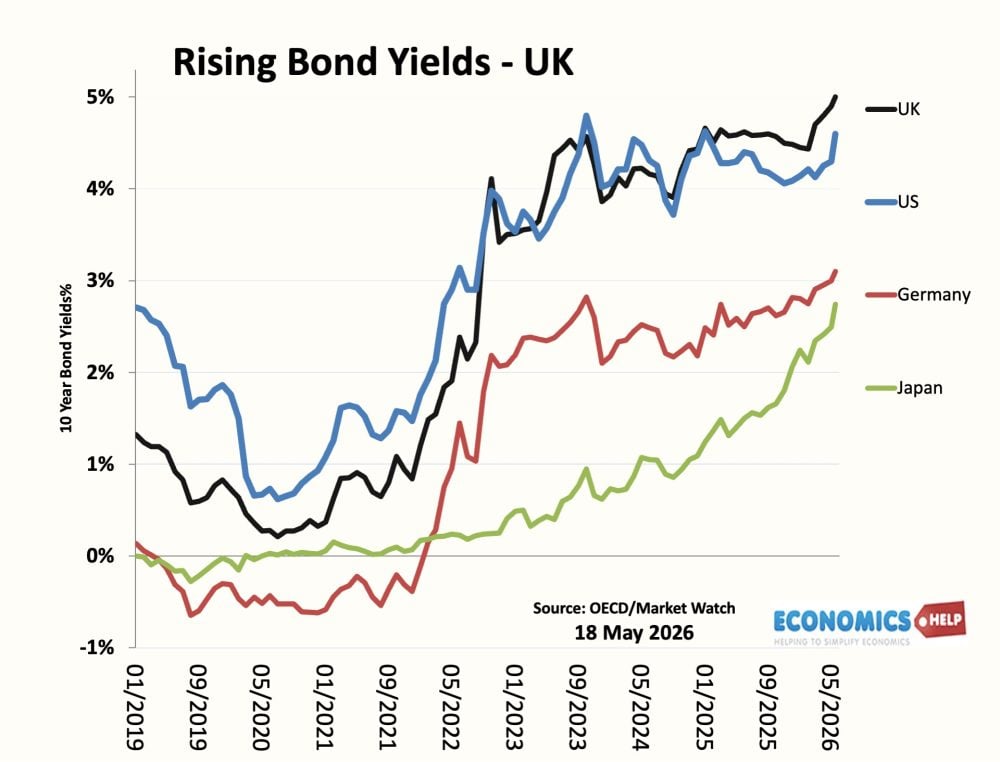
Even the surge in bond yields may not be quite as bad as it might first appear. The reason is that the Bank of England has achieved, if that is the right word, to reduce QE holdings by £368 billion. This is definitely a factor in pushing up UK bonds relative to elsewhere. So the high UK bond yields are not just a story of UK political and economic failure, and if the Bank of England slowed down QT, it would give more breathing space and stop landing the taxpayer with huge losses.
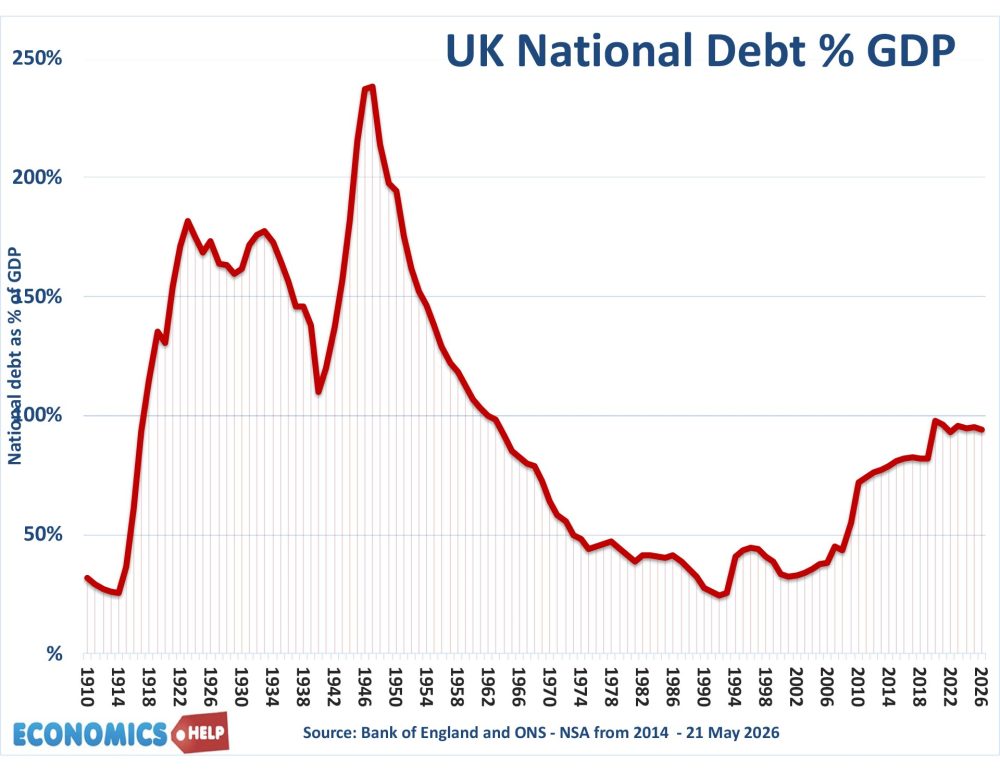
And if you look at UK historical debt. 94% debt is actually below the long-term average of 107%. So that doesn’t sound so bad – just don’t mention the looming demographic crunch, ageing population and rising pension, welfare and health care spending.

In some sectors, the UK is struggling, but there are also bright spots. UK attracts nearly 50% of European Venture capital. The IT sector is seeing strong growth in productivity and there are signs that the city of London has shrugged off fears it would lose out post-Brexit.
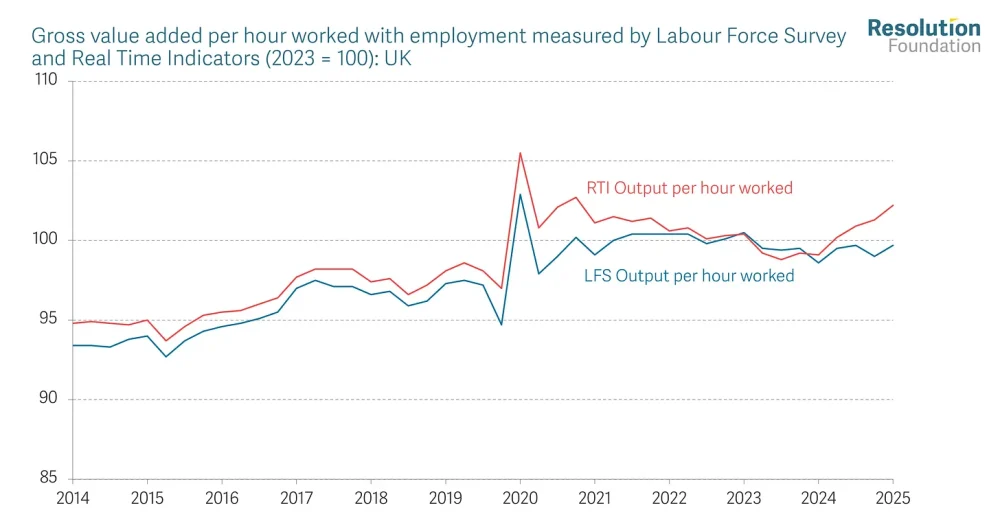
Resolution Foundation also suggest that productivity may be better than official statistics suggest, though this is due to fact people may be working less than reported.
The UK also has a thriving bio-tech sector. It is great at developing products, less successful at bringing them to the market. But a reminder that the UK does have skilled labour and good education sector.

Another moral panic in the UK, is the idea that everyone is on benefits these days. The new generation too lazy to work. But, if you look at statistics for inactivity rates – the % of working age people not in labour market. Inactivity has been falling steadily. This is primarily due to lower structural unemployment and fewer women staying at home to look after children. There is still a rise in health inactivity.
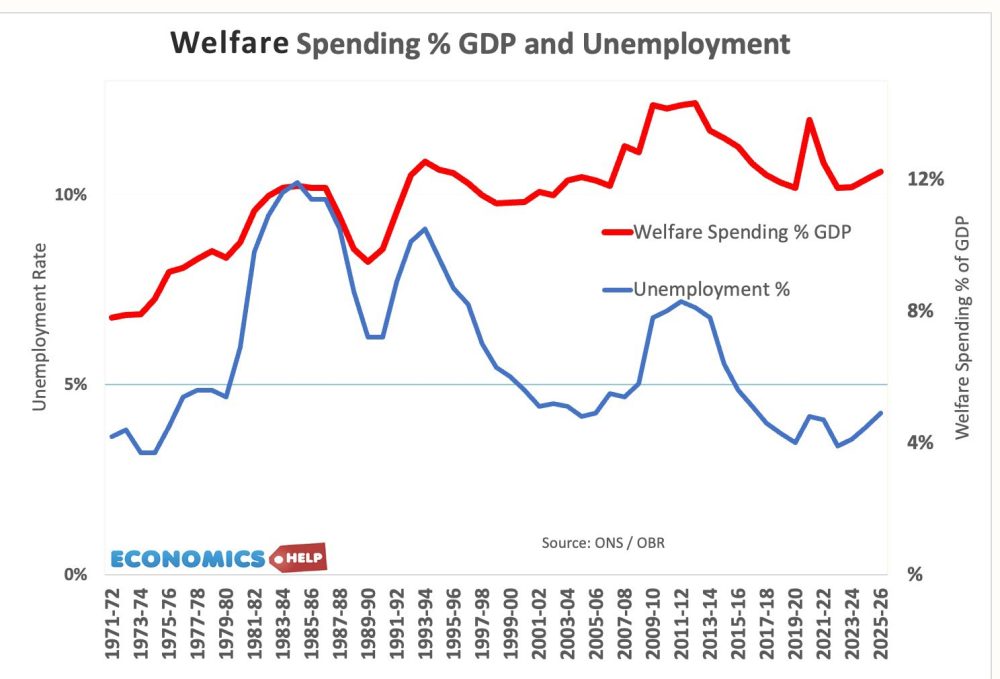
Another moral panic is that the welfare bill is soaring out of control. But as a share of GDP, the welfare bill is not particularly soaring out of control – despite big rise in pension spending.

Another moral panic is that crime is on the rise. But, if we use survey of victim based crime, this is in long-term decline since 2000. Though I would point out that this excludes non-victim based crime, e.g. shoplifting, fraud and computer misuse and these are definitely on the rise.
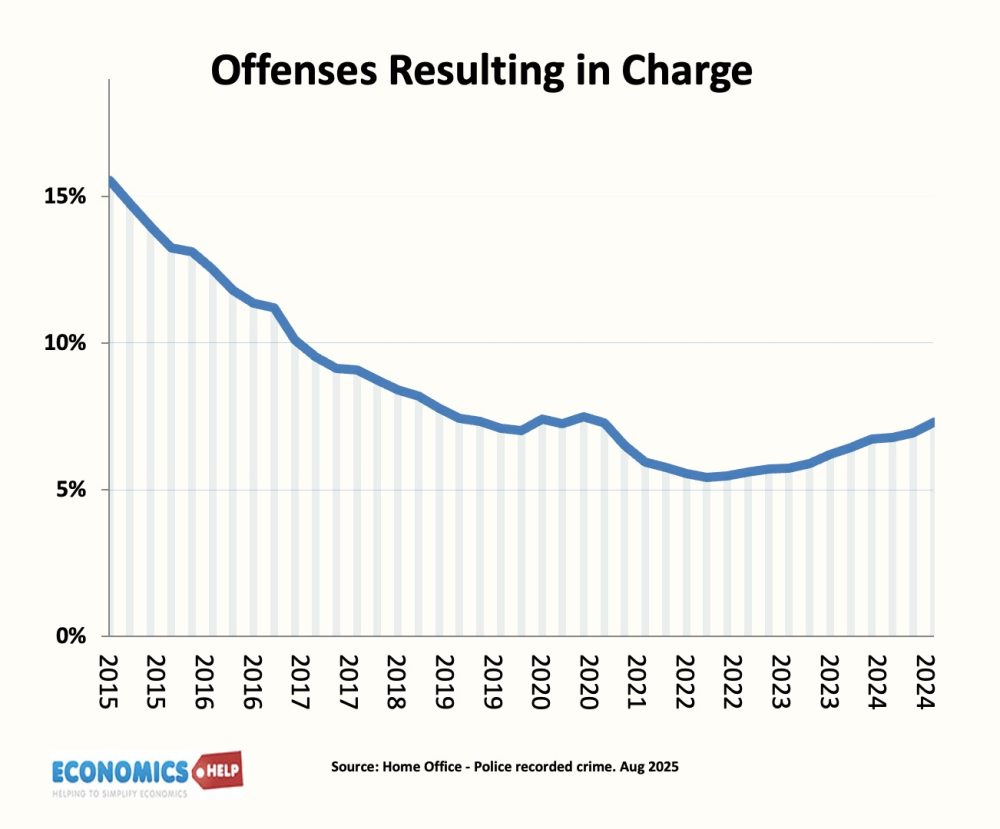
There’s also been a decline in offenses resulting in a charge.
So does this mean the UK economy is doing well.
No, the overall data suggests very serious problems. It doesn’t alter the fact of stagnating incomes and real hardship across the economy. And the very tentative signs of recovery we saw at start of year are likely to be wiped out by the crisis in the Middle-East, something largely out of our control.
Anyway what do you think? Too optimistic or would you like to see more videos like this. Let me know what you think.
Sources
https://www.investorschronicle.co.uk/content/83fd45be-74c5-4790-8664-e8628567b955
https://www.england.nhs.uk/statistics/statistical-work-areas/
https://frasernelson.com/data/migration/
About The Author
