
Definition of Fiscal Drag
Fiscal drag is a concept where inflation and earnings growth may push more taxpayers into higher tax brackets. Therefore fiscal drag has the effect of raising government tax revenue without explicitly raising tax rates.
This fiscal drag has the effect of reducing (or limiting increase) in Aggregate Demand and becomes an example of a mild deflationary fiscal policy. It could also be viewed as an automatic fiscal stabiliser because higher earnings growth will lead to higher tax and therefore moderate inflationary pressure in the economy.
Bracket Creep and Fiscal Drag
If the higher tax rate band is 40% for income over £30,000. Then rising average earnings will mean a higher % of the working population will end up paying the higher rate of income tax.
Fiscal drag could work in the opposite direction. If there is deflation and falling wages, fewer workers would be in the higher tax bracket. However, deflation has not been common since pre-1939.
Fiscal Drag could be overcome by indexing tax bands to earnings or inflation. However, this is not usually done.
Real Fiscal Drag. If tax brackets are increased in line with inflation, earnings may be growing faster. This means a higher % of earnings will fall in higher tax brackets.
Stamp Duty and Fiscal Drag
In 1993, Stamp Duty was 1% for homes less than £60,000. In 1993, the average house price was £65,000 so many didn’t have to pay stamp duty. By 2005, the average house price had risen to over £150,000, meaning very few no longer paid stamp duty.
In this period, it was estimated the income from stamp duty rose ninefold.
Higher tax threshold in UK – Fiscal Drag

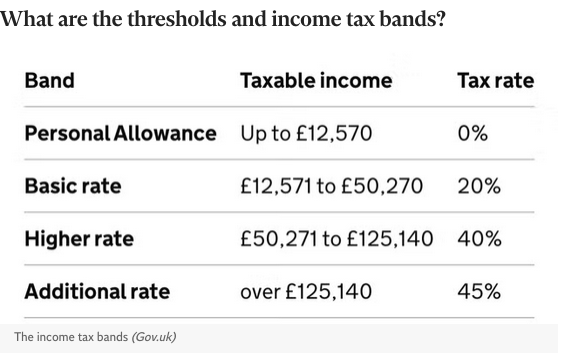
This is a good illustration of fiscal drag and the higher rate of income tax. Inflation and rising nominal wages saw a big decline in the real value of the higher rate of income tax – bringing more people into the higher rate.
How Progressive is fiscal drag?
On the one hand you could argue that freezing thresholds is progressive because people on higher incomes more likely to pay higher rates of income tax. But, actually it is less progressive than just increasing the rate of tax.
The top 1% are barely affected by fiscal drag. Fiscal drag hurts those on just above median salaries the most.
Related concepts
About The Author
