Definition of ceteris paribus
Ceteris paribus is a Latin phrase meaning ‘all other things remaining equal’
The concept of ceteris paribus is important in economics because in the real world, it is usually hard to isolate all the different variables.
Assuming ceteris paribus allows us to simplify economics – we can understand how something like higher price will affect demand – ignoring all other factors which might complicate the outcome.
Ceteris Paribus
“All other things being equal”
Ceteris paribus is an assumption used in economics where only one variable changes, while all other factors are held constant.
Example
If the price of coffee rises, then ceteris paribus, the quantity demanded of coffee will fall — assuming income, tastes and prices of substitutes stay the same.

Example of Ceteris Paribus in Economics
- An increase in interest rates will ceteris paribus, cause the demand for loans to fall. (Higher interest rates increase the cost of borrowing so there will be less demand for loans. However, if confidence was high, people might still want to borrow more. Ceteris paribus assumes things like confidence remain the same.)
- Ceteris paribus, higher oil prices should lead to less demand for oil.
- Ceteris paribus, higher interest rates should lead to lower economic growth.
- Ceteris paribus, higher prices of coffee should encourage growers to try and increase the supply of coffee.
Importance of ceteris paribus
1. Identifies cause and effect. In the real world, it is very hard to isolate only one factor. For example, if we look at exchange rates, we would expect higher interest rates (ceteris paribus) to cause an appreciation in the currency. But, in the real world, there will be many other factors affecting exchange rates.
For example, if there was a lack of confidence in the countries economy, then investors may not want to buy the currency – despite higher interest rates. However, by isolating the other factors, we can consider how higher interest rates are likely to have an effect and understand the impact of higher interest rates – ignoring all the other complicating factors.
2. Makes economic models workable. If you take any economic model, it rests on ceteris paribus.
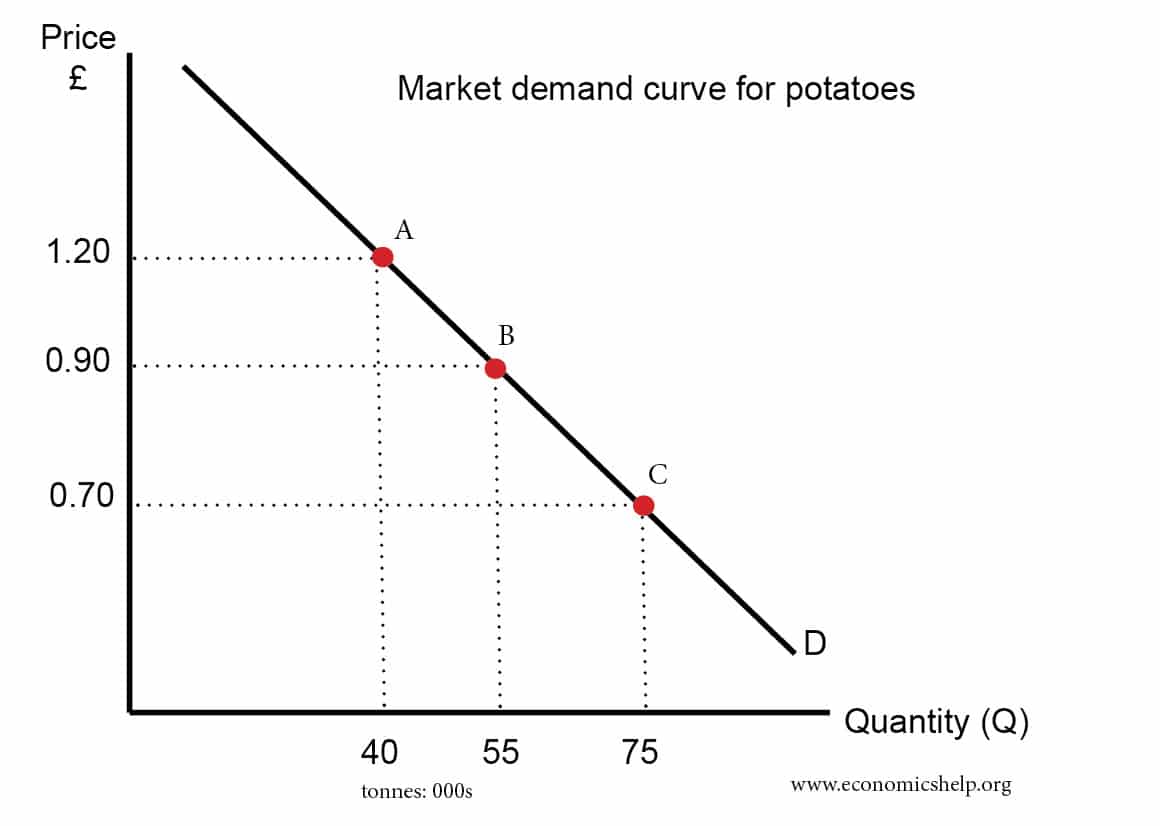
If we take a demand curve like above; we draw a demand curve assuming that everything else stays the same apart from the price.
Therefore, in the above example, we can say that an increase in the price from £0.90 to £1.20 will ceteris paribus, cause a fall in demand from 55,000 tonnes to 40,000 tonnes. Of course at same time as price rising, potatoes may become more fashionable, shifting demand to right.
3. Helps to suggest policy
When evaluating a policy like should we increase tax on alcohol. We can examine how a tax may affect demand in isolation, putting aside real-world complications like shifting demand from changing cultural preferences.
Related
About The Author
