

There has been a lot of talk of a budget blackhole of £20bn – £30bn, but the real hole in UK finances is much greater, unfunded liabilities of pensions, crumbling buildings, infrastructure backlogs, PFI commitments, housing crisis, and social care. And all this is occurring against a backdrop of lower growth and rising inactivity. How big is the hidden blackhole.
In recent weeks, there was shock when prisoners were mistakenly released early. But, although this year is a record, it is not a new phenomenon. Since 2008, justice has been one of the biggest targets of austerity. By 2020, justice spending was 24% lower than 2007, and adjusted for the higher population 32% lower. Cutbacks have left a prison system with overcrowding, bad morale and crumbling buildings. A parliamentary report suggested 75% of prisons were inadequate or showing no improvement with Education cut and reoffending rates rising. At a minimum, an extra £1.8 billion is needed to improve the prison system, and even more to tackle backlogs in criminal courts.
Local councils
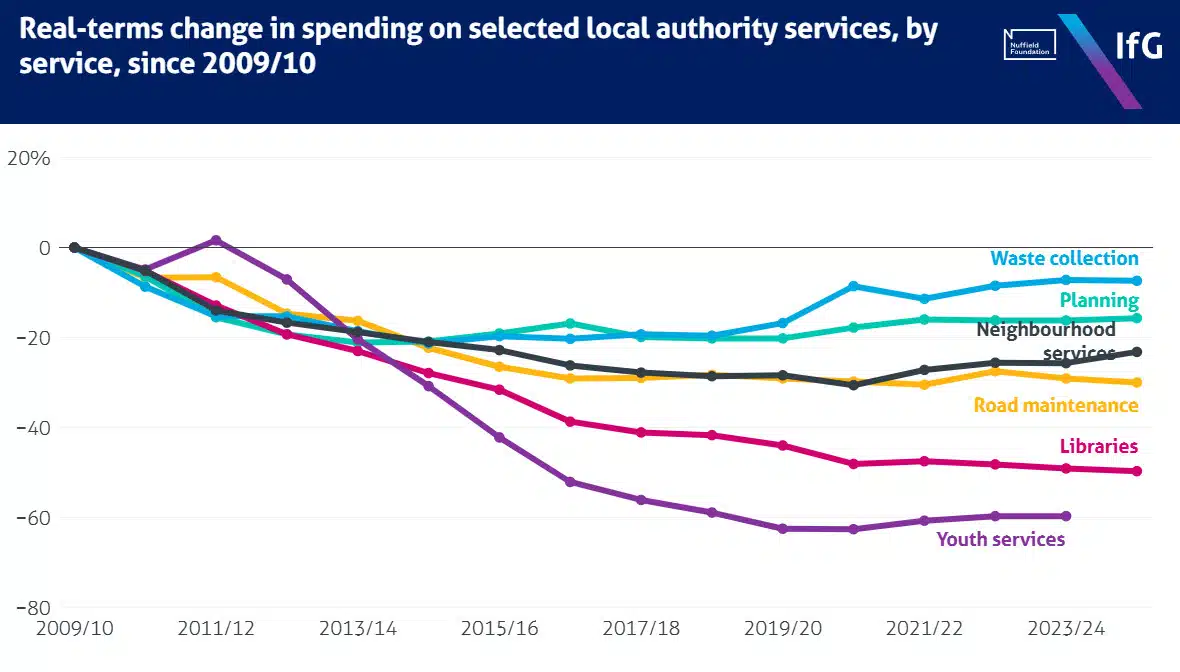
If it was just a prison service in crisis, it would be quite fixable, but cracks are showing in every area. One of the hardest hit areas has been local councils. Local councils again suffered heavily from the austerity era, with funding cut significantly. But, at the same time as funding cuts, they face three huge pressures for more spending. They have legal requirements to provide social care, temporary accommodation and education for special needs. Social care bill has skyrocketed as the population ages, but councils have limited tax-raising power. They are being asked to provide a service without the means. Secondly, the cost of living crisis, especially in housing, has seen a rise in homelessness, defined as living in temporary accommodation. As a result, council spending on temporary accommodation has increased. A third burden has been the rise in special needs education.
The number of pupils with SEND and EHCPs has increased 20%. A council has a legal requirement to send to school of choice, even if this involves a taxi bill running into millions.
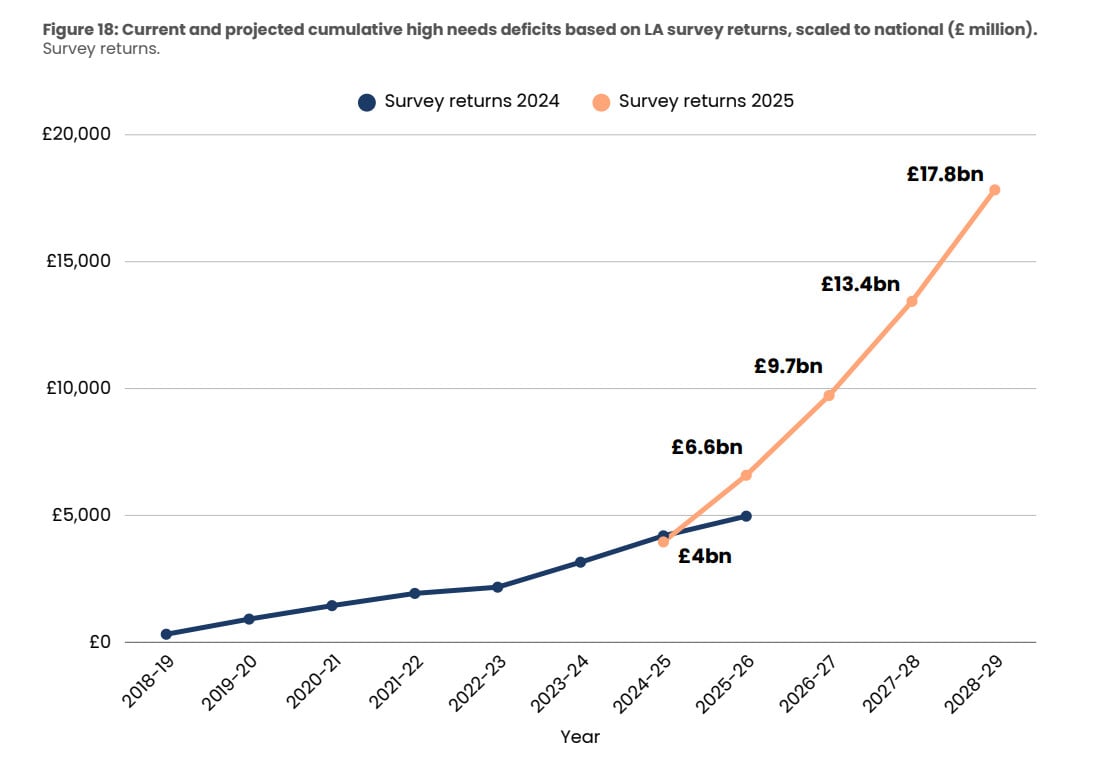
But, this problem is set to get worse, with surveys of local councils suggesting the expected special needs deficit is forecast to soar from £4 billion to £17.8bn by 2029.
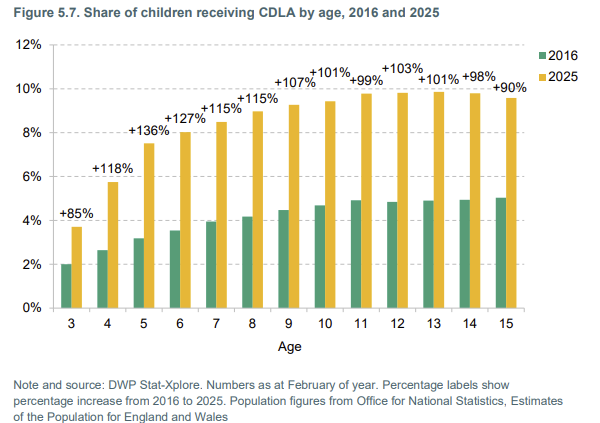
The rise in mental health problems among the young is a ticking time bomb in terms of finance. Since 2016 the number of children receiving child disability allowance has increased by over 100%, and one of the stats that raises concerns is the expected rise in health-related benefits, both PIP payments and incapacity benefits.
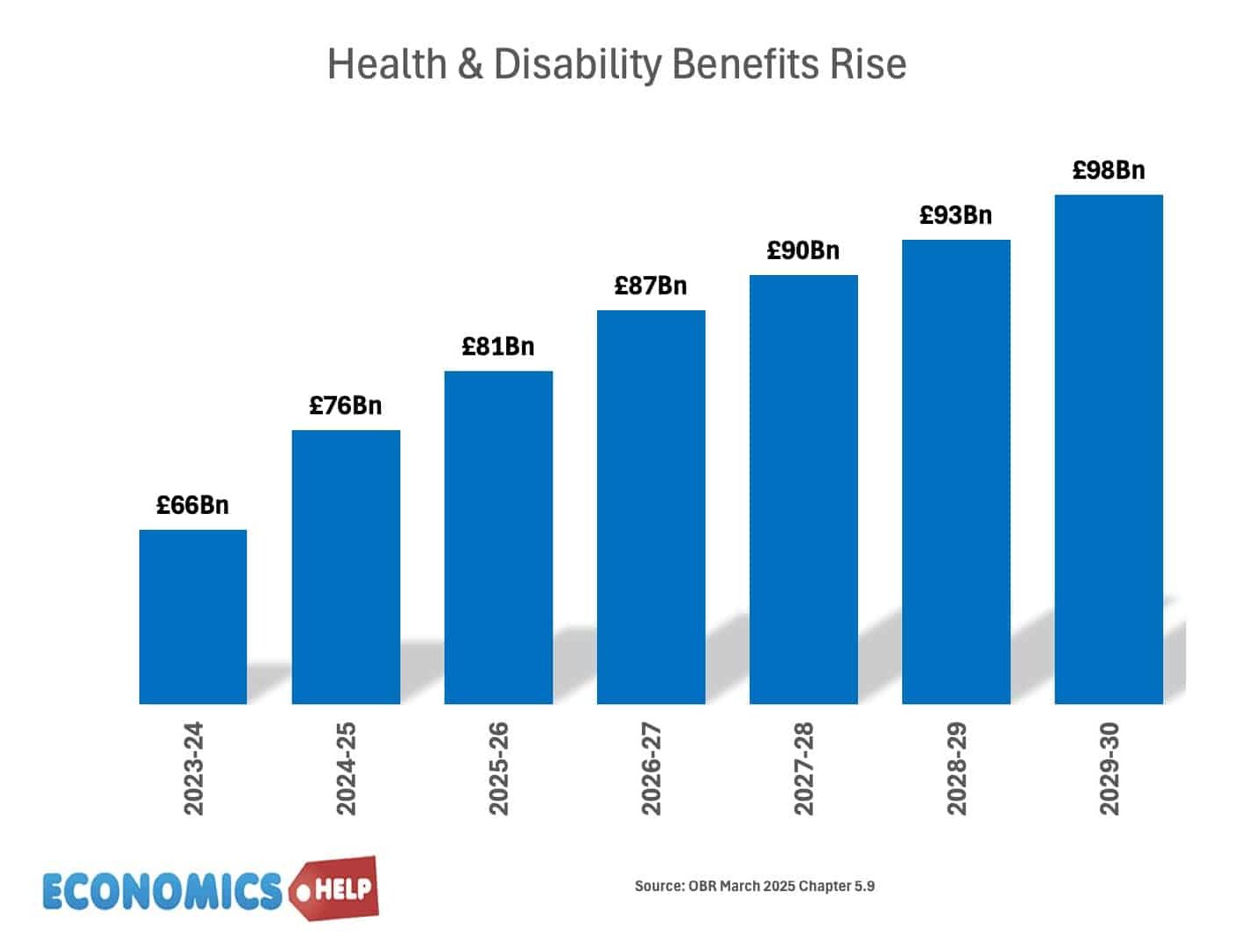
£98 billion sounds a big bill but this is dwarfed by the expected rise in pension spending. The basic maths is that the ratio of old people to working age is going to rise from 25 to 45 within a few decades. But, at the same time, we have a system where state pensions are likely to rise faster than wages, making it very hard to afford, without ongoing tax rises.

It is worth bearing mind, that despite the fact pension spending will rise as a share of GDP, The UK state pension is relatively low compared to others, the UK still relies heavily on private pension top ups to meet a statisfactory level.
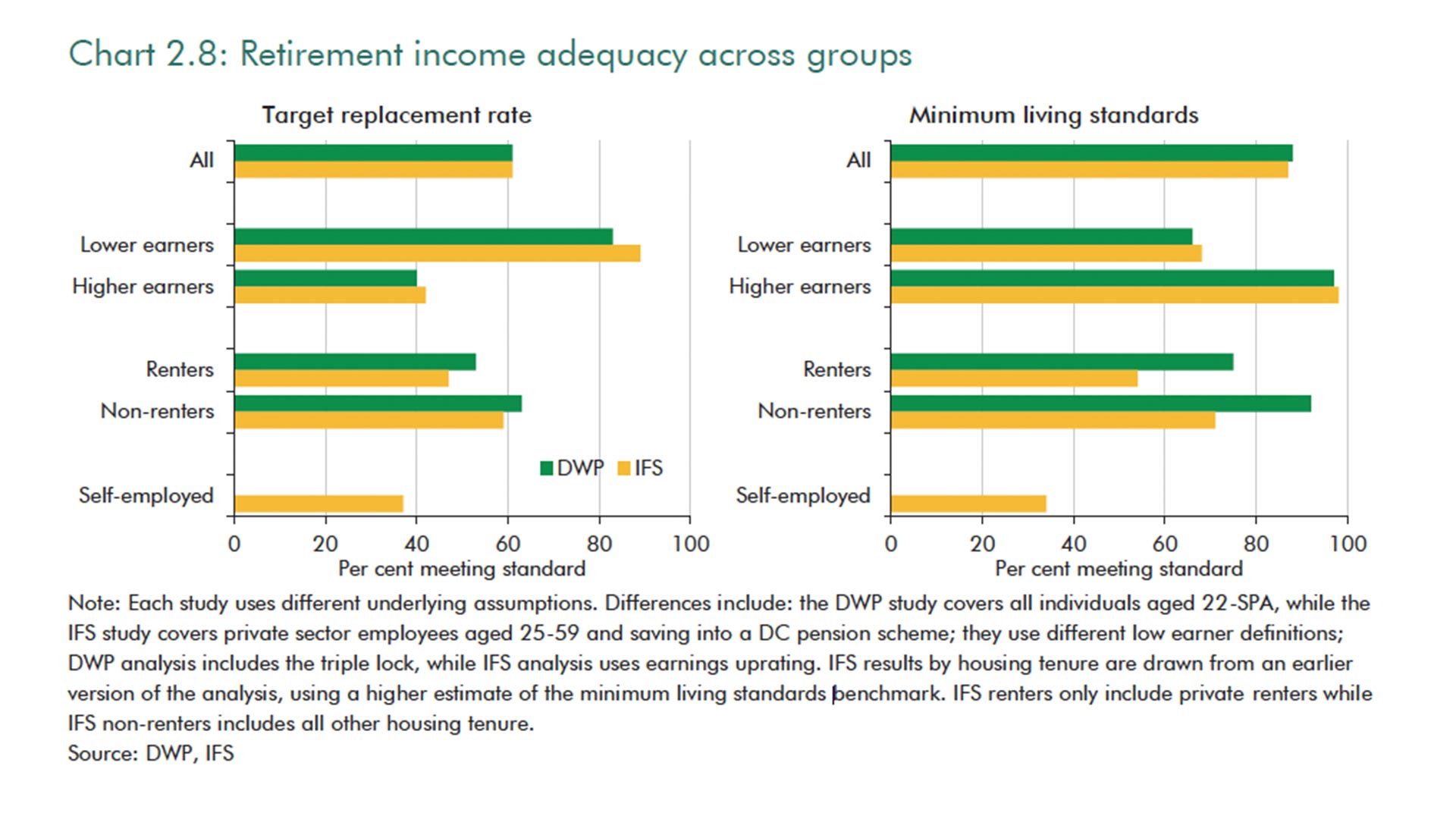
The problem is that when you rely on private sector pension to meet half of pension income, some will slip through the cracks, for example, the self-employed like myself have very low rates or private pensions. And there is another complication. In the past, retired people generally had low housing costs, either they had paid off their mortgage or lived in subsidised social housing. But, the rise in rents combined with fall in home-ownership, mean we face a new generation of retirees having to pay market rents whilst only getting a pension income. The problem is not one so much of intergenerational inequality, but inequality between those who own a house and those who don’t. The share of British people paying more than 40% on housing is one of the highest in worlds, this is a hidden cost in terms of cost of living, and puts pressure on government benefits to stave off the worst of poverty. The problem is with so much pressure on short-term needs, the state doesn’t feel it has the capacity to invest in long-term solutions, like say building houses. In the 1970s, the government did build houses; now we spend that money on housing benefits.
Ageing population
An ageing population will also cause health care spending to rise as a share of GDP. Now if this sounds alarmist bear in mind, forecasts of UK fertility have generally been wrong and overly optimistic. I guess the one silver lining of lower birth rates at least from a financial perspective is that we will be able to close schools and cut education funding. Which is probably a good job, because as pension benefits take a bigger share of GDP, other budgets like education will be squeezed.

At this point you might think, that’s enough of the bad news, can’t you give me something a bit more positive. Well, austerity did actually shrink working age benefits as a share of GDP.
For all the panic over rising health related benefits. Working age benefits have stayed fairly constant as a share of GDP. In fact, some argue the reduced value of universal credit has created an incentive to try and get on health related benefits. But, it has also come at a cost of rising child poverty, which does store up problems for the long-term.
Public Sector Pensions
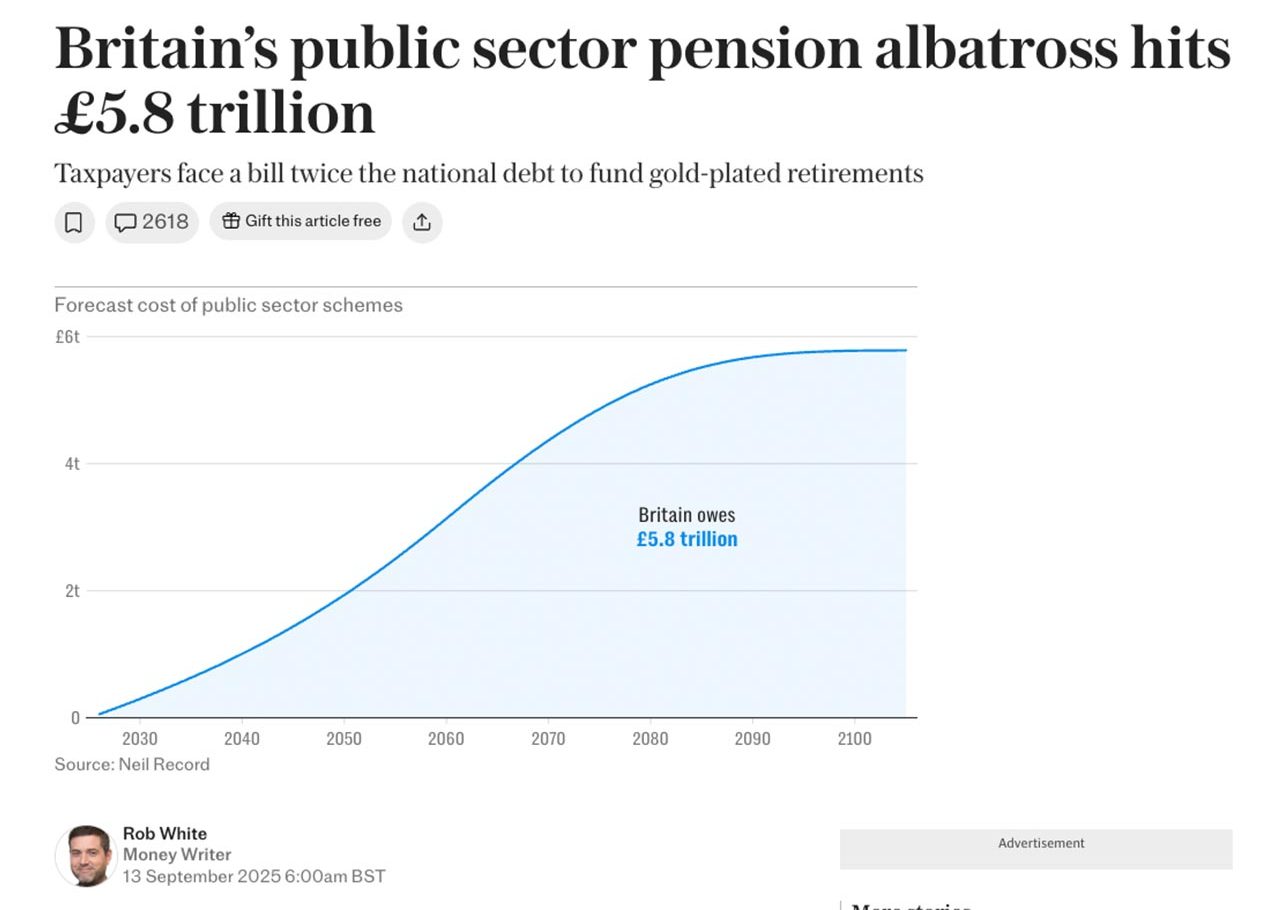
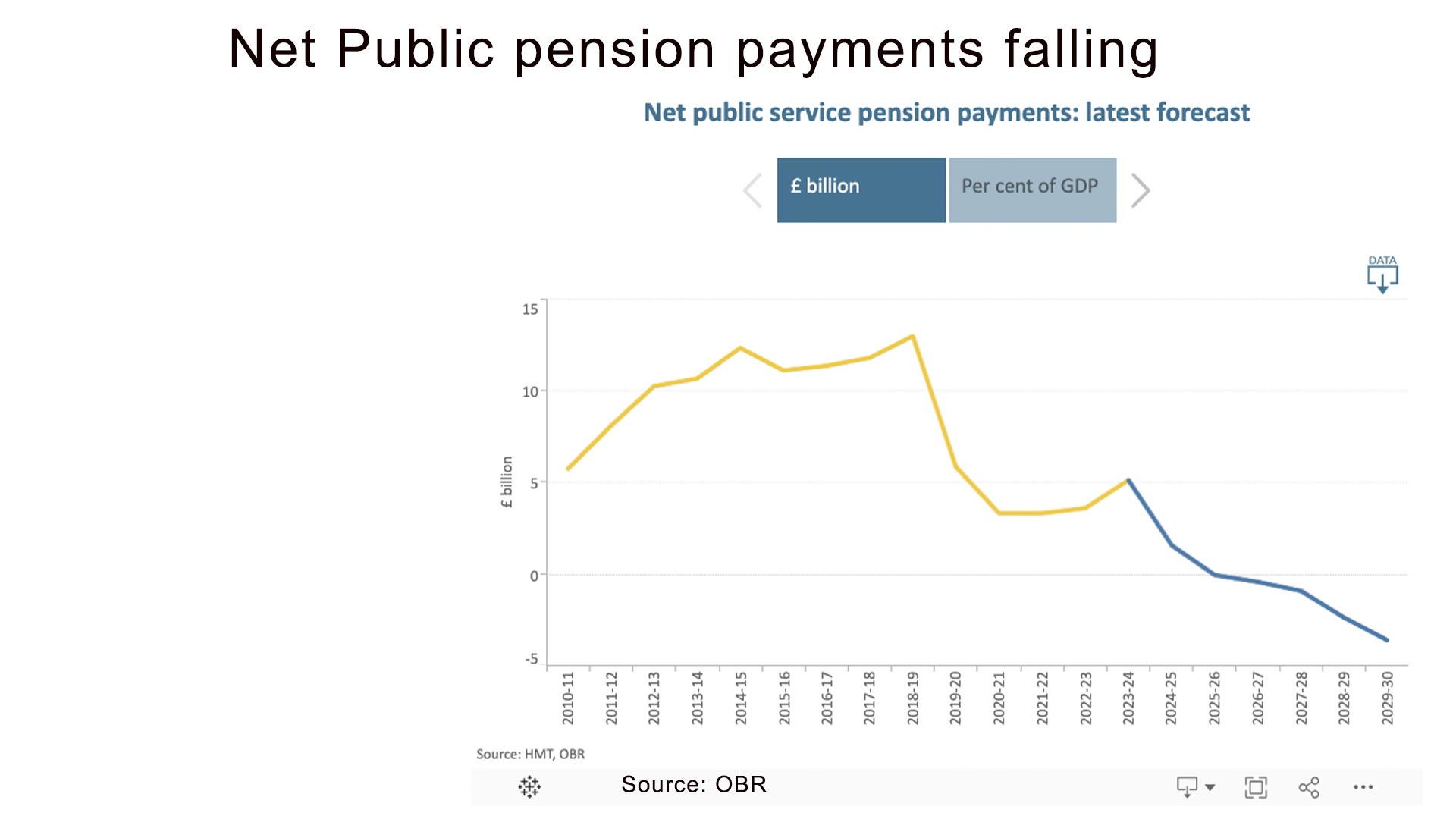
But, in terms of budget blackholes, one blackhole, we haven’t even mentioned yet is public sector pensions. Traditionally, public sector jobs often traded relatively lower salaries for more generous pensions. The Daily Telegraph cite a former Bank of England economist who claims the UK will have £5.8tn in total pension promises by the end of 2025-26. This figure is misleading because it includes the future effect of inflation and wage rises. The Treasury claim the discounted present value of pension liabilites are closer £1.3 trillion and recent changes have actually reduced the net cost of public sector pensions to the taxpayer. Nevertheless, the unfunded pension liabilities are a problem and require higher contributions from the employer, which is effectively the taxpayer.
The NHS is one area where government spending has increased significantly. Yet, partly due to Covid, it has failed to prevent waiting lists reach over 7 million. And there has also been a growing backlog in maintenance, with estimated costs rising from 6 billion to £13bn in a decade. Crumbling infrastructure has often seen hospital treatments delayed. And it’s not just in the NHS, the National audit office estimated that at the end of 2025, the UK maintenance backlog was £49 billion or £730 per person.
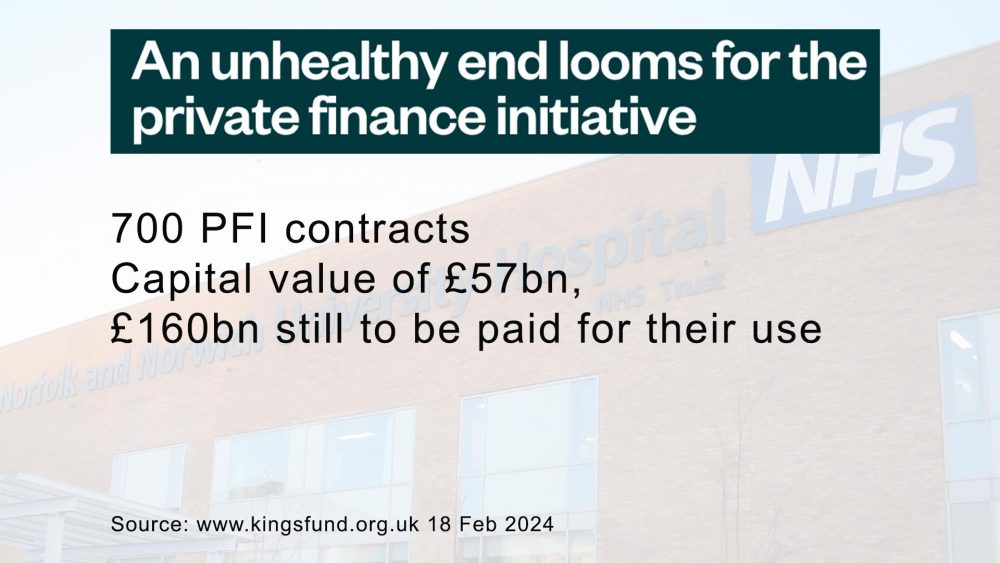
And during government austerity, it was often capital investment that was cut first, because the effects don’t show up in the short-term. And not only that, but to save money in the short-term, the government used private fianance initiatives to raise capital, but even though they have been stopped because they are very bad value for taxpayerrs, we are still left with the ongoing cost and repayments. Of 700 PFI contracts which gave a capital value of £57, £160bn is still being paid by the taxpayer for their use and maintenance. In a similar vein two decades of privatisation raised £70b in one off payments, but it left key public utilities in the hands of private sector equity, which has under-invested, paid dividends and left bill payers and taxpayers with the cost of higher bills to fix a creaking industry. No where is this more evident that water, privatised with zero debt, private firms loaded up debt, paid dividends but now the companies need bailing out by taxpayers and bill payers.
Contingent Liabilities

Another cost not on the governments balance sheet is contingent liabilities The OBR report this is £250 billion or 8.5% of GDP. By far the largest is the £115bn liabilities relating to the costs of decommissioning nuclear sites. The next biggest liability is clinical neglicence for lawsuits about health care. These liabilities are expected to last over 30 years.
Energy
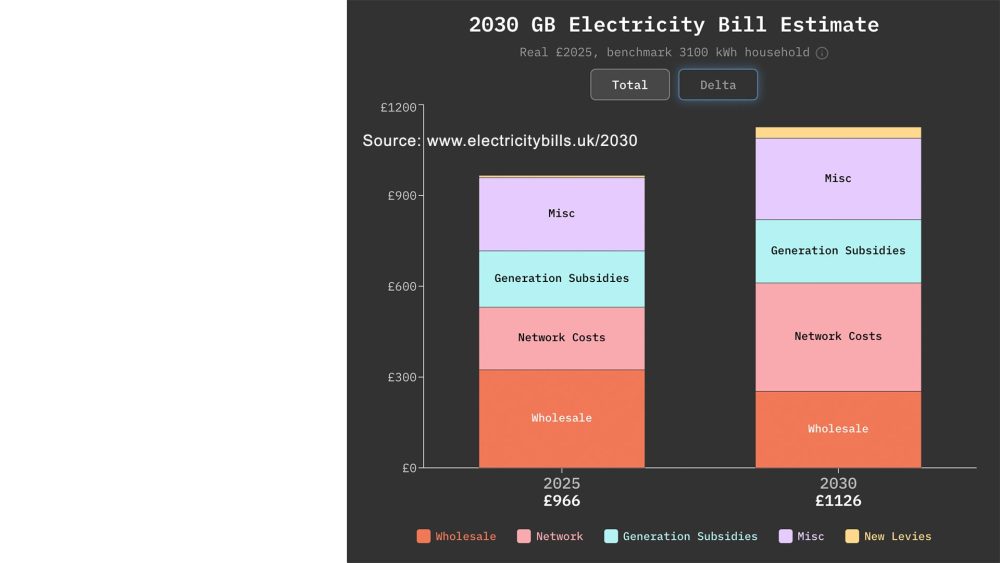
Another cost is the energy transition. Even if wholesale prices of electricity fall, the cost of grid investment and, network costs and subsidies will lead to higher energy bills by 2030. This is a problem, given that high electric costs are a big factor in causing a decline in the UK industrial sector and lower growth.
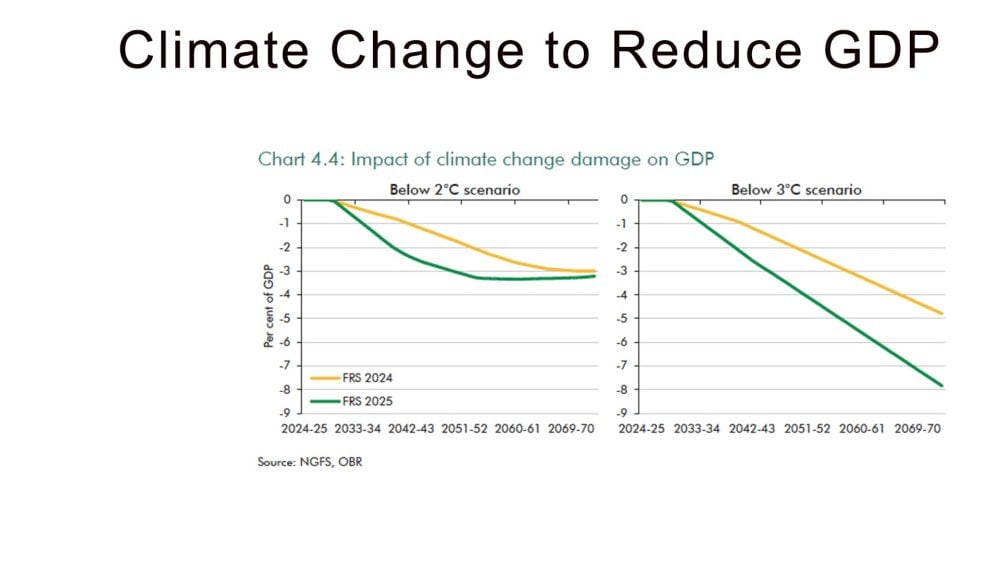 Overall the energy transition will be a net cost to the economy until 2040. And on the other side, the impact of climate change could be to reduce GDP with higher insurance premiums and increased volatility.
Defense
It’s not only the weather which is potentially more volatile; geo-political pressures are leading to demand for big increase in defense spending. And it’s not just that the UK needs to spend more on defense but the whole budget needs thinking. The recent war in Ukraine has radically changed the nature of modern warfare. Tanks and artillery is being to a large extent superseded by drone technology. Future military power may depend on how much cheap electronic drones you can make. And you can’t just rely on importing them from China…

So how will this extra spending be financed? We will probably see public debt continue to rise. It is worth bearing in mind, that the government fiscal rules assume debt falls within 5 years, and this is what the OBR forecast, but in recent years, the actual outcome has always been debt has continued to rise higher than forecast.

It is not unreasonable to assume debt will keep rising.

These OBR forecasts assume no change in government policy, so shouldn’t be treated as gospel, but actually, debt is likely to rise faster in the short-term, than these forecasts suggest.
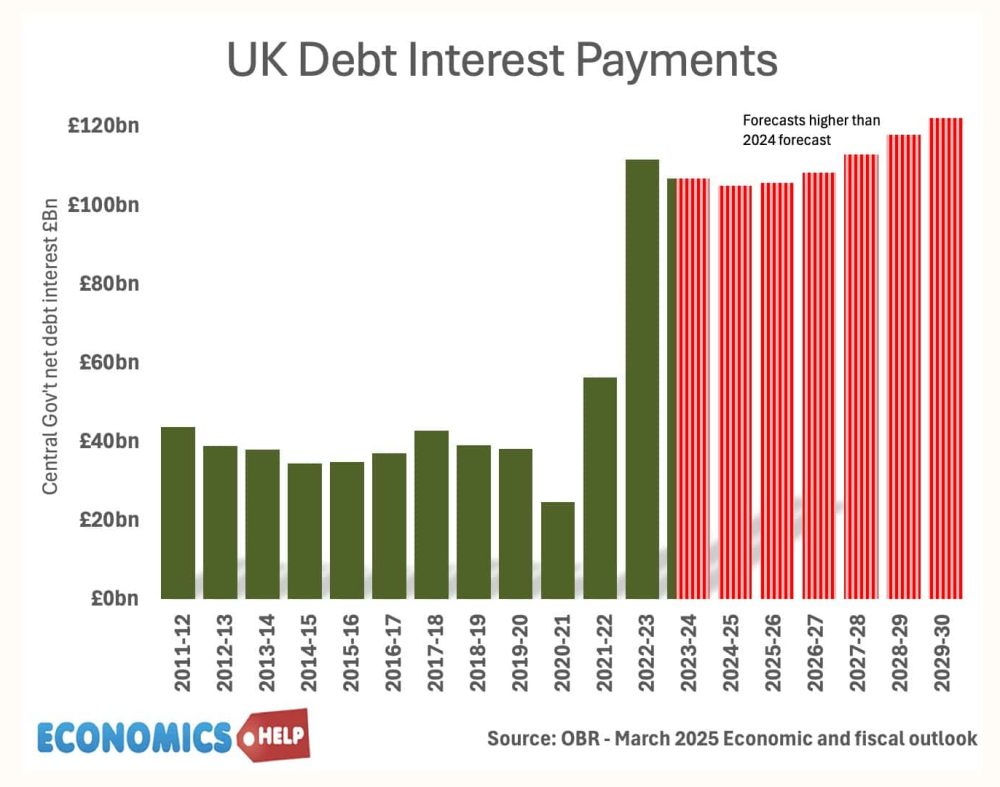
The problem is that the UK faces another kind of hidden cost that gives no benefit to taxpayers: rising debt interest payments. They have already shot up in the past few years, causing much of the fiscal black holes. However, there are reasons to fear that the UK’s borrowing costs may continue to remain elevated. Firstly, global debt is rising, and the UK is increasingly dependent on overseas buyers. They will demand higher yields. Secondly, changes in UK pension funds to defined contributions means there will be less demand from UK pension funds. Basically, the gilt market is going to lose one of its key buyers. Less demand means lower prices and higher yields. The OBR predict an eventual increase in annual debt interest costs of around £22 billion from just this change in pensions.
Everywhere Bill is Going Up
So in summary, all the big areas of government spending, health, pensions, benefits, defence and interest payments all set to rise as a share of GDP. But, that has to come from somewhere; it means other areas of spending will have to shrink or taxes increase even more than what they already have. Some like to say a wealth tax could ride to the rescue, but prespective models suggest at best they might raise £10 to £20billion a year, which is a drop in the ocean.

All this wouldn’t be a problem if we had strong economic growth, but since 2007, that hasn’t happened, average growth rates are falling which means less tax revenue. Tax has gone up as a share of GDP, but shortfalls remain, which make it harder to increase taxes, especially when so many types of tax rises like VAT and income tax are seen as politically impossible.
What will happen?
So what is going to happen? Will UK go bankrupt? No, I think we face a long, difficult period of muddling through. At some point, services will get so strechedthat something has to give. It’s already happening with a shortage of NHS dentists pushing people into private sector. If that’s too much bad news for one video, have a look at what Britain isgood at because focusing on what we are actually good at is the best way to improve the overall economy and make these things better. Well, thanks for watching, the good news is we have a budget coming up next week, so I’m sure things will be looking up soon.
https://www.instituteforgovernment.org.uk/comment/prisons-emergency-measures
https://obr.uk/forecasts-in-depth/tax-by-tax-spend-by-spend/public-service-pension-payments-net/
https://www.telegraph.co.uk/money/pensions/news/britains-public-sector-pension-albatross-6trillion/
https://obr.uk/forecasts-in-depth/tax-by-tax-spend-by-spend/public-service-pension-payments-net/
https://obr.uk/frs/fiscal-risks-and-sustainability-july-2025/
About The Author
