
20mph speed limits are a big controversy. Campaigners say they can reduce fatalities, make roads safer, encourage more active forms of transport and just make local communities a more inviting place. However, many bitterly opposed 20 mph speed limits on the grounds that they are unnecessary, hard to keep to 20mph and lead to traffic moving too slowly. I have mixed feelings when I cycle around Oxford, the lower speed of cars does make it easier to turn right. You feel safer and, less likelihood of accidents. On the other hand, when I drive in 20mph zones, I often find it difficult to keep to 20mph speed limits; it seems so slow. It does depend a little on your mindset. Sometimes I’m in the mood for driving slowly, and it is actually quite calming to drive slowly – especially in a city like Oxford, where you have pedestrians, cyclists, and moped drivers darting in and out at unexpected intervals. At other times, I’m impatient to drive faster, and if the road is clear, then it seems an imposition.
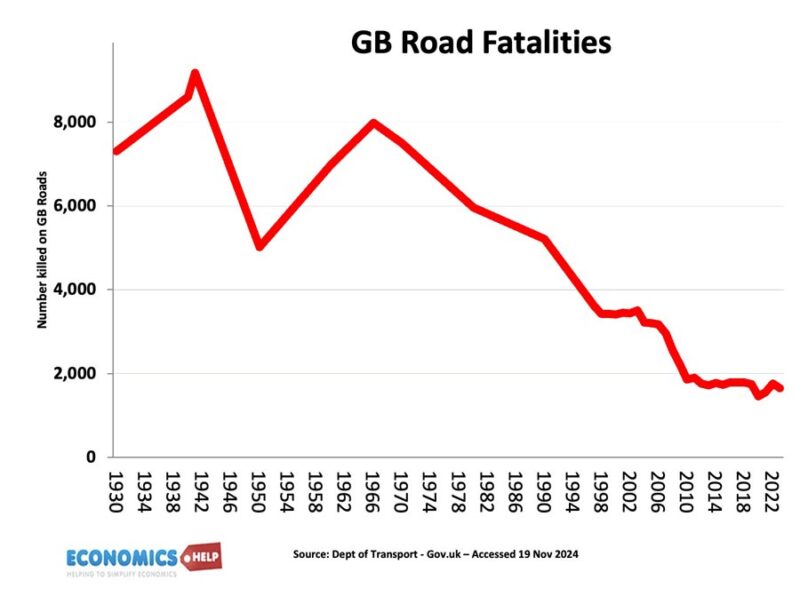
In the ‘golden age’ of motoring, a time without speed limits, road signs, or even having to pass a driving test, roads were a death trap. In the 1930s, over 8,000 people were killed on British roads, despite having only a fraction of the traffic on the road.
Whilst people like to complain that things are getting worse, this stat shows that in terms of reducing road fatalities, things are improving considerably. But, the big question i,s what are we prepared to sacrifice in order to get that closer to zero?
Advantages of 20mph Speed Limits
1. Improved road safety
Lower speed limits significantly reduce both the likelihood of collisions and their severity. At 20 mph, drivers have more time to react to hazards such as children stepping into the road, cyclists swerving to avoid potholes, or cars pulling out unexpectedly. Braking distances are much shorter at 20 mph than at 30 mph, which is crucial on narrow residential streets with limited visibility.
A London study found that on roads with 20 mph limits, collisions fell by about 35 %, fatal/serious injuries by 34 %, with child casualties down by 46 % and child deaths down 75 % (ETSC)
The first year of Wales’ default 20mph speed zone saw a fall in accidents

Casualites falling in first year of 20mph zone (GB Safety)
2. Fewer serious injuries and fatalities

The relationship between speed and injury severity is non-linear. A pedestrian hit at 30 mph faces a four times higher risk of serious injury or death than at 20 mph. Even when accidents still occur, the lower impact speed greatly reduces trauma, long-term disability, and pressure on emergency and NHS services.
3. Quieter streets and improved quality of life
Traffic noise increases sharply with speed, especially from acceleration and braking. Slower speeds reduce engine noise and tyre friction, making streets more pleasant places to live. This can improve mental well-being, reduce stress, and increase the desirability of residential areas.
4. Encourages walking and cycling
Perceived safety and speed of cars is a key barrier to active travel. When traffic moves more slowly, people feel more confident allowing children to walk to school, cycling locally, or crossing roads. This can raise physical activity levels, reduce car dependency for short journeys, and contribute to long-term public health benefits. The UK has an obesity epidemic, and encouraging active travel has huge potential benefits for both physical and emotional health.
5. More liveable streets

Calmer traffic makes it easier for residents to interact and reclaim roads from being merely means to an end.
6. Motorists less likely to be prosecuted for dangerous driving
With a reduction in speeds, motorists are less likely to cause fatal accidents and therefore less likely to be prosecuted for dangerous driving, which can now lead to prolonged jail sentences.
7. Slower journey times exaggerated
In city centres with congestion, 20mph may not actually reduce average speeds that much because if you speed you just get to the next queue quicker. 20mph speed limit smooths out journeys. A gov study found that after the introduction of 20mph zones, average median speeds fell only 1.1mph. Since I have been driving in Oxford’s 20mph roads, my overall journey time has barely changed. Though this also reflects the fact that compliance is not very good.
Downside of 20 mphs Speed Limits
1. Increased journey times
On some routes, particularly longer urban journeys or distributor roads, lower speed limits can noticeably increase travel times. This is particularly a criticism of 20mph speed limits in rural Wales, roads which are far from villages and towns. This is frustrating for commuters, tradespeople, and delivery drivers, especially where roads are wide and uncongested and the lower limit feels unnecessary. The longer journey times have economic costs in terms of lost hours, increased cost of delivering items.
2. Mixed impact on emissions
While smoother driving at 20 mph can reduce emissions, 20mph zones can also lead to stop-start driving, increased acceleration, and higher pollution. Also, to drive at 20mph requires low gear which may be less fuel efficient than driving at 30mph.
3. Enforcement and implementation costs
Introducing 20 mph limits requires new signage, road markings, public awareness campaigns, and sometimes physical traffic-calming measures. Effective enforcement may require police resources or speed-camera investment. In the case of Oxford, there are many 20mph roads, but the average speed of cars is considerably higher than the 20mph, you can tell, because there speed guns which tell you how fast you are going. A criticism of London is that you are more likely to get a fine for breaking a 20mph zone than you are for dodging a rail journey. TFL don’t try to stop people jumping barriers, but the Times reports that half a million have been caught out with fines for breaking 20mph zone.
4. Low compliance and driver resistance
Figures from the Department for Transport show that in 2024, while 43% of cars exceeded the 30mph limit (and 44% exceeded 70mph on motorways), on 20mph roads, it was 76%. (BBC)
Where limits are perceived as blanket, arbitrary, it can reduce faith in the fairness of the system and encourage a general sense of not following the rules of the road.
A gov report found that the introduction of 20mph zones only led to slower median speeds of fallen by 0.7mph in residential areas and 0.9mph in city centre areas.
5. Fatalities not due to speed
Critics argue the problem is not speed, but poor driver judgement, badly designed junctions or issues like drink driving. Therefore, it is disputed whether reducing speed limits will actually reduce the number of accidents on the roads.
Evaluation
- 20-mph speed limits alone not enough Reviews conclude strong evidence that 20 mph zones (with engineering measures) reduce speeds and injuries, but the evidence for 20 mph limits (signs alone) is less conclusive
- Depends where the 20mph zones are introduced. Bigger benefit for urban areas, less for rural roads between village.
Conclusion
The interesting thing is that when it comes to airline safety, we accept really strict laws and regulations for very marginal benefit. For example, the ban on bottled water for the perceived terrorist threat. But, when it comes to driving, we are more resistant to accept curtailment of freedom. Driving at 20mph is a sacrifice because it increases journey times, but in built-up areas, there are potentially very large gains. Even a small reduction in fatalities, is potentially a large benefit. The cost of taking an extra 5 minutes to get to work is fairly small compared to the cost of losing people, children to road accidents that could have been avoided by slower journey times. So when I write this I become more supportive of 20mph speed limits. It’s good in theory and the goal of reducing road fatalities is worth some inconvenience in reducing casualties on roads.
Related
- Pros and cons of LTN – on my cycling blog
About The Author

Good balanced article, with broadly the right conclusion. There a few statements which don’t reflect the latest evidence. I’d be happy to expand on those offline, if you wish.
Sure, feel free to add them in comments or contact form.