
In the UK, we have a marginal tax rate system. This means income tax is charged on income above a certain level. If you earn £200,000 you do not pay 45% on the whole £200,000. You only pay 45% rate on the income earned above £125,140.
Example £200,000 salary
- Basic rate (20%) £37,700 × 20% = £7,540
- Higher rate (40%) (£125,140 − £37,700) = £87,440
£87,440 × 40% = £34,976 - Additional rate (45%) (£200,000 − £125,140) = £74,860
£74,860 × 45% = £33,687 - Total income tax paid
£7,540 + £34,976 + £33,687 = £76,203 or 38.1%
Income tax rates
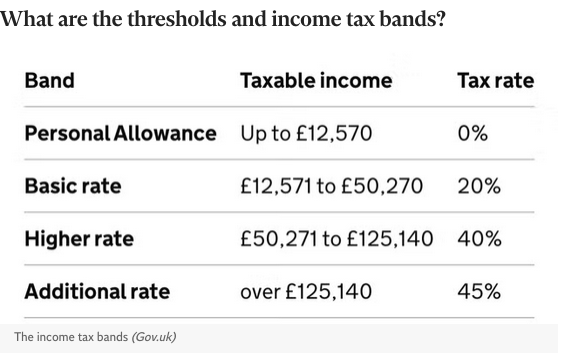
Income tax bands 2025/25
How much do you actually pay?
Example 1: Income = £30,000
- First £12,500 → 0% = £0
- Next £17,500 (£12,500–£30,000) → 20% = £3,500
Total tax paid: £3,500
Average tax rate: £3,500 ÷ £30,000 ≈ 11.7%
Example 2: Income = £60,000
- First £12,500 → 0% = £0
- Next £37,500 → 20% = £7,500
- Next £10,000 (£50k–£60k) → 40% = £4,000
Total tax paid: £11,500
Highest Marginal tax rate: 40%
Average tax rate: £11,500 ÷ £60,000 ≈ 19.2%
Example 3: Pay rise example
You earn £49,000 and get a £2,000 pay rise.
- First £1,000 (to £50,000) taxed at 20%
- Remaining £1,000 taxed at 40%
You do not lose money by moving into a higher band.
Only the income above the threshold is taxed at the higher rate.
National Insurance N.I. Contributions
In addition to income tax rates, there are national insurance contributions (N.I.) levied on income earned.
- Employee NICs (main rate) – 12%
Employee NICs (upper rate) – 2% - Lower Earnings Limit (LEL) £123 per week (≈ £6,396 per year)
- Primary Threshold (PT) £242 per week (≈ £12,570 per year)
Example 1: Income = £30,000
Breakdown
- Income tax:
- £12,570 at 0%
- £17,430 at 20% → £3,486
- Employee NICs:
- £17,430 at 12% → £2,092
Totals
- Total deductions: ≈ £5,578
- Marginal rate: 32% (20% income tax + 12% NICs)
- Average rate: £5,578 ÷ £30,000 ≈ 18.6%
Example 2: Income = £60,000
Breakdown
- Income tax:
- £37,700 at 20% → £7,540
- £10,000 at 40% → £4,000
- Total income tax: £11,540
- Employee NICs:
- £37,700 at 12% → £4,524
- £10,000 at 2% → £200
- Total NICs: £4,724
Totals
- Total deductions: ≈ £16,264
- Marginal rate above £50k: 42% (40% + 2%)
- Average rate: £16,264 ÷ £60,000 ≈ 27.1%
Example 3: Pay rise into higher tax band
You earn £49,000 and receive a £2,000 pay rise.
- First £1,000 → taxed at 32%
- Next £1,000 → taxed at 42%
Related
- Tax rates at Gov.uk
About The Author

Also, your tax allowance is reduce by £1 for every £2 you earn over £100,000.
So earning £112,950 will reduce your personal tax allowance to £0.