
Readers Question: What is the most important reason why there is an improvement in the economic growth in the chinese out of the following policies. is it Government policy, education, investment from overseas, cheap labour or natural resources.
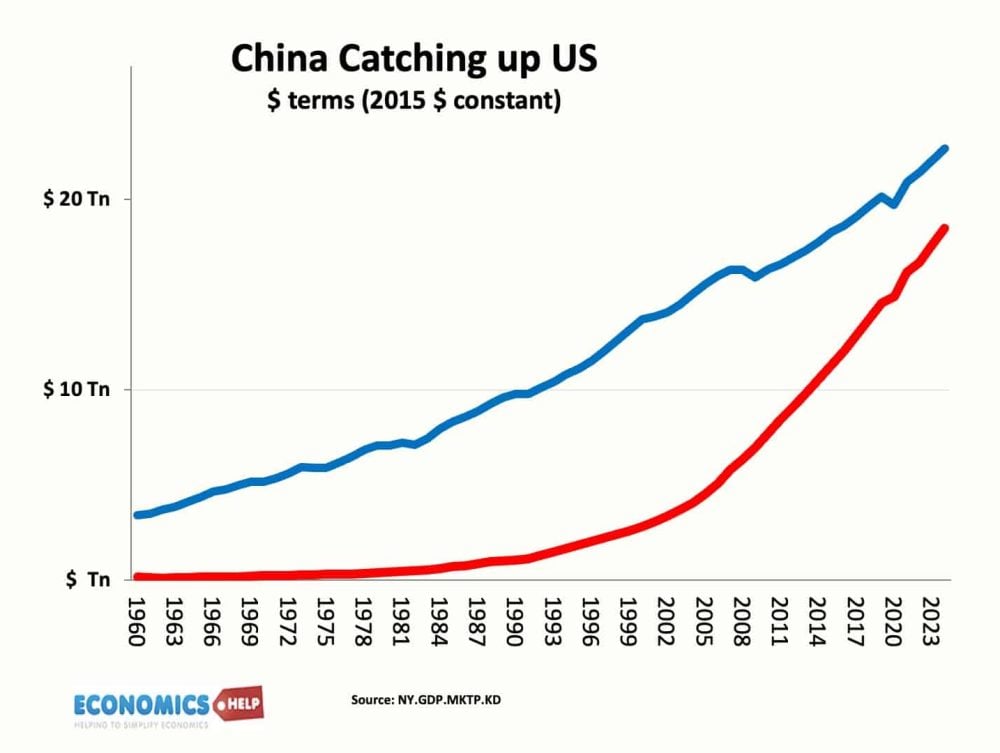
Measuring in constant US$, the Chinese economy has nearly caught up with the US.

If you measure in terms of purchasing power parity, the Chinese economy has grown faster than the US.
1. Cheap Labour
China has a large unskilled workforce willing to work for low wages. In the north, many farmers struggle to make an income, therefore, they are willing to move south and work in manufacturing for low wages. Therefore, despite high growth, wages have remained low. This has meant Chinese exports have continued to be very competitive. Exports to the rest of the world are one of the main factors behind increased AD and China’s. Cheap labour has also helped avoid wage inflation, which could destabilise economic growth.
2. Government Policy
The Chinese government have been keen to promote economic growth (they have been concerned about unemployment from privatised industries and agriculture). Therefore, they have kept the Yuan undervalued. This makes Chinese exports more competitive and has helped the exporting sector. The government have also kept interest rates relatively low. Although it is sometimes difficult for small business to get loans. Low interest rates have also encouraged some irresponsible lending. Arguably the government have contributed to a boom and there is a danger that the government have allowed growth to be too high. This could lead to inflation and a downturn in the future.
3. Raw Materials
China has good reserves of raw materials such as coal. However, for many raw materials they are net importers. This is true, particularly, for metals, oil and precious commodities. In fact demand from China is one of the main reasons behind the boom in commodity prices. Therefore, we could say China has experienced growth, despite having to import so many raw materials. The increasing price of oil and metals may be a constraint on future growth.
4. Investment from Overseas
This increases productive capacity and helps improve technological development. However, as a % of GDP investment from overseas is relatively low.
5. Education
Historically,, China’s comparative advantage lay in unskilled labour intensive industries. However, there is a growing, educated, middle class, which has enabled the economy to diversify out of manufacturing and into higher end industrial production. Education will be of increasing importance as China tries to provide greater value added to its industries.
Other factors influencing growth may include:
- Domestic Demand
- Privatisation. Selling state owned assets to the private sector has enabled big efficiency savings.
- Consumer Demand in US
6. Energy Growth
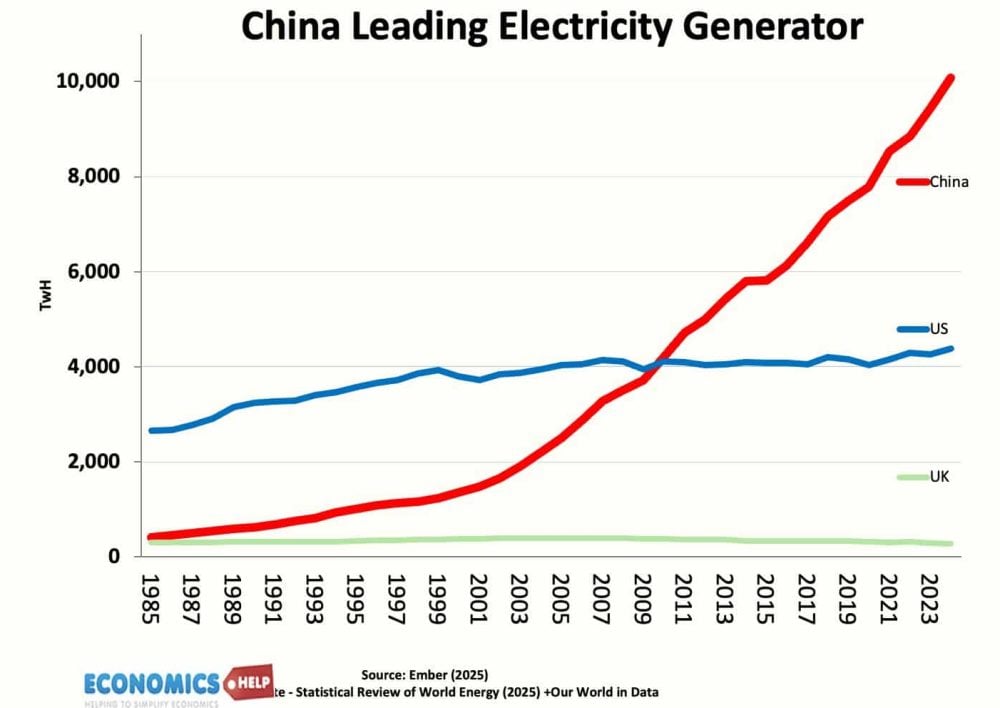
China has successfully invested in renewable energy, enabling it to become the biggest electricity producer in the world. This has enabled low cost of electricity, which gives it a comparative advantage in energy-intensive manufacturing.
7. Economies of scale
Many big manufacturing industries have high fixed costs. China’s size and scale of investment has enabled it to gain economies of scale which means it can undercut many Western firms.
8. Lack of planning laws and environmental laws
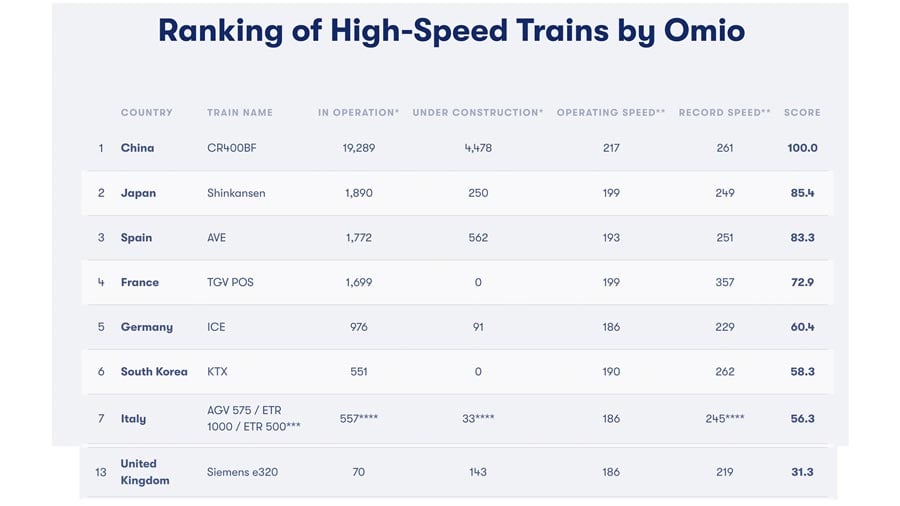
Whilst the UK and US have struggled to build high speed rail because of political NIMBYISM, China has raced ahead. China is less encumbered by legislative blocks.
9. New Electric Car Growth
Traditionally, European and US car firms have had a comparative advantage in mechanical engineering. But, the trend of electric cars means China can exploit its relatively good software engineering and access to cheap batteries.
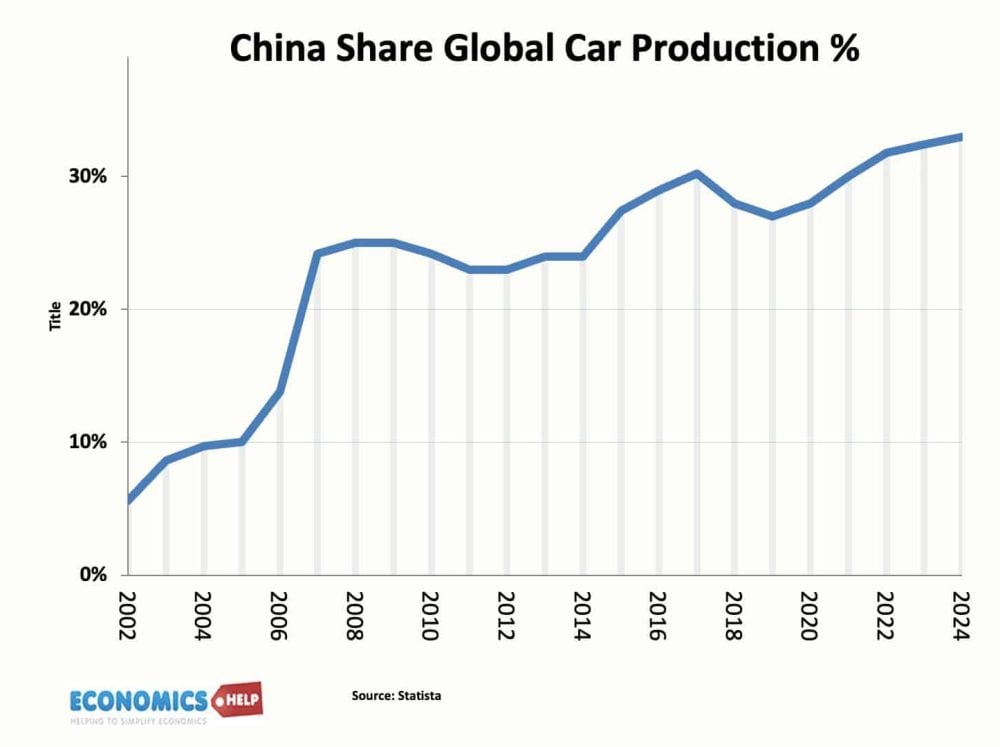
China’s share of global car production has soared as China produces more electric cars at a lower cost than the west.
10. Switching to higher-tech industries. In recent years, China has moved beyond low-cost assembly by investing heavily in skills, engineering education, and applied research, enabling firms to use AI, adopt automation, and introduce advanced production techniques. Together, these factors have shifted China from labour-intensive manufacturing towards higher productivity, innovation-led growth.
Related posts
About The Author

If you ask me, education had a lot to do with it. And another source is in my opinion, their ability to trade. Imports and exports made China’s market place larger, and more important to the world, to its partners.