
Definition of Base Rate
In the UK, the base rate is the term given to describe the interest rate which the Bank of England controls. The base rate is the rate that the Bank charges commercial banks and discount houses. It is also known as the Repo Rate. The base rate is used to influence other interest rates throughout the economy. Most borrowers from commercial banks pay a premium on the base rate.
Base rates may also be a term used to describe the main standard variable rate of a commercial bank.
In rare cases, changes in the base rate may not directly affect rates charged by commercial banks. For example, in the aftermath of credit crunch, the Bank of England reduced base rates to 0.5% but commercial banks only reduced their rates a small amount. This was because banks were short of liquidity
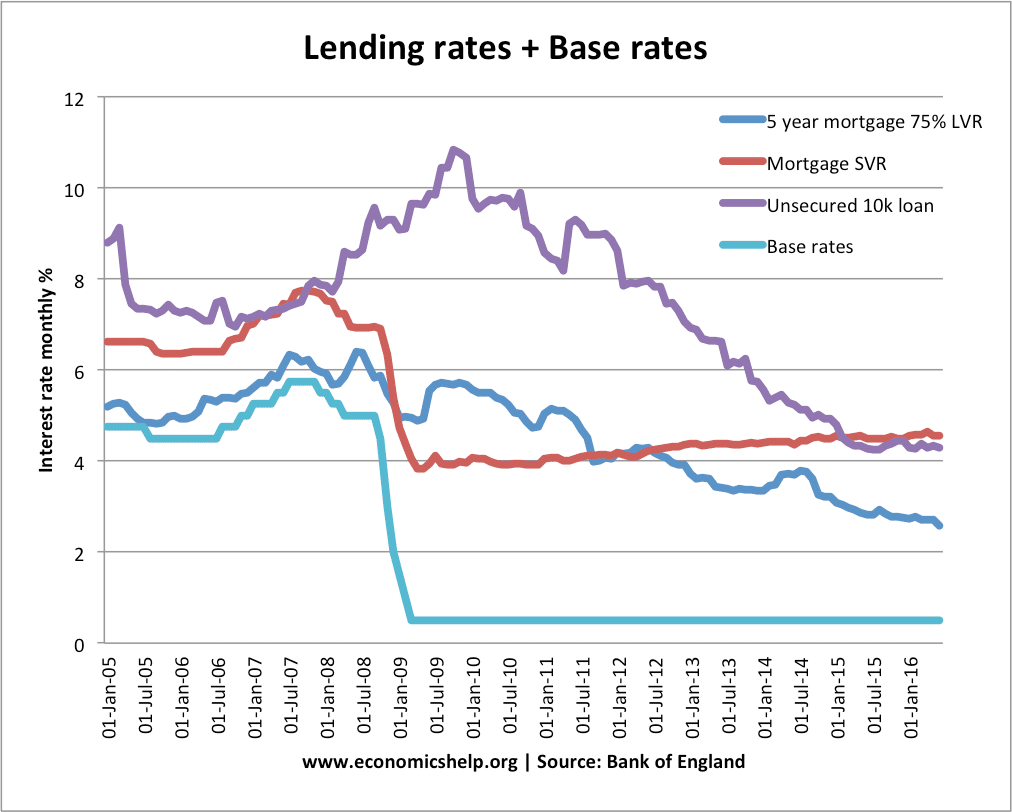 Lending rates
Changes in the Base Rate
- In the United Kingdom, the base rate is set by the Bank of England’s Monetary Policy Committee.
- In the United States, it is the Federal Reserve’s federal funds rate.
- In the euro area, it is set by the European Central Bank.
Changes in these rates are among the most important tools of monetary policy used to stabilise prices and maintain economic growth.
Why are base rates important?
- When the central bank raises the base rate, borrowing becomes more expensive and saving becomes more attractive. This tends to reduce consumer spending and investment, helping to lower inflation.
- On the other hand, when the base rate is cut, borrowing costs fall, encouraging businesses and households to spend more, which can stimulate economic growth.
Base Rates since 1695

Base rates since 1900

More base rate graphs at historical interest rates in UK
About The Author
