
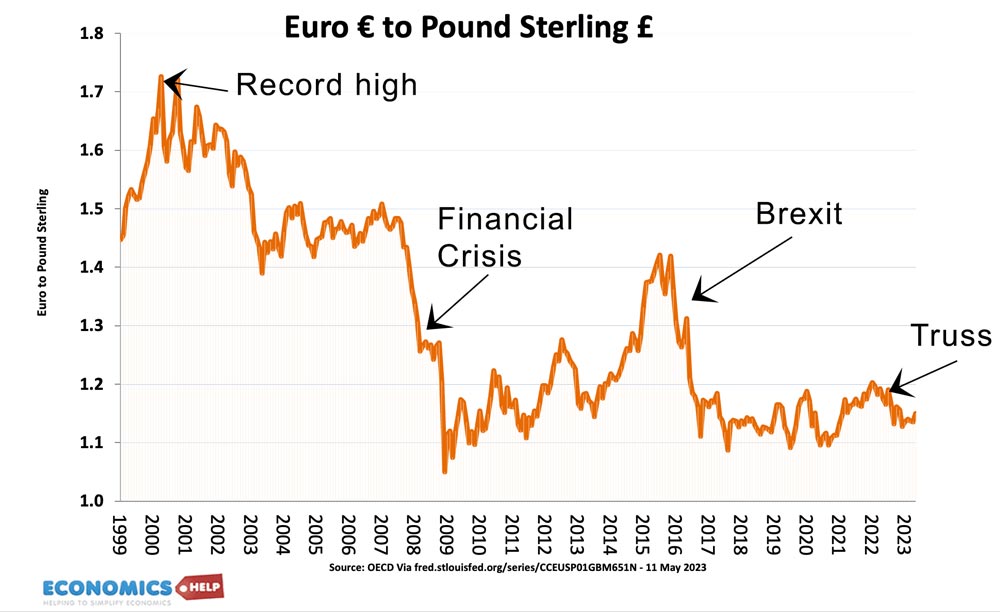
An example of an appreciation in the value of the Pound 2012 – 2015
- Jan 2009 If £1 = €1.1
- June 2012 £1 = €1.4
- In this case, we can say there was a 25% appreciation in the value of the Pound against the Euro – between Jan 2009 and Jan 2016
- The appreciation in the pound made imports into the UK cheaper. One pound goes further in buying European goods.
- The appreciation in the pound made UK exports appear more expensive, leading to lower demand from European buyers.
- This appreciation should help reduce inflation, but also lead to lower domestic demand and assuming demand is relatively elastic a bigger current account deficit.
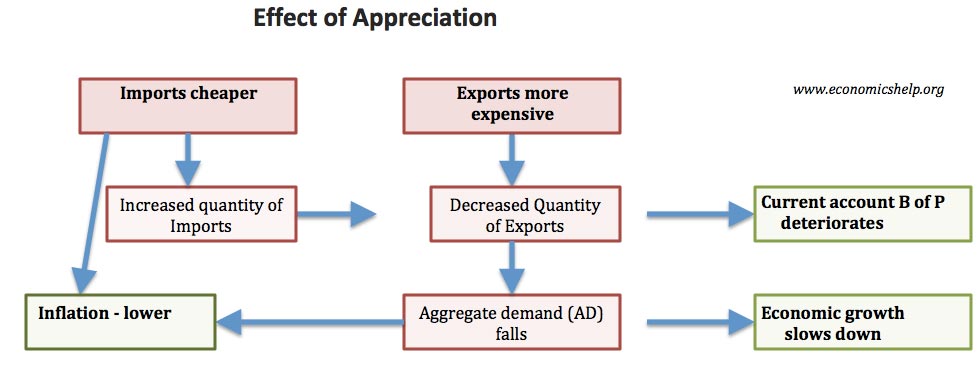
Effects of an appreciation on the UK economy
- Exports more expensive. The foreign price of UK exports will increase – so Europeans will find British exports more expensive. Therefore with a higher price, we would expect to see a fall in the quantity of UK exports.
- Imports are cheaper. UK consumers will find that £1 now buys a greater quantity of European goods. Therefore, with cheaper imports, we would expect to see an increase in the number of imports.
- Lower (X-M) With lower export demand and greater spending on imports, we would expect fall in domestic aggregate demand (AD), causing lower economic growth.
- Lower inflation. An appreciation tends to cause lower inflation because:
- import prices are cheaper. The cost of imported goods and raw materials will fall after an appreciation, e.g. imported oil will decrease, leading to cheaper petrol prices.
- Lower AD leads to lower demand-pull inflation.
- With export prices more expensive, manufacturers have greater incentives to cut costs to try and remain competitive.
- Monetary policy. It is possible that an appreciation in the exchange rate may make the Central Bank more willing to cut interest rates.
- An appreciation reduces inflationary pressure so interest rates can be lower.
- Also higher interest rates would cause the currency to rise even more. If the Central Bank thought appreciation was too rapid, they may cut rates to reduce the value of the currency.
Impact of appreciation on AD/AS
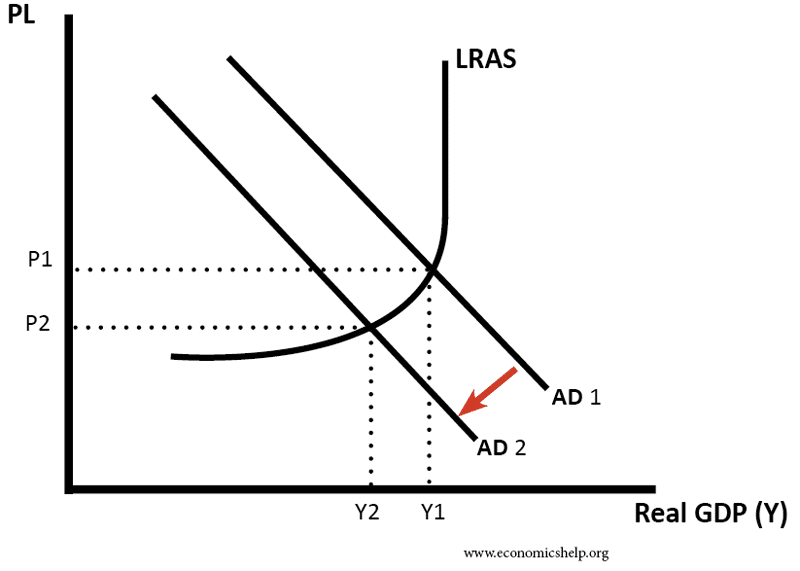
Assuming demand is relatively elastic, an appreciation contributes to lower AD (or a slower growth of AD), leading to lower inflation and lower economic growth.
Impact of an appreciation on the current account

You can see in 2013to 2016, the UK is running a large current account deficit of nearly 6% of GDP, partly due to strong Pound at the time.
Assuming demand is relatively elastic, we would expect an appreciation to worsen the current account position. Exports are more expensive, so we get a fall in eXports. Imports are cheaper and so we see an increase in iMports. This will cause a bigger deficit on the current account.
However, the impact on the current account is not certain:
- An appreciation will tend to reduce inflation. This can make UK goods more competitive, leading to stronger exports in the long term, therefore, this could help improve the current account.
- The impact on the current account depends on the elasticity of demand. If demand for imports and exports is inelastic, then the current account could even improve. Exports are more expensive, but if demand is inelastic, there will only be a small fall in demand. The value of exports will increase. If demand for exports is price elastic, there will be a proportionately greater fall in export demand, and there will be a fall in the value of exports.
- Often in the short term, demand is inelastic, but over time people become more price sensitive and demand more elastic. It also depends on what goods you export. Some goods with little competition will be inelastic. China’s manufacturing exports are more likely to be price sensitive because there is more competition.
Evaluating the effects of an appreciation
- Elasticity. The impact of an appreciation depends upon the price elasticity of demand for exports and imports. The Marshall Lerner condition stations that an appreciation will worsen the current account if (PEDx + PEDm >1)
- Elasticity varies over time. In the short run, we often find demand for exports and imports is inelastic, so an appreciation improves current account. But, over time, demand becomes more elastic as people switch to alternatives.
- The impact of an appreciation depends on the situation of the economy. If the economy is in a recession, then an appreciation will cause a significant fall in aggregate demand, and will probably contribute to higher unemployment. However, if the economy is in a boom, then an appreciation will help reduce inflationary pressures and limit the growth rate without too much adverse impact.
- It also depends on economic growth in other countries. If Europe was experiencing strong growth, they would be more likely to keep buying UK exports, even though they are more expensive. However, in 2012, the EU economy was in a recession and therefore was sensitive to the increased price of UK exports.
- It also depends on why the exchange rate is increasing in value. If there is an appreciation because the economy is becoming more competitive, then the appreciation will not be causing a loss of competitiveness. But, if there is an appreciation because of speculation or weakness in other countries, then the appreciation could cause a bigger loss of competitiveness.
Is an appreciation good or bad?
- An appreciation can help improve living standards – it enables consumers to buy cheaper imports.
- If the appreciation is a result of improved competitiveness, then the appreciation is sustainable, and it shouldn’t cause lower growth.
- An appreciation could be a problem if the currency appreciates rapidly during difficult economic circumstances.
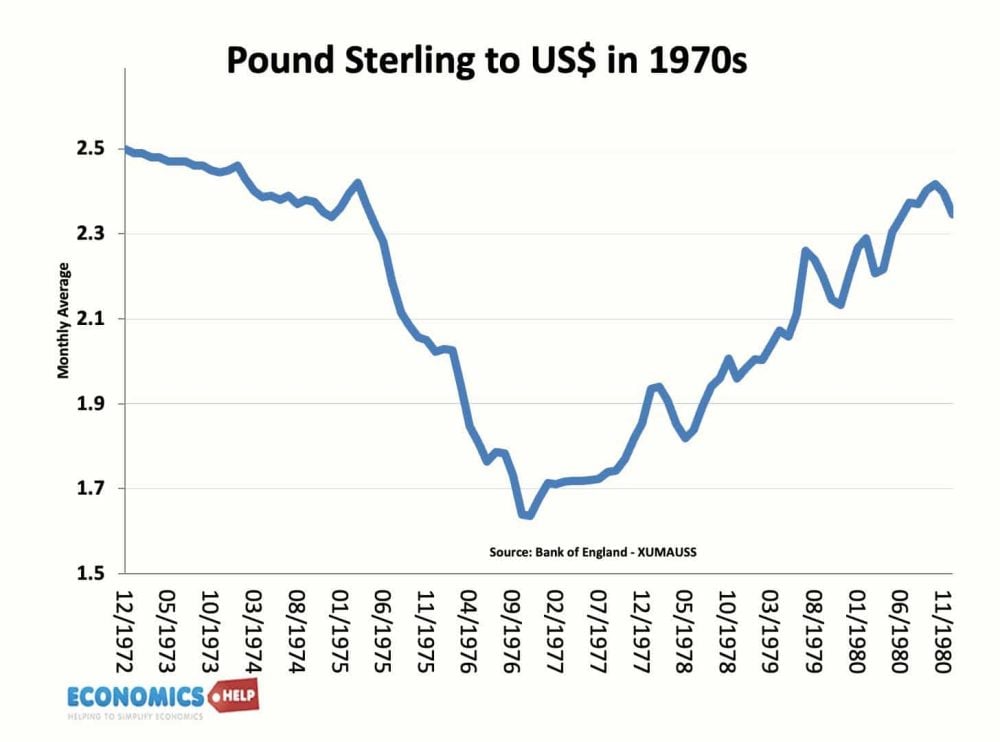
- For example, in 1979 and 1980, the UK had a sharp appreciation in the exchange rate, partly due to the discovery of North Sea oil. The value of the Pound increased from £1=$1.5 to £1 = $2.5. However, this appreciation was a factor in causing the recession of 1981 – which particularly affected UK exports and manufacturing.
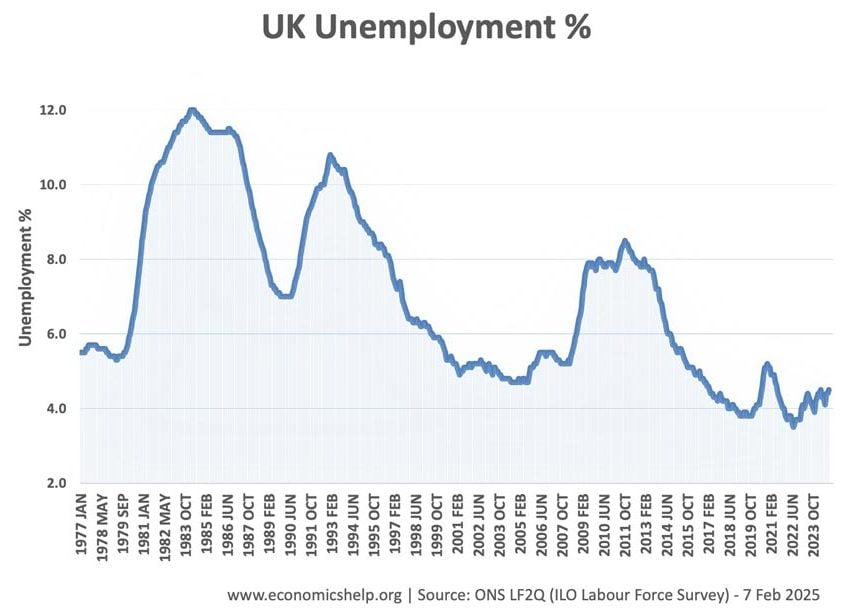
High value of pound 1977 to 1981 was a factor in causing manufacturing recession in the UK. UK firms became uncompetitive as the value of Sterling soared (partly due to oil discovery and higher interest rates).
This was a damaging appreciation as many firms went out of business.
Related posts
About The Author

I’m pleased with your information. may you kindly share with me some of these relevant materials.
the effect of an appreciation of a country’s foreign exchange rate on the level of employment