
Yield-Curve Control (YCC) – Explained Simply
Yield-Curve Control is when a central bank targets a specific interest rate on
long-term government bonds (e.g., 10-year yields) and buys or sells bonds to keep rates near that level.
Set Target
Yield (e.g. 0%)
Buy Bonds
if Yields ↑
Sell Bonds
if Yields ↓
Why Central Banks Use YCC
- Keep borrowing costs low for the government and businesses.
- Support economic recovery by lowering long-term rates.
- Signal strong monetary stimulus.
Risks & Problems
- Requires huge bond purchases to defend the target.
- Can distort markets and reduce bond-market liquidity.
- If inflation rises, maintaining YCC becomes unsustainable.
- Speculators may attack the yield target, forcing policy change.
What is Yield-Curve Control?
Yield-Curve Control is a monetary policy where a central bank targets a specific long-term government bond yield (e.g., the 10-year rate) and buys or sells bonds to keep that yield near the target. Unlike QE (which targets quantities), YCC targets prices directly.
2. How YCC Works
- Central bank sets a long-term yield target (e.g Bank of Japan sets target yield of 0% for 10 year bonds).
- If bond yields rise, it buys bonds → prices rise → yields fall.
- If bond yields fall, it sells bonds → prices fall → yields rise.
- The commitment shapes expectations and stabilises the entire yield curve. If markets believe the BoJ will keep 10-year yields low for years, they assume short-term rates will stay low too, in theory, reducing volatility across the curve.
3. Why Central Banks Use It
- Lower long-term borrowing costs for government, mortgages, businesses.
- Strengthen stimulus when short-term rates are already at zero. The Bank of Japan wanted to avoid negative rates, so it was willing to sell bonds, to push rates up
- Anchor expectations for interest rates and inflation. In a period of defaltion, the Bank of Japan wanted to make a commitment to positive inflation.
- Support recovery in periods of deflation or weak growth.
- Japan introduced Yield control curve in 2016 for these reasons.
4. Benefits of Yield Control Curve
- Predictable long-term interest rates.
- More precise and powerful than QE.
- Helps governments finance debt more cheaply.
- Stabilises the whole yield curve.
5. Problems & Risks
- Can require very large bond purchases to defend the target.
- Distorts bond markets: lower liquidity, weaker price discovery.
- If inflation rises, Yield control curves becomes hard to maintain.
- Encourages currency depreciation and fuels yen carry trades. This becomes like a big bubble because it encourages people to borrow in Yen and invest abroad.
- Exiting YCC may trigger volatile jumps in yields.
6. Why Yield Control Curve Came Under Pressure in Japan
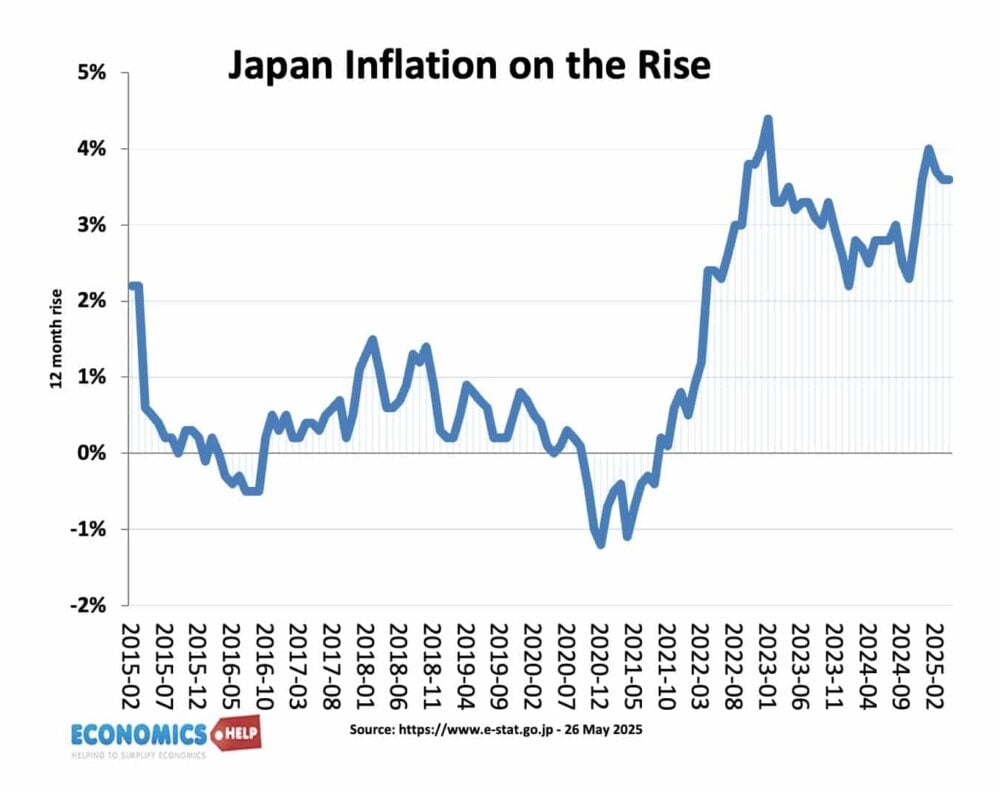
Inflation rose above 3% after 2022.
Speculators tested the upper band limits.

Japan failed to normalise the yield curve with 40 year bond yields spiking because investors felt it was unsustainable.
- Bank of Japan widened or relaxed the target several times.
- Markets began expecting eventual policy normalisation.
Connection with Yen Carry Trade
- YCC keeps Japanese long-term rates very low → weak yen → profitable to borrow yen → carry trade grows.
- If YCC ends → yields rise → yen strengthens → carry trade unwinds sharply.
Short Summary
Yield-Curve Control fixes long-term interest rates by using unlimited bond buying or selling. It helps stimulate the economy and lower borrowing costs but becomes fragile when inflation rises, markets challenge the target, or the currency weakens excessively.
About The Author
