
Gold is soaring in value. It has tripled in price since just five years ago. On 9 March 2025, gold prices hit a new record high of $5,095, with some analysts saying it could go up to $7,000

Why is gold so popular? Traditionally, Gold is seen as a hedge against inflation. The stock of gold is fixed, and fiat currencies can be printed at will. Certainly, in the 1970s, there was a strong correlation between inflation and gold prices. The inflationary surge of the 1970s, saw gold prices increase, but importantly, when interest rates were increased in the early 1980s, inflation fell, and the price of gold collapsed.
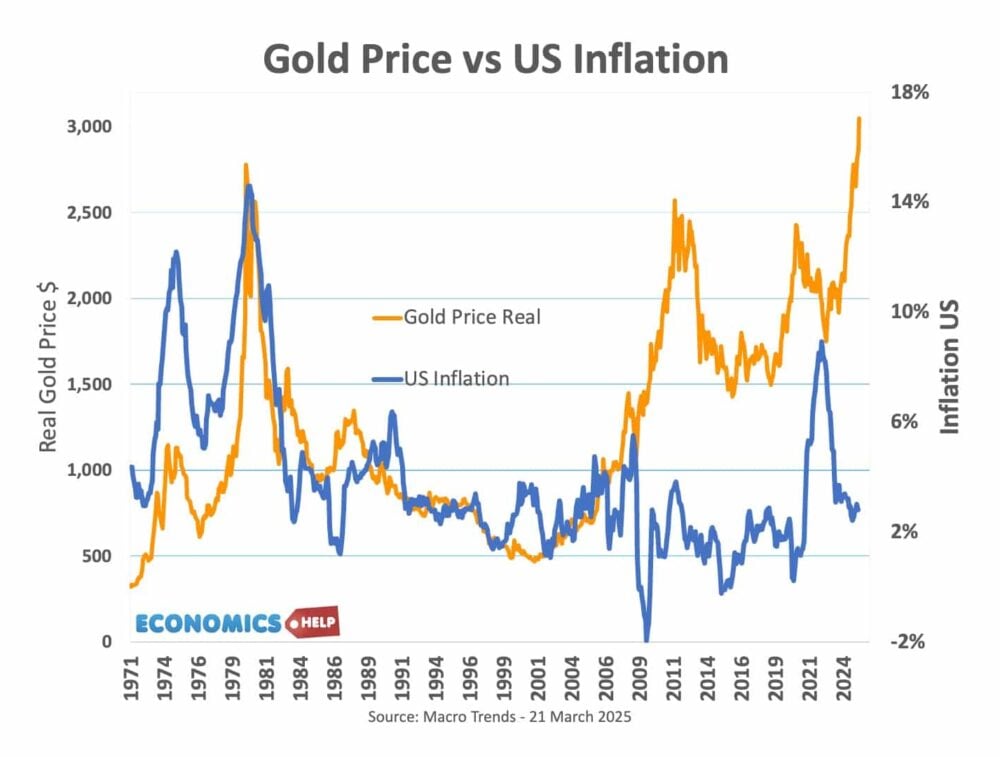
However, that link between gold prices and inflation is not explain the recent surge in gold prices. In the past two years, US inflation has fallen from 10% to 2.6%, yet during this period of falling inflation and higher interest rates, gold prices has defied its traditional bearings to continue to increase in value. What is happening and can it be maintained?
Dollar losing allure
President Trump’s recent criticism and pressure on Fed Chair Jerome Powell — have heightened fears that monetary policy could be driven by political aims rather than economic data. Markets tend to react to this uncertainty and increased risk of low interest rate, high inflation environment by seeking the certainty of gold. Historical episodes of political interference in central banking (e.g., 1970s U.S. inflation) are often cited as reasons investors demand safer assets.
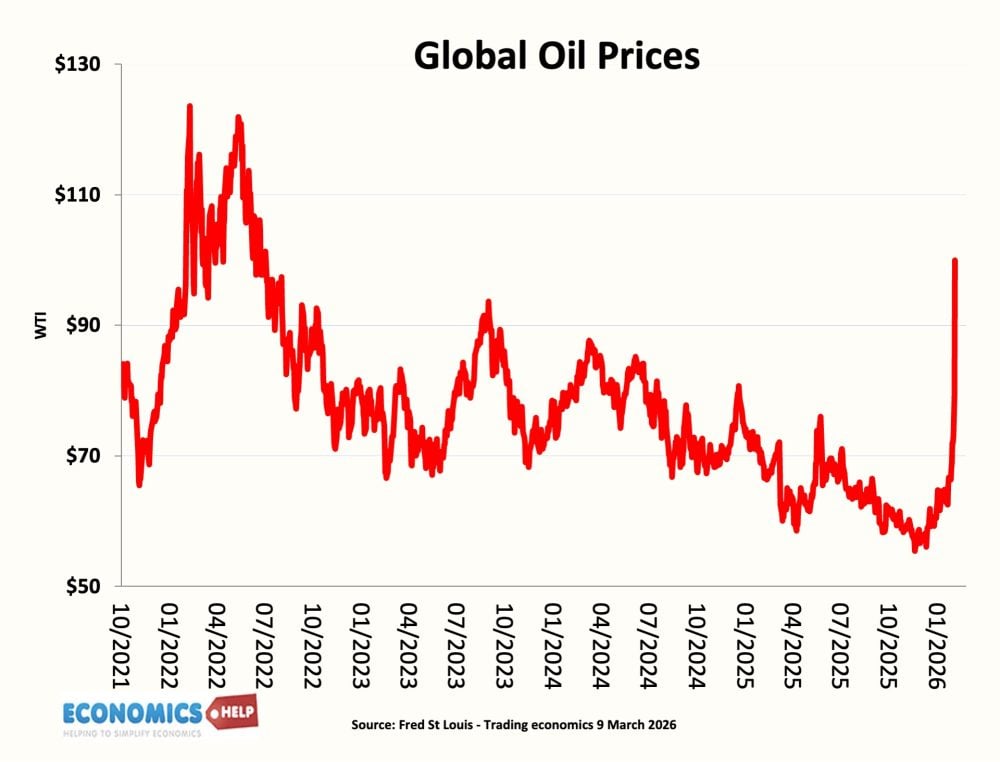
The decision to start bombing Iran March 2026 has caused further interest in gold, with oil prices soaring in response to the Strait of Hormuz being effectively closed.
Uncertainty

Firstly, one of the biggest drivers of the gold price at the moment is global uncertainty. This graph tracks the real gold price against a measure of global uncertainty. We are now living in unchartered territories. Last month, the uncertainty index hit its highest level for decades, and investors piled into gold as a result. Interestingly despite some improvement in uncertainty (index has slipped back towards the end of 2025), gold still retains it sbull run.
Warren Buffet has never been a great believer in investing in gold, because basically it does nothing: no interest, no dividends and a cost of storage. He also said that gold is a way of going long on fear and hoping that others become more fearful too. So certainly, in periods of great uncertainty and economic fear, gold tends to do well. There is a psychological attachment to gold as something very solid and safe.

The reason for much higher levels of uncertainty is the ongoing conflict in Ukraine, the Middle East and the very real threat of a tariff war. Already the US has imposed tariffs on Europe, Canada and China and this has led to retaliation. The scale of tariffs is much greater than previous years and it could continue to escalate and this will reduce the profitability of many multinational firms and increase some import prices. However, whilst consumer expectations of inflation have shot up, a tariff war is unlikely to cause the runaway inflation of the 1970s or 2022. If anything tariffs and a decline in global trade is more likely to lead to stagnation and low growth. Interestingly, oil prices and other commodities continue to slide because of weak demand.
Lower Rates
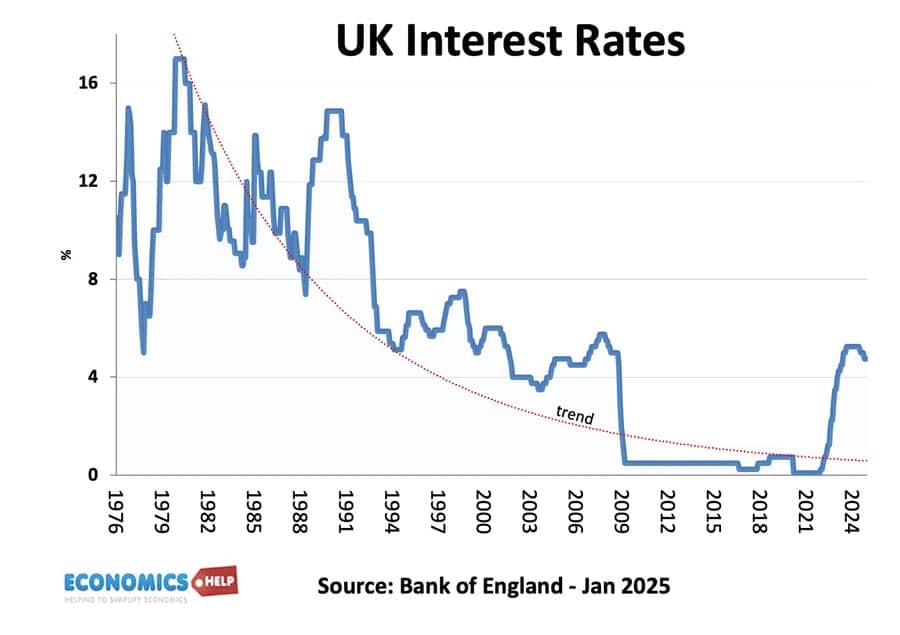
This decline in interest rates in UK is a global phenomena. 2023 inflation caused a temporary rise in short-term rates, but interest rates look to be going back down.
However, the fall in inflation and lower growth prospects also means that interest rates are expected to be cut in 2025. Lower bond yields and interest rates make it more attractive to hold gold, which has an interest return of zero. Certainly in the aftermath of the credit crisis, gold did well when interest rates were cut to zero. However, not all countries are cutting rates. Japan after decades of zero interest rates and deflationary pressures are starting to see higher rates. This matters because for many years, investors have taken part in something called the Yen carry trade. Investors borrow in Yen, at ultra low interest rates and then invest in higher yielding US assets. But, as inflation and interest rates in Japan rise, this trade is unwinding, putting downward pressure on US dollar and US assets. Gold has been one of the few beneficiaries of this
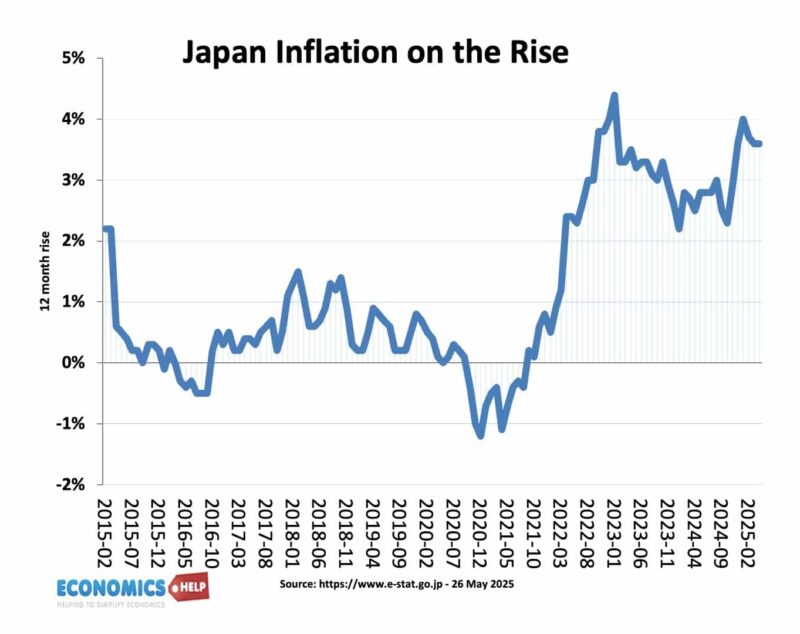
Japanese inflation could be critical for ending Yen Carry Trade, which could trigger large losses, gold is alternative.
Speculation
Although gold has an intrinsic value, it doesn’t mean it isn’t immune from the usual levels of speculation. The World Gold Council remarked last October that the fear of missing out on gold’s rising value has encouraged more investors and wealthy individuals to buy gold in a bid to diversify away from stocks. The introduction of gold ETFs have made it much easier to buy gold. In recent years many investors have bought into US tech stocks but at the start of the year, these were looking overvalued on long-term price to earnings. If the AI boom turns out to be more of a bubble, gold is one a way to diversify.
Dollar Speculation

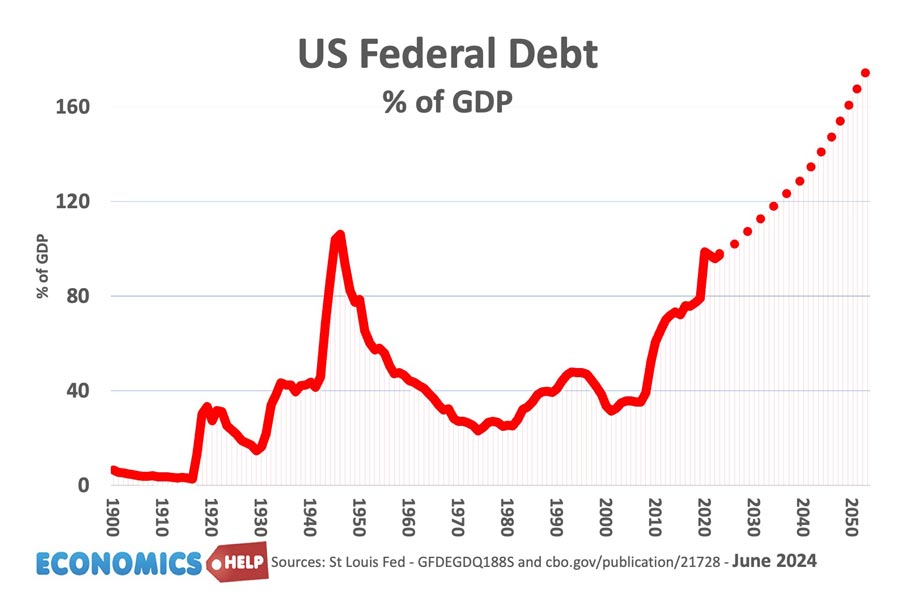
The uncertainty over trade and new direction of the US is also causing a re-evaluation of US assets and the dollar. Certainly, the dollar is still the main reserve currency, with 57% of the global total and 88% share of foreign transactions. But there are fears that the role of the US Treasury as the global standard in a safe asset may start to slowly unwind. Certainly, there is a large projected rise in US debt in coming decades, and given political divisions in the US, there is always a chance of a debt ceiling being breached and government shut down causing panic on the market. This has often been a big talking point of gold bugs; the threat of US debt default, suddenly makes gold look really attractive. The threat of a US default is often exaggerated; it’s certainly a long way off, but markets are taking the view, it’s probability has increased in recent years and the dollar has decreased 5% since the start of the year
Central Banks
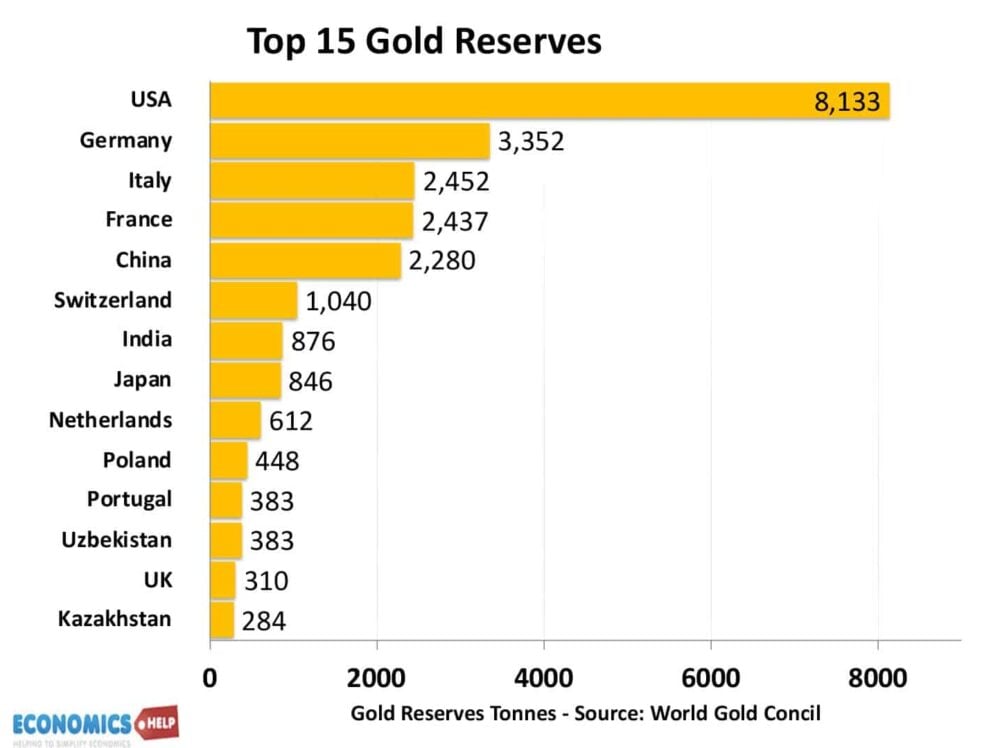
Another factor behind the rise in gold price is the fact that global Central banks are now buying more gold for their gold reserves. Central Banks currently own 20% of all gold ever mined. In the 1990s and early 2000s, Central banks tended to sell gold reserves believing they had little value, given low inflationary environment and relative stability. But, since the financial crisis, gold purchases have increased. In fact since 2022, Central Banks have bought even more gold. Sanctions on Russia’s dollar assets was a motivating factor for many countries to consider diversifying from dollar assets. China’s gold reserves have significantly increased in the past two decades.
Which central banks are buying?
- China – steady accumulation to diversify reserves. In 2023, China’s central bank was a major net buyer, with purchases of approximately 225 tonnes of gold. In 2024, reported purchases were lower but still positive (around 44 tonnes). In 2025, official stats have been much smaller (~20–21 tonnes) — though market analysts suggest much higher unofficial purchases based on import data and estimates.
- Russia – long-term strategic shift into gold (after dollar assets frozen after invasion of Ukraine)
- Turkey – frequent buyer, often linked to currency instability
- India – gradual diversification
- Middle Eastern central banks – oil revenues → reserve accumulation
Jewellery
One reason for gold’s enduring appeal, is that it not just a store of value, but also has intrinsic use in jewellery. Rising economic growth in India has led to higher demand in a country where gold in jewellery is particularly prized. Jewellery demand is roughly 40% of total global demand. However, the very high prices of gold are now impacting demand, with global consumption of gold falling 7% in 2024 due to the very high prices.
Also, with fears of slowing consumer spending, higher tariffs and declining confidence, there are fears that the US could enter recession and this could increase the attractiveness of gold. Certainly, the economic outlook has weakened, but don’t forget recessions were forecast in 2022 and 2024 which didn’t materialise. The real sign of an upcoming recession is falling profit margins and rising unemployment, So far, this has not materialised.

The price of gold has risen to record levels in both nominal and inflation adjusted terms. Investors point to greater uncertainty, risks over government debt levels and growing tarrif barriers. However, with inflation falling, gold prices could see a major readjustment, should global uncertainty start to decline.
Video on Gold
Gold Investment compared
How does gold investment compare to other sources of investment?

Note, 2000 was a particularly good year to buy gold.

Is it time for a stock market crash in 2026?
Sources:
About The Author
