
Wind farms seek to offer an environmentally sustainable source of energy that will help reduce our dependence on non-renewal fossil fuels. However, this clean and safe source of energy is controversial with many opposed to its use, often on grounds of aesthetics or lack of efficiency and cost of subsidies. This looks at the pros and cons of wind farms.
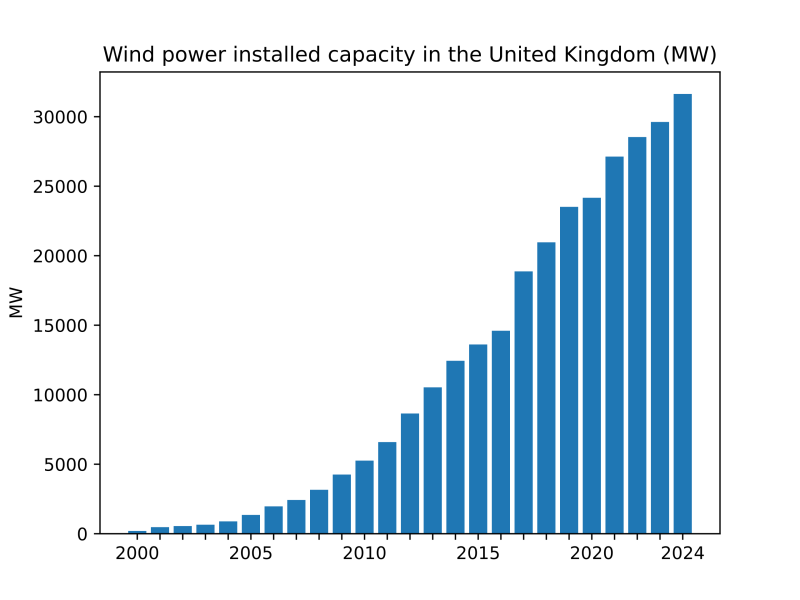
Wind power is taking off in the UK, producing 30% of all electricity in 2024
Pros of wind energy
- Creates virtually no pollution which damages environment, wildlife and humans. (very limited negative externalities)
- Some feel wind farms are actually aesthetically pleasing and help to enhance a local area. In 17th Century, the UK had 90,000 windmills (Guardian) (subjective opinion)
- Wind energy is completely renewable. There is no danger of running out of wind. Fossil fuels, by contrast, are limited and will eventually run out. As they do, we need to increasingly rely on renewable energy,such as wind.
- Wind energy does not have hidden dangers such as nuclear fuel and does not contribute to global warming.
- Wind is available across the world. Oil is concentrated in certain areas of the world, creating Geo-political tensions for control and purchase of oil. Wind is a renewable source that nearly all countries can tap into.
- In recent years, the efficiency of wind turbines has increased, enabling improved electricity generation.
- Wind energy can be good use of certain barren environments which are too rocky or hilly for agriculture. Often the best places for wind energy is on high land, which is less desirable for housing.

Wind costs have come down (though not as dramatic as solar power.
Cons of wind energy
- It is weather-dependent. Wind farms don’t generate electricity all the time. Volatile energy sources are much less valuable. Because when the wind doesn’t blow, you have to pay gas turbines to turn on and fill the gap. This is why gas prices set the marginal cost of electricity in the UK. With a traditional power station (nuclear / coal) you can keep a constant power output, but in a period of still wind, power output can fall to nothing. This means the national grid cannot rely on wind, but has to have back up energy sources.
- Fixed costs of building Wind Farms. The massive investment in wind energy is heavily dependent on subsidies. Wind might have relatively low marginal cost, but it has high fixed costs of setting up. Without subsidies, energy firms are reluctant to get involved in paying for the investment.
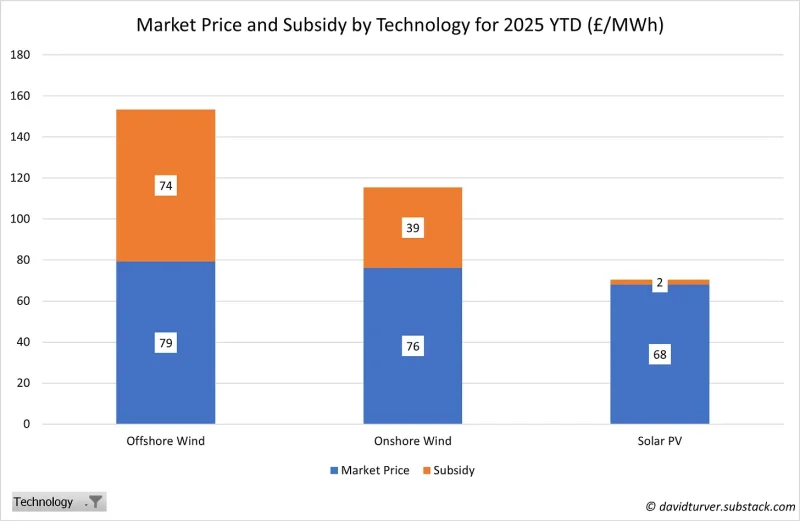
This shows the high level of subsidies paid to off-shore wind producers
- Aesthetics – Local residents often object to the position of wind farms arguing it spoils the view. (this opposition is greater when placed in areas of outstanding natural beauty)
- Balancing the Grid. Off shore wind is located in inaccessible parts of the country. 48% is in Scotalnd, but it is far from where the demand is. Therefore, wind power has high costs of grid balancing, storage and distribution. Therefore, the marginal cost of producing wind is misleading, the rise in electricity bills in the UK is coming from higher network costs and subsidy costs.
Diminishing utility of wind. The more wind you produce the harder it becomes to make use of in a grid system that is not set up to deal with high quantities of wind
- Wind cost improvements going into reverse Solar energy is falling in price quicker than wind. In recent years, the falling cost of wind has slowed (Wind turbines increase 38% )
Paying wind farms to not produce – Because wind power generated cannot be used, UK contracts mean firms still get paid to produce wind, even though it can’t be used in the grid.

Wasted Wind

According to the wasted wind tracker, UK wind farms produce so much wind energy that can’t be used. They calculate the cost at £1,42 billion in terms of switching off wind turbines and paying gas plants to switch on.
Higher electricity prices
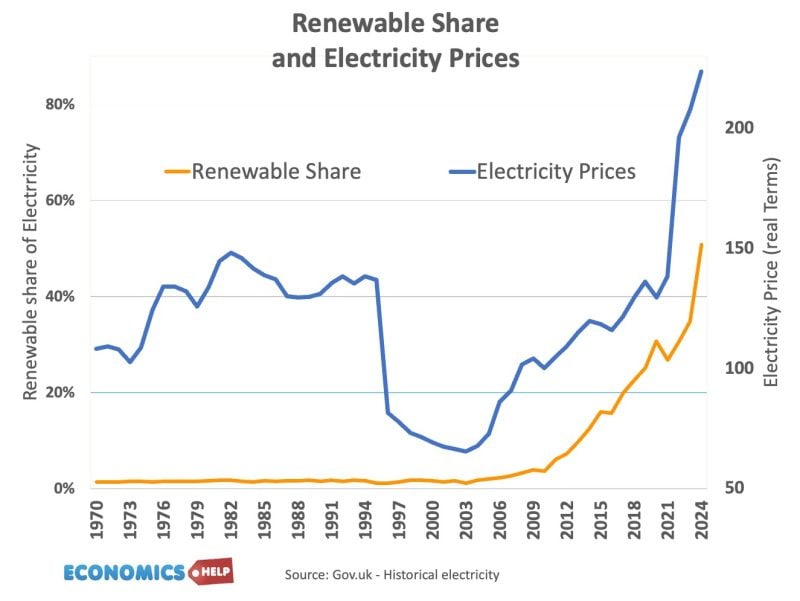
The growth in wind power has led to higher prices (even though gas prices came down in 2024/25)
Evaluation
- It depends where they are located, e.g. few people object to placing wind farms off shore, but would if placed in the Peak District. However, off-shore wind is more expensive to get to where it is needed.
- Wind has a role, but it is a mistake to over-subsidy to production of wind power, when the grid cannot cope with the electricity it generates.
- Subsides would be better used in battery technology, storage and grid management.
Fossil Fuel Volatility

Rising oil and gas prices causes inflationary pressures and lead to lower economic growth. Renewable energy reduces need for spending on oil and gas.
Personal opinion
I like seeing wind farms. I think a windmill is an attractive object which can enhance bleak moors. I don’t think they should be placed everywhere, but, I do support the expansion of wind and other renewable energy sources through taxing those fuels which create pollution.
Last year I arrived in Vienna airport and driving to the Czech Republic, I was struck by the ranks of wind turbines by the side of the motorway. Some people look upon them as a visual eye-sore, but I really like them. I think they are quite attractive, but also like seeing them because I feel it is creating the energy we need without damaging the environment.
What do you think?
About The Author

7 thoughts on “Pros and Cons of Wind Energy”