
When did you get your first mobile phone?
I got mine in 1999, which it turns out was the year of most rapid growth in mobile phone use.
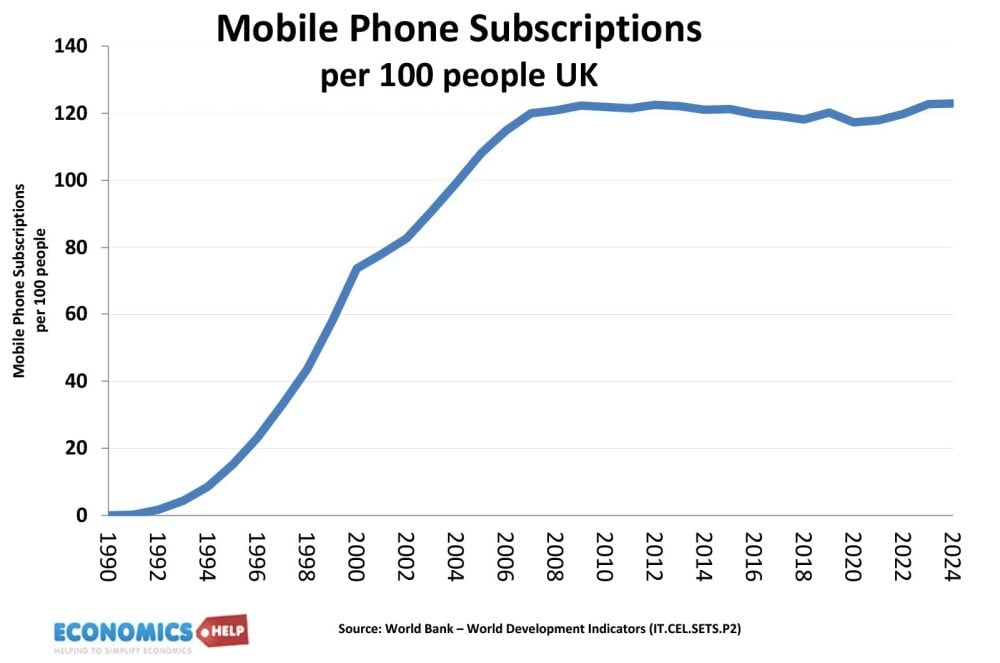
Source: World Bank Mobile Phone
Mobile phones look to have the classic product life cycle of introduction, growth and maturity. However, it is not the whole story because it is not just the amount of phones we have. But, how frequently we update the mobile phone and also how much we spend on it.
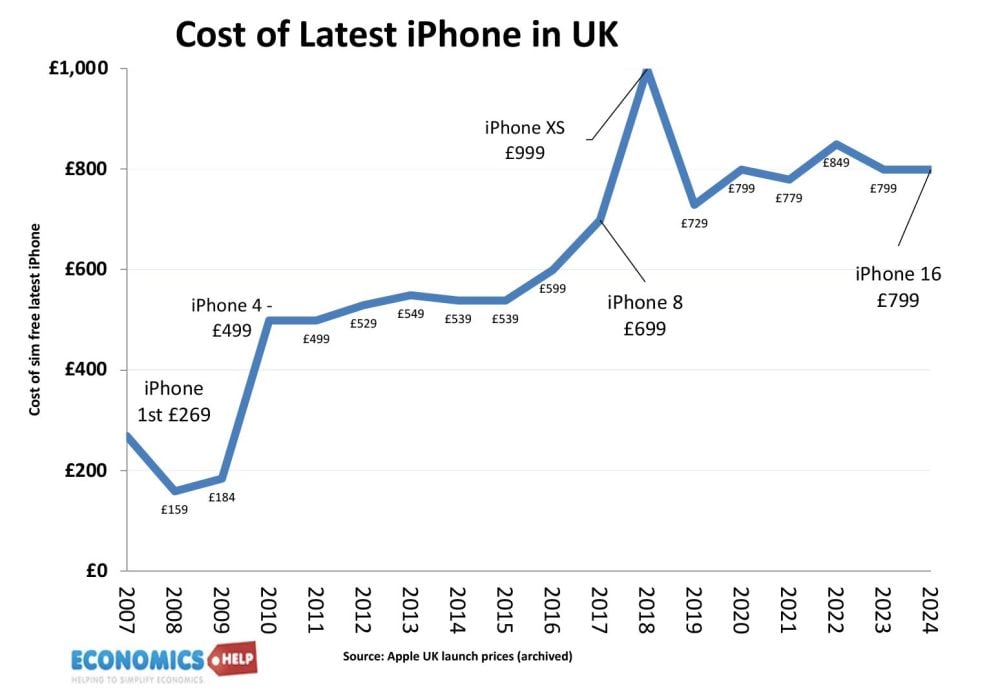
This shows that we spend more on iPhone than at their launch in 2007. This reflects they have more features. Although it also seems we have reached a limit for what we are willing to pay for a mobile phone
Introduction
A long slow period of introduction from 1985 to 1997. I remember at this time that a mobile phone was considered to be the preserve of fancy ‘yuppies’ (Young upwardly mobile people) e.g. city financiers.
When I was at university in the 1990s, if you wanted to meet up with a friend, you would generally go and knock on their door. There were no mobile phones, (no one ever answered the telephone shared by the whole corridor) There was definitely no facebook and very few had email. If you did have email, you probably only checked it in the computer room once a day. (Goodness me, this is making me feel nostalgic for the good old days!)
Growth
In the years 1998 to 2000, there is suddenly an explosion as the rate of mobile phone subscription increased from 25% to 74%. Mobile phones went from being a minority user group to an essential part of life.
 As mobile phone use increased, mobiles themselves decreased in size (until the smart phones reversed trend) Photo Rohdesign CC licence
I got my first mobile phone in 1999, a Virgin pay as you go. A Nice chunky phone with 2 colour display. I bought it somewhat reluctantly – it took quite a while to change my perspective of mobile phones away from the old Yuppie device.
Growth in features
One feature of mobile phones is the ability to keep re-inventing itself with more features, better battery, camera, lights. People are willing to keep upgrading their mobile phone because it offers new features.
However, as we reach the iPhone 16, there is diminishing returns from new models. Cameras are so good, that it is hard to get visible improvements in cameras from here on.
Saturation / Maturity
In the late 2000s, mobile phones reached to even the most technophobic elements of society. (e.g. my mother). It was a bad day when she learnt how to send text messages saying ‘what are you up to?’
By 2009, it looks like we have reached the peak and market saturation, with a subscription rate constant at 130%. This rate has never been increased (and why would it).
Possible Decline in Mobile Phone Market?
Is it possible that we could see a decline in mobile phone subscriptions, as in some product life cycles?
I think it is unlikely. In a way, we have already seen a decline of the old traditional mobile phone – which has been replaced by the new smartphone. Interestingly, the Smartphone is causing a decline in digital camera sales. – As people don’t need both a camera and a phone. But, because the mobile phone has evolved, it is hard to see a decline in mobile phone subscriptions for the foreseeable future.
Related
About The Author

Nokia phones were the best if we talk about durability. Nowadays people use touch phone which are not that durable and their life is also very less.
A long slow period of introduction from 1985 to 1997. I remember at this time that a mobile phone was considered to be the preserve of fancy ‘yuppies’ (Young upwardly mobile people) e.g. city financiers.