
The UK housing market is broken. Two decades ago, the Barker Review warned of inadequate supply, price volatility, and growing unaffordability. But twenty-one years later, nothing has improved—if anything, the problems are deeper.
At the heart of the crisis is affordability. The average home in England costs £290,000, while the average household earns £37,000—a ratio of 7.7. For most people, buying a home now requires either family wealth, risky borrowing, or years of saving for a deposit. No surprise that homeownership has fallen from 74% to 65%. The ONS note that only the richest 10th percentile can afford a house with five years of salary.
And renting is even more difficult. Private tenants already spend a third of their income on housing, with rents rising faster than inflation. The result? A system that widens inequality and threatens to divide society.
Actually, the past 12 months have seen a small improvement in affordability, but this barely dents the long-term picture. The ONS shows that affordability today is still worse than in 2004—and more than twice as bad as it was in the 1970s.

Importantly, not all regions are affected equally. There is a huge variation across the country. In Wales and Northern Ireland, homes are relatively more affordable, while London and the South East remain the epicentre of the crisis. In northern towns such as Burnley and Blackpool, the affordability ratio is around 3.9. Compare that to Kensington and Chelsea, where it reaches 27.1.
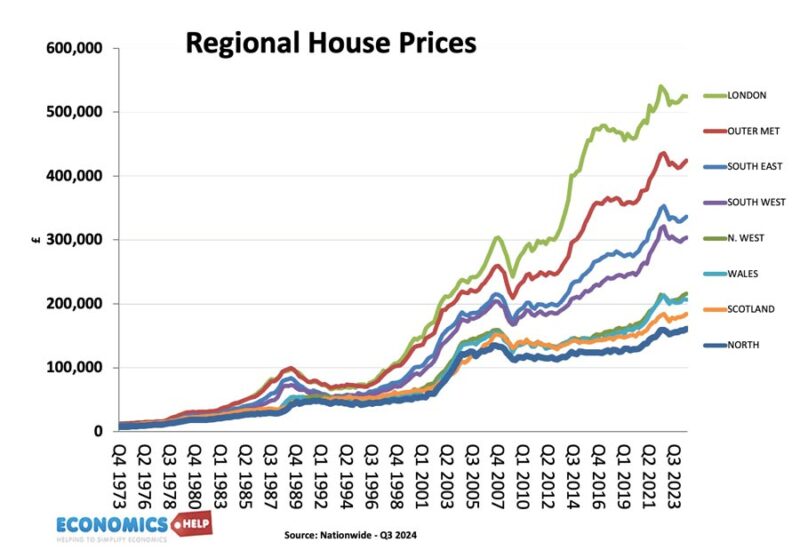
This regional divergence reflects the wider divide in the UK economy. The housing crisis is most severe where growth and employment are strongest. That, in turn, creates a vicious cycle: areas of high opportunity are often the least affordable, effectively shutting out those who don’t already have wealth. For graduates and young professionals, it means an unenviable choice—move to London and pay £2,000 a month in rent, or stay in a more affordable town and struggle to find decent jobs.
Yet, this imbalance also points toward a partial solution. If the economy could be rebalanced away from London, directing investment and high-quality jobs to regions where housing remains affordable, it could ease the pressure. At the same time, building more homes in areas of strongest demand would reduce the bottlenecks that are driving prices ever higher.
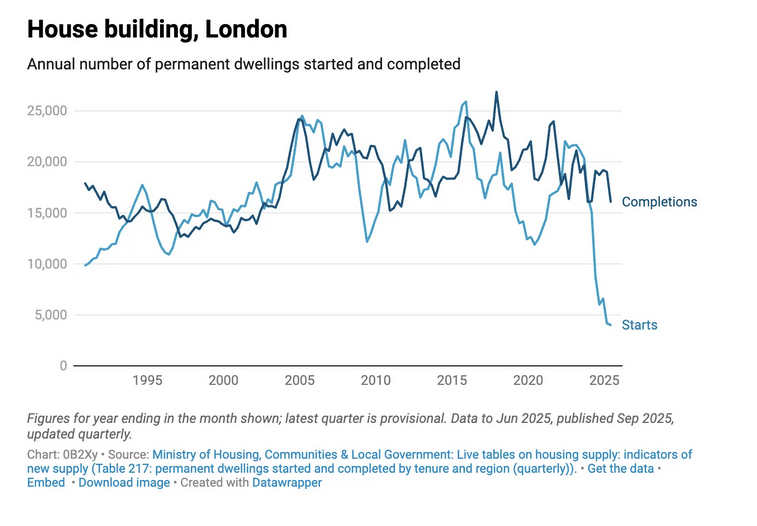
But London is experiencing a crisis in construction. In the first quarter of this year, just 347 affordable homes were started. In the second quarter, new starts fell by 59%. As the Evening Standard reported: “Residential development in London has stopped, it no longer happens.” Of 1,400 development sites, only 16 have actually begun construction…”

Since 1997, house prices have quadrupled, while incomes have merely doubled. Compared to other advanced economies, the UK faces one of the largest housing shortages—estimated at more than 4 million homes—and has the lowest ratio of housing stock relative to the population.
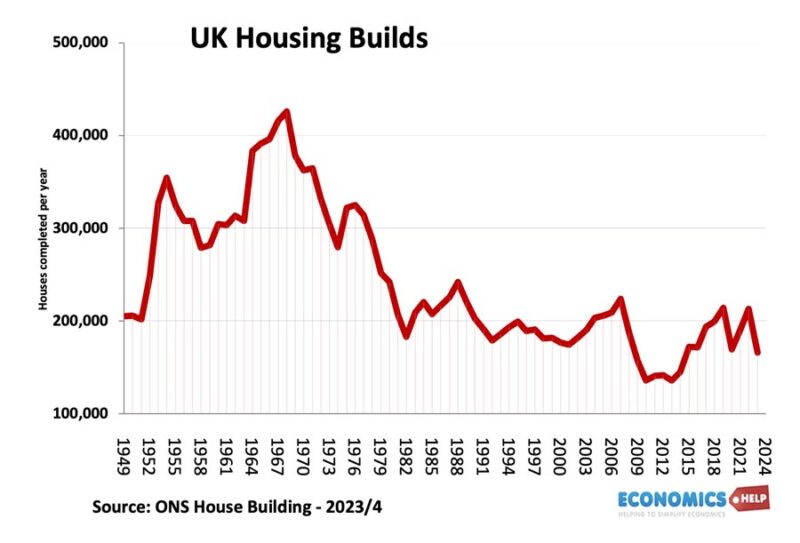
But if prices keep rising, why doesn’t supply respond? There are several reasons. First, the post-war building boom was helped by large-scale social housing programmes. Yet since the 1980s, around 1.7 million council homes have been sold off, with very few replacements built. That loss of stock has never been made up. Against this backdrop, the government’s target of 350,000 new homes a year looks increasingly ambitious.
Second, private construction firms are profit-driven. They have little incentive to build rapidly when drip-feeding homes into the market sustains higher prices. Many developers simply sit on land with planning permission, waiting for conditions to maximise returns rather than to meet housing need.
Third, the cost of building itself has risen sharply. Since 2000, the building cost index has increased by 140%, outpacing general inflation. Estimates suggest that constructing a three-bedroom house in the UK can cost anywhere between £242,000 and £363,000. London, in particular, is now ranked as the second most expensive city in the world for construction.
London has a huge backlog of “ghost sites”: more than 280,000 homes have planning permission but remain unbuilt. Developers point to new regulations and bottlenecks at the Building Safety Regulator, while also citing weak demand and tougher affordable housing requirements that reduce profitability. Even when developers push ahead, projects can still be blocked or delayed by local councils.
Modular Housing to Rescue?
One solution is greater flexibility in building. London City Hall have approved modular housing, housing that is built in a factory, with much lower costs and quicker to build. It is ironic that generally the housing sector uses the same labour intensive methods as the Victorians.
Also, since 2004, the UK population has increased faster than expected. An extra 8.1 million people, 6 million due to net migration. This has incresed the number of households, but without dealing with the backlog of housing shortage. The housing crisis has influenced household formation. If you can’t buy or rent, young people live at home longer. Bad news for young people, not great for parents either. The collapse in the UK fertility rate mirrors global trends, but if people find housing expensive, it is definitely a factor in delaying family formation. Even if people do get married, the cost of buying, say, a 4 bed house rather than 2-bed is a factor in encouraging smaller family sizes.
Difficulty in Moving
Ironically, the UK housing market does have an issue of under-occupation. In 2023, 72% of households in England had at least 2 bedrooms more than they needed.
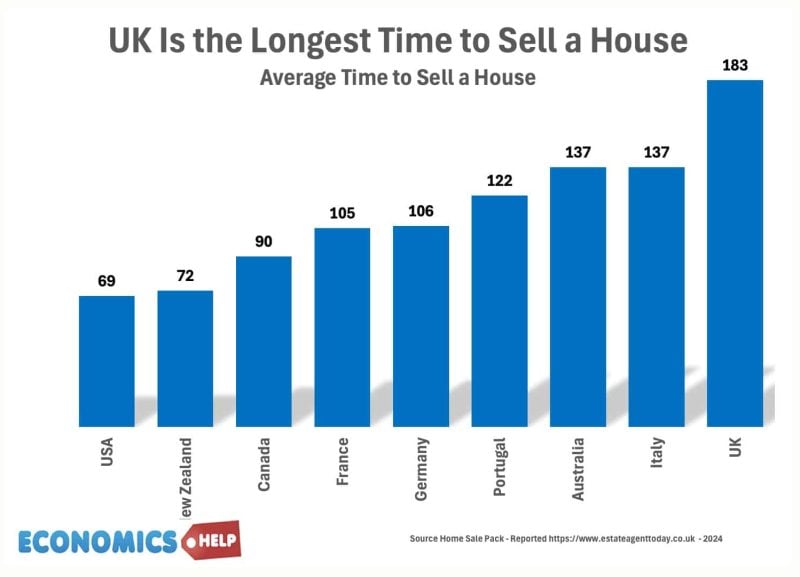
This is often single old people who find it difficult to move and downgrade. This highlights another structural problem. It is stressful, difficult and costly to move. Higher stamp duty is definitely a factor in discouraging people to move, but in a survey people also cite the stress and costs of moving. The UK process is archaic and time-consuming, and the worst in the world. In the UK, the average time is over 6 months compared to 69 days in the United states. This only increases the inefficiency of the housing market.
Overcrowding
But, also whilst some homes are over-occupied or even empty, the private rented sector has become a nightmare. 8% are overcrowded, with insufficient bedrooms to avoid overcrowding. Rents have remorselessly risen, yet, many landlords are pulling out of the sector. We are seeing a shift to bigger corporate landlords, but the fundamental problem is the sector hasn’t kept up with growing demand. There are long waiting lists for social housing, and a big rise in homelessness. In terms of temporary accomodation, England has become an outlier, a high rate of people sofa surfing or being placed in B&Bs by councils.
Homelessness
Latest figures suggest local councils spent £2.8 billion on temporary accommodation, a 118% increase in the past 5 years. This includes £844 million spent on emergency B&Bs and hostels. It is the most inefficient use of government money, fighting a crisis, rather than a long-term solution.
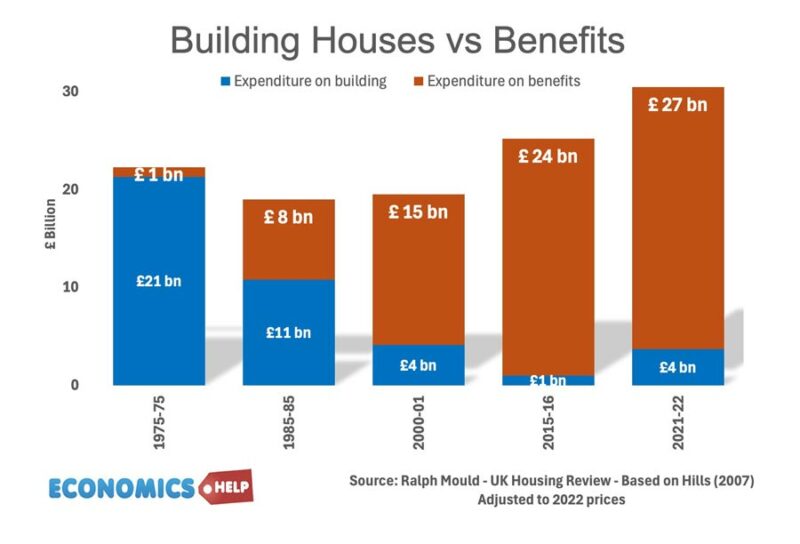
Despite freezes to housing benefit and two child cap, the amount spent on housing benefit is much greater than the 1970s. It mirrors the shift from funding building new houses to funding benefits. Yet, despite the total bill rising, the real value of housing benefit is falling behind market rents, meaning that the share of private rental properties which are affordable is lower than in the past.
One solution often touted is for the government to build council houses directly rather than through subsidies. The benefit is that government ownership would lead to income revenue rather than letting the private sector benefit. In theory, the government can borrow cheaper than private sector. The government have increased fund for social housing, but it is usally in partnership. The main drawback is the state of finances and perception that with debt hovering around 100%, there is limit to future borrowing.
Improvements in Housing Market?
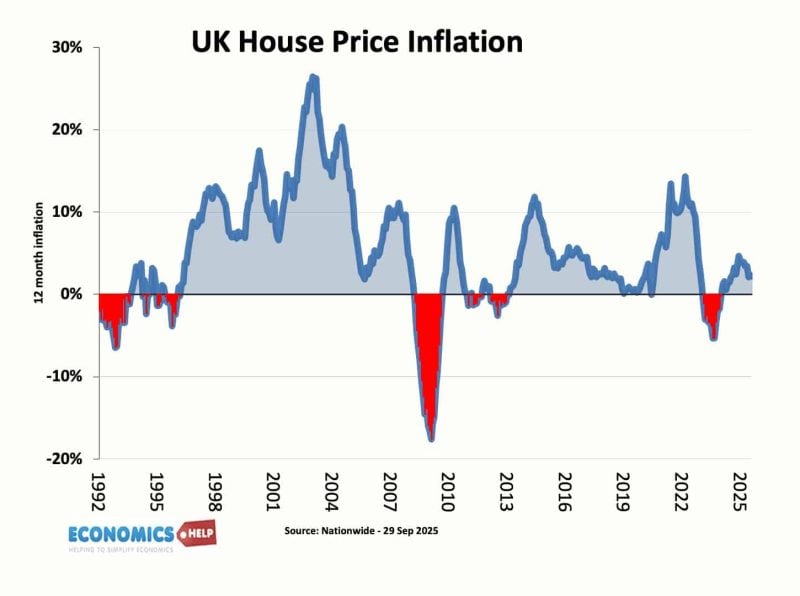
Are there any improvements since 2004? Well some relaxation of planning regulations have seen greater interest in building. Secondly, since the big crash of 2008, we haven’t seen a repeat. The 2022 increase in interest rates caused a mini dip in house prices, but it was very mild compared to 1991 and 2008. This is because post-crash, new regulations introduced stricter stress tests, which means borrowers had to prove they could pay if rates went up. Also, there was a move from variable mortgages to fixed rate mortgages. For all the problems of the housing market, it is worth pointing out that since the Covid boom in 2021, house price growth has moderated. In fact, real house prices have fallen since 2009; you could argue that the problem is not just the housing market, but poor growth in real incomes.
The hope would be that a limit on house price growth could be maintained for several years to slowly improve affordability. The problem is that with affordability stretched, there is always temptation to resort to relaxing mortgage restrictions and encourage bigger mortgages, which helps a few at the cost of bidding up prices.
Wealth
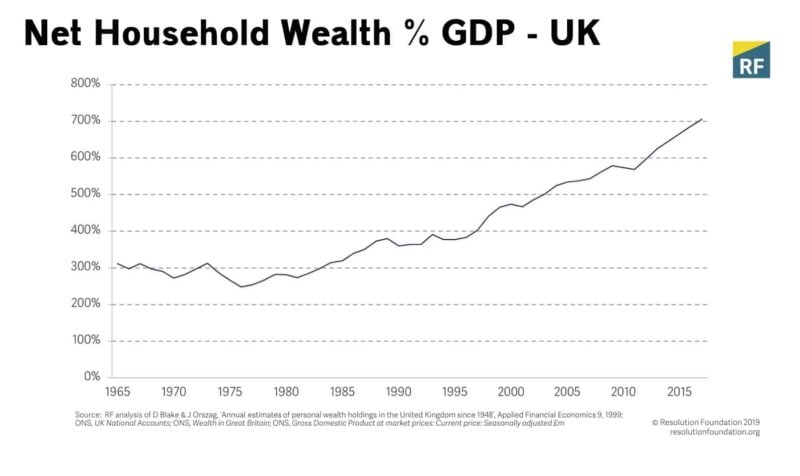
Another factor, that has become more important since 2004 is the growing importance of wealth and inheritance in proping up the housing market. If we ask what explains the long-term rise in house price to income ratio, at least part of the reason is that people are using more than just income and borrowing, but wealth. In other words, rising house prices leads to more wealth, which is then recycled back into the housing market, pushing up price-to-income multiples. But, this raises obvious problem that it increases inequality between those who inherit and those who do not. It is becoming big divide. It also means people are becoming homeowners much later in their 60s, rather than 20s and 30s. Also, the growth of private rented sector, rise in rents, raises another unwelcome issue. We will be facing a new generation of private renters who retire but with need to pay market rents. There is a big divergence in living standards of pensioners who own and have paid off mortgage and those who pay market rent.
Despite recent figures for net migration coming down from the very high levels of 2023, the UK population is still forecast to increase in the coming years, so with this there is no easy solution. There is good case for treating it like a national emergency like in the post-war period. For example, prefab housing were put up to provide immediate need. We have to find a way to build houses cheaper and in greater numbers, with 3D printing, modular housing seems a relatively unexplored avenue.
Sources:
https://openpropdata.org.uk/the-uk-has-the-slowest-home-moving-timeline-of-12-countries/
https://www.estateagenttoday.co.uk/breaking-news/2024/02/uk-home-sale-times-are-embarrassing-claim/
About The Author
