
A fall in the inflation rate means that prices are rising at a slower rate (called disinflation)
A fall in prices means prices are actually going down. This means a negative inflation rate (called deflation)

Recently, there was a fall in the UK inflation rate to 3.2%, what does that mean?

This shows inflation in the UK peaked at over 10% in late 2022. Then, during 2023, inflation rate fell to 2%. In early 2024, prices were rising at just 2%, but prices were still going up, just at a slower rate.
For non-economists who tend not to look at the latest inflation data, an ordinary household is more likely to view inflation and prices like this.
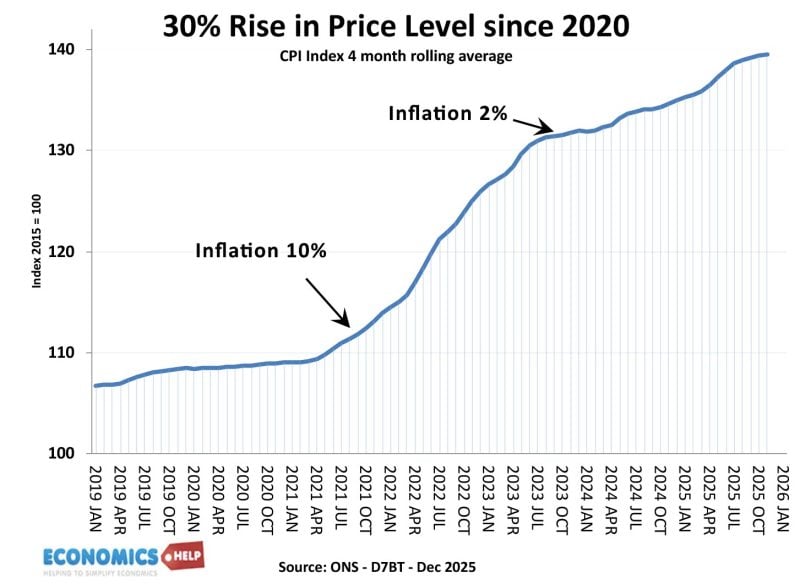
This shows the actual price level. In 2021, the price level is rising fast. By 2023, the price level is increasing only slowly. But, for most households, what they value is how much do things cost, and in 2024, prices were still 20% higher than before the inflation surge.
2024 US election

In 2024, it was a similar situation. The inflation rate had come down, and President Biden could claim, look inflation is falling! The economy is doing great. But, American households were not in the mood to be positive about the economy. From their perspective, prices were much higher than when Biden came to power. For many households, prices were 20, 25% higher and for highly visible goods like food and gas, prices had risen even more. (see also why people hate inflation)
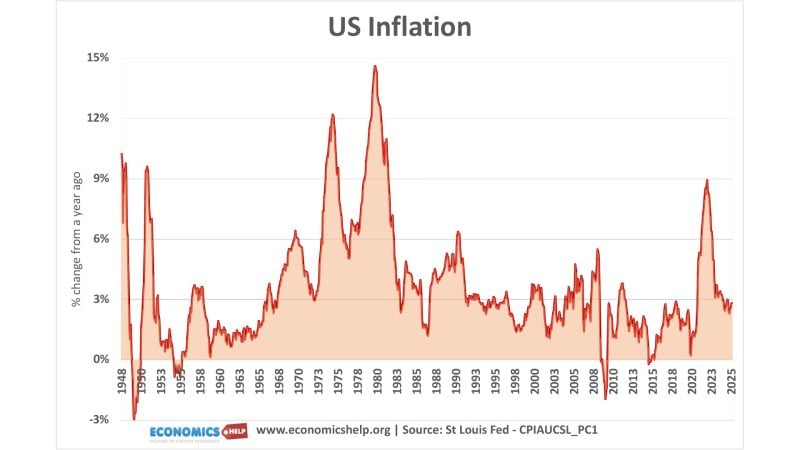
US inflation since the war only very brief periods of deflation (1949 and 2009)
In that election, Donald Trump promised that when he came to power, prices would fall immediately. Unsurprisingly, when Trump came to power, prices didn’t fall. In fact the inflation rate picked up. By historical standards, inflation of 3% is not too bad; it’s not that far off the 2% target most central Banks target. However, again, American households are not impressed. To them, prices are rising, and many households would say that their personal cost of living is rising faster than 3%. Inflation doesn’t fully reflect the cost of rents and also interest payments on loans. So some households definitely would see living costs rise above inflation.
But the point is, inflation rate may be lower than under Biden, but the struggle to get by is still there.
Also, the fact that Trump’s signature economic policy of wide-ranging tariffs contributed to higher goods inflation is an added reason why many households are not happy.
Is it good to target lower prices?
But, it is quite possible when Trump said he would lower prices, what he really meant was to lower the inflation rate. I don’t know. But, it does raise the question should politicians try to reduce prices?

If you look at UK inflation since 1900, there have only been two periods of sustained deflation
- 1920s deflation
- 1930s deflation
These were the worst economic decades of the twentieth century. Prices fell because demand was squeezed, the economy contracted and unemployment rose.
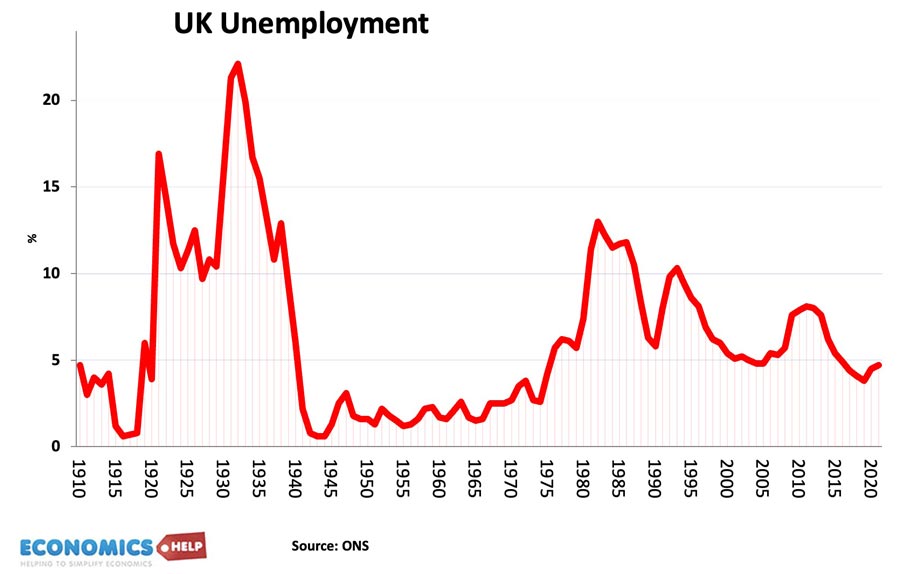
The 1930s of course, was the Great Depression. In the 1920s, the UK imposed austerity and the Gold Standard on itself to deflate the economy. You can read more about it here. (Economy of 1920s)
It’s the same with the US, the only period of sustained deflation was the 1930s, where a collapse in the money supply caused prices to fall.
Why is Falling Prices Bad?
It does raise the question why is falling prices bad, because intuitively falling prices seems to be good. Well falling prices is good, if your income continues to rise. But, in those periods of falling prices, because demand fell, firms employed less people, so incomes were falling faster than prices. Deflation can be also damaging to the economy because:
- Real value of debt increases – indebted households have to spend higher share of income on debt repayments.
- With prices falling, people often delay spending
- Real interest rates become too high.
Read more on costs of deflation here.
About The Author
