
Gold and housing couldn’t be more different as assets yet they do have some similarities. They perform well when interest rates are low and provide a hedge in times of inflation and crisis. There may be bubbles in gold and housing, but they are both enduring assets that have stood the test of time. Be wary about comparisons, as it really depends which time period we use.
Also, on a personal note, I have never bought gold, not even gold jewellery. I have bought a house, and it has been pretty useful and remains so. If I had a gold bar, it would be up in the loft, not doing anything. Recent movements in gold are pretty staggering, driven by a range of structural changes (mostly driven by Central Bank gold buying, and change in banking regulation) But at the end of the day it is an asset with no yield and can go down as well as up. I’ll stick with my house for now.
In summary.

The graph below shows that since 2007, UK real House prices have fallen 20%. In the same time period, real gold prices have soared by 190%.
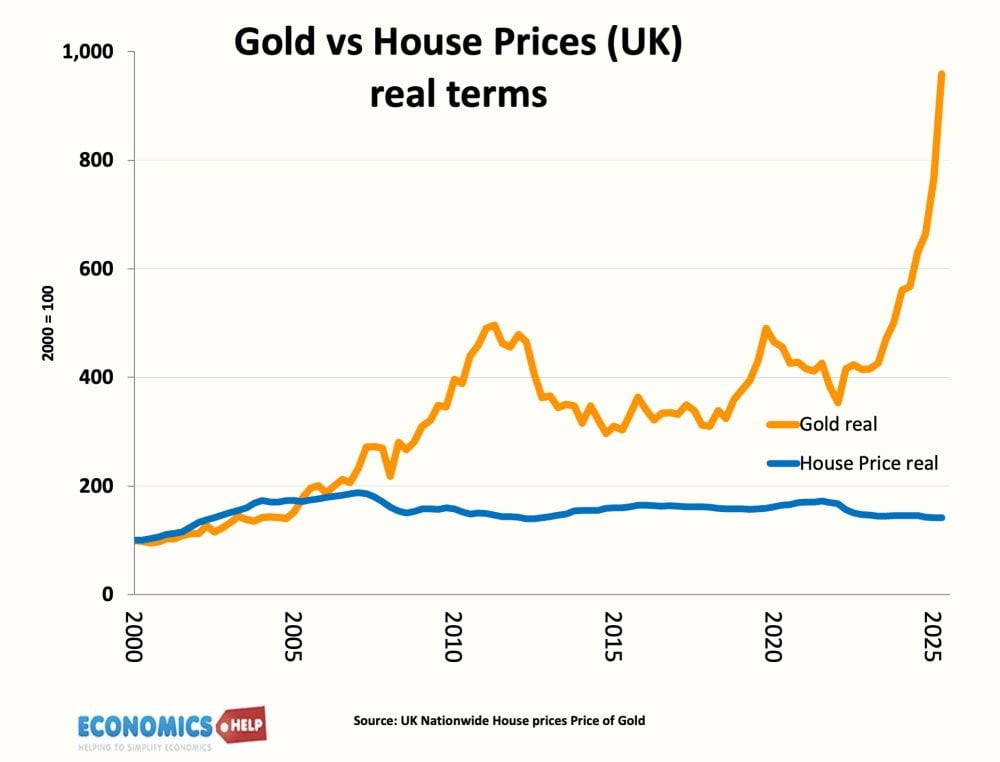
Since 2000, gold has grown nearly 1,000%. This was a great time for gold. By comparison, housing offered terrible returns after the 2007 crash. However, to be fair to housing, we need to add in the rental yield
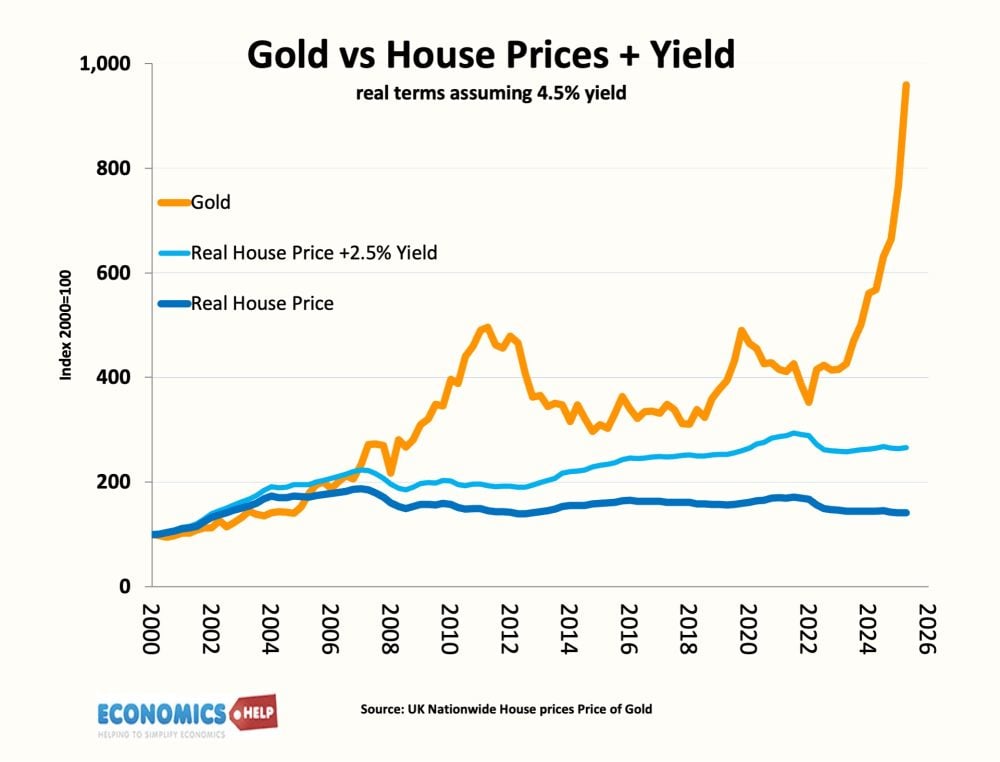
Now, here we have estimated a yield of 2.5%. Why? The average rental yield in this period was 4-6%. But, you have to take into account maintenance costs, plus taxes. Stamp duty has actually increased a lot in this period. If you were able to reinvest profits of housing rentals back into housing, the returns would be better. So even with negative real house price growth since 2008, housing would return a positive return with reinvestment. Admittedly, reinvesting profit into now buys is not without costs and difficulties.
These scenarios assume cash buyers. Neither loans to buy gold or buy to let mortgages.
But, firstly, before we get carried away, there are 2 important caveats to that first graph. Firstly, gold doesn’t always go up. If compare real house prices to gold since 1980, the result is very different.

Gold had nearly 3 decades of low prices. Secondly, gold gives no yield. It is famously why Warren Buffet says he does not want to invest in gold.
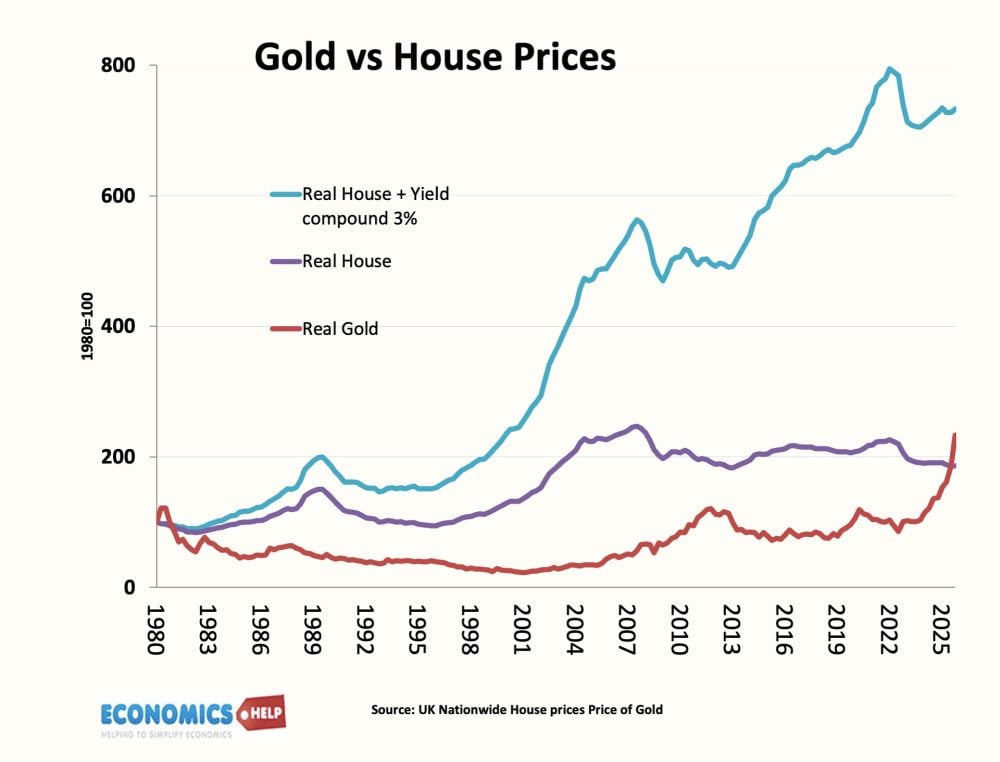
Also, the long-term can change perspective. If you applied a 3% profit yield from housing since 1980, an investment in housing offers much higher returns than gold. Rental yields were actually higher in the 1980s, because house prices were relatively lower and the rented sector smaller.
Maintenance Gold vs Housing
Gold may offer no yield, but at least it has very little maintenance cost and troublesome tenants (though with gold bars you need to pay for security).Housing has also become more expensive to maintain with a rise in legislation such as renters rights reform. Also, in the UK, stamp duty for second home buyers has gone up considerably.
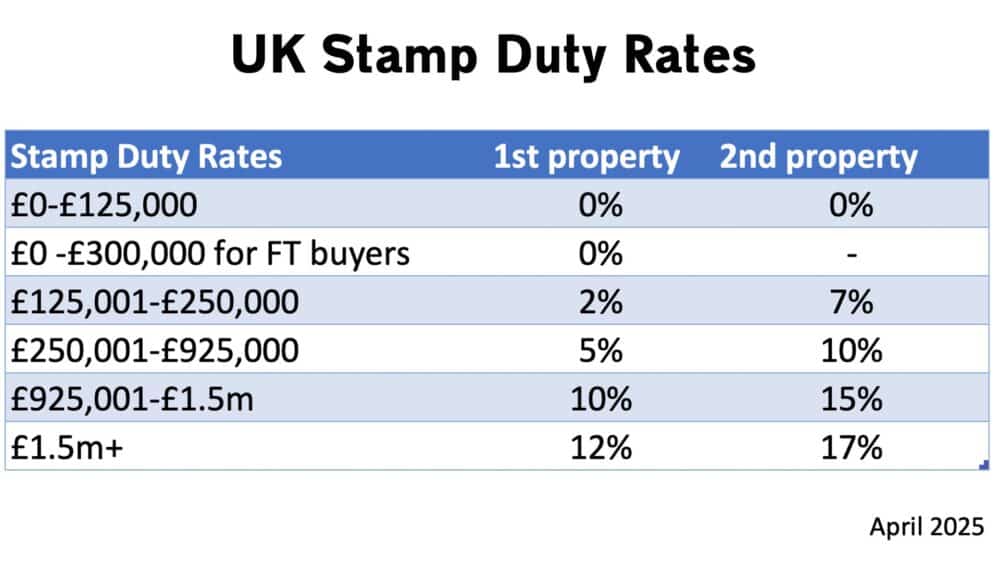
Another point of view being a landlord helps provide housing a socially useful good, investing in gold has no social usefulness. For a second home over £1.5 million stamp duty at 17% is a big impact.
What about other options?
 This shows golds meteoric performance since 2000. But, don’t forget 2000 was a good year to choose gold in its best light.
Future of Gold
But, gold optimists are saying gold has still a long way to go. This isn’t just speculation – we are witnessing a structural revaluation of gold driven by three big changes: central bank de-dollarisation, record global debt, and a revolutionary shift in banking regulations. The big question is: why has gold increased so much, and can it sustain this parabolic rise?
The big change has been a rise in Central Bank purchases as dollar assets are viewed with less appeal than before.

Since the dollar fell in 2025, gold has risen. This is one factor, but not the biggest.
See: Why prices of gold are rising?
About The Author
