
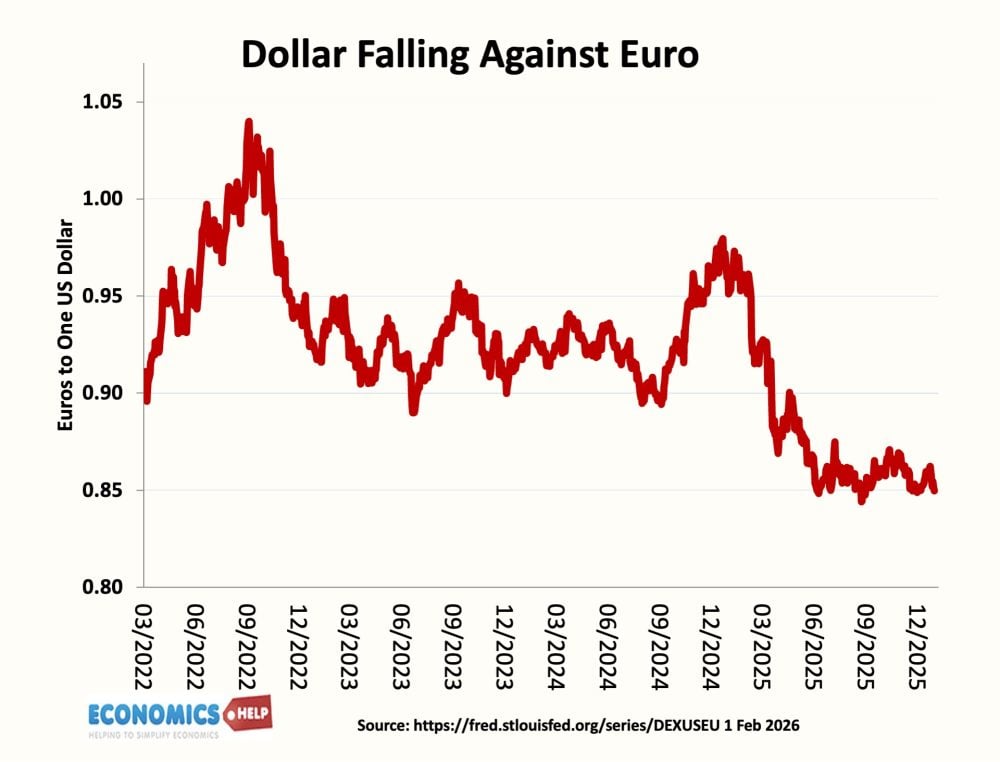
In the past year, the dollar has fallen 13% against the Euro. And this week has seen another rollercoaster ride. With President Trump saying he wants a weaker dollar, investors have taken him at his word. But, big investors feel the dollar has been overvalued for years, and there is still a long way for the dollar to slide. Of course, people have been predicting the imminent demise of the dollar since Youtube was invented in 2005, but the twin US deficits, erratic foreign policy, rising inflation expectations and desire for low interest rates all could mean there is a long way to go for the dollar’s fall.
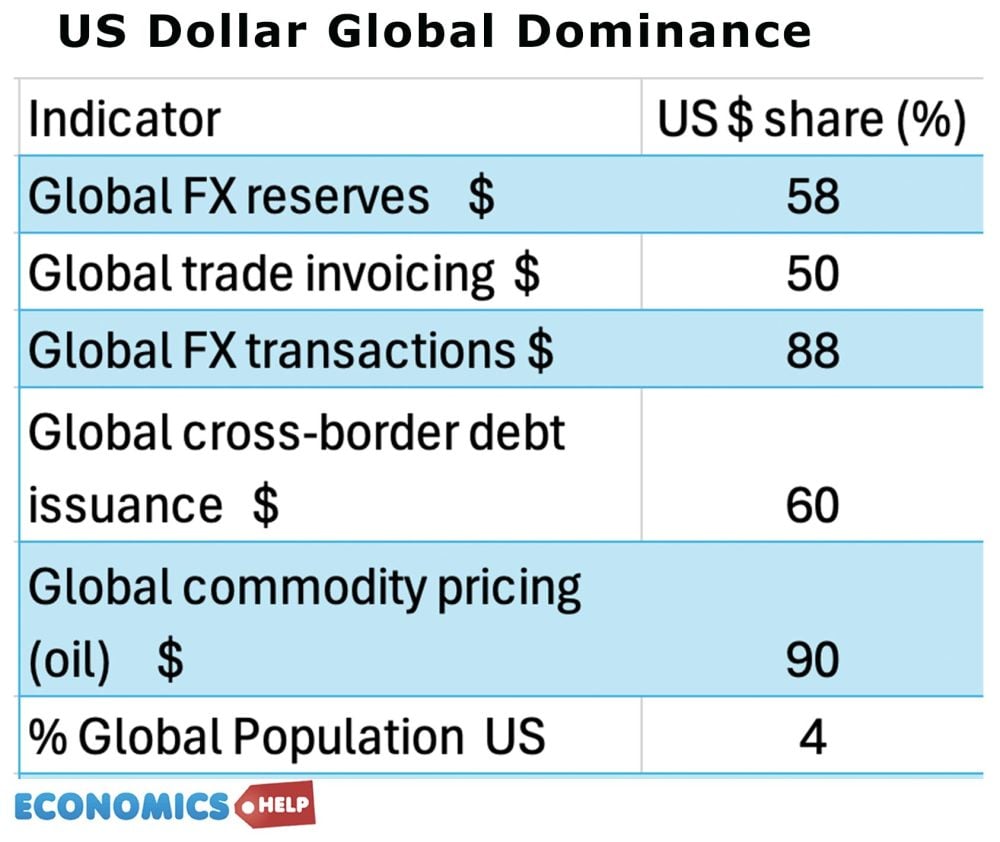
The dollar’s current domination is unprecedented. The US accounts for 4% of the world’s population but 25% of nominal GDP, 40% of global bond values and roughly 60% of global equity value.
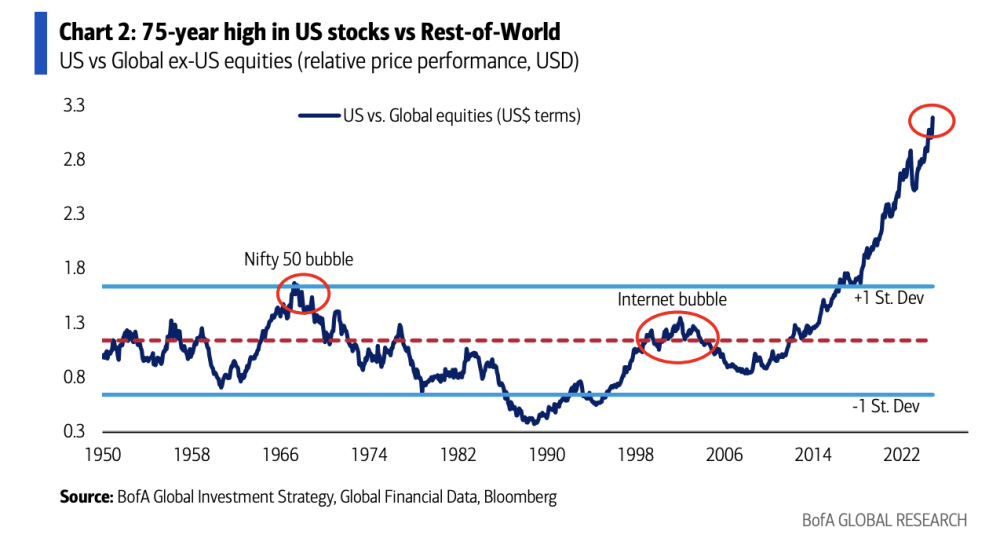
This reflects US economic exceptionalism. For years, US shares have outperformed the rest of the world.
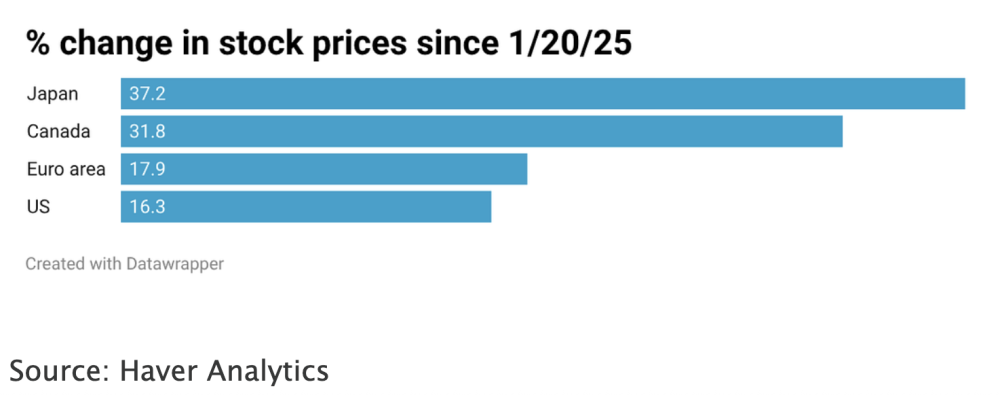
At least until last year, when US stocks underperformed even Europe and emerging markets.
And with the US seemingly happy to upturn old alliances and threatening to take Greenland, many investors look at the US in a new light. Holding dollars is no longer seen as the safe bet it used to be. Last year, when good or bad news came along, Central Banks had a preference for gold, pushing the precious metal upto to record highs.

What is happening is that Central Banks have been shifting the balance of their reserves from dollar assets to gold and other currencies.
Even small shifts in central bank policy can have big effects on the price of gold and dollar. 2025 was also a turning point for the US.

April Tariff liberation day was an unprecedented expansion of tariffs, taking the US back to the 1930s and Smoot Hawley. But, markets predict that erratic foreign policy and tariffs will ultimately hurt the US economy or at least reduces the sense of a safe haven. And the new tariffs have seen German investment in the US fell by roughly 45% ($11.1 billion) during 2025.
Hedging against the Dollar
And as a result of changing climate, last year we had a rise in investors hedging against the US dollar, which involves technically selling dollars now.
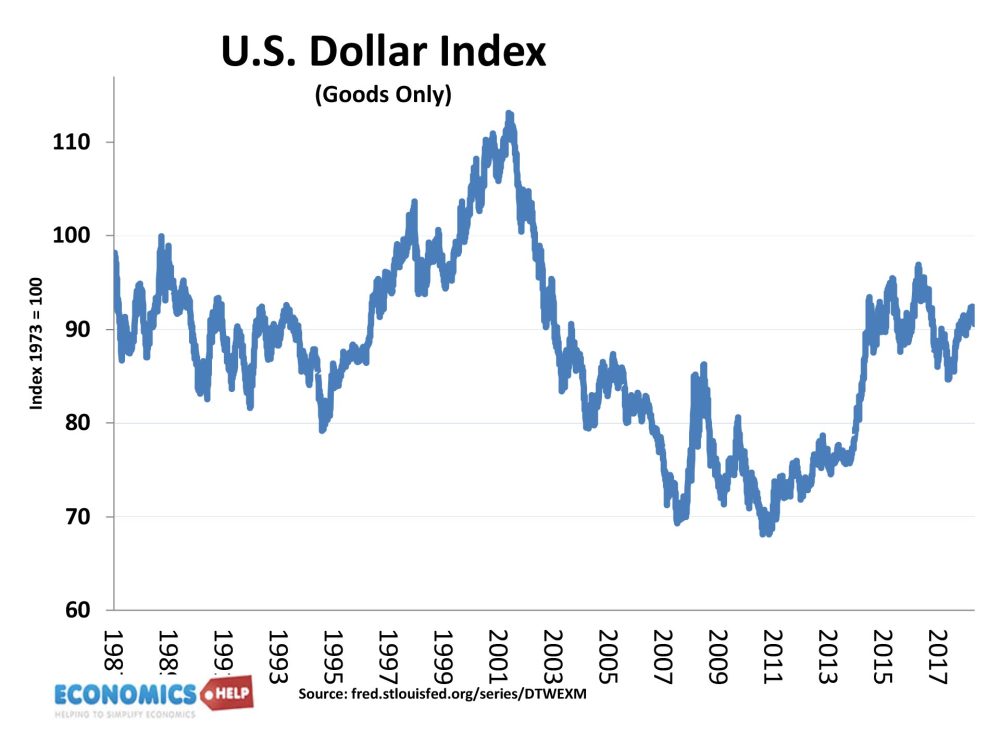
Another argument for a US dollar bear market is the current American mania is reminiscent of the 2002 dot com bubble. The dollar soared on the back of a booming stock market, but when the bubble popped, and capital flows went into reverse, the dollar fell 40%.
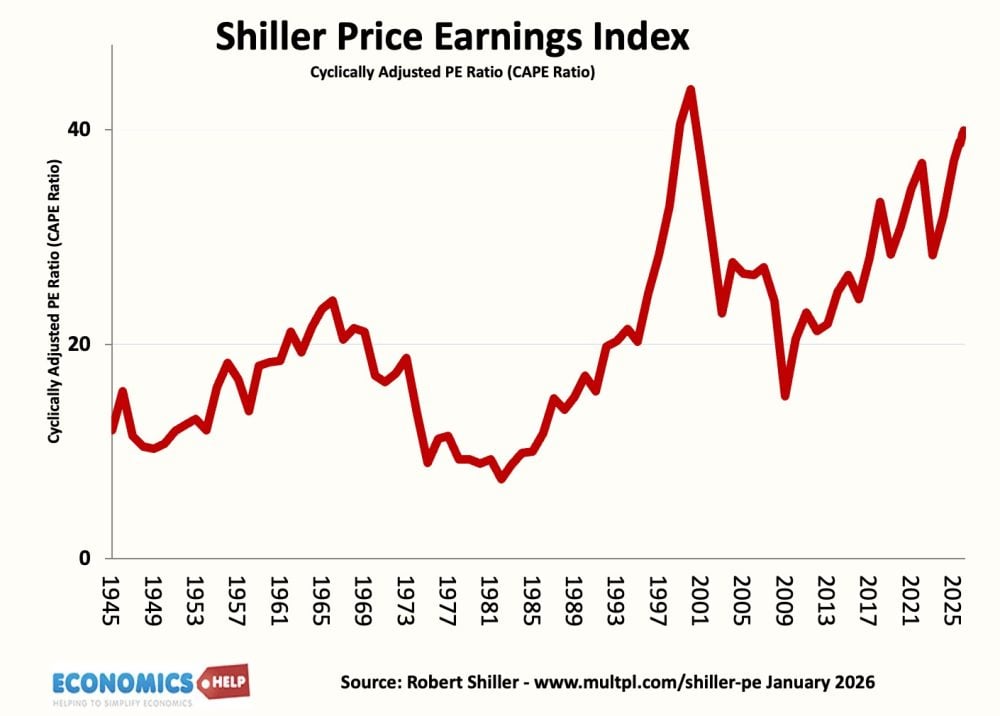
The rise in price to earnings also reflected the strength of dollar
Up to last year, the dollar strength was related to capital flows into AI, it leaves share as overvalue as 2002. If AI disappoints in any way, you could see a repeat of the dollar post dotcom bubble performance
Interest Rates and the Dollar
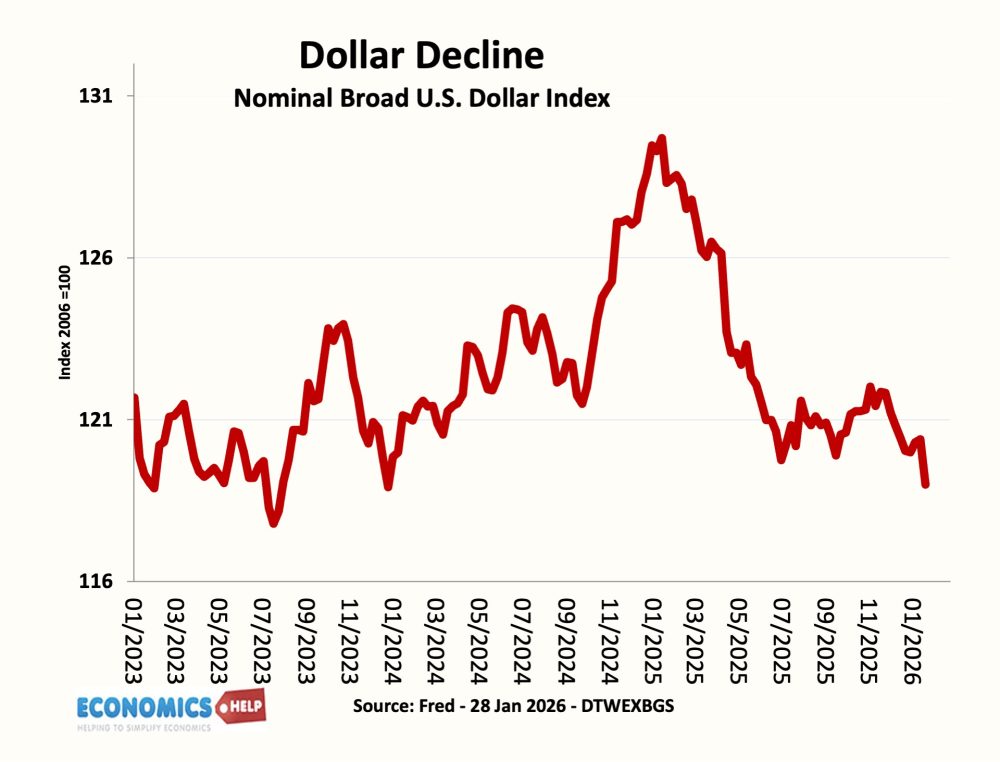
In the short-term, the biggest reason for the short-term fall in the dollar is actually less dramatic. It reflects two rather mundane economic factors. Firstly at the end of 2024, the dollar was overvalued, it had been on a long bull run, and it was kind of inevitably it would fall. Even after the 13% devaluation since its peak, the Economist notes that the dollar is still overvalued against 49 out of 70 currencies according to Big Mac index. This is the logic of welcoming the dollar’s fall; it will make US exports relatively more competitive and reduce the persistent current account deficit.

The second reason for the fall in the dollar is the change in the interest rate cycle. Last year, US interest rates were double other major countries. The UK had high interest rates, but that reflected inflation rather than high growth. But, with US rates substantially higher than those in other countries, there is a clear incentive to save in US dollar assets. But, US interest rates are now predicted to fall. And, this is a significant reason behind the falling dollar. The prediction of lower interest rates reflects partly a slowing economy. Whilst the stock market booms, consumer confidence is reaching all-time levels.
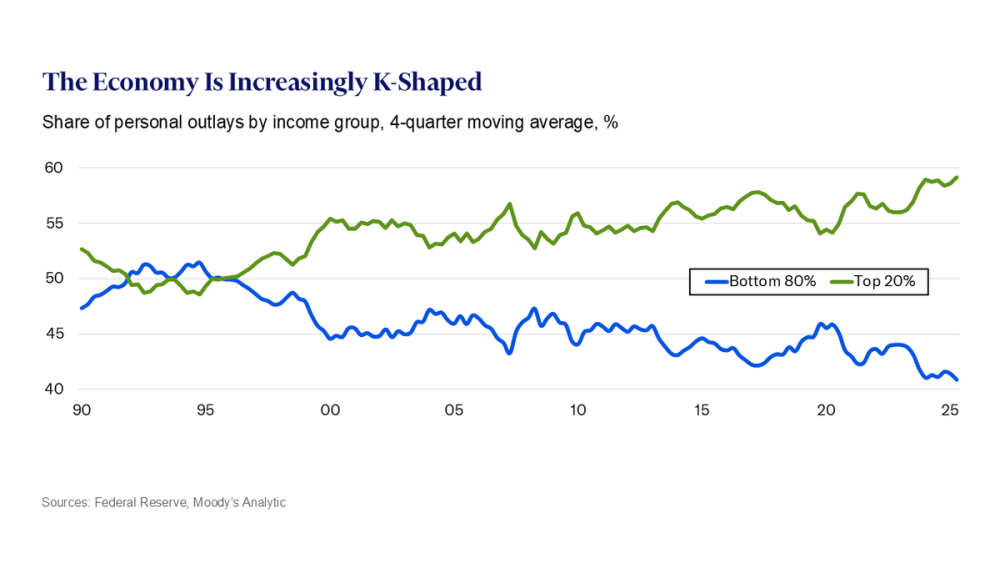
Growth is maintained by spending of the top 20%, the median worker and the bottom 20% is increasingly squeezed with households running down savings and running on empty. Employment growth has fallen and concerns over joblessness have risen.
Preference for Interest Rate Cuts
But, it’s not just the economy the clear preference of President Trump is for big interest rate cuts. Kevin Warsh the new pick for Fed chairman in the past has been an inflation hawk arguing against an interest rate cut. But, now he is arguing that the US can afford to have substantially lower interest rates because he claims the new wave of AI technology will radically improve productivity and reduce prices. This is optimistic to say the least. There is no evidence of it so far. But, his conversion to low interest rates did him no harm in getting the top job. When the Fed cut rates from 2009 to 2012, Warsh claimed it would lead to inflation, which at the time it didn’t. The economy was too depressed. But, to be fair, he did criticise the expansion of the Fed balance sheet in 2021 and 2022, which he warned would be inflationary.
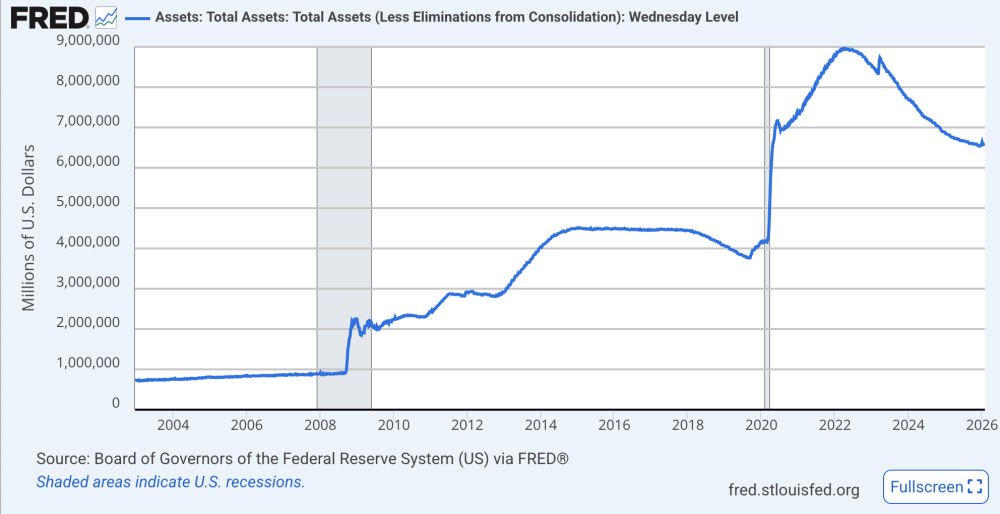
Fed has $6 trillion of assets.
In fact, one of the few consistent policies is his desire to cut the Fed balance sheet and reverse quantitative easing. This involves selling bonds back onto the market. This will lead to fall in liquidity and higher bond yields. Less dollars, should in theory, strengthen the dollar. The predicted decline in liquidity is one reason why gold prices fell at the end of last week and a slight recovery in the dollar.
US Twin Deficits

However, the problem with reversing quantitative easing is that the US has a twin deficit problem. High government borrowing and large current account deficit. This persistent and growing budget deficit risks putting downward pressure on the dollar in the long-term. Markets fear that with the projection of US debt set to soar in the coming years, there will be temptation at some point to monetise part of the debt. In an era of political populism and divided congress, monetising debt is easier than hard choices like increasing taxes and cutting spending. This would be a disaster for the dollar, if US inflation did pick up then this will have effect of reducing dollar.

The other part of the deficit is the persistent current account deficit, which reflectsa high level of imports of goods and services. It means the US relies on inward investment and capital flows to balance the balance of payments. Currently, the dollar retains a huge dominance of the global financial system, from both foreign exchange reserves to cross border debt issuance. The position of the dollar as global reserve currency has given the US the privilege of being able to borrow at relatively lower interest rates and also run this current account deficit. But if global investors feel the US has greater risk, this will be eroded.
It won’t be dramatic overnight, but something drip, drip that gains momentum. And once the dollar loses its status as a source of safety, then it can become self-fulfilling.
De-dollarisation will be gradual
Whilst it is easy to get carried away with grand statements of de-dollarisation. It is is worth bearing in mind, those who hold trillions of dollars of US assets don’t have a vested interest in seeing the dollar fall. It reduces the value of their investment. Whatever may happen on the surface, the US economy retains quite strong dynamism and strong productivity growth, even if AI proves to be something of a bubble and less than investors want it to be.
However, the days of the dollar’s absolute dominance will start to fade and the past year has made US less attractive as a source of capital flows than in the past. The Pound Sterling was once dominant global currency, until one day it wasn’t. The Dollar took its place, but what if anythying can take the dollars place, the Euro, the Yuan or gold? Probably a combination of all. This video looks at prospect of gold.
About The Author
