
Inflation is a sustained increase in the general price level in an economy.
Inflation means an increase in the cost of living as the price of goods and services rise. The rate of inflation measures the annual percentage change in the general price level. A fall in the inflation rate means prices are increasing at a slower rate. You can see the price level still increases, just at a slower rate.
Deflation is a fall in prices, a negative inflation rate. It is quite rare.
Hyperinflation is a very rapid rise in prices. An inflation rate of over 1,000%

Causes of Inflation
The two main causes of inflation are Cost-push inflation and demand-pull inflation.
1. Cost-push inflation
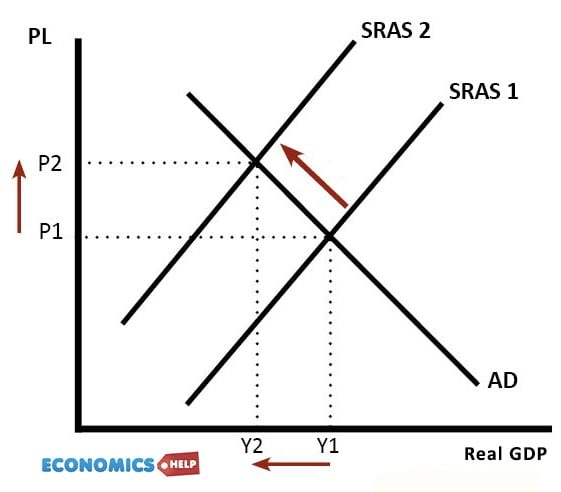
Cost-push inflation occurs when a rise in prices is caused by a rise in the cost of production, such as higher oil prices. It is shown by a shift to the left of the short-run aggregate supply curve.
2. Demand-pull inflation
Demand-pull inflation occurs when there is a rise in aggregate demand faster than an increase in aggregate supply and the economy gets close to full capacity.
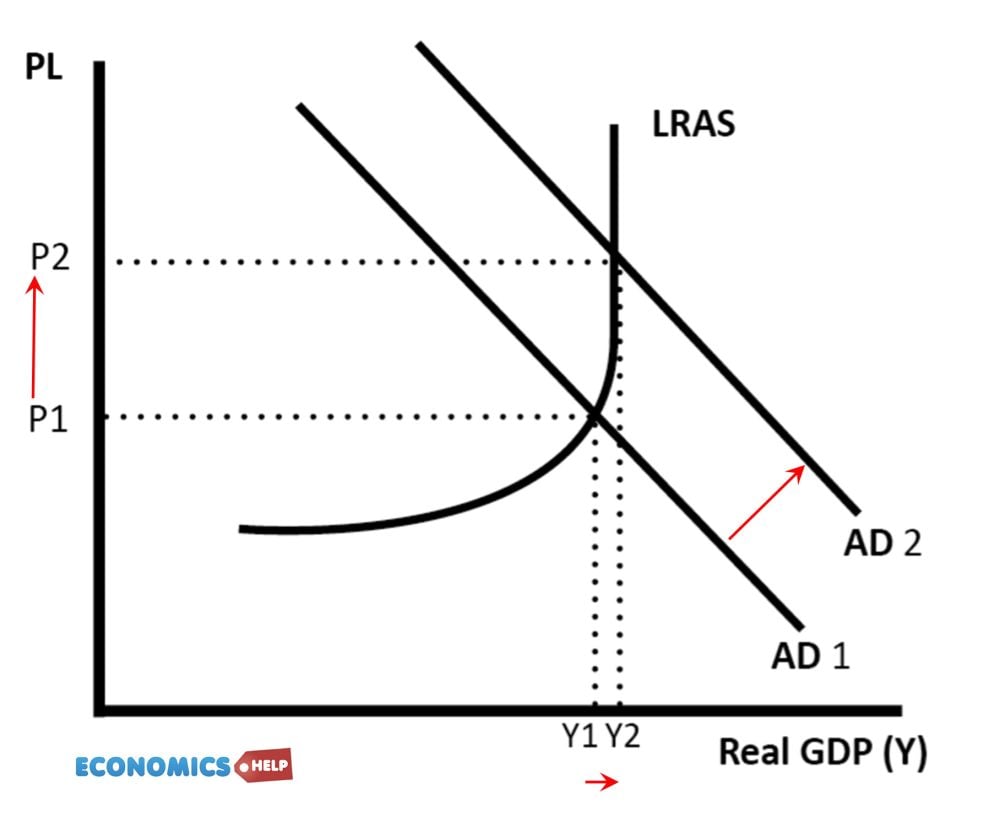
If we look at inflation in the UK, we can see inflation spiked in the 1970s, 1980s, and 2022.

In the 1980s, inflation was caused by demand-pull factors. The government cut interest rates, causing higher spending. Also at the time house prices were rising, and confidence was very high, growth reached 4% a year, but this was faster than the productive capacity of the economy. In 2022, the inflation was due more to cost-push factors.
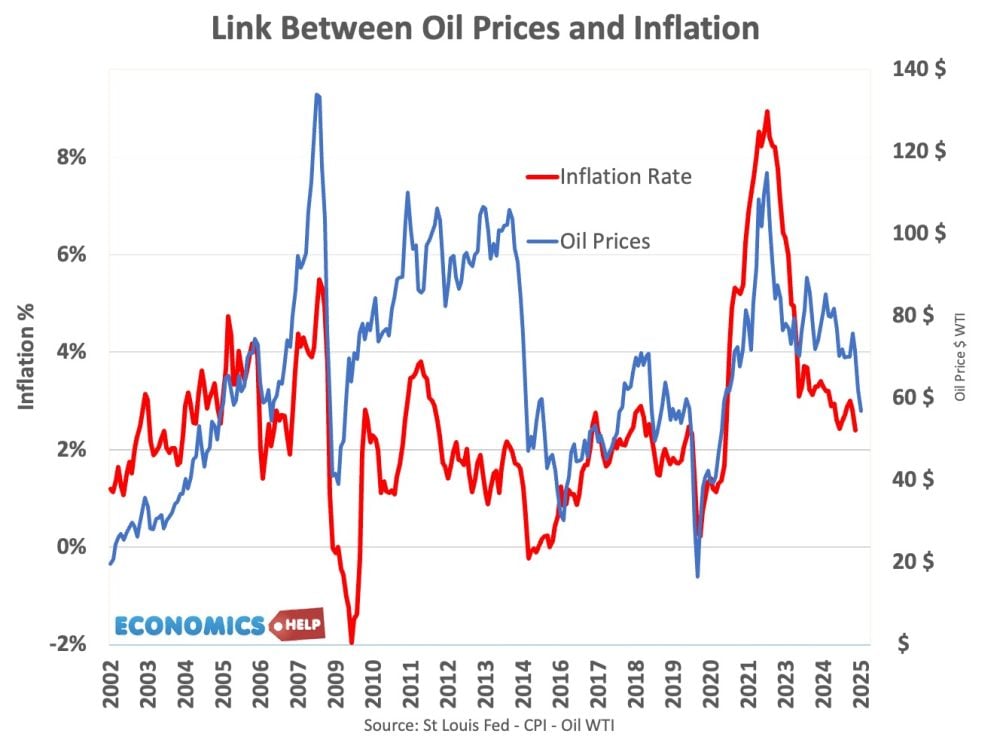
Oil and gas prices soared, this led to higher transport and energy costs. Also, at the end of covid, there were supply constraints, e.g. ships in the wrong part of the world. This graphs shows a link between oil prices and the inflation rate. When oil prices rise, this usually causes some rise in inflation.
Another cause of inflation is a depreciation in the exchange rate. This causes inflation for three reasons.
- Firstly, imports become more expensive causing imported inflation.
- Secondly, a depreciation makes exports cheaper, increases export demand and tends to boost domestic demand causing demand pull inflation.
- Thirdly, exports may have less incentive to cut costs because the depreciation improves competitiveness without any effort.
Costs of inflation
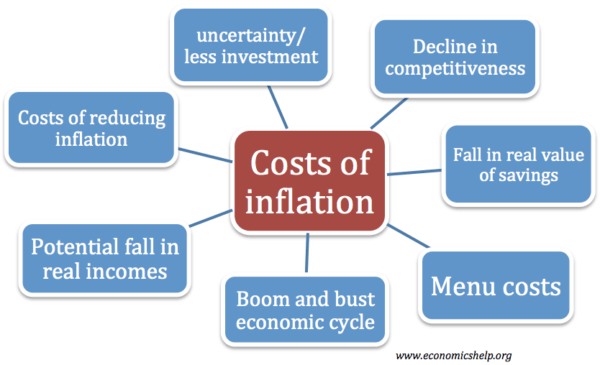
Why is inflation a problem? Inflation has various costs, such as uncertainty, potential fall in real incomes, decline in competitiveness, fall in value of savings and it is difficult to reduce. When inflation is high, it creates uncertainty and firms tend to reduce investment. This leads to lower growth in the long-term.
If inflation rises faster than wages, then households will be worse off and spending will fall. This happened in 2022.

Finally inflationary growth tends to be unsustainable and can lead to boom and bust economic cycles, where the high growth doesn’t last.
Policies to reduce inflation
1. Monetary Policy – Higher interest rates
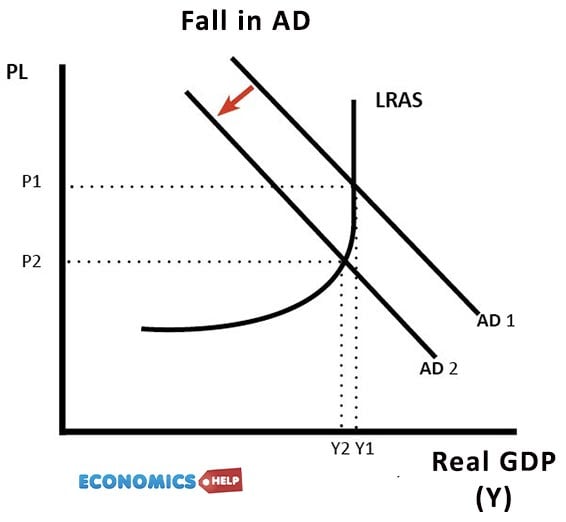
The main policy to reduce inflation is monetary policy and the use of interest rates. If the Central Bank expect inflation to rise, it will increase interest rates.
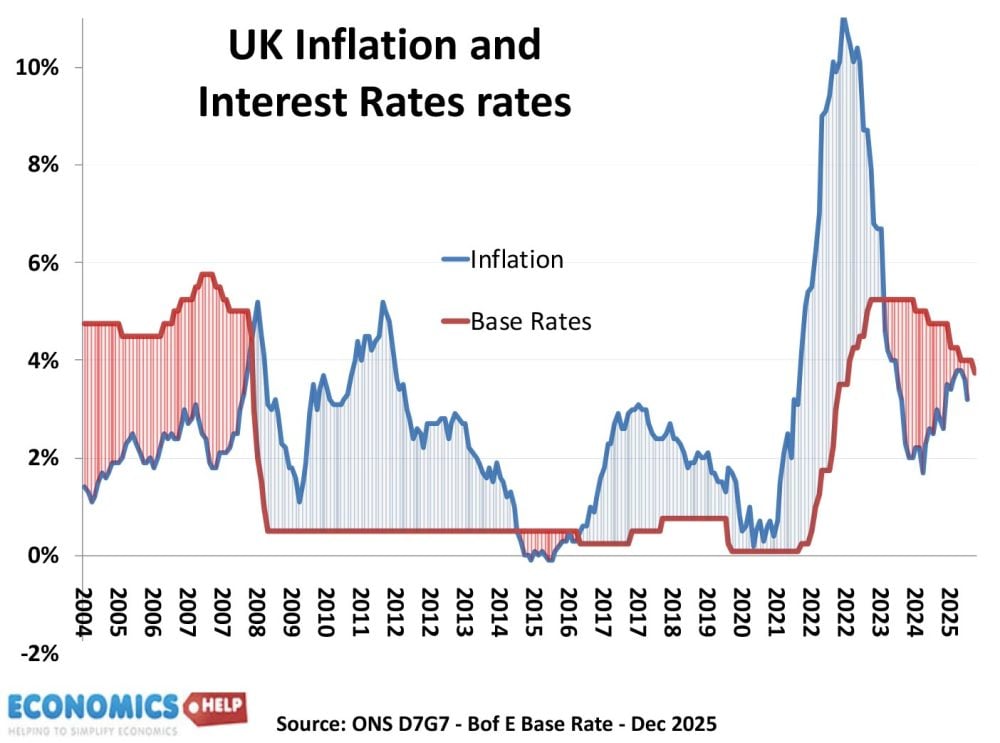
Interest rates increased in 2022 after rise in inflation. Bank of England a bit too slow to increase interest rates.
Higher interest rates increase the cost of borrowing, leading to lower spending and investment. This leads to lower AD and lower inflation. However, there is potential cost of lower economic growth. Also, there are time lags before higher interest rates have the effect of reducing growth and inflation. Also, if inflation is caused by a supply side shock, then growth is already falling and the Central Bank won’t want to cut growth even further by increasing interest rates.
Another solution to reduce inflation in the long-term is to introduce supply side policies. Policies could include privatisation, deregulation, better infrastructure, reduced power of trade unions. For example, the UK has expensive energy prices because of subsidies and lack of free entry amongst energy providers deregulation of energy markets could increase competition and enable prices to fall. In theory more competition can keep a lid on inflation. However, these policies take a long time to have effect, there is no guarantee that they work, and will not solve inflation caused by strong demand.
Related posts
About The Author
