
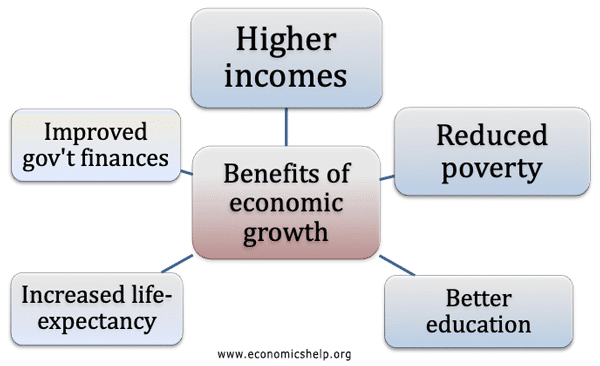
Economic growth means an increase in real GDP – an increase in the value of national output, income and expenditure. Essentially the benefit of economic growth is higher living standards – higher real incomes and the ability to devote more resources to areas like health care and education.

Video summary
Benefits of economic growth
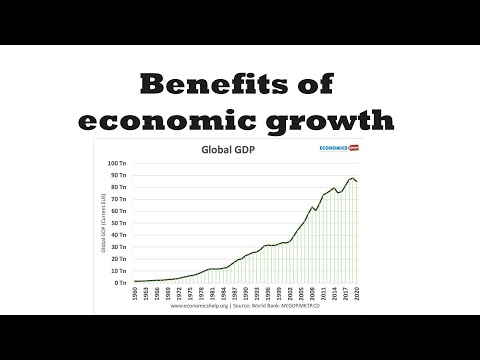
The benefits of economic growth include
- Higher average incomes. Economic growth enables consumers to consume more goods and services and enjoy better standards of living. Economic growth during the Twentieth Century was a major factor in reducing absolute levels of poverty and enabling a rise in life expectancy.
- Lower unemployment. With higher output and positive economic growth, firms tend to employ more workers creating more employment.
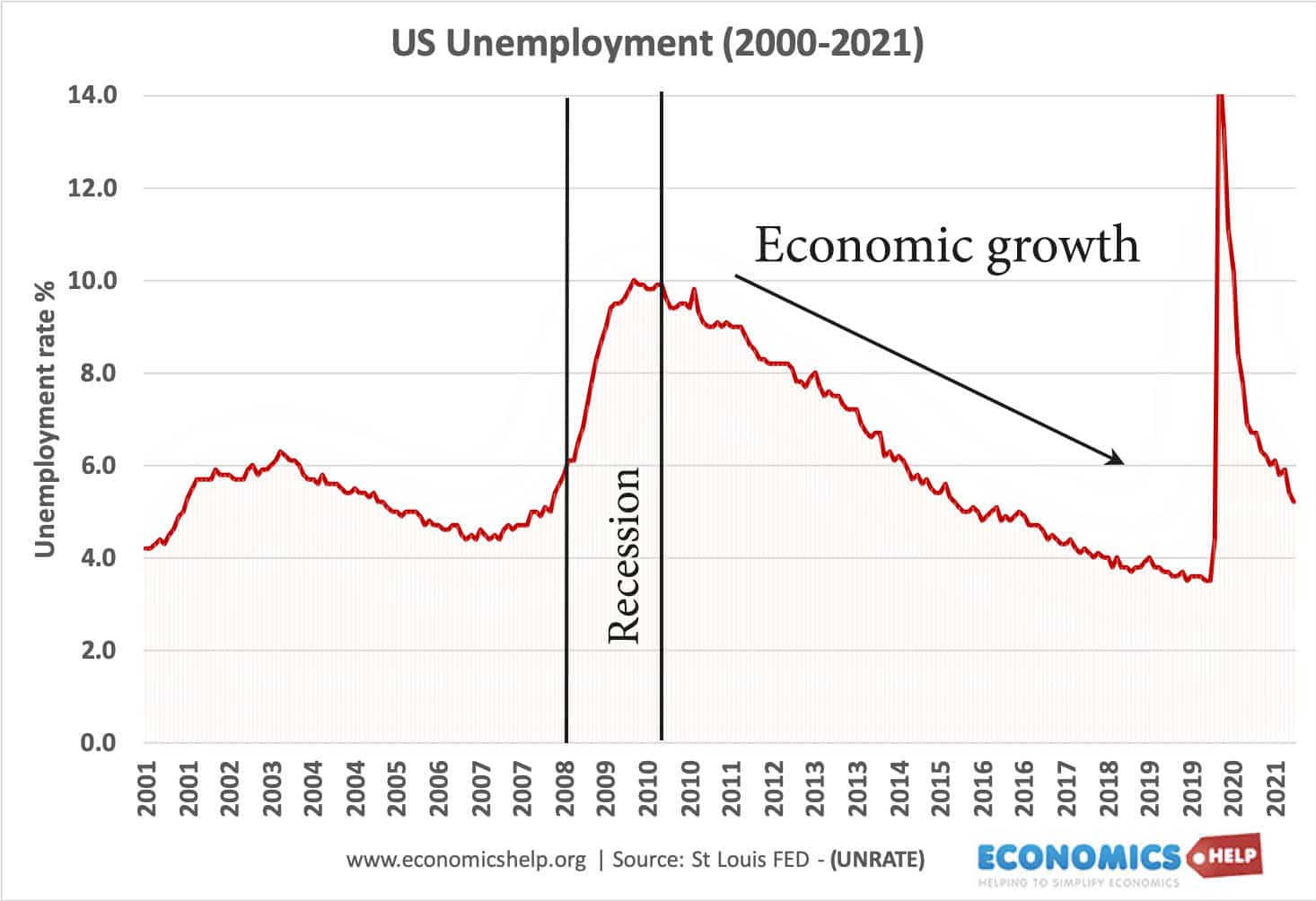
UK unemployment rises during a recession – falls during periods of economic growth.
- Lower government borrowing. Economic growth creates higher tax revenues, and there is less need to spend money on benefits such as unemployment benefit. Therefore economic growth helps to reduce government borrowing. Economic growth also plays a role in reducing debt to GDP ratios.
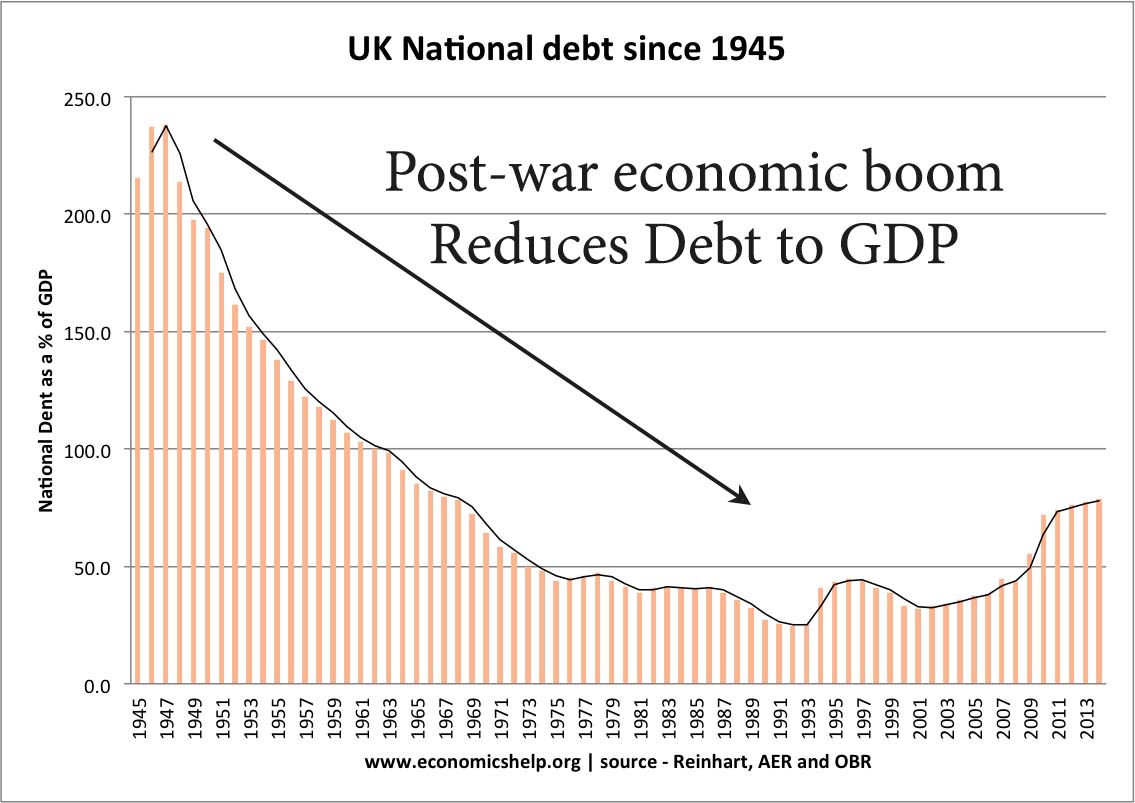
A long period of economic growth in the post-war period helped reduce the UK debt to GDP ratio.
- Improved public services. Higher economic growth leads to higher tax revenues and this enables the government can spend more on public services, such as health care and education e.t.c. This can enable higher living standards, such as increased life expectancy, higher rates of literacy and a greater understanding of civic and political issues.
- Money can be spent on protecting the environment. With higher economic growth a society can devote more resources to promoting recycling and the use of renewable resources. The Kuznets curve suggests that initially economic growth worsens the environment, but after a certain point of growth, the damage to the environment will fall. This theory is controversial. But, it is possible for higher growth to be consistent with improved environmental outcomes.
- Investment. Economic growth encourages firms to invest, in order to meet future demand. Higher investment increases the scope for future economic growth – creating a virtuous cycle of economic growth/investment.
- Increased research and development. High economic growth leads to increased profitability for firms, enabling more spending on research and development. This can lead to technological breakthroughs, such as improved medicine and greener technology. Also, sustained economic growth increases confidence and encourages firms to take risks and innovate.
- Economic development. The biggest factor for promoting economic development is sustained economic growth. Economic growth in south-east Asia over the past few decades has played a major role in reducing levels of poverty, increasing life expectancy and enabling more economic prosperity.
- More choice. In less developed economies, a large proportion of the population work in agriculture/subsistence farming, economic growth enables a more diverse economy with people able to work in service sector, manufacturing and having a greater choice of lifestyles.
- Decline in absolute poverty. Economic growth has played a crucial role in reducing absolute poverty (people with insufficient income to meet basic needs)
Economic growth and fall in poverty
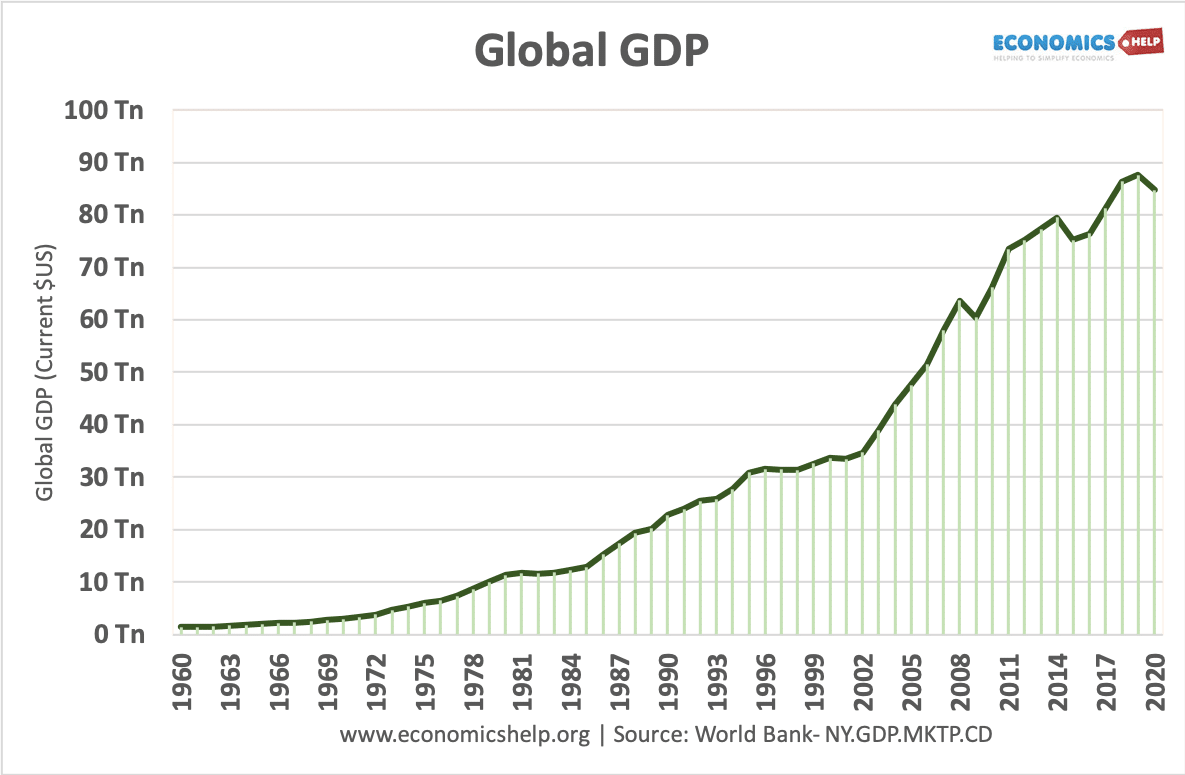
Since 1960, we can see rapid growth in real GDP. This period has coincided with a significant reduction in absolute poverty.

Poverty since 1820

Source: OurWorldinData.org
Evaluation of economic growth
- For developing economies in Sub-Saharan Africa, economic growth enables countries to escape the worst levels of poverty. Even a small level of economic growth can facilitate higher living standards and an improvement in life expectancy. In the developed world, economic growth is less essential.
- It depends on the nature of economic growth. For example, if economic growth leads to more pollution and congestion, then living standards can fall.
- It also depends on the distribution of economic growth – who benefits from economic growth? If growth benefits primarily the richest in society, growth may do little to overcome poverty.
- Economic growth can be very damaging to the environment. If it leads to greater use of non-renewable resources and Carbon emissions, then it will contribute to potentially very severe environmental problems which will increasingly impact future generations.
- When countries have low GDP, economic growth brings a high marginal benefit. But, for developed countries with high GDP, the marginal benefit of economic growth is lower. There is a diminishing marginal utility of extra income and at higher levels, the problems of growth may outweigh the benefits.
Related