
A look at how much the UK government spend on social security, benefits and welfare payments.
- For 2025–26, the UK government is forecast to spend around £326.9 billion to £334.0 billion on the social security system, including benefits administered by the Department for Work and Pensions (DWP), tax credits, Child Benefit and social security in Northern Ireland. GOV.UK
- Social security (often referred to as social protection or welfare spending) accounts for roughly 23 – 30 % of total UK government spending in recent years — making it one of the largest components of public expenditure after health
- Historically, social security spending makes up about a quarter of total government expenditure and roughly 10–11 % of GDP.

Universal credit includes – unemployment benefit, housing benefit, low-income top up benefits.

If we included benefits, pensions and social services, the sum was £430bn in 2024/25, making it the largest government department. The different figure is social services includes mainly local-authority-run care for children and pensioners.
Does the UK spend too much on Social Security?
Whether the UK spends “too much” on social security depends on the criteria you use. There is a trade-off between equity, efficiency and fiscal sustainability.
The case – the UK does spend too much
1. Fiscal pressure and opportunity cost

Social security takes roughly a quarter of total public spending. Critics argue this crowds out spending on growth-enhancing areas like infrastructure, education or productivity-boosting investment. Rising social security spending is a factor behind rise in UK public debt.
2. Demographic pressures
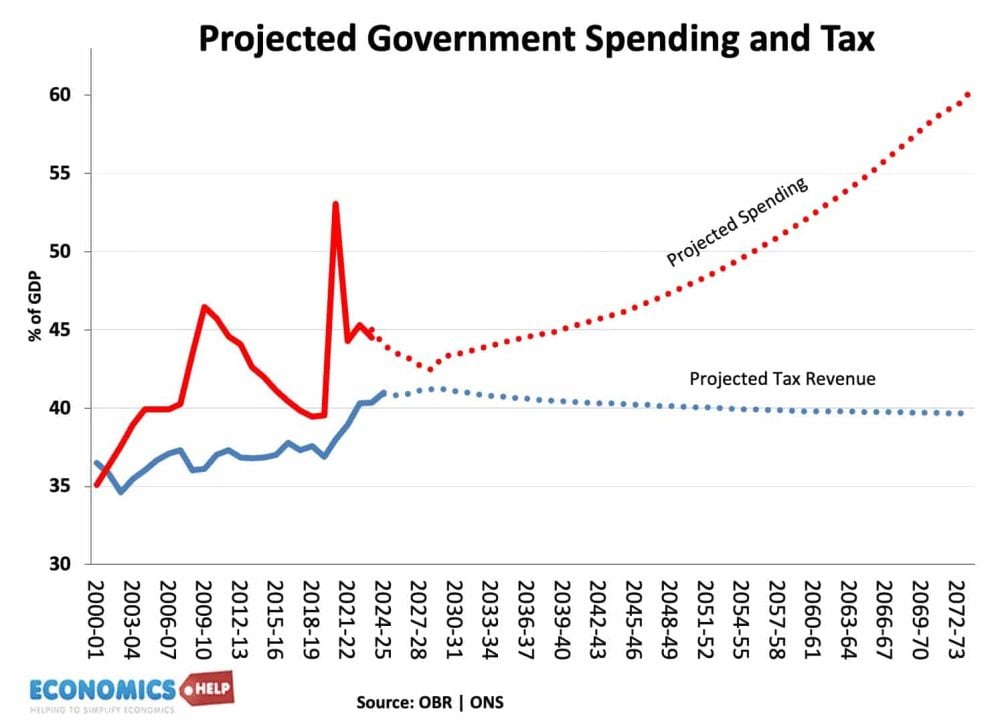
An ageing population means rising state pension and health-related benefits. Bodies such as the Office for Budget Responsibility warn that, without reform, age-related spending will rise faster than tax revenues over the long run.
3. Work incentives and dependency
Some argue that generous benefits (especially housing and disability-related support) can weaken incentives to work or increase hours, raising concerns about economic efficiency and long-term dependency. The rise in inflation and stagnation in real incomes, increased the incentive for those with disability to apply for benefits and become economically inactive.
4. International comparisons
Compared with countries like the US, UK welfare spending (as a share of GDP) looks high, leading to claims the system is “over-extended”.
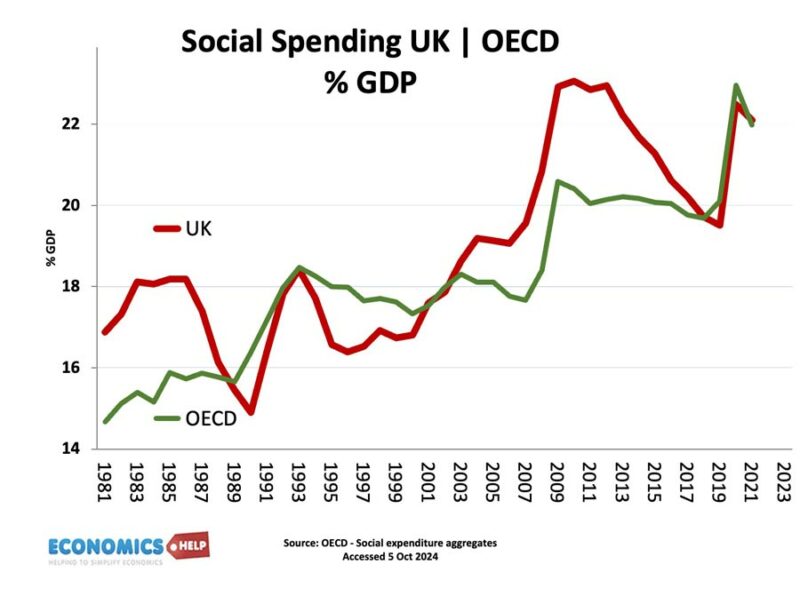
Though this is debatable. UK social security spending is similar to other OECD countries. Other European countries have more social security spending (but higher taxes, e.g. VAT of 25%)
Case for Social Security spending
1. Social insurance, not “handouts” – Over half of welfare spending goes to pensioners, mainly the state pension, which people have contributed to through National Insurance (though it is worth pointing out there was no investment, we pay for pensions out of current revenues). This weakens the argument that spending is excessive or wasteful.
2. Poverty reduction and social stability – Benefits significantly reduce relative and absolute poverty, especially for pensioners, disabled people and families with children. Without welfare, inequality and social costs (crime, poor health, low educational outcomes) would likely be higher.
4. Automatic stabiliser role – Welfare spending rises in recessions and falls in booms, helping stabilise the economy. Cutting too aggressively could worsen downturns and increase long-term costs.
Growth of Health-related benefits
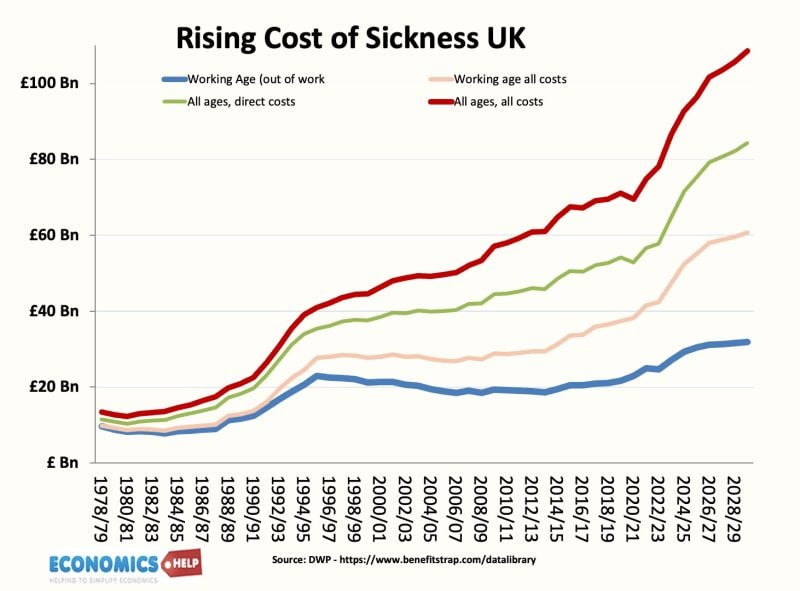
The UK has seen a significant rise in sickness related benefits – both for working age and those past working age (pensioners)
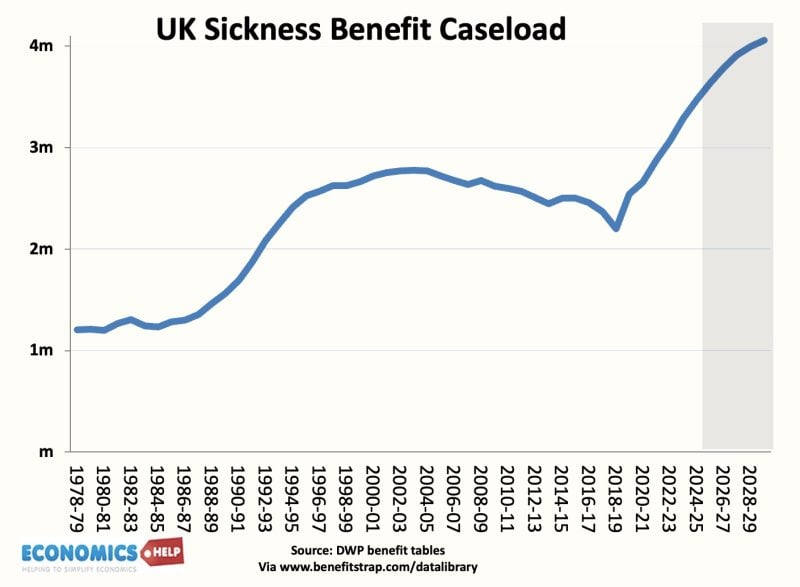
The sickness benefit caseload has risen, in particular driven by rise in mental health related conditions and muscular skeletal problems.
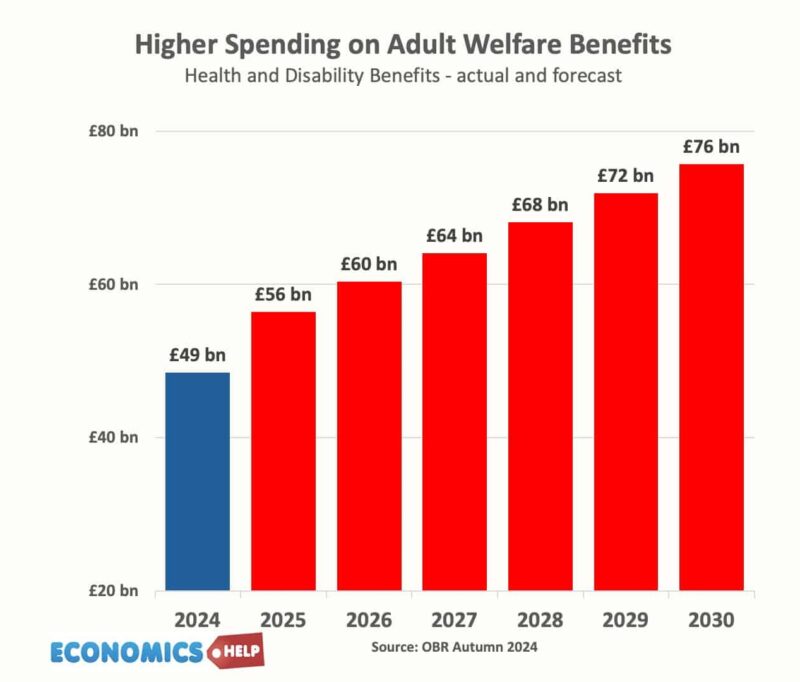
Health related benefits have risen considerably in recent years and are forecast to keep rising. This reflects a rise in sickness levels and inactivity.
Related posts
Sources:
About The Author

The terms are designed to confuse however, social protection seems about
right? £334 bn plus. If you include benefits, pensions and social services the sum was £430 bn. What is of concern is the interest being paid to service the national debt, around £130 bn on a £2.9 trillion national debt, and a borrowing requirement of £132.3 bn. Over to Torsten Bell with the view we should need higher taxes and Rachael from the bank to tax everything which leads to another recession. With tax receipts at an all time
high, of £1.23 trillion, maybe time to reduce taxes to encourage spending to
stimulate the sluggish economy? What do you think?
It is confusing. And the government recently changed their definition of Social security spending.
It was really hard to decipher myself. There are 3 inter-related concepts
social security payments
Welfare payments
Welfare benefits
I’m massively confused here because ukpublicspending.co.uk – which uses the HM Treasury PESA figures – has Welfare spending at roughly £60 billion between 2010 and 2013 and then £54 billion odd for 2014???
What does that include? Why is it different from all the other figures I’m seeing.
Also, nobody seems to use the same term for this – the BBC uses “welfare”, the Economist “social benefits” and you guys use “social security”. Which one is the correct one or are they all different?