
Readers Question: Can you please differentiate between the causes of once-off inflation and sustained inflation?
A temporary period of inflation, also called one-off inflation, may be caused by temporary cost-push factors, such as rising taxes, rising oil prices and the effect of depreciation. It will last for less than a year. Sustained inflation is over a longer-time period.

This shows UK inflation since 2007. The Bank of England seek to keep inflation at the target of 2%, but you can see there are periods of temporary inflation. Mostly notable, 2022/23. In 2022, inflation surged due to:
- End of covid lockdowns, supply constraints, such as lack of shipping,g led to higher costs
- Boost in spending as people used lockdown savings
- Rise in oil prices following the Ukraine war.
However, this inflation proved temporary, and when oil prices fell, the inflation rate went down significantly.
Other causes of temporary inflation
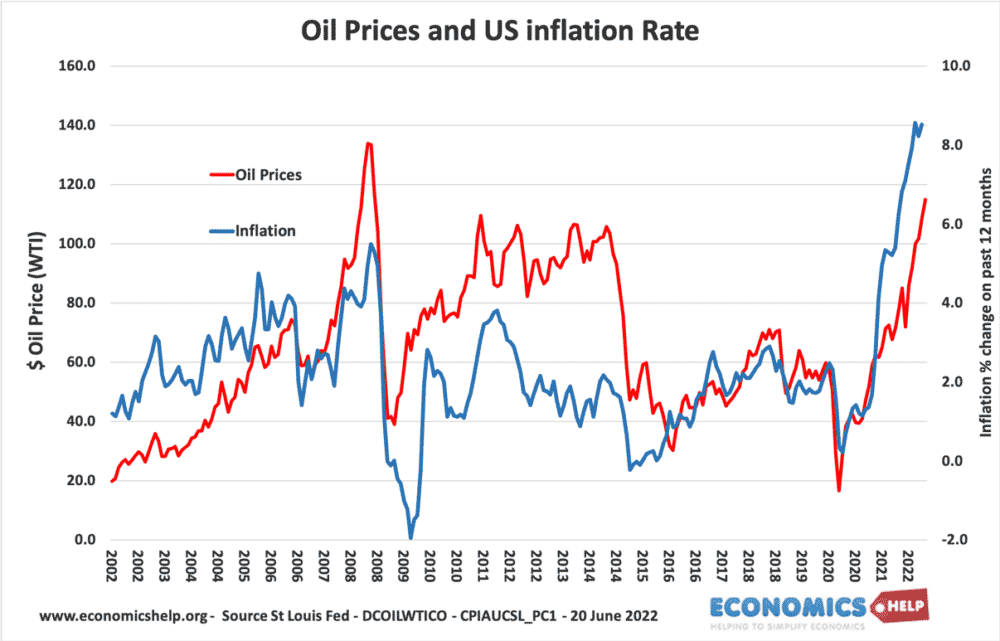
This shows how strongly the oil price is linked to the US inflation rate.
- Rise in tax rates. Suppose the chancellor announces a 10% rise in fuel duty. This means prices will rise. But, next year this price rise will not occur (unless of course, he announces 10% rises every year)
- Rise in energy bills. Again, this causes a one-off rise in inflation.
- Rise in oil prices that is temporary.
- Rise in interest rates will increase the Retail Price Index, this is because mortgage costs increase (although it doesn’t affect CPI, which excludes mortgage payments). Ironically, the higher interest rates are likely to reduce inflation in the long term because they reduce demand
see: cost-push inflation
Sustained Inflation
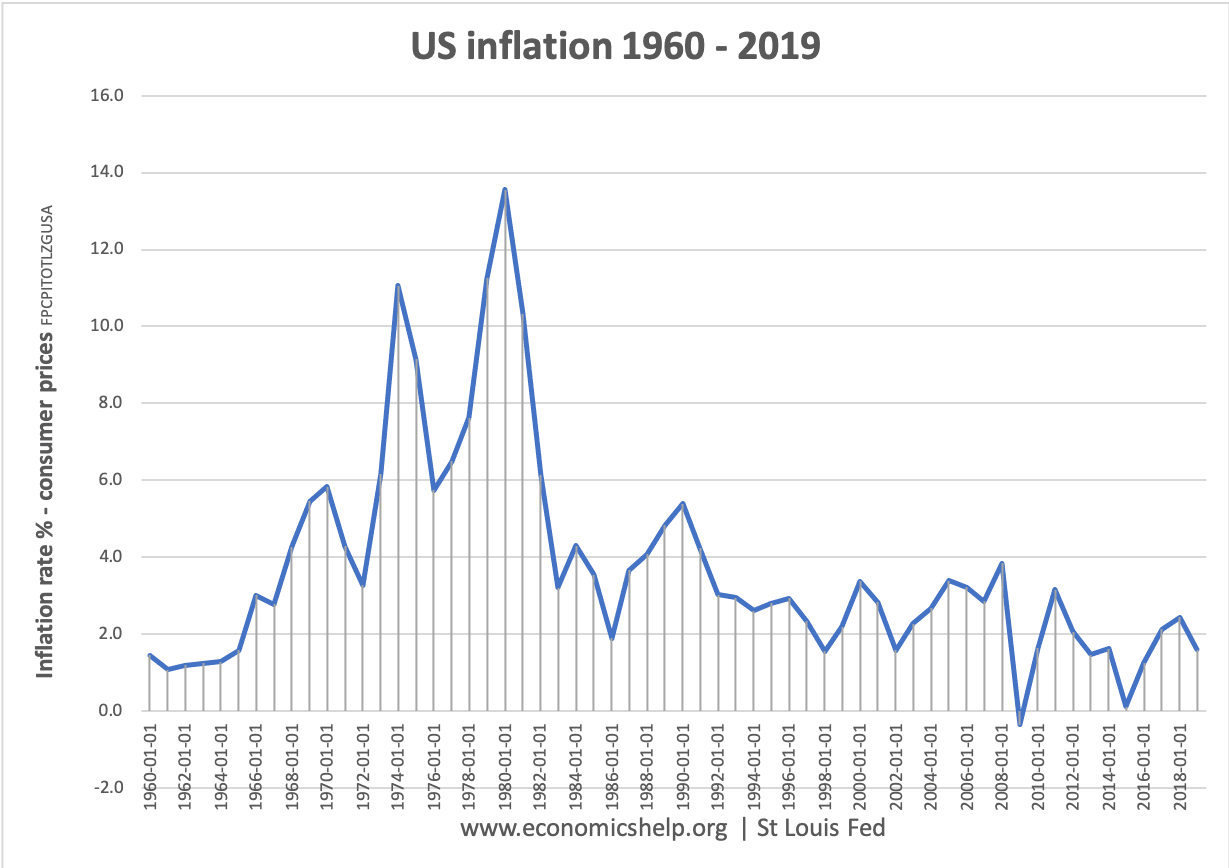
Sustained inflation is a period of continuously rising prices. The reason price rise are usually continuous is:
- Wage price spiral. If workers get rising wages, they spend more (demand-pull inflation) and increase costs for firms (Cost-push inflation). This causes inflation. Therefore, next year, workers and unions will bargain for further wage increases because they want to maintain their real incomes. In some cases, it may cause a period of rising wage inflation.
- Expectations. If inflation is 4% last year. People tend to expect inflation of 4% next year. Therefore, firms will be looking to increase prices and workers will be looking for wage increases. Therefore, expectations can become self-fulfilling. It is argued a temporary one-off inflation can become sustained if expectations are changed. When the UK experiences cost-push inflation due to rising energy prices. It is hoped these will be a one-off price rise. However, the MPC is concerned that it will affect inflation expectations and so the temporary inflation will become sustained.
- Growth in money supply. If monetary authorities allow a grow in the money supply, through, say, low interest rates this will cause inflationary pressures.
- Supply constraints. If an economy has serious supply constraints, then it may not be able to keep up with demand,d and so this pushes up inflation.

This shows inflation in Turkey. Turkey has had sustained inflation because in this period, inflation has always been above 6%. This high inflation was due to excessively weak monetary policy, allowing money supply to increase and long-term devaluation of Lira, which keeps pushing up import prices.
Related
About The Author
