Causes of the Cost of Living Crisis 2026

wages-inflation-lines

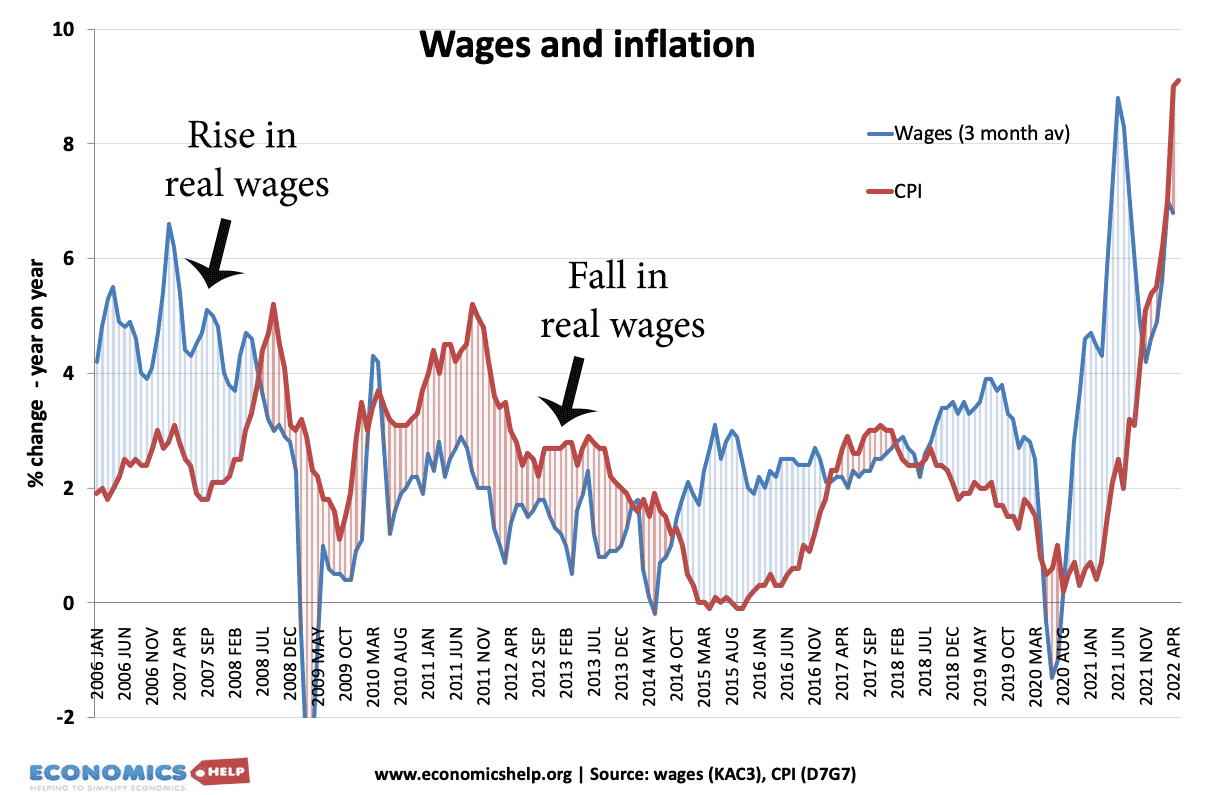
UK households have been pushed into a cost of living crisis due to High inflation, a significant rise in the price level Stagnant real incomes Rise in unemployment/under-employment High energy prices/water bills High housing costs. Housing costs Between 2021 and 2025, the cost of private renting in England has increased 30% Another long-term structural problem …

Read more

Investment in UK – Business and Public Sector

uk-business-investment-labels

investment-uk-25

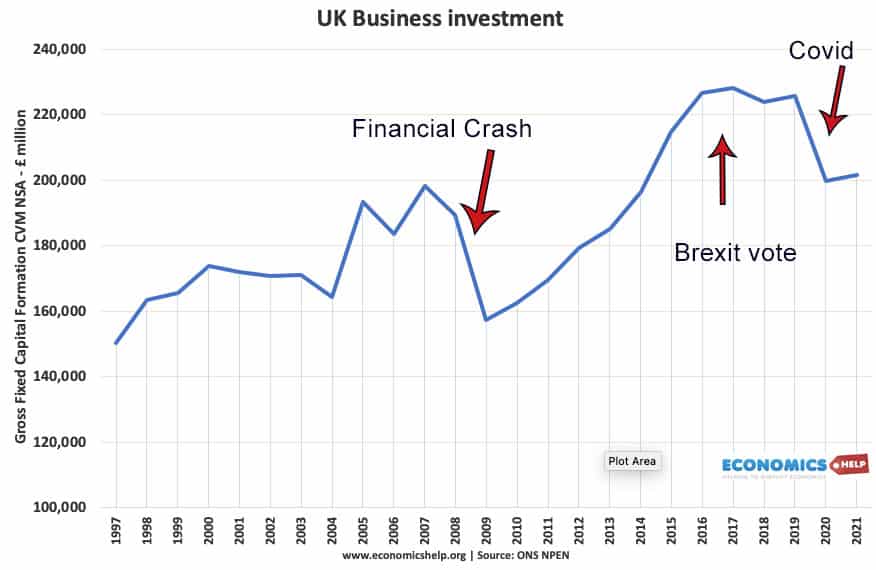
  • UK investment since 1997.
  • The credit crunch 2007-2010 led to big reduction.
  • Brexit vote in 2016 also saw a decline in growth compared to previous trend.
  • Covid saw another decline, which the UK has struggled to get out of the low growth.
  • Source: ONS NPEN

UK Investment compared
investment-share-gdp-uk-lowest

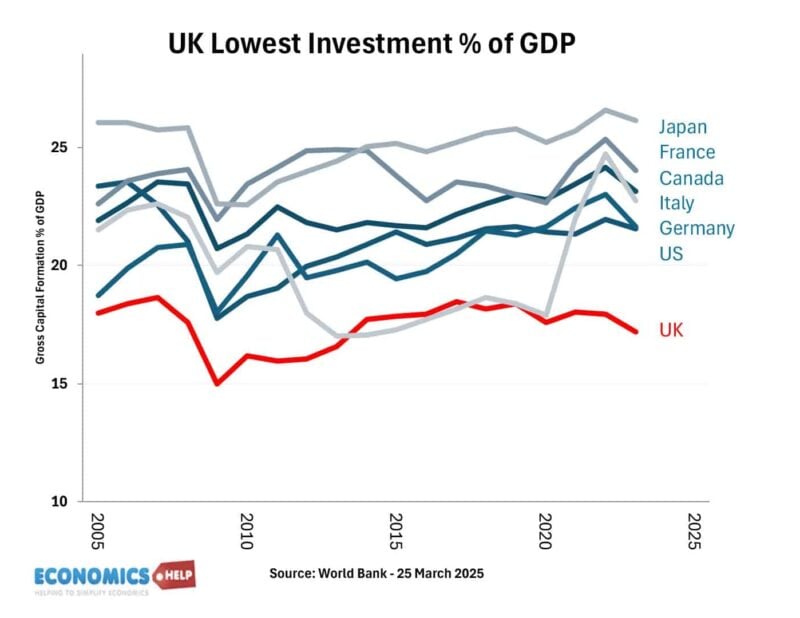
UK has the lowest share of investment compared to other G7 countries.

Total UK Business investment since 1997. After sharp fall in 2009 due to global recession, investment recovered quite strongly. In 2016, Investment fell, at least in part, due to the uncertainty of the Brexit vote and leaving the Single Market. The covid pandemic caused another sharp fall in investment.

Effect of Lower investment

The poor investment performance is concerning for the UK economy as it is reflected in poor productivity growth, low economic growth and limited real wage growth
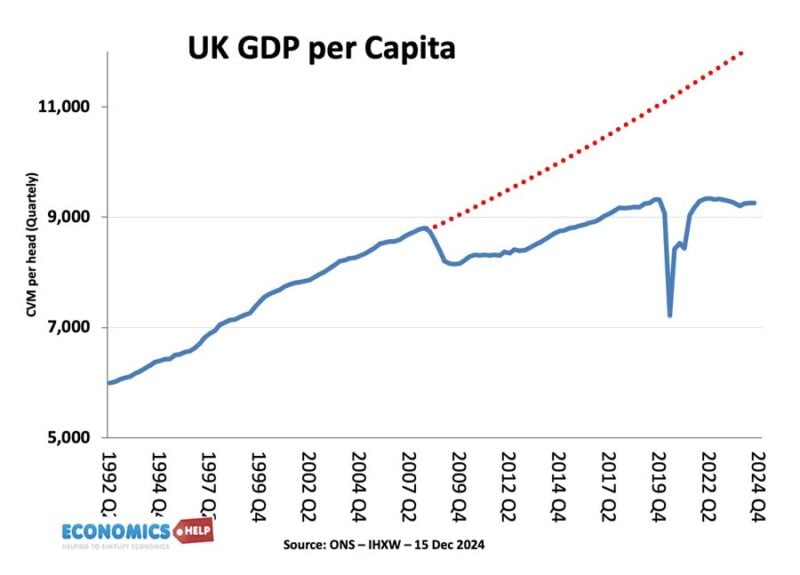
uk-gdp-per-capita-dec-24

UK real GDP has never recovered its pre-2007 trend rate of growth.


The poor levels of investment post 2008 are reflected in poor labour productivity growth.

Investment in profile

From 2007 to 2010 we see a 22% fall in private sector business investment. This was the result of

  • Banking crisis – banks didn’t want to lend
  • Fall in consumer confidence
  • Recession, which caused firms to hold bank from investment

Recovery in business investment  2010-2016

  • From a low basis and 20% fall
  • Helped by low interest rates making investment more attractive, but availability of funds a bigger problem than the cost of borrowing.
  • Business investment has fallen behind past trend growth in value of business investment.
  • Still volatile and uncertain, e.g falls in 2014 and the end of 2015

Factors influencing future investment levels
interest-rates-75-25

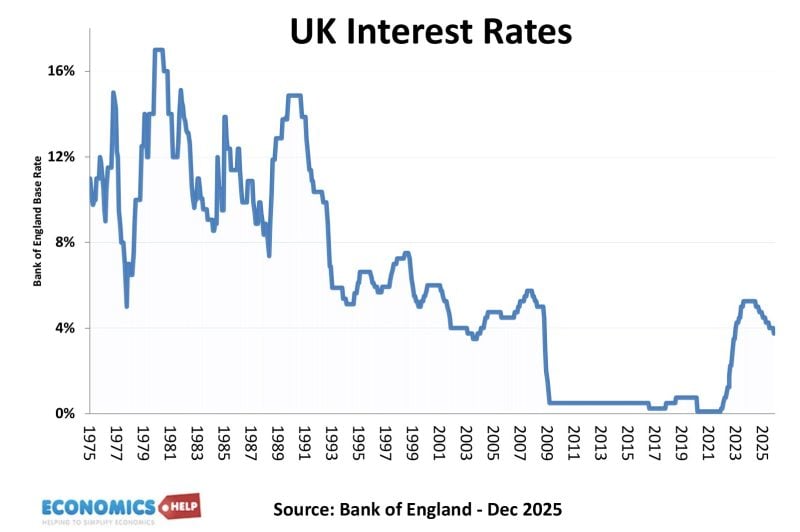
  • Interest rates. Lower rates make it cheaper to borrow. But, the low rates of the 2010s didn’t help because firms lacked the confidence to invest.
  • Prospects for economic growth. A key factor is expected future demand, firms will only invest if they expect demand to rise.
  • Inflation rate – high inflation tends to discourage investment
  • Trade uncertainties. Uncertainties over Britain’s place in Europe and concerns about US tariff policy.
  • Demographics – ageing population is not good for investment as old people tend to spend less.

Read more

World’s Top 10 Exporters – And Why China Dominates

The world’s largest Exporter is China with $3.75 trillion worth of exports. This accounts for 20% of China’s GDP. The second largest exporter is the United States with $3.19 trillion worth of exports. This accounts for just 11% of US GDP. The world’s third largest exporter is Germany with $1.9 trillion, but this is 41% …

Read more

How Liz Truss Crashed the UK Economy

mortgage-rates-truss

In the summer of 2022, Liz Truss was elected Prime Minister and with chancellor Kwasi Kwarteng, embarked on a bold economic experiment of large unfunded tax cuts primarily for the rich. They believed in a free market ideology and hoped a radical budget of tax cuts would end the UK’s economic stagnation. However, even whilst …

Read more

Top 10 Countries – Debt % of GDP

top-10-debt-share-gdp

According to IMF figures, the countries with the highest share of government debt % of GDP are Japan (236%), Venezuela (164%) and Greece (150%) Top 10 Share Debt Explained 1. Japan   Japan’s debt exploded when the economies boom and asset bubble turned into deflation after the late 1980s. The economy slowed down and the …

Read more

Monetary and Fiscal Policy in the UK

monetary-vs-fiscal-policy

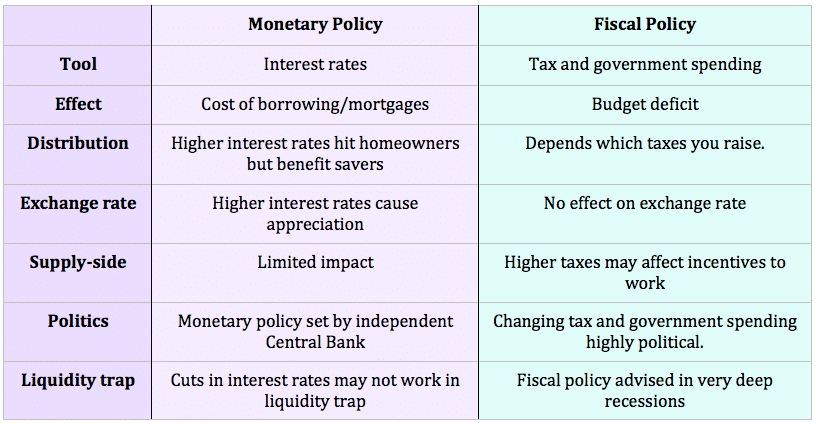
Readers Question: What is meant by monetary and fiscal policy? Monetary Policy vs Fiscal Policy Monetary Policy Controlled by: Central Bank (e.g. Bank of England) Main tools: Interest rates Quantitative easing / tightening Main objectives: Control inflation 2% target Stabilise the business cycle Maintain financial stability Speed: Relatively quick to implement Limitations: Banks may not …

Read more

Historical Interest Rates UK

inflation-interest-rates-dec-25

UK Interest Rates since 1900

uk-interest-rates-1900-2025

One thing that stands out is the high interest rates in the 1970s and early 1980s – a reflection of a boost in inflation during these decades.

Historical Interest Rates in UK since 1800

interest-rates-since-1816

Interest Rates since 1695

interest-rates-since-1697

Interest rates in the UK since 1800. In the nineteenth century, interest rates were more stable.

Bank Rate 1830–1972 and 2006–09, Minimum Lending Rate 1972–81, London clearing banks’ base rate 1981–97, repo rate 1997–2006.  End year observation.

Read more

UK in Exchange Rate Mechanism ERM 1990-92

The Exchange Rate Mechanism was a semi fixed exchange rate – designed to reduce exchange-rate volatility between European countries by keeping currencies within agreed bands against each other. Each currency had a central rate against others and could only fluctuate within a narrow band. It was seen as a precursor to the Euro single currency. …

Read more

Item added to cart.
0 items - £0.00