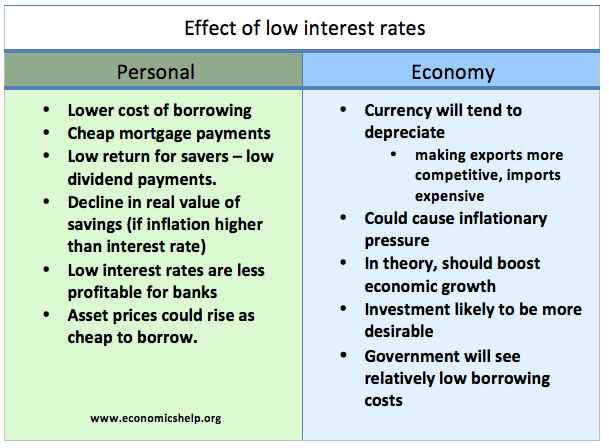
In general lower interest rates will make borrowing cheaper, saving less attractive, and in theory should lead to higher spending, higher economic growth and higher inflation. Lower interest rates can also reduce the value of the exchange rate.
Effects of Lower Interest Rates

Positive effects
Higher consumer spending
Lower mortgage and loan repayments increase disposable income.
More business investment
Cheaper borrowing encourages firms to invest in capital and expansion.
Higher asset prices
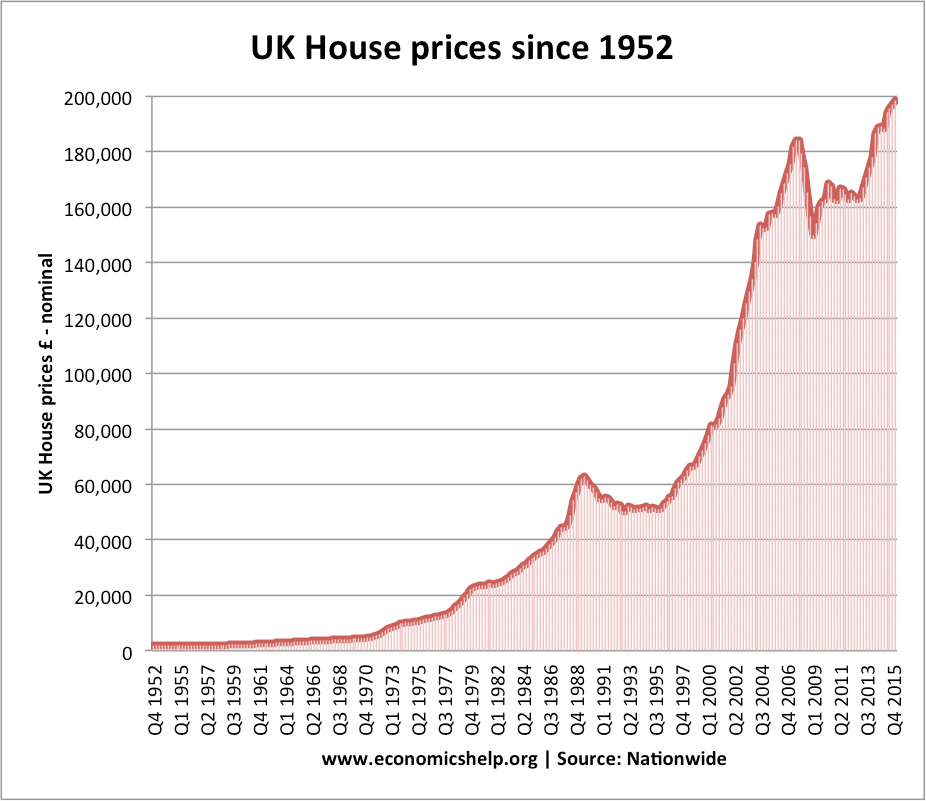
Lower mortgage rates can push up house prices and share prices.
Weaker exchange rate
Lower rates can reduce capital inflows, boosting exports.
Negative effects
Lower returns for savers
Pensioners and savers earn less interest on deposits.
Risk of asset bubbles
Cheap credit can fuel excessive house price and stock market inflation.
Higher household debt
Low rates may encourage over-borrowing.
Limited impact if confidence is weak
During recessions, firms and households may not borrow despite low rates.
Lower interest rates aim to stimulate demand, but their effectiveness depends on confidence, debt levels, and the wider economic environment.
Summary
Lower interest rates make it cheaper to borrow. This tends to encourage spending and investment. This leads to higher aggregate demand (AD) and economic growth. This increase in AD may also cause inflationary pressures.
In theory, lower interest rates will:
- Reduce the incentive to save. Lower interest rates give a smaller return from saving. This lower incentive to save will encourage consumers to spend rather than hold onto money.
- Cheaper borrowing costs. Lower interest rates make the cost of borrowing cheaper. It will encourage consumers and firms to take out loans to finance greater spending and investment.
- Lower mortgage interest payments. A fall in interest rates will reduce the monthly cost of mortgage repayments. This will leave householders with more disposable income and should cause a rise in consumer spending.
- Rising asset prices. Lower interest rates make it more attractive to buy assets such as housing. This will cause a rise in house prices and therefore rise in wealth. Increased wealth will also encourage consumer spending as confidence will be higher. (wealth effect)
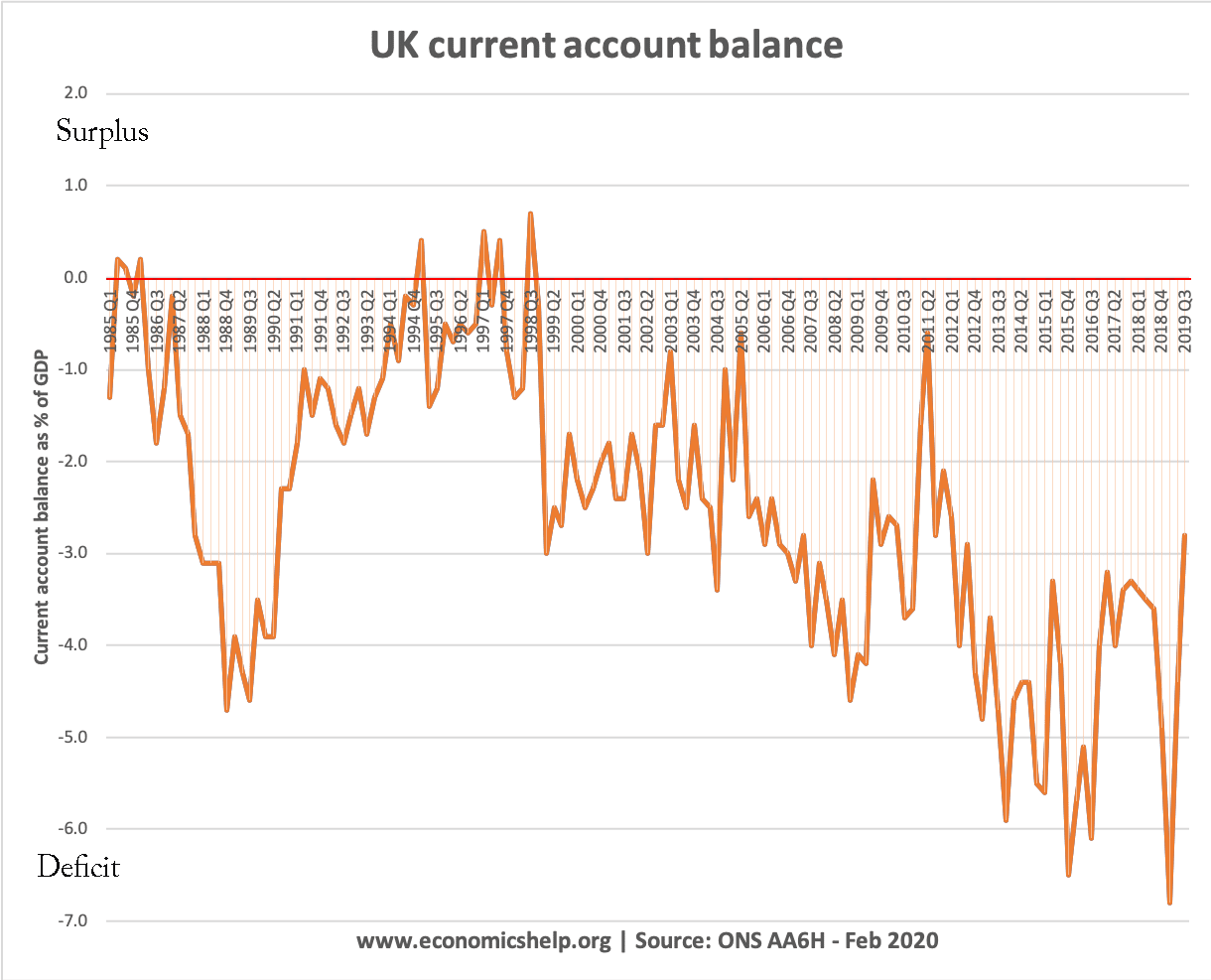
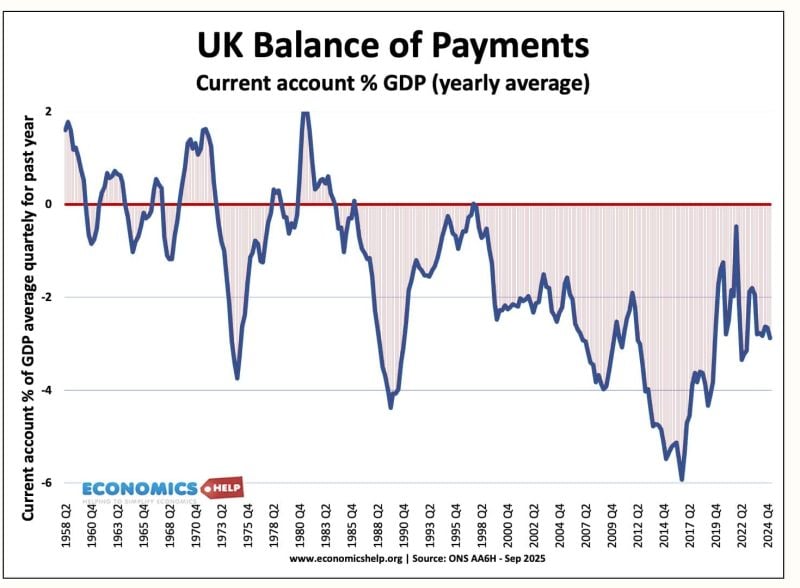
- Depreciation in the exchange rate. If the UK reduce interest rates, it makes it relatively less attractive to save money in the UK (you would get a better rate of return in another country). Therefore there will be less demand for the Pound Sterling causing a fall in its value. A fall in the exchange rate makes UK exports more competitive and imports more expensive. This also helps to increase aggregate demand.
Overall, lower interest rates should cause a rise in Aggregate Demand (AD) = C + I + G + X – M. Lower interest rates help increase (C), (I) and (X-M)
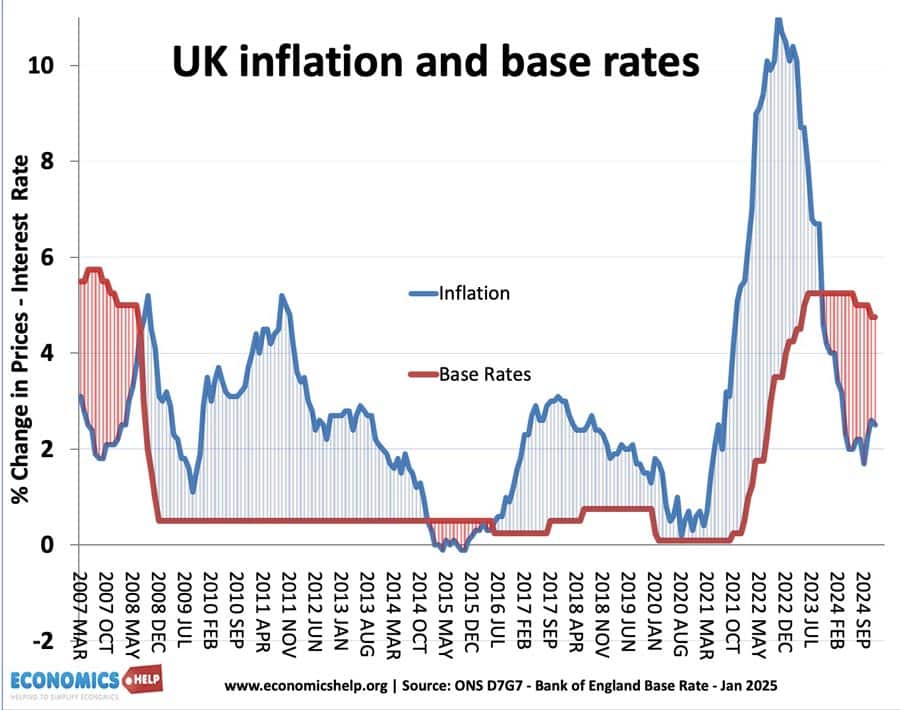
UK interest rates

UK interest rates were cut in 2009 to try and increase economic growth after the recession of 2008/09, but the effect was limited by the difficult economic circumstances and the after-effects of the global credit crunch.
It is worth bearing in mind, that although the Bank of England cut base rates, it didn’t translated into lower commercial bank rates. Banks were slow to cut lending (and saving rates)

AD/AS diagram showing effect of a cut in interest rates
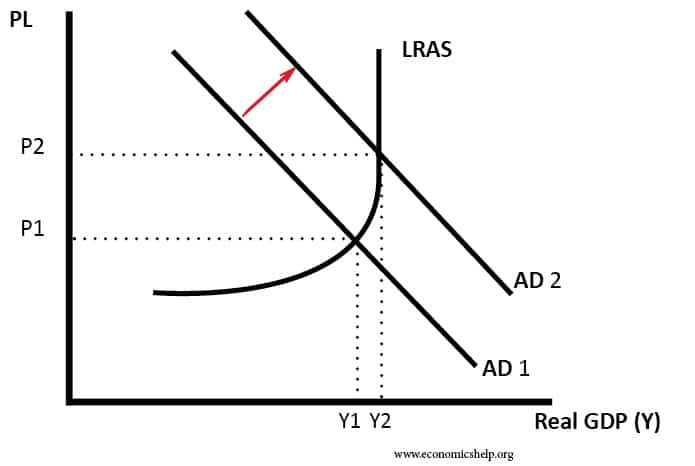
If lower interest rates cause a rise in AD, then it will lead to an increase in real GDP (higher rate of economic growth) and an increase in the inflation rate.